
Foundation Masonry Repair · Chicagoland, IL
Parging and Foundation Coating: Protecting Chicago's Brick and Block Foundations
Parging is a thin protective mortar coat that smooths, seals, and shields the exposed face of a brick or block foundation. When it flakes and crumbles, moisture starts working its way into the wall. Here's how parging works, why it fails, and how Emerald Masonry LLC repairs it across Chicagoland.
2026-07-09
Quick Answer
Parging is a thin mortar coat troweled over a brick or block foundation to protect and smooth it and help the wall shed water. Failing parge coats flake, blister, and let moisture into the masonry behind them. Emerald Masonry LLC parges, coats, and repairs brick, block, and stone foundations across Chicagoland — free estimates, family-owned, career masons, (708) 288-1696.
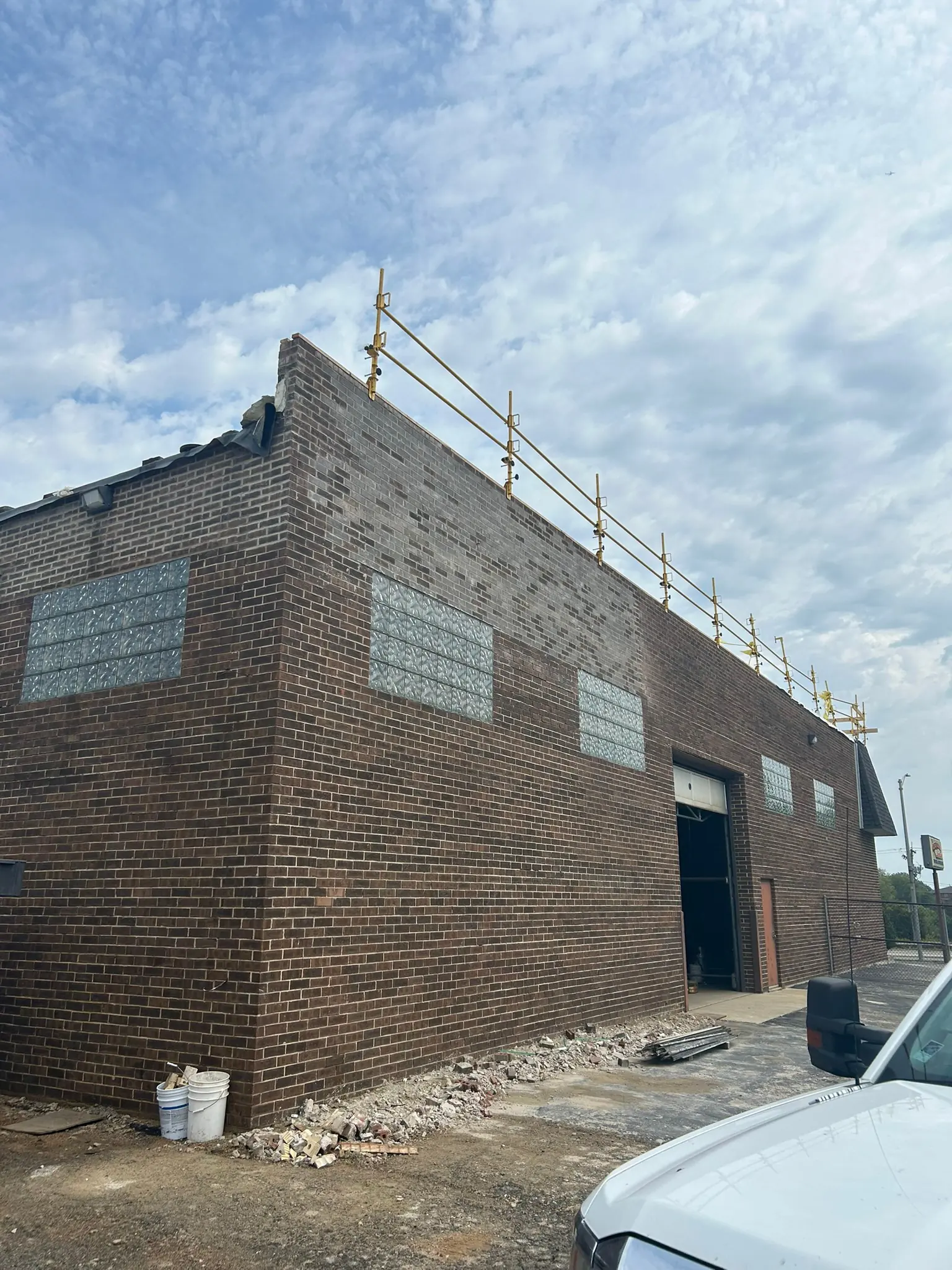
If the gray mortar skin on your foundation is flaking off in sheets, cracking along the block joints, or showing chalky white stains, you're looking at a failing parge coat — and it's usually a symptom of a moisture problem, not just a cosmetic one. Parging is a thin protective layer of cement mortar troweled over the exposed face of a brick, block, or stone foundation to smooth it, hide the joints, and help the wall shed water. When it lets go, water starts reaching the masonry behind it. Emerald Masonry LLC has been repairing and coating foundations across Chicagoland for career masons as a family-owned, licensed, bonded, and insured masonry contractor. If your foundation coating is crumbling or you want it done right the first time, call us at (708) 288-1696 for a free estimate.
This guide walks through what parging actually is, where it's used, why parge coats fail, and — most importantly — how a real repair differs from just slapping fresh mortar over a bad wall.
What Is Parging (and What Foundation Coating Does)
Parging — sometimes called a parge coat, mortar coat, or foundation coating — is a thin layer of cement-based mortar applied over a masonry foundation wall. On a typical Chicago home, you'll see it on the strip of foundation that sits above the ground line: the band of block, brick, or stone between the soil and the bottom of your siding, brick veneer, or greystone.
Parging does two jobs at once:
- Cosmetic: It gives a rough, mismatched, or patched foundation a clean, uniform surface. It hides individual concrete blocks, old repairs, mortar joints, and color differences, so the base of the house looks finished instead of raw.
- Protective: It puts a continuous skin over the masonry that helps the wall shed rain and splash-back, reduces how much water soaks directly into the block or brick, and protects softer old mortar joints from weathering.
Foundation coating is closely related — it's the broader idea of applying a protective finish to the foundation. Parging is the traditional mortar version. Some coatings are cementitious like a parge coat, and some are elastomeric or breathable masonry coatings applied over the parge for extra protection. The important distinction, which we'll come back to, is that these are surface treatments. They protect and beautify a sound wall. They do not, on their own, fix a broken wall or a wet basement.
Where Parging Is Used
Parging shows up almost everywhere in Chicagoland because so many of our foundations are exposed masonry rather than smooth poured concrete. You'll typically find parge coats on:
- Concrete block (CMU) foundations — the most common candidate. Block foundation parging or a surface-bonding cement coat smooths the blocky texture and protects the mortar joints between units.
- Brick foundations — older Chicago homes, brick two-flats, and bungalows often have brick below grade. A brick foundation repair frequently includes re-parging the exposed courses after the joints are addressed.
- Rubble-stone and greystone foundations — the irregular stone foundations under many older Beverly and Oak Park homes were often parged from the start to even out the surface and lock the face together.
- Repaired or patched sections — after foundation crack repair, tuckpointing, or partial rebuilds, a parge coat unifies the patch with the surrounding wall.
The exposed above-grade band takes the worst of it. It's hit by rain, splash-back off the ground, road salt, and — this is the Chicago killer — repeated freeze-thaw cycles all winter long. That's exactly the zone parging is meant to protect, and exactly the zone where it fails.
Why Parge Coats Fail
A parge coat almost never fails for no reason. When we see a crumbling parge coat, we're really looking at a clue. Here are the usual culprits.
Water behind the coat
This is the number one cause. If water is getting into the wall from behind — through poor grading, a downspout dumping at the foundation, or a below-grade moisture problem — that water pushes outward toward the surface. It works its way behind the parge coat and breaks the bond. You'll often see this as blistering, bubbling, or whole sheets of coating peeling away.
Freeze-thaw cycles
Chicago winters are brutal on masonry. Any moisture that gets behind or into the parge coat expands as it freezes and contracts as it thaws — over and over. Each cycle pries the coat a little further off the wall. This freeze-thaw action is why parge coats on the north and shaded sides of a house often fail first.
The wrong mix
A parge coat that's too hard and dense for the wall it sits on can't flex or breathe with the masonry. A coat that's too rich in cement can shrink and crack; one that's poorly proportioned won't bond. Matching the mortar coat to the wall — Type N, Type S, or a surface-bonding cement as appropriate — matters more than people think.
Painted or sealed surfaces trapping moisture
This is a common homeowner mistake. Painting the foundation or applying a hard, non-breathable sealer creates a vapor barrier on the outside face. Moisture inside the masonry can't escape, so it pushes the paint, sealer, and parge coat off — and can spall the block or brick behind it. Efflorescence (the chalky white salt residue) is a warning sign that moisture is moving through the wall.
Movement and cracks
Foundations move a little with settlement, soil moisture, and seasonal change. If there's an active crack in the wall, or ongoing movement, it will telegraph straight through a rigid parge coat and split it. Patching the surface without addressing the crack just hides the problem temporarily.
Bond failure and flaking
Parging bonded to a dirty, dusty, glossy, or already-failing surface never had a chance. If the wall wasn't cleaned, dampened, and prepped correctly, the coat lets go from day one, flaking off in thin plates.
Cosmetic Parging vs. Fixing the Real Problem
Here's the honest part, and it's the difference between a repair that lasts and one that fails again in two winters.
Re-parging a foundation makes it look great immediately. But if the underlying cause — a wet wall, open mortar joints, an active crack, bad drainage — is still there, the beautiful new coat is on a countdown clock. A responsible mason fixes the wall first, then parges.
That means, before any fresh mortar coat goes on, we look at:
- Repointing / tuckpointing — open, eroded, or missing mortar joints get raked out and repointed so the wall is sound underneath.
- Crack repair — active or structural cracks are evaluated and addressed rather than buried under new parging.
- Drainage and grading — if water is the root cause, we talk through gutters, downspout extensions, and grading so the new coat isn't fighting a losing battle.
Parging is the finish, not the fix. When someone offers to "just parge over" a visibly wet, cracked, spalling foundation with no prep, that's a red flag.
The Parging and Foundation Coating Repair Process
Here's how Emerald Masonry approaches a foundation parging and coating job, start to finish:
- Assess the wall. We inspect the full exposed foundation, identify why the old coat failed, check for cracks and spalling foundation block, look for efflorescence and moisture, and check grading and drainage around the base.
- Remove the loose and failing coat. All flaking, blistered, and drummy (hollow-sounding) parge gets knocked off back to sound masonry. Trying to save bad coat just guarantees the new one fails.
- Repair the joints and cracks. Open mortar joints are repointed, cracks are addressed, and any deteriorated brick or block is repaired so we're building on a solid, sound surface.
- Prep and bond. The wall is cleaned of dust and debris and dampened (or a bonding agent applied) so the new mortar coat grabs properly instead of drinking the water out of the mix and failing to cure.
- Apply the parge in lifts. We trowel the parge coat on in one or more even layers ("lifts") at the correct thickness, working it into the surface and finishing it to the texture you want — smooth or lightly floated.
- Cure it correctly. Fresh mortar needs time and moisture to cure and reach strength. Rushing or drying it out too fast in the summer sun causes shrinkage cracks, so we manage curing.
- Optional breathable coating. Where it makes sense, we finish with a breathable masonry coating or sealer that adds protection while still letting the wall release vapor — never a coating that traps moisture inside.
Materials: Getting the Mix Right
The material choice is where experience shows. The wrong product can cause the exact failure it was supposed to prevent.
- Type N mortar — a moderate-strength, more flexible mix, often the right choice for parging over softer brick and older masonry that needs to breathe and move a little.
- Type S mortar — higher strength, used where more durability is needed, common on block foundations and areas with heavier exposure.
- Surface-bonding cement — a fiber-reinforced cementitious coat used especially on block walls; it bonds the units together and creates a tough parge surface in one step.
- Breathable masonry coatings — applied as a finish over the parge, these add weather protection while allowing water vapor to escape. The cardinal rule: avoid trapping moisture with the wrong sealer. A hard, film-forming, non-breathable coating on a foundation is how you get spalling and blistering.
Matching the coat to the wall's strength and moisture behavior is the whole game. That judgment call — Type N vs. Type S vs. surface bonding, breathable vs. film-forming — is exactly what career masons in the field teaches you.
What Drives the Cost
We don't give exact prices online, because every foundation is different and a fair number requires seeing the wall. What we can tell you honestly are the factors that move the price up or down:
- Size of the exposed foundation — more linear feet and taller exposed walls mean more material and labor.
- How much old coat has to come off — a wall that needs full removal costs more than a spot repair.
- Underlying repairs first — repointing, crack repair, and block or brick replacement add scope before parging even begins.
- Condition and access — landscaping, tight side yards, deep grading, and difficult access all add time.
- Finish — a simple parge is different from a parge plus a breathable coating system.
The right way to get a real number is a free on-site estimate. Call (708) 288-1696 and we'll come look at your actual foundation.
Parging vs. Waterproofing vs. Structural Repair
This is the single biggest point of confusion for homeowners, so let's lay it out plainly. These three things are not interchangeable.
| Approach | What it does | What it does NOT do | When you need it | | --- | --- | --- | --- | | Parging / foundation coating | Smooths and protects the exposed face of the wall; sheds surface water; cosmetic finish | Does not stop an active leak; not a structural fix; not full waterproofing | Sound wall with a worn, flaking, or ugly exposed foundation | | Waterproofing | Manages water — grading, drainage, membranes, keeping water away from and out of the wall | Doesn't repair broken masonry or dress up the surface | Wet or damp basement; water intrusion; standing water at the foundation | | Structural repair | Fixes the wall itself — active cracks, movement, failing block, bowing, rebuilds | Doesn't waterproof or beautify on its own | Cracked, moving, bowing, or crumbling foundation walls |
The takeaway: parging is a surface treatment, not a structural or waterproofing solution. Often a foundation needs a combination — repointing and crack repair, then drainage correction, then a fresh parge coat as the finishing layer. A good mason tells you which of these you actually need instead of selling you a pretty coat over a real problem.
The Chicago Context
Chicagoland foundations are a special case, and it's why parging is so common — and so commonly failing — around here.
- Old masonry everywhere. Greystones, brick two-flats, bungalows, and stone-foundation homes across neighborhoods like Beverly and suburbs like Oak Park were built with exposed brick, block, and rubble-stone foundations that were parged from the beginning.
- High water table and heavy clay soil. Much of the region sits on dense clay that holds water against foundations, driving moisture into below-grade masonry.
- Freeze-thaw punishment. Our winters cycle above and below freezing constantly, and every cycle attacks any moisture trapped in or behind a parge coat.
- Age. A lot of these coats are decades old and were never maintained, so we see a huge amount of failing parging, spalling block, and efflorescence throughout the area.
Understanding the local building stock is half the job. A parge coat that's right for a 1920s greystone in Beverly is not the same spec as one for a mid-century block foundation in the suburbs.
Maintenance: Making a Parge Coat Last
Once your foundation is repaired and re-parged, a little upkeep protects the investment:
- Keep water away. Extend downspouts, clean gutters, and make sure the soil slopes away from the foundation. Water management is 90% of parge coat longevity.
- Watch for early warning signs. Hairline cracks, small flakes, or new efflorescence are cheap to address early and expensive to ignore.
- Don't seal it wrong. Never slap on a hard, non-breathable paint or sealer. If you want extra protection, use a breathable masonry coating.
- Get it looked at. A quick inspection every few years catches problems while they're small.
Related Emerald Masonry Services
Foundation work rarely happens in isolation. Depending on what your wall needs, we may combine parging with:
- Foundation masonry repair — repointing, crack repair, block and brick replacement, and rebuilds for the wall itself.
- Masonry sealing — breathable protective coatings and sealing done the right way, without trapping moisture.
- Brick repair — spalled, cracked, and deteriorated brick repaired or replaced before it undermines the coat.
Protect Your Foundation with Emerald Masonry LLC
A parge coat is the skin over your foundation — and like any skin, it protects what's underneath as long as it's healthy. When it starts flaking, cracking, or blistering, that's your foundation asking for help. Done right, with the wall repaired first and a breathable coat matched to your masonry, parging protects your home and looks clean for decades.
Emerald Masonry LLC is a family-owned, licensed, bonded, and insured masonry contractor with career masons of experience parging, coating, and repairing brick, block, and stone foundations across Chicagoland — from Beverly to Oak Park and everywhere between. We'll tell you honestly whether you need a fresh parge coat, underlying repairs, drainage work, or all three — and we back it with a free estimate.
Call (708) 288-1696, email emeraldmasonryil@gmail.com, or reach out through our contact form to get your foundation looked at by people who've been doing this the right way for decades.
Frequently Asked Questions
What is parging on a foundation?
Parging is a thin coat of cement mortar troweled over the exposed face of a brick, block, or stone foundation. It smooths the surface, hides the individual units and joints, and adds a layer of protection that helps the wall shed water. It's both cosmetic and protective.
Why is my parge coat cracking and falling off?
Parge coats usually fail because moisture gets trapped behind them, freeze-thaw cycles pop the bond, or the coat was applied over a dirty, painted, or unsound surface. Movement and cracks in the foundation itself can also telegraph through and break the coat apart.
Is parging the same as waterproofing?
No. Parging improves how a wall looks and adds a modest protective skin, but it is not a true waterproofing system and it is not a structural repair. If you have an actively wet basement, the drainage and the source of the water need to be addressed, not just the surface coat.
Can I just paint or seal over a failing parge coat?
That usually makes things worse. Painting or applying a non-breathable sealer over a foundation traps moisture inside the masonry, and the trapped water then blows the coating off and can spall the block behind it. Failing parge should be removed and the wall repaired properly first.
How much does parging a foundation cost in Chicago?
It depends on the size of the exposed wall, how much of the old coat and joint repair has to be done first, the condition of the block or brick, and access. We don't quote exact prices sight unseen — Emerald Masonry offers free on-site estimates so you get an honest number for your specific foundation.
What kind of mortar is used for parging?
Most foundation parging uses a Type N or Type S mortar, or a surface-bonding cement for block walls. The right mix depends on the wall material and exposure. The key is choosing a coat that bonds well and stays breathable so it doesn't trap moisture behind it.
Does parging fix a leaking or damp basement?
Not by itself. Parging is a surface treatment on the outside face of the wall above and near grade. A damp basement is almost always a water-management problem — grading, gutters, drainage — so those causes have to be corrected for the fix to last.
How long does a good parge coat last?
When the wall is sound, properly prepped, and the coat is breathable, a quality parge job can last 15 to 25 years or more. Lifespan drops fast if there's an unresolved water problem behind the wall or if the coat was applied over a failing surface.