
Brick Replacement · Chicagoland, IL
Salvaged Brick: Where Matching Brick Actually Comes From in Chicago
When a mason says they will source a match for your hundred-year-old brick, that brick comes off a demolished Chicago building — because the units in your wall stopped being manufactured decades ago. Here's how salvage sourcing actually works, why reclaimed brick is often the technically correct choice rather than just the authentic one, and what to ask before someone sets a modern unit into an old wall.
2026-08-03
Quick Answer
Matching brick for pre-1940 Chicago buildings comes from salvage — reclaimed units from demolished Chicago-area structures — because those bricks, including Chicago common brick, are no longer manufactured. Salvaged brick is often the technically correct choice rather than merely the authentic one, because it matches the original's absorption and hardness as well as its size and color. Emerald Masonry LLC sources and matches brick across Chicagoland. Family-owned, career masons, licensed and insured. Call (708) 288-1696.
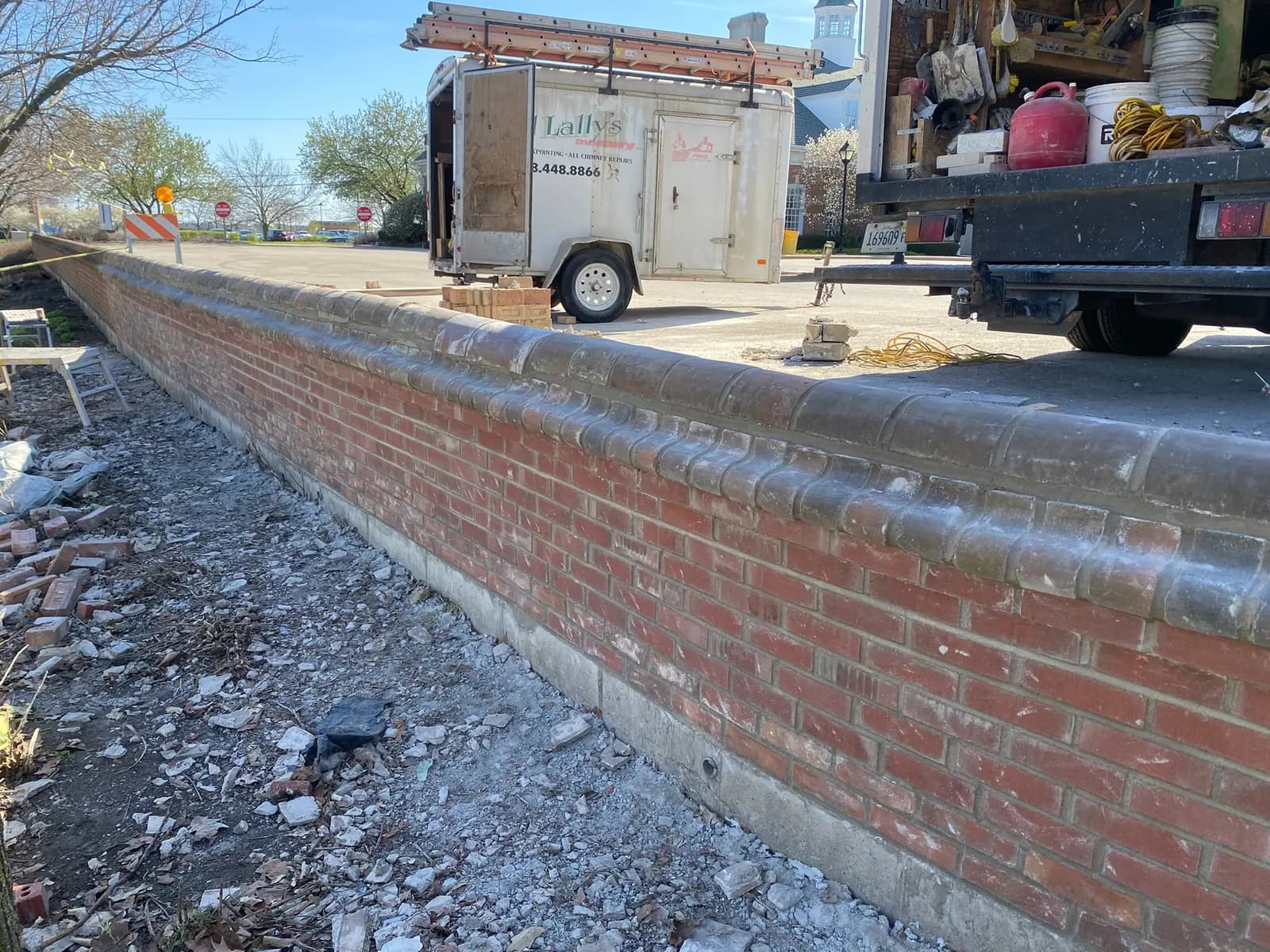
Salvaged Brick: Where Matching Brick Really Comes From
When a mason says they will source a match for your hundred-year-old brick, that brick comes off a demolished Chicago-area building — because the units in your wall stopped being manufactured decades ago. Reclaimed brick from houses, two-flats, warehouses and factories is cleaned, sorted and stocked by regional salvage yards, and restoration masons maintain relationships with those sources because matching work depends on them. Emerald Masonry LLC sources and matches brick on repairs across Chicago and the Chicagoland suburbs. Family-owned, licensed and insured, career masons with decades of experience, free on-site estimates. Call (708) 288-1696.
Homeowners are often surprised by this. It sounds improvised — you are putting used brick in my house? But on a pre-1940 wall, salvaged brick is usually not the compromise. It is the correct material, and new brick is the compromise.
Here is why.
Matching Is Four Things, Not Two
Most people assume matching means color and size. A replacement unit actually has to match on four dimensions, and the two nobody thinks about are the ones that determine whether the repair survives.
| What must match | Why it matters | |---|---| | Size | Brick dimensions changed across eras; an off-size unit throws the coursing and the joint widths | | Color and texture | The visible match — what you notice from the sidewalk | | Absorption | How much water the unit takes on relative to its neighbors | | Hardness | How it behaves under freeze-thaw stress beside the original units |
Get size and color right and absorption and hardness wrong, and the repair looks perfect on day one. Then it behaves differently from the wall around it through every wet-freeze cycle. A dense modern unit set among soft old brick does not absorb or move the same way, and the stress goes into the neighboring original units.
That is the argument for salvage in one sentence: brick from the same era shares the original's softness and absorption, not just its appearance.
Chicago Common Brick: The Reason Salvage Exists Here
Chicagoland has a specific material problem that makes this more acute than in most cities.
Chicago common brick — the soft, salmon-and-buff colored brick made from local clay roughly between the 1870s and the 1930s — was fired at lower temperatures than face brick and is dramatically more porous. It was utility material: the inner wythes of solid masonry walls, plus side walls, rear elevations, alley faces, coach houses and garages.
It has not been manufactured in decades. There is no new equivalent. If your side wall or rear elevation is common brick and units have spalled, salvage is the only source that exists.
The same is true of a great deal of period face brick — regional colors, sizes and textures that went out of production generations ago.
Where the Brick Comes From
Reclaimed brick enters the supply chain a few ways:
- Building demolition — houses, two-flats, three-flats, courtyard buildings taken down across the city and older suburbs.
- Industrial deconstruction — warehouses, factories and mill buildings, often the source of the largest and most consistent lots.
- Institutional demolition — schools, churches and civic buildings.
- Partial demolition — a rear addition removed, a coach house taken down, a wall opened for an addition.
- Contractor stock — masons who salvage sound brick off their own jobs and hold it.
It is then cleaned (old mortar removed), sorted by size, color and condition, and culled — cracked, heavily spalled and crumbling units are discarded rather than sold.
One practical consequence: availability varies. A match that is plentiful this month may be gone next month, which is why sourcing time belongs in the project schedule rather than being discovered mid-job.
How a Mason Actually Finds Your Match
- Take a sample. A sound unit removed from an inconspicuous spot — ideally a hidden elevation — travels to the yards.
- Size first. If the dimensions do not work, nothing else matters; the coursing will not line up.
- Then color and texture, compared in daylight rather than under yard lighting.
- Then absorption and hardness — assessed by era, appearance and, in the field, how quickly a splash of water soaks in.
- Check quantity. Enough for the repair plus a margin, because more damage is routinely found once work starts.
- Buy the lot. Salvage stock is finite; a partial purchase risks not finding the rest.
- Blend if needed. Where no single unit matches, distributing two or three close ones across the repair area usually reads better than a uniform near-miss.
When No Match Exists
It happens, and there are established answers.
Blend. Several close units distributed across the area, which the eye reads as natural variation rather than as a patch.
Relocate original material. This is the best move and it is standard restoration practice: take sound original brick from a hidden elevation — a rear wall, a section behind a garage, an area below grade — use it for the visible repair, and put the imperfect modern match where nobody looks. The public face keeps original material.
Accept it where it does not show. A rear or alley elevation does not need the same match a front facade does, and pretending otherwise just spends money.
On stone, use a dutchman — cutting out the damaged section and fitting matched new stone into the original unit, covered in our limestone and sill repair work.
The Mortar Has to Follow the Brick
Sourcing the right brick and then setting it in the wrong mortar undoes the whole exercise.
The governing rule: mortar must be softer than the brick it holds. Mortar is the sacrificial layer — it absorbs movement and moisture stress and wears out first, because replacing mortar is cheap and replacing century-old brick is, as this entire article demonstrates, genuinely difficult.
So soft salvaged brick needs a lime-based or lime-modified mix. Standard Type S on soft historic brick inverts the wall's design: the joints become the strong element, freeze-thaw stress goes into the brick faces, and they spall within a few winters — including the salvaged units you just spent weeks sourcing.
Color and sand matter for appearance. Hardness determines whether the repair protects or damages the wall.
Modern Brick: When New Is Right
None of this argues against new brick where new brick belongs.
On post-war and modern veneer, a current-production match is often available and entirely appropriate — the wall was built with machine-made, dense, uniform units and a comparable modern brick behaves the same way. Manufacturers keep long-running lines, and many 1970s–2000s Chicagoland subdivision brick can still be matched new or near-new.
The problems arise at the discontinued end: 1980s and 90s colors that had short production runs, and any unit where the manufacturer is gone. Those land back in salvage territory.
Preparing Salvaged Brick Before It Goes in the Wall
Reclaimed brick does not arrive ready to lay. What happens between the salvage yard and your wall matters as much as the sourcing.
Old mortar has to come off. Every salvaged unit carries residue from its previous life, and it has to be cleaned back to sound brick face so the new mortar bonds to brick rather than to a hundred-year-old crust. This is done by hand or with light mechanical cleaning — never by sandblasting, which strips the fired outer skin and turns a durable salvaged unit into an absorbent one.
Units get culled again on site. Yard sorting catches the obvious failures, but a mason working the pallet will pull additional brick that is cracked through, spalled on the good face, or noticeably softer than the rest. Expect a percentage of any lot to be unusable — which is why the quantity ordered should exceed the count needed.
Faces get selected. A salvaged brick often has one face in better condition than the other, and part of the craft is choosing which face goes outward and orienting each unit so its best surface reads to the street.
Color gets distributed, not clustered. Old brick varies naturally, and the eye reads a random distribution as original while it reads a concentrated patch of one tone as a repair. Masons deliberately mix from across the pallet as they set.
And the units get wetted appropriately before laying. Highly absorbent old brick will otherwise pull water straight out of fresh mortar, starving the mix and weakening the bond — a real failure mode on soft salvaged material specifically.
Warning Signs of a Bad Match
- A patch you can see from the street — right general color, wrong tone or texture.
- Joints that do not line up with the surrounding coursing, indicating an off-size unit.
- New brick sitting proud or recessed from the original wall plane.
- A band of spalling around a repair a few years old — the classic signature of a mortar or absorption mismatch.
- Uniform new brick in a wall whose original units vary naturally in color.
- Bright, clean mortar against weathered joints, tooled to the wrong profile.
Chicagoland Context
This matters more here than in milder climates for the same reason everything masonry does: dozens of freeze-thaw cycles each winter, lake-effect moisture keeping north elevations damp, road salt at grade, and a housing stock — brick bungalows, two-flats, greystones, worker cottages, courtyard buildings — that is overwhelmingly soft, absorbent and a century old.
A mismatched unit in a mild climate is a cosmetic issue. Here it is a unit that behaves differently through a hundred freeze cycles a year, in a wall where its neighbors are already at the edge of what they can take.
What Drives Cost
- Number of units needing replacement.
- Match difficulty — unusual color, discontinued size, or scarce salvage.
- Sourcing time, which affects scheduling more than price.
- Height and access — staging or a lift on upper elevations.
- Underlying cause — a rusting lintel or failed sill that must be fixed first.
- Extent of accompanying joint work.
Sourcing is rarely the dominant line item. Labor and access usually are — which is another argument for getting the match right, since redoing the work means paying for those twice.
Related Services
Brick replacement, brick repair, tuckpointing and repointing, historic masonry restoration, limestone and sill repair and chimney repair.
The Bottom Line
The brick that matches your 1924 bungalow is sitting in a salvage yard on the South Side right now, having come off a building that did not survive. That is not a workaround — it is how restoration works in a city whose original brick supply closed generations ago.
What to ask before anyone sets a unit into your wall: where is the replacement coming from, how was it matched, and what mortar is going around it. A mason who can answer those three specifically is going to give you a repair you cannot find afterward. One who plans to grab a pallet of whatever is closest at the supply house is going to give you a patch you will notice every day.
Emerald Masonry LLC is a family-owned, licensed and insured masonry contractor serving Chicago and the Chicagoland suburbs led by career masons with decades of hands-on experience in tuckpointing, chimney repair, brick repair and replacement, lintel and parapet repair, foundation and limestone/sill repair, caulking, sealing, and commercial, residential and historic masonry restoration.
Free on-site estimates. Call (708) 288-1696 or request an estimate.
Frequently Asked Questions
Where does salvaged brick actually come from?
From demolished and deconstructed buildings across the Chicago area — houses, two-flats, warehouses, factories and institutional buildings taken down and their brick reclaimed, cleaned and sorted. Regional salvage yards and masonry suppliers stock it, and restoration masons keep relationships with those sources because matching work depends on them.
Why not just use new brick that looks the same?
Because looking the same is not behaving the same. A replacement unit needs to match the original's absorption and hardness as well as its size, color and texture — a denser modern brick set among softer old units takes on water differently through freeze-thaw and can stress its neighbors. On pre-1940 walls, salvage is frequently the technically correct answer.
Is salvaged brick more expensive than new brick?
Per unit it often is, and sourcing takes time because availability varies. But it is usually a small part of a repair's total cost compared with labor and access, and a mismatched repair that has to be redone is far more expensive. On a visible elevation, the match is most of what you are paying for.
Can Chicago common brick still be bought new?
No — it has not been manufactured for decades. Chicago common brick was made from local clay roughly between the 1870s and 1930s and fired at lower temperatures than face brick, so it is softer and far more porous. Salvage is the only real source, which is why it is stocked and traded specifically.
How do masons find a match for an unusual brick?
By taking a sample unit to salvage yards and suppliers and comparing against stock, checking size first since brick dimensions changed across eras, then color, texture and absorption. Where no exact match exists, blending several close units across the repair area often reads better than a single uniform near-miss.
What if no match can be found at all?
There are a few options: blend the closest available units, relocate original brick from a hidden elevation to the visible one and put the imperfect match where nobody sees it, or on stone use a dutchman insert. Relocating original material to the public face is a standard restoration move and usually gives the best result.
Does the mortar matter as much as the brick when matching?
Yes, and in structural terms more. Mortar must be softer than the brick it holds, so soft salvaged brick needs a lime-based mix rather than a hard modern mortar that would spall the faces. Color and sand matter for appearance, but hardness is what determines whether the repair damages the wall.
Is reclaimed brick as strong as new brick?
For repair purposes the question is compatibility rather than absolute strength — you want a unit that behaves like the ones around it. Sound salvaged brick that has already survived a century of Chicago freeze-thaw has demonstrated its durability; units that are cracked, heavily spalled or crumbling are culled during sorting.
How much does brick matching and replacement cost?
It depends on how many units are involved, how difficult the match is, the height and access, and whether the water source that caused the damage also needs correcting. Sourcing an unusual match adds time. Emerald Masonry gives free on-site estimates with a written scope.