
Chimney Repair · Chicagoland, IL
Should I Remove My Chimney Instead of Repairing It?
If your fireplace has been gas or unused for years and the stack needs a rebuild, removal is a legitimate option — but it is not automatically the cheap one, and there are three ways to do it with very different costs and consequences. Here is how the decision actually works, what removal involves, and when repairing is still the better call.
2026-08-03
Quick Answer
Removing a chimney is a legitimate option when the fireplace is unused, nothing vents through it, and the stack needs a full rebuild — but there are three different removal scopes (above the roofline, to the attic, or full demolition) with very different costs, and removal is not automatically cheaper than repair. Emerald Masonry LLC assesses both options across Chicagoland. Family-owned, career masons, licensed and insured. Call (708) 288-1696.
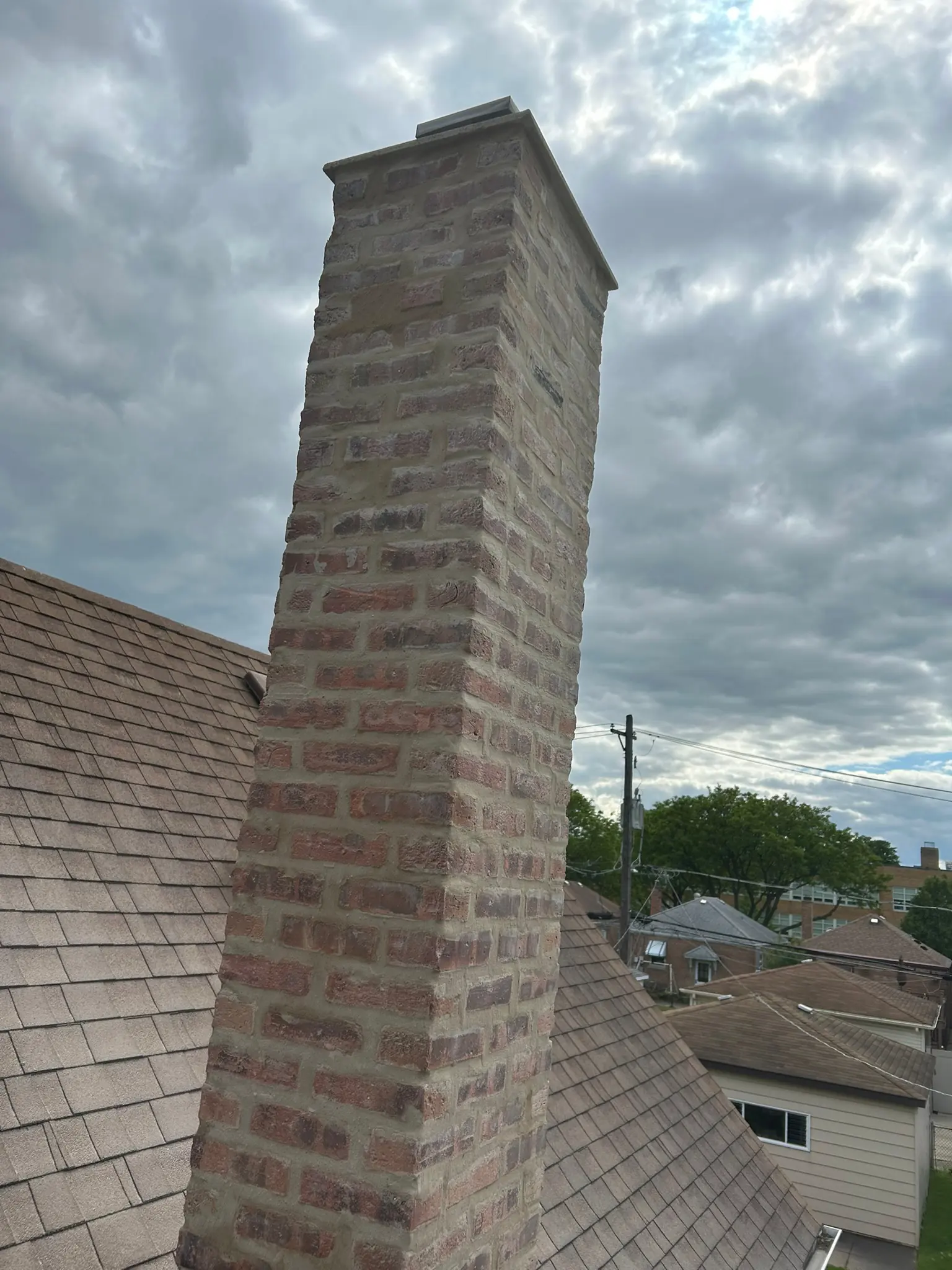
Should You Remove the Chimney Instead of Repairing It?
Removal is a legitimate option when three things are true: the fireplace is unused, nothing vents through the flue, and the stack needs a full rebuild rather than a repair. But removal is not automatically cheaper — and there are three very different removal scopes with very different costs. Emerald Masonry LLC assesses both paths honestly across Chicago and the Chicagoland suburbs, including telling you when repairing is the better call. Family-owned, licensed and insured, career masons with decades of experience, free on-site estimates. Call (708) 288-1696.
This question comes up constantly, and it comes up for a good reason. A very large share of Chicagoland fireplaces have been converted to gas or simply abandoned, while the masonry stack above them keeps deteriorating and keeps costing money. At some point a homeowner reasonably asks why they are maintaining a structure they never use.
Fair question. Here is how to answer it properly.
First: Is the Chimney Actually Doing Anything?
Before anything else, establish what — if anything — the flue serves.
- A wood-burning fireplace you still use. The chimney is functional; this is a repair conversation.
- A gas fireplace insert. Depends entirely on whether it vents through the masonry flue or has its own direct-vent system. Many do not use the masonry chimney at all.
- A furnace or water heater. Very common in older Chicagoland homes, and this changes everything. The venting must be rerouted to a code-compliant alternative before any masonry comes down. That is an HVAC scope, and it has to be resolved first.
- Nothing at all. A genuinely orphaned flue. This is where removal becomes a real option.
If you are unsure, find out before you get quotes. It is the single fact that determines whether removal is even on the table.
Why Unused Chimneys Deteriorate Faster
Worth understanding, because it explains why this decision arrives sooner than people expect.
A chimney is the most exposed masonry on any building — standing above the roofline, weathered on four sides, with no heated interior drying it from behind. Everything else on the house has a roof over it and warm air behind it.
An unused chimney loses its last advantage. A working flue gets periodically heated, which drives moisture out of the masonry. An abandoned one never does. It absorbs rain, snow and — if it serves a gas appliance — condensing flue gases, and simply stays damp through every one of the dozens of freeze-thaw cycles Chicagoland delivers each winter.
Gas conversions make it worse specifically: gas produces cooler, wetter flue gases that condense inside the stack, often in a flue oversized for the appliance.
So the chimney that nobody uses is frequently the one that fails first.
The Three Removal Options
This is the part homeowners rarely get explained, and the cost differences are enormous.
| Option | What it involves | Relative cost | Disruption | |---|---|---|---| | 1. Remove above the roofline | Take the stack down to just below the roof, frame, deck, roof and flash the opening | Moderate — often comparable to rebuilding | Low; exterior work only | | 2. Remove to attic / ceiling level | Everything above, plus demolition down through the attic space | Higher | Moderate; interior access needed | | 3. Full demolition | The entire chimney, fireplace, hearth and often the footing, through every floor | Highest by a wide margin | Major; framing, floors, walls, finishes |
Option 1 is what most people actually mean, and it is what we do most often. The stack disappears from the roofline, the roof is closed properly, and the chimney below remains — inert, dry, and no longer a maintenance item.
Options 2 and 3 involve structural framing, interior finishes and sometimes floor patching, and they are renovation projects rather than masonry repairs.
Removal Is Not Automatically the Cheap Option
This is the misconception worth correcting.
A large portion of what you pay for a chimney rebuild is not the brick. It is access and staging, demolition of the failed stack, debris handling, roof work, protection and cleanup — and removal requires nearly all of the same items. Take the stack down and you still have setup, staging, demolition, debris removal, framing, decking, roofing and flashing.
So removing above the roofline is frequently in the same range as rebuilding, and occasionally more once the roofing work is properly priced.
Where removal genuinely wins on cost is the long run: a removed chimney has no future maintenance, no crown, no flashing, no repointing, ever again.
When Removal Makes Sense
- The flue is genuinely unused and nothing vents through it.
- The stack needs a full rebuild, not a repair — it leans, joints have failed through their depth, or brick is spalling across multiple faces.
- The chimney is on a secondary or hidden elevation where its absence will not read architecturally.
- The house is modern, where the chimney is not a period feature.
- You have repaired it repeatedly and it keeps failing.
- The stack is tall and hard to access, making every future maintenance visit expensive.
When Repairing Is the Better Call
- Anything vents through it. Not optional.
- You use the fireplace, or want the option.
- The chimney is on a period home where it is an architectural feature — a Victorian, greystone, bungalow or historic-district property. Removing a corbelled stack from a 1910 house changes the building's face.
- The problem is on the repair ladder's lower rungs: a cap, a cracked crown, failed flashing, or repointing. These are modest repairs, and jumping straight to removal is an overreaction.
- The chimney is sound and the flashing is the leak. We are called to quote rebuilds regularly and find perfectly good stacks with sixty-year-old flashing.
That last one is worth emphasizing. Get the diagnosis before the decision.
The Repair Ladder, for Context
| Repair | When it applies | |---|---| | Chimney cap | Any open or unused flue | | Crown repair or rebuild | Cracked or crumbling top slab | | Flashing replacement | Ceiling stains near the chase; rusted or tar-patched metal | | Repointing | Receded, sandy joints; brick sound | | Brick replacement | Spalled units on an otherwise sound stack | | Rebuild above roofline | Lean, deep joint failure, widespread spalling | | Removal | All of the above would apply and the chimney serves nothing |
Removal belongs at the bottom of this list, not the top.
How Removal Is Actually Done
- Confirm nothing vents through the flue — and reroute with an HVAC contractor first if something does.
- Permit as the municipality requires.
- Protection and staging — roof, landscaping, walkways, neighboring property.
- Demolition from the top down, controlled, with debris contained rather than dropped.
- Salvage sound brick where the homeowner wants it, or where it can be reused elsewhere on the property.
- Frame and deck the roof opening to match the surrounding structure.
- Roof and flash the transition so it is watertight and visually consistent.
- Cap and seal what remains below, so the abandoned chase stays dry.
- Cleanup and photo documentation.
Steps 6 and 7 are not optional and are not cheap. A removal quote that does not address closing the roof is an incomplete quote.
What Happens to the Fireplace Inside?
With the most common removal — taking the stack down above the roofline — nothing changes inside the house. The fireplace, hearth, mantel and the chase running up through the building all stay exactly where they are. What disappears is the exposed masonry above the roof and the maintenance that came with it.
The chase below becomes a sealed, dry, inert shaft. That is fine, provided two things are handled: the top is properly capped and weatherproofed so the remaining masonry does not become a water collector, and the flue is genuinely not serving anything.
Homeowners sometimes assume removal means losing the fireplace. It usually does not. A decorative fireplace and mantel can remain untouched, and many people keep them precisely because they are a feature of the room.
If you do want the fireplace gone as well, that is Option 2 or 3 — removal down through the interior, which brings framing, drywall, flooring and finish work into scope. That is a renovation project with a masonry component, not a masonry repair, and it should be priced and planned as one.
The practical takeaway: decide about the roofline and the interior separately. They are different projects with very different costs, and conflating them is how people talk themselves out of a straightforward fix.
Signs Your Chimney Needs a Decision Soon
- A visible lean, or a gap opening between the chimney and the house — treat as urgent.
- Brick or mortar debris in gutters, on the roof, or in the yard.
- Spalling faces across multiple sides of the stack.
- Mortar you can rake out with a screwdriver.
- White efflorescence staining — water moving through the masonry.
- A cracked or crumbling crown.
- Rusted or tar-patched flashing.
- Water stains on ceilings or in the attic near the chase.
- Daylight visible through the stack from the attic.
- Repeated repairs that have not held.
Resale: The Honest Answer
It depends on the house.
On a modern home, removing a non-functional stack is rarely an issue and can be a mild positive — one less thing for an inspector to flag.
On a period home, the chimney is often part of what buyers are buying. Removing a corbelled stack from a Victorian or a chimney-and-fireplace from a bungalow removes a feature people came for.
What is unambiguously true either way: a neatly removed chimney with a properly closed roof shows far better than a visibly deteriorating one. Inspectors flag crumbling chimneys, and buyers price that flag generously in their own favor.
Chicagoland Context
The reason this question is so common here is a combination of climate and housing stock. Dozens of freeze-thaw cycles per winter with no lake buffer in most of the suburbs. Enormous numbers of brick bungalows, two-flats, greystones and post-war ranches with original masonry chimneys now sixty to a hundred and twenty years old. And a widespread shift to gas inserts, forced-air systems and direct-vent appliances that left a great many flues doing nothing.
The result: thousands of Chicagoland houses maintaining a structure that has quietly become optional.
Related Services
Chimney repair, tuckpointing, brick repair, brick replacement, masonry sealing and historic masonry restoration.
The Bottom Line
Ask three questions in order. Does anything vent through it? If yes, the conversation is over — repair it. Do you use the fireplace, or want to? If yes, repair it. Does it need a full rebuild rather than a crown, cap, flashing or repointing? If no, do the smaller repair and stop there.
Only if you get to the bottom of that list is removal the right conversation — and even then, expect it to cost more than people assume, because taking a chimney down and closing a roof properly is real work.
What we will not do is quote you a rebuild on a stack that needs flashing, or a removal on a chimney your water heater is venting through.
Emerald Masonry LLC is a family-owned, licensed and insured masonry contractor serving Chicago and the Chicagoland suburbs led by career masons with decades of hands-on experience in tuckpointing, chimney repair, brick repair and replacement, lintel and parapet repair, foundation and limestone/sill repair, caulking, sealing, and commercial, residential and historic masonry restoration.
Free on-site estimates. Call (708) 288-1696 or request an estimate.
Frequently Asked Questions
Is removing a chimney cheaper than repairing it?
Not automatically. Removing the stack above the roofline is often comparable to rebuilding it, because much of the cost is access, demolition, debris handling and the roofing work to close the opening. Full removal down through the house is substantially more expensive than almost any repair. It becomes the economical choice mainly when the chimney would need a full rebuild and serves no function.
Can I remove a chimney if my furnace vents through it?
Not without addressing the venting first. Many older Chicagoland homes vent a furnace or water heater through the masonry chimney, and removing it means rerouting that venting to a code-compliant alternative. That is an HVAC scope that has to be resolved before any masonry comes down.
What are the options if I do not want to rebuild?
Three, in increasing scope: remove the stack above the roofline and close the roof; remove down to the attic or ceiling level; or full demolition through the house including the fireplace and footing. The first is by far the most common and least disruptive, and it is what most homeowners actually mean by removal.
Does removing a chimney hurt resale value?
It depends on the house and the buyer. Removing a decorative or non-functional stack from a modern home is rarely an issue, while removing a chimney and fireplace from a period home can remove a feature buyers expect. A neatly removed chimney with a properly closed roof is far better than a visibly deteriorating one either way.
Is a leaning chimney an emergency?
It should be treated seriously. A leaning stack has lost structural integrity, and masonry above a roof, gangway, driveway or walkway is a safety and liability issue rather than a maintenance item. Get it assessed promptly and keep people out from under it in the meantime.
What happens to the roof where the chimney was?
The opening has to be framed, decked and roofed to match, with proper flashing at the transition. This is a real part of the job and should appear in the scope and the price — a removal quote that does not address closing the roof is incomplete.
Do I need a permit to remove a chimney?
Usually yes, and requirements vary by municipality, especially where structural elements or venting are involved. Landmark and historic-district properties add review. A contractor working in your town should know and should say so in the proposal.
My chimney is only used for a gas fireplace insert — should I keep it?
That depends on whether the insert vents through the masonry flue or has its own direct-vent system. If the masonry flue is genuinely unused, it is a maintenance liability rather than an asset, and removal above the roofline is a reasonable option. If it is still doing work, it needs to be maintained.