
Tuckpointing & Repointing · Chicagoland, IL
Spot Repointing vs. Full Tuckpointing — When Patching Saves Money and When It Wastes It
Do you need to repoint the whole wall, or just the bad sections? It's one of the most common — and most consequential — questions on a masonry estimate. Here's how to tell which one your building actually needs, and how to avoid paying for the wrong one.
2026-06-17
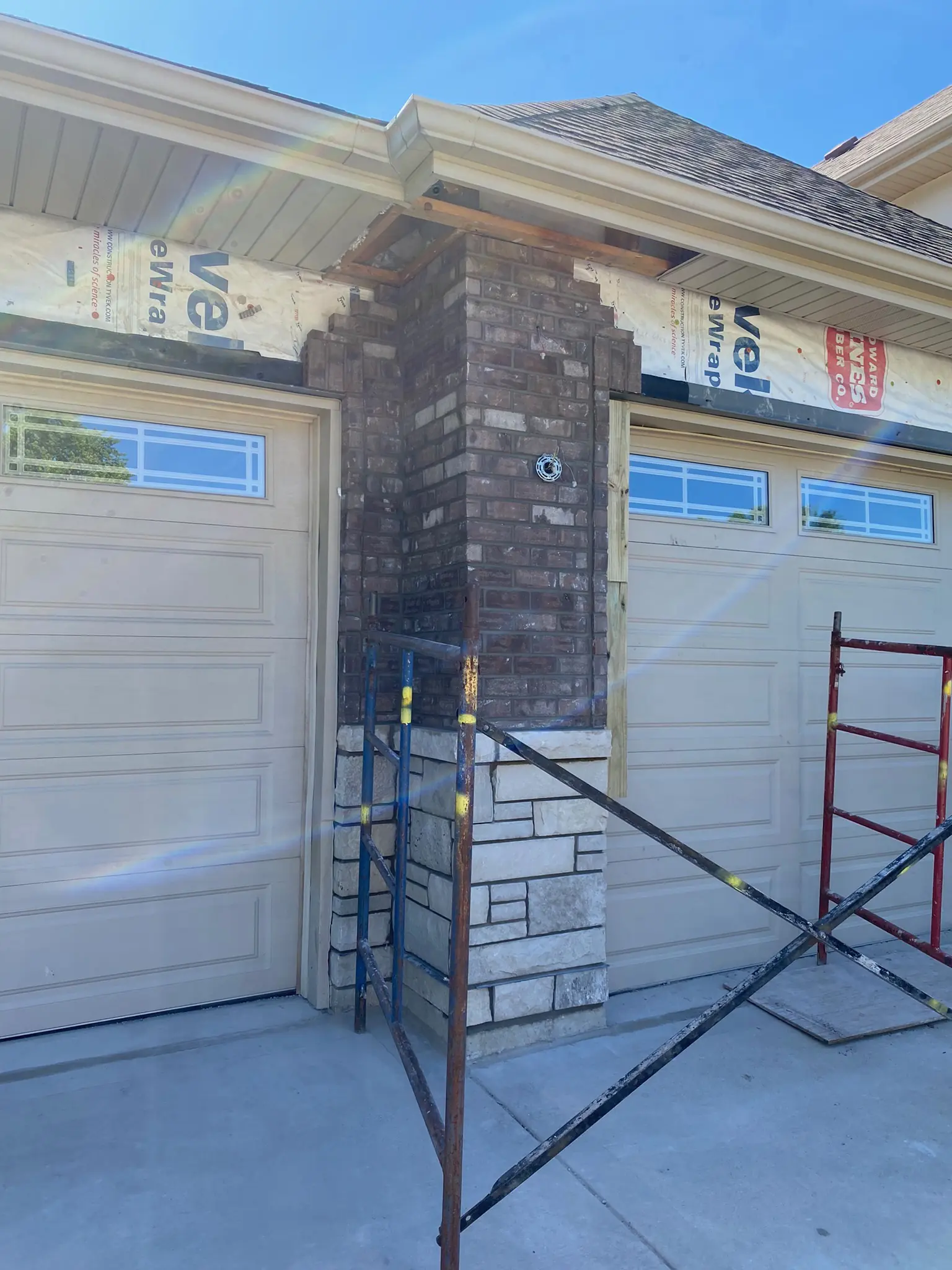
One of the first real decisions on any tuckpointing project is also one of the most consequential for the budget: do you repoint the whole wall, or just the failing sections? Get it right and you spend money exactly where it is needed. Get it wrong in one direction and you overpay for sound mortar you did not need to touch. Get it wrong in the other and you pay twice — once for the patch, and again when the rest of the wall fails a year later and the crew has to come back.
This post lays out how to think about that decision, so property managers and building owners can read an estimate with a clear head instead of guessing.
First, What the Two Terms Mean
- Spot repointing (also called partial or selective repointing) means grinding out and replacing mortar only in the joints that have actually failed — a band along one elevation, the areas around windows, the weather-exposed corners — while leaving sound joints alone.
- Full tuckpointing means repointing an entire wall or elevation, sound joints and failed joints alike, to bring the whole surface to one consistent, renewed condition.
Both are legitimate. Neither is automatically the "honest" choice or the "upsell." The right answer depends entirely on the condition of the wall.
When Spot Repointing Is the Right Call
Spot repointing makes sense when mortar failure is genuinely localized and the rest of the wall is sound. That happens more often than you might think, because masonry does not weather evenly. Some classic cases:
- A single bad elevation. The south and west faces take the brunt of driving rain and sun; the north face takes the brutal freeze-thaw. It is common for one or two elevations to fail decades before the others.
- Concentrated water exposure. Joints under a failed downspout, around a leaking window, or below a bad coping section fail in a tight cluster while the surrounding wall is fine.
- A relatively young wall with isolated defects. A newer building with one problem area does not need its good mortar disturbed.
In these situations, spot repointing is the cost-effective, correct choice — provided the new mortar is matched to the existing wall so the patched areas blend in and perform the same.
When Full Tuckpointing Is the Smarter Spend
Full repointing earns its higher price when the failure is widespread, when the wall is old enough that "the good joints" are not far behind the bad ones, or when appearance matters. Consider doing the whole elevation when:
- Mortar is failing across most of the wall, not in one patch. If you would be spot-repointing 60–70% of an elevation anyway, doing the whole thing is usually better value and a cleaner result.
- The wall is old and the mortar is uniformly tired. When the original mortar has reached the end of its service life everywhere, patching the worst spots just means you are back next year for the next-worst spots. Repointing the elevation once is cheaper than five trips.
- Appearance is a priority. Spot repointing, even with good mortar matching, can leave subtle differences between old and new joints. On a prominent facade where uniform appearance matters, full repointing gives a consistent look.
- You are already paying for access. This is the one most people miss. On a multi-story building, a large share of the cost is the scaffolding, lift, or swing stage — not the pointing itself. Once that access is up and paid for, the marginal cost of doing the whole elevation instead of a few bands is much smaller than doing it as two separate mobilizations later.
The Access Cost Is the Hidden Pivot
That last point deserves its own moment, because it quietly drives a lot of these decisions. On a single-story building you can reach from a ladder, spot repointing is cheap and sensible. On a four-story building where you need a swing stage or full scaffolding, the access can be a major line item. Mobilizing that equipment twice — once for a patch now, once for the rest later — can easily cost more than doing the full elevation in one mobilization.
So the real question is often not just "how much mortar is bad?" but "what does it cost to get up there, and how soon will I be back?" A good contractor will factor that into the recommendation instead of just quoting the smallest possible scope.
How to Read an Estimate That Offers Both
If a contractor gives you options, here is how to evaluate them:
- Ask what percentage of the joints are actually failing. If it is a small, contained share, spot repointing is reasonable. If it is most of the wall, lean toward full.
- Ask about the access line. Find out how much of the cost is getting to the wall versus doing the work. That tells you whether "do it all now" is genuinely cheaper than phasing.
- Ask about mortar matching. Spot repointing only works well if the new mortar matches the old in strength and color. If they cannot match it confidently, the spot work will stand out and may not perform the same.
- Ask what they would do on their own building. A straight contractor will tell you when spot work is enough and when it is throwing good money after bad.
For more on reading the whole document, our guide on how to read a masonry contractor's scope of work breaks down the line items, and how to evaluate a masonry contractor bid covers comparing competing proposals.
The Trap to Avoid in Both Directions
The mistake going one way: insisting on spot repointing to save money on a wall whose mortar has uniformly failed, then paying for repeated visits as each new section gives out. The mistake going the other way: being talked into full repointing of an elevation where only one contained area is bad and the rest has decades left. Both waste money. The cure for both is an honest assessment of how much mortar is actually failing and a contractor willing to scope the work to the real condition.
When the foundational work of tuckpointing is matched to what the wall genuinely needs — and the mortar is matched to the wall — both spot and full repointing do exactly what they should.
Get a Straight Recommendation
If you are looking at a tuckpointing estimate and are not sure whether you are being quoted too much or too little scope, get a second set of eyes on the wall. Contact Emerald Masonry or call (708) 288-1696 for a free on-site assessment anywhere in Chicagoland. With more than decades of masonry experience, we will tell you honestly whether your wall needs spot repointing, a full elevation, or something in between — and why.