
Historic Masonry Restoration · Chicagoland, IL
Terra Cotta and Cast Stone Facade Repair in Chicago: What Building Owners Need to Know
Chicago is a terra cotta city — the glazed ornamental cladding on thousands of storefronts, churches, apartment buildings and civic landmarks is a hollow, anchored system, not solid stone. When it fails it fails differently from brick, and it fails downward onto sidewalks. This guide explains how terra cotta and cast stone are built, why they crack and spall, and how repair actually works.
2026-07-30
Quick Answer
Architectural terra cotta is hollow, glazed, kiln-fired clay cladding anchored to a building's structure with steel, and cast stone is a manufactured concrete masonry unit imitating carved stone — both fail from water entering behind the units and corroding the anchors, which cracks and dislodges the pieces. Repair means anchor replacement, patching, dutchman units or replication, not simple patching. Emerald Masonry LLC restores ornamental facades across Chicagoland. Family-owned, career masons, licensed and insured. Call (708) 288-1696.
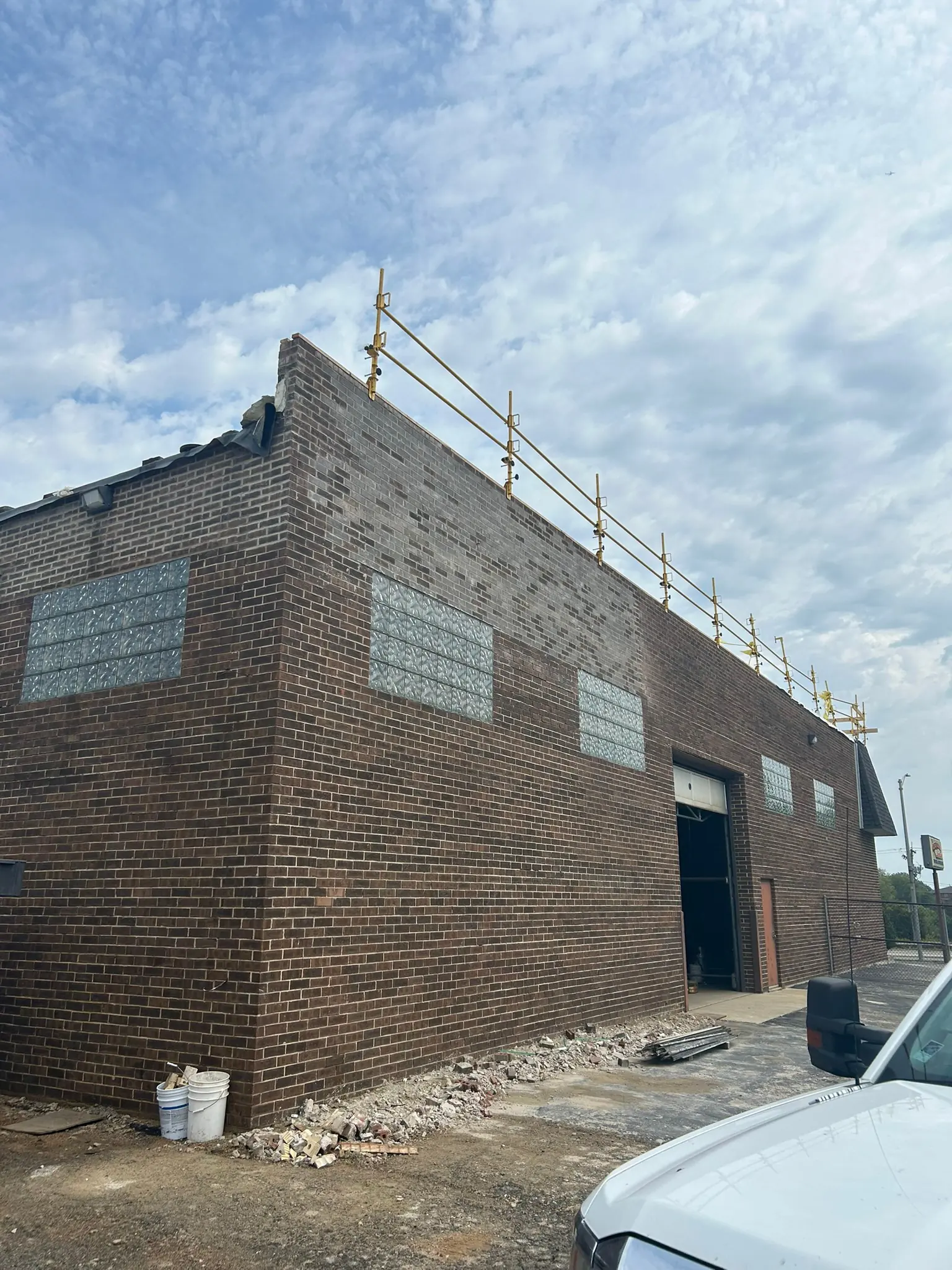
Terra Cotta and Cast Stone Facade Repair in Chicago
Architectural terra cotta is hollow, glazed, kiln-fired clay cladding anchored to a building's structure with steel — not solid stone. Cast stone is a manufactured concrete unit cast to imitate carved stone. Both fail the same fundamental way: water gets in behind the units, corrodes the steel anchors and shelf angles holding them, and the expanding rust cracks the pieces and eventually pushes them off the building. Repair means addressing the anchors and the water, not just patching the visible crack. Emerald Masonry LLC restores ornamental facades on commercial, church, institutional and multi-family buildings across Chicago and the Chicagoland suburbs. Family-owned, licensed, bonded and insured, career masons with decades of experience, free on-site assessments. Call (708) 288-1696.
Chicago is, to an unusual degree, a terra cotta city. Between roughly 1880 and 1940 the material was everywhere: it was fireproof, lighter than stone, could be molded into any ornament a draftsman could draw, and could be produced locally. It clads storefronts, apartment buildings, theaters, churches, schools, banks and civic landmarks across the city and the older suburbs.
A century later, an enormous quantity of that material is reaching the end of its original anchoring system's life at the same time — and unlike a failing brick wall, a failing terra cotta cornice comes down onto a sidewalk.
How These Facades Are Actually Built
This is the part that changes everything about the repair, and it is the part most building owners have never been told.
Architectural terra cotta
Each piece is a hollow shell of fired clay with a glazed exterior face. Internal webs stiffen it. The unit is hung on the building's structure with steel anchors, hooks and ties, often bearing on steel shelf angles, and the cavity behind is partially filled with mortar. The glaze is the weather barrier; the clay body behind it is porous.
So a terra cotta facade is not a wall in the way a brick wall is a wall. It is a cladding system — thin decorative units, a void, steel anchors, and structure behind. When people say a terra cotta piece "fell off the building," that is literally what happened: it was hung, and the hanger failed.
Cast stone
Cast stone is a manufactured concrete masonry unit, cast in molds with selected aggregates to imitate quarried limestone. It became popular in the early 20th century because it was cheaper and faster than carving stone and could be reproduced identically. Many pieces contain internal reinforcing steel.
Cast stone weathers like concrete, not like natural stone: it carbonates, its surface erodes, and where internal reinforcement corrodes it produces rust staining and spalling from within.
Why this matters
| | Solid limestone | Cast stone | Architectural terra cotta | |---|---|---|---| | Material | Quarried natural stone | Molded concrete | Hollow fired clay, glazed | | Structure | Solid unit, often bearing | Solid unit, often reinforced | Hollow shell, anchored | | Primary failure | Delamination, erosion, joint failure | Surface erosion, rebar corrosion | Anchor corrosion, glaze crazing, spalling | | Falling hazard | Moderate | Moderate | High — units are hung | | Typical repair | Dutchman, patching, repointing | Patching, replication, repointing | Anchor replacement, patching, replication |
Why Ornamental Facades Fail
Water enters. Through crazed glaze, cracked units, open mortar joints, failed sealant, missing or blocked through-wall flashing, and at horizontal surfaces — cornices, sills, belt courses, balustrades, coping — which hold water rather than shedding it.
Steel corrodes. The anchors, ties and shelf angles behind the units rust. Corroding steel expands to several times the volume of the original metal, and there is nowhere for that expansion to go except into the surrounding masonry. This is rust jacking, the same mechanism that lifts brick above a corroding steel lintel, operating behind ornamental cladding where you cannot see it.
Units crack and displace. The expansion cracks the terra cotta from behind. The crack lets in more water. The cycle accelerates.
Freeze-thaw finishes the job. Chicagoland delivers dozens of crossings of the freezing point per winter. Water trapped inside a hollow terra cotta unit or a porous cast stone piece expands about nine percent each time it freezes.
Then a piece comes down. Usually from the highest, most exposed, most ornamental part of the building — cornices and parapet ornament — onto the sidewalk.
Warning Signs on an Ornamental Facade
On the units themselves
- Crazing — the fine hairline network in the glaze, marking the start of the water path.
- Glaze spalling — the glazed face flaking off, exposing the porous clay body.
- Cracked units, particularly cracks running in a consistent direction across several pieces.
- Displaced, tilted or projecting units — a piece no longer flush with its neighbors is a piece whose anchor has failed.
- Rust staining bleeding from joints or from within a unit.
- Missing pieces, or fresh voids where ornament used to be.
On the assembly
- Open, cracked or missing mortar joints and failed sealant between units.
- Cracked or displaced cornice, cap and coping elements.
- Efflorescence on or below the ornamental work.
- Interior water staining on top floors near exterior walls.
- Debris — fragments on the sidewalk, in gutters, on setbacks or on the roof.
- Existing netting or scaffolding left up long-term, which is a containment measure, not a repair.
The Chicago Facade Ordinance Context
Chicago requires periodic exterior wall inspection and reporting for qualifying buildings, with critical examinations on a defined cycle and immediate action where unsafe conditions are found. Ornamental terra cotta, cornices and parapets are among the most frequent sources of unsafe findings, precisely because they are the highest, most exposed and most heavily anchored elements.
For owners and property managers the practical implication is straightforward: treat the facade report's findings as a repair schedule. Deferring a flagged cornice condition does not pause the deterioration; it just moves the work into an emergency, at emergency pricing, potentially with a sidewalk closure attached.
How Repair Actually Works
- Close-up assessment. Ornamental facades cannot be evaluated from the ground. Real assessment means hands-on access — lift, swing stage or scaffold — sounding units to find hollow and delaminated areas, and probing the anchor condition.
- Stabilize immediate hazards. Loose material is removed or secured, and protection is installed below before anything else proceeds.
- Identify and stop the water path. Joints, sealant, flashing, coping and roof drainage. Repairing units while leaving the water path open guarantees a repeat.
- Address the steel. Corroded anchors, ties and shelf angles are exposed, cleaned or replaced with stainless components. This is the actual fix; everything visible depends on it.
- Repair the units. Patching with matched cementitious repair mortars for surface loss; dutchman inserts where a section can be cut out and replaced; pinning and stabilizing cracked units.
- Replicate where necessary. Units beyond saving are replaced in new terra cotta, cast stone or GFRC, matched for profile, color, texture and sheen. This is the most expensive route and is reserved for pieces that cannot be stabilized.
- Repoint and reseal. Matched mortar at joints, correct sealant and backer rod at movement joints.
- Gentle cleaning only. No sandblasting, no high-pressure washing — both destroy glaze and erode cast stone surfaces permanently.
- Document. Photographs and a written record for the owner's files and the next facade report.
Materials and Techniques
Matched cementitious repair mortars tinted and textured to the original; stainless steel anchors, pins and ties replacing corroded originals; new terra cotta, cast stone or GFRC replication units; lime-based and matched mortars for joints on historic assemblies; stainless and copper through-wall flashing; and vapor-permeable sealers where protection is warranted. Never film-forming coatings — a facade assembly with a void behind it must be able to dry.
Related work regularly forms part of the same project: historic masonry restoration, commercial masonry restoration, limestone and sill repair, parapet wall repair, lintel repair and caulking and joint sealant.
What Drives Cost on Ornamental Facade Work
- Access. Frequently the single largest line. Scaffolding, swing stage or lift on an occupied city building, plus sidewalk protection and permits.
- Unit count and repair method. Patching is far less costly per unit than replication.
- Anchor and steel scope. How much steel must be exposed, treated or replaced.
- Replication complexity. Ornate, carved or figural pieces take real craft and lead time to reproduce.
- Lead time on custom units. Replication is manufactured to order.
- Public protection. Netting, canopies, pedestrian routing.
- Occupancy and phasing. Working around tenants, congregations, students or business hours.
- Documentation and coordination with the facade inspection process.
We assess in person and provide a written scope with photographs — the format owners, property managers, church boards and associations need for budgeting and board approval.
Where This Comes Up Across Chicagoland
Commercial storefronts and mixed-use buildings along the city's older retail corridors, where terra cotta surrounds and cornices frame the ground floor. Churches and institutional buildings, where ornamental stone and terra cotta cluster at towers, entrances and parapets — the tallest and most exposed elements on the property. Vintage courtyard and multi-family buildings, where entryway ornament, belt courses and cornices are heavily detailed. Theaters and civic landmarks, where the ornament is the architecture. And greystones, where carved limestone fronts pose closely related problems addressed in our work on limestone and stone facade restoration.
Regionally, the drivers are the same ones that govern all Chicagoland masonry: relentless freeze-thaw cycling, lake-effect moisture keeping north elevations damp, road salt at the base of buildings, and a building stock old enough that original anchoring systems are past their service life.
Maintenance That Prevents Emergencies
- Keep the water out at the top. Coping, cornice flashing, roof drainage and parapet condition protect everything below them.
- Maintain joints and sealant on a cycle rather than after failure.
- Inspect after hard freezes and major storms, and look at what is landing on the sidewalk and in the gutters.
- Sound the units periodically — hollow-sounding terra cotta indicates delamination before anything is visible.
- Never blast or pressure wash glazed or cast surfaces.
- Budget from facade reports rather than reacting to findings.
- Address rust staining immediately — it is the earliest external evidence that the steel behind the facade is going.
The Bottom Line
Terra cotta and cast stone do not fail like brick, because they are not built like brick. They are decorative units hung on steel, and the steel is what fails first, invisibly, years before a crack appears. By the time ornament is visibly displaced, the anchoring behind it has usually been deteriorating for a long time.
That is also the good news: caught early — while the issue is crazing, open joints and staining rather than displaced units — this is a maintenance problem. Caught late, it is a sidewalk closure.
Emerald Masonry LLC is a family-owned, licensed and insured masonry contractor serving Chicago and the Chicagoland suburbs led by career masons with decades of hands-on experience in tuckpointing, chimney repair, brick repair and replacement, lintel and parapet repair, foundation and limestone/sill repair, caulking, sealing, and commercial, residential and historic masonry restoration. We work with property managers, HOAs, churches, building owners and insurance companies.
Free on-site assessments. Call (708) 288-1696 or request an estimate.
Frequently Asked Questions
What is architectural terra cotta?
It is hollow, kiln-fired clay cladding with a glazed outer face, used extensively in Chicago from the 1880s through the 1930s for ornamental facades, cornices, storefront surrounds and entire building fronts. Unlike solid stone, each piece is a hollow shell hung on the building's structure with steel anchors and backfilled mortar. That hollow, anchored construction is why it fails differently from brick or limestone.
What is the difference between cast stone and limestone?
Limestone is quarried natural stone; cast stone is a manufactured concrete product cast in molds to imitate carved stone, widely used from the early 1900s onward because it was cheaper to produce and easier to replicate. Cast stone weathers more like concrete than like stone, and it can suffer rust staining and spalling from corroding internal reinforcing steel.
Why is terra cotta falling off buildings?
Almost always because of water and steel. Water enters through crazed glaze, cracked units or failed joints, reaches the steel anchors and shelf angles behind the units, and corrodes them — and corroding steel expands, cracking the terra cotta from behind and eventually pushing pieces off the building. The visible crack is usually the last stage, not the first.
Is terra cotta repairable or does it have to be replaced?
Much of it is repairable. Depending on condition, units can be patched with matched cementitious repair mortars, stabilized with new stainless anchors, repaired with dutchman inserts, or replicated in new terra cotta, cast stone or GFRC where a unit is beyond saving. Full replication is the most expensive option and is reserved for units that cannot be stabilized.
What does the Chicago facade ordinance require?
Chicago requires periodic exterior wall inspections and reporting for qualifying buildings above a certain height, with critical examinations on a set cycle and immediate action on unsafe conditions. Ornamental terra cotta and cornices are a frequent source of unsafe findings. Owners should treat a facade report's recommendations as a repair schedule, not a formality.
What is crazing on glazed terra cotta?
Crazing is the fine network of hairline cracks that develops in the glaze as it ages and the clay body behind it expands. It matters because it converts a waterproof glazed face into a permeable one, letting water into the hollow unit and toward the anchors. Crazing on its own is not an emergency, but it marks the beginning of the water path.
How much does terra cotta or cast stone facade repair cost?
It varies widely with the number of units, how many need replication versus patching, the height and access required, and whether anchors and shelf angles must be replaced. Access alone — scaffolding, swing stage or a lift on an occupied city building — is often a major component. Emerald Masonry assesses in person and provides a written scope.
Can facade repair be done while the building stays occupied?
Yes, and it usually is. Ornamental facade work on commercial, church and multi-family buildings is routinely staged with protected walkways, netting or sidewalk canopies, and phasing scheduled around business and worship hours. Protecting the public below is part of the scope, not an afterthought.
Who should I call for ornamental facade work — a mason or a restoration specialist?
A masonry contractor experienced with historic and ornamental assemblies, because the work involves anchors, flashing, mortar matching and unit replication rather than simple brick laying. Ask specifically about anchor replacement and unit replication experience. Emerald Masonry LLC has career masons of Chicagoland masonry experience across historic and commercial facades; call (708) 288-1696.