
Masonry Restoration · Chicagoland, IL
Unhappy With a Masonry Repair? How to Tell Cosmetic From Defective
The work is finished, the crew is gone, and something looks wrong. Before you make a phone call you'll regret, it's worth knowing which complaints resolve on their own, which are genuine workmanship defects, and which are the kind that quietly destroys the wall over the next five winters.
2026-08-13
Quick Answer
Some masonry complaints resolve on their own — fresh mortar cures lighter and darkens over weeks, and efflorescence on new work usually clears. Genuine defects include mortar smeared across brick faces, wrong joint profile, shallow preparation, filled weep holes, and mortar harder than the brick, which spalls faces within a few winters. Emerald Masonry LLC provides second-opinion assessments across Chicagoland. Family-owned, career masons, licensed and insured. Call (708) 288-1696.
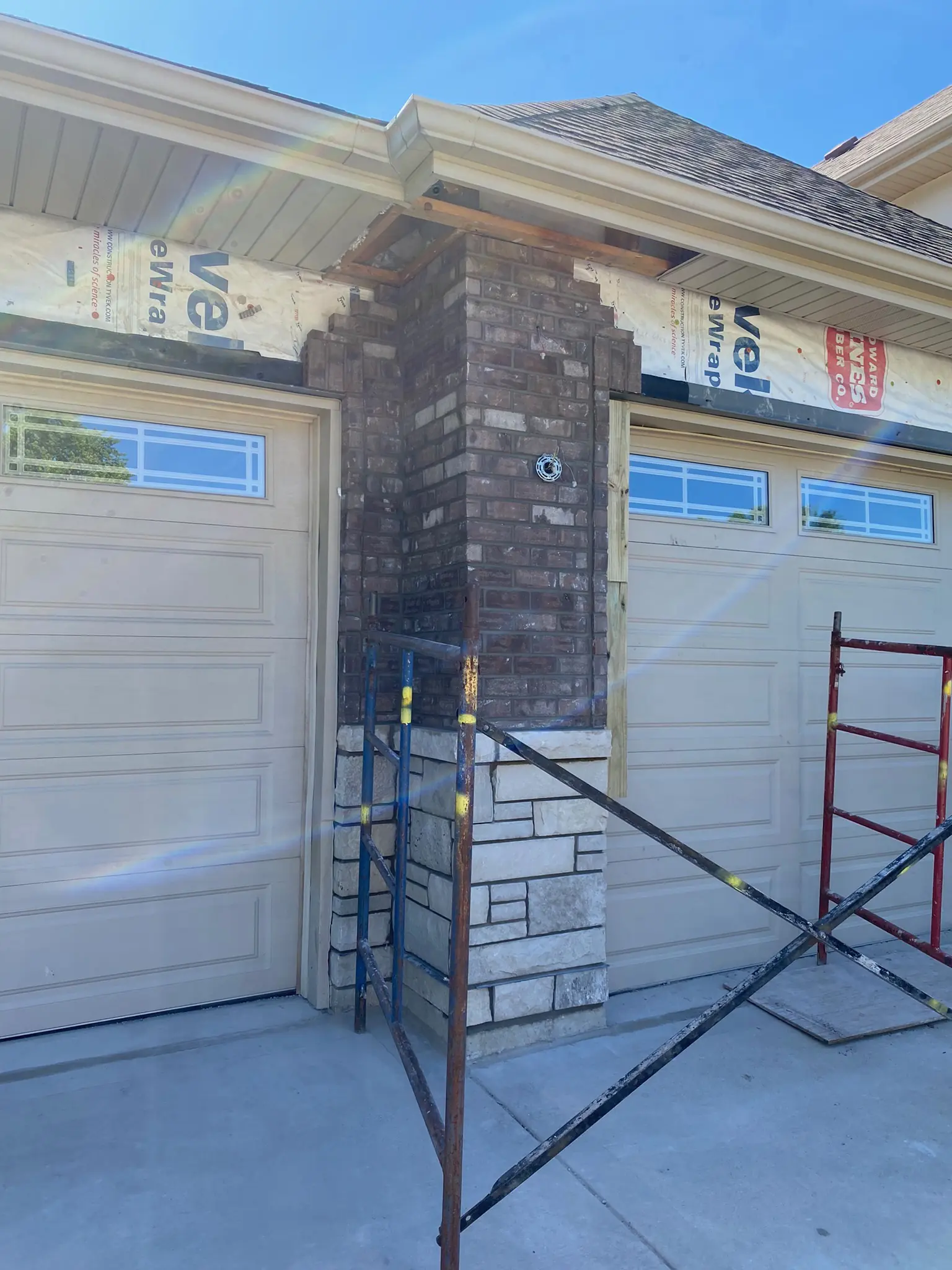
Before You Make the Call
Some masonry complaints resolve on their own. Some are cosmetic workmanship issues worth raising. And one category quietly destroys the wall over the next five winters. Knowing which you are looking at determines whether you need a conversation, a punch list, or a second opinion. Emerald Masonry LLC provides second-opinion assessments across Chicago and the Chicagoland suburbs — family-owned, licensed and insured, career masons with decades of experience, free on-site. Call (708) 288-1696.
We get these calls regularly, and they split fairly cleanly. Roughly a third of the time the homeowner is looking at normal curing and the work is fine. A third are real but cosmetic. And a third are genuine defects — sometimes serious ones the homeowner had not even flagged as the problem.
Category 1: Resolves on Its Own
Mortar looks pale or bright. Fresh mortar cures lighter than its final color and keeps changing for weeks to months as it cures and starts weathering. Lime-based mixes on historic masonry cure slower still. This is the single most common complaint and it is usually not a complaint at all.
White haze on new joints. Efflorescence from curing water carrying mineral salts to the surface. Common on fresh work, usually diminishes over the first months, generally brushes off dry. If it persists well past that, it has stopped being a curing artifact.
New brick looks "too clean." The surrounding wall has decades of accumulated patina. New material narrows that gap over years but never fully closes it.
Slight color variation between new units. Reads as natural variation once weathered — and is actually preferable to uniformity.
Give it a full season before judging any of these.
Category 2: Real, Cosmetic, Worth Raising
Mortar smeared across brick faces. The crew worked faster than the mortar allowed and did not clean down properly. Not structural — but it hardens, and removing it later without damaging the brick is difficult. Raise this immediately, not in a month.
Wrong joint profile. Concave, weathered, raked, grapevine and struck joints each catch light differently. A repair tooled to the wrong profile is visible even when the color matches perfectly, because the shadow line is different. Fixable if caught before the mortar hardens fully.
Genuinely wrong mortar color. Gray against tan, or bright white against weathered joints. Most of a mortar's color comes from its sand, so this means the wrong sand. Distinguish from Category 1 — this is a hue difference, not a brightness difference.
Joints noticeably wider than the originals. A signature of aggressive grinding, particularly on soft brick.
Sloppy line work — joints wandering, inconsistent widths, obvious start-and-stop points.
Category 3: Genuine Defects
These are the ones that matter.
Mortar harder than the brick
The most damaging error in masonry, and the most common.
A masonry wall is designed so the mortar is softer than the brick it holds — the mortar absorbs movement and freeze-thaw stress and wears out first, because it is cheap to replace and century-old brick is not. Repoint soft pre-1930 brick with hard Portland-heavy mortar and the relationship inverts: the joints become the strong element and the stress goes into the brick faces.
The signature: a band of spalling brick corresponding exactly to where the repointing was done, appearing three to eight winters later. By then most homeowners have forgotten the repair and blame the weather.
Shallow preparation
Mortar skimmed over the face of old joints instead of cut back to sound material — generally two to two and a half times the joint width. It looks acceptable for a year, has almost no bond, and fails early. Check by pressing a key into the joint and looking at it edge-on for old mortar behind the new.
Filled weep holes
On brick veneer, the small openings at the base course drain the cavity behind the brick. A crew that mortars them shut — because they look like missing joints — has converted a drained wall into one that holds water. This is a defect with real consequences and it is easy to verify.
Damaged brick from removal
Chipped arrises, cracked units and grinder scoring on faces adjacent to the work. Damage caused during the repair, to brick that was sound when the crew arrived.
Water source ignored
The repointing was fine, but nobody addressed the failed sill, the leaking gutter or the chimney crown that caused the damage. The repair has a countdown on it. Whether this is a defect depends entirely on what the scope said — which is why written scopes matter.
A Quick Self-Check
| What you see | Likely category | Action | |---|---|---| | Mortar pale / bright | 1 — curing | Wait a season | | White haze on new joints | 1 — curing | Wait; brush off | | Smeared mortar on faces | 2 — cosmetic | Raise now | | Wrong joint profile | 2 — cosmetic | Raise now | | Gray mortar against tan | 2 — cosmetic | Raise; can be redone | | Joints wider than original | 2/3 | Raise; indicates grinding | | Key sinks into new mortar | 3 — defect | Second opinion | | Weep holes filled | 3 — defect | Raise immediately | | Chipped brick beside the work | 3 — defect | Document now | | Band of spalling at repair line | 3 — defect | Second opinion |
How to Raise It Well
The goal is a contractor who comes back, not a dispute. That is mostly about how the first message is written.
- Do it early. Cosmetic issues are far easier to correct before mortar cures hard.
- Put it in writing. Email, so there is a record and a date.
- Describe the observable condition, not the motive. "The mortar on the south elevation reads noticeably gray against the original tan" beats "the work looks terrible."
- Reference the agreed scope. If the scope named a mortar type or joint profile, quote it.
- Attach dated photographs, wide and close, in daylight.
- Ask what they propose, rather than dictating a remedy. Most reputable contractors respond to a specific documented issue.
- Give a reasonable window to respond and to schedule.
Do not withhold payment as a first move. Illinois contractors have lien rights, and withholding without a documented basis converts a fixable problem into a legal one. A written punch list is the stronger position.
When to Get a Second Opinion
Get an independent masonry assessment when:
- You suspect a Category 3 defect — especially mortar hardness or shallow preparation.
- The contractor says it is normal and you are not convinced.
- Spalling has appeared in the area of a past repair.
- You need to know whether it is fixable and what fixing costs before deciding anything.
- A dispute is heading toward formal, and you need a written third-party opinion.
We do these assessments, and we will tell you when the previous contractor did fine work — which happens often, and is worth hearing.
Can It Be Fixed?
Mostly, yes.
Wrong color or profile — joints raked out and redone. Straightforward. Shallow preparation — cut back properly and repointed. More work, but routine. Hard mortar on soft brick — removable, but delicate and slow, and it is the reason to catch this early. Filled weep holes — reopened. Smeared mortar — cleanable, gently, though harder once fully cured.
What cannot be recovered is spalled brick. Once a face has come off, that unit needs replacing — which is why the hard-mortar defect is the expensive one, and why time matters.
How to Not End Up Here Next Time
Most of what goes into Category 3 was decided before the crew arrived, in the proposal.
Get the mortar named in writing. Type, and why that type for your wall. A contractor who cannot say has not evaluated your brick, and that is the defect that costs the most.
Get the joint preparation depth stated. Generally two to two and a half times the joint width, cut to sound material. If a proposal does not say, ask — because shallow prep is invisible at completion and fails in three years.
Get grind-or-hand-rake specified, particularly on pre-1930 brick where power grinding widens joints and chews the arrises.
Get the joint profile named — concave, weathered, raked. It costs nothing extra and it is the difference between a repair that disappears and one you notice daily.
Ask for a cured test patch on anything where appearance matters. Judging mortar wet on a trowel is judging the wrong color.
And get the water addressed in the scope. If the sill, gutter or crown that caused the damage is not in the document, the repair has a countdown on it and nobody has promised otherwise.
Those six items take one email to request and they eliminate most of Category 3 before it exists. They are also what makes competing bids genuinely comparable — bids that differ wildly usually differ in scope rather than price.
What a Fair Contractor Response Looks Like
Worth knowing, because it helps calibrate whether you are dealing with a problem or a person.
A reasonable response to a Category 2 issue is to come look, agree or explain why not, and fix what is fixable — usually without argument, because a smear or a profile mismatch is cheap to correct and expensive to argue about.
A reasonable response to a color complaint is to explain the curing timeline and offer to re-look after a season. That is not a brush-off; it is the correct answer.
A reasonable response to a Category 3 claim is more careful, because the stakes are higher on both sides. Expect them to want to see it, and expect a real discussion about what the mortar was and why. What is not reasonable is refusing to look.
The signal to watch for is not disagreement — it is avoidance. A contractor who comes out, disagrees, and explains their reasoning is behaving professionally even if you end up unconvinced. One who stops answering is telling you something, and that is the point at which an independent written assessment stops being optional.
Chicagoland Context
Two local factors make Category 3 more common here than in newer markets.
The housing stock — bungalows, two-flats, greystones and worker cottages built 1890–1940 with soft brick and lime mortar — is exactly the masonry a standard modern mix damages. And the climate delivers dozens of freeze-thaw crossings each winter, so a mortar mismatch shows in five years rather than fifteen.
Which is also why the timeline matters: the defect that costs the most appears years after the crew left, long after most people would think to connect the two.
Related Services
Tuckpointing and repointing, brick repair, brick replacement, historic masonry restoration, chimney repair and masonry sealing.
The Bottom Line
Wait a season on color. Raise smears and profile immediately. And if a key sinks into the new mortar, the weeps are filled, or spalling appears along a repair line — that is not aesthetics, and it is worth an independent look while it is still fixable.
Most masonry disputes we see started as a fixable Category 2 that went unraised for a year, or a Category 3 that nobody recognized until the brick started coming off.
Emerald Masonry LLC is a family-owned, licensed and insured masonry contractor serving Chicago and the Chicagoland suburbs led by career masons with decades of hands-on experience in tuckpointing, chimney repair, brick repair and replacement, lintel and parapet repair, foundation and limestone/sill repair, caulking, sealing, and commercial, residential and historic masonry restoration. We give honest second opinions, including on work we did not do.
Free on-site assessments. Call (708) 288-1696 or request an estimate.
Frequently Asked Questions
My new mortar is much lighter than the old — is that a defect?
Usually not. Fresh mortar cures lighter than its final color and keeps darkening for weeks to months as it cures and begins weathering. Give it a full season before judging. What will not change is a genuinely wrong hue, such as gray against tan, which indicates the wrong sand.
How can I tell if the repointing was done deep enough?
Look at the joints edge-on and press a key into them. Properly prepared joints were cut back to sound mortar, generally two to two and a half times the joint width, and the new mortar is packed solid. Mortar skimmed thinly over old joints often has visible old mortar behind it and gives easily under pressure.
What does mortar smeared on the brick faces mean?
It means the crew was working faster than the mortar allowed and did not clean down properly. It is a workmanship issue rather than a structural one, but it is genuinely hard to remove later without damaging the brick, so it is worth raising immediately rather than after the mortar cures hard.
The repair looks fine but my brick started flaking two years later — is that related?
Quite possibly. If the spalling forms a band corresponding to where the repointing was done, the mortar used was almost certainly harder than the brick, which drives freeze-thaw stress into the faces instead of the joints. That is a genuine defect, and it is the most damaging one on this list.
Can bad repointing be fixed, or does the wall have to be rebuilt?
Most of it is fixable. Wrong-color or wrong-profile mortar can be raked out and redone, and hard mortar can be removed from soft brick, though that is delicate slow work. What cannot be recovered is any brick that has already spalled — those units need replacing.
Should I withhold payment if I'm unhappy?
Get advice before you do. Illinois contractors have lien rights, and withholding without a documented basis can escalate a fixable dispute. The stronger position is a written punch list with dated photographs, delivered promptly, giving the contractor a defined opportunity to correct.
How do I raise it without the conversation going badly?
In writing, specifically, and early. Describe the observable condition rather than assigning blame, reference the scope you agreed, attach photographs, and ask what they propose. Most reputable contractors will come back for something specific and documented far more readily than for a general complaint.
Is it worth getting a second opinion?
Yes, especially before a dispute hardens. An independent masonry assessment tells you whether what you are seeing is normal curing, a cosmetic workmanship issue, or a defect that will damage the wall — and a written third-party opinion carries weight in the conversation that follows.
What if the contractor won't come back?
Document everything with dated photographs, keep the correspondence, get an independent written assessment, and check what your contract says about warranty and dispute resolution. Depending on the amount and the circumstances, licensing complaints, small claims and legal advice are all options — but a documented file is the prerequisite for any of them.