
Masonry Restoration · Chicagoland, IL
What a Masonry Estimate Should Include — and How to Compare Two That Differ by Thousands
Two masonry estimates for the same house routinely differ by a factor of three, and the reason is almost never that one contractor is greedy — it is that they scoped different work. This guide covers exactly what a real estimate should spell out, the line items cheap bids leave off, and how to compare proposals that are not describing the same job.
2026-08-03
Quick Answer
A real masonry estimate should name the specific elevations and elements in scope, the mortar type and how it was matched, joint preparation depth and method, brick sourcing and matching, what happens to water sources like sills and flashing, access and staging, cleanup, insurance, warranty terms and payment schedule. Bids that differ wildly usually differ in scope, not price. Emerald Masonry LLC gives free written estimates across Chicagoland. Family-owned, career masons, licensed and insured. Call (708) 288-1696.
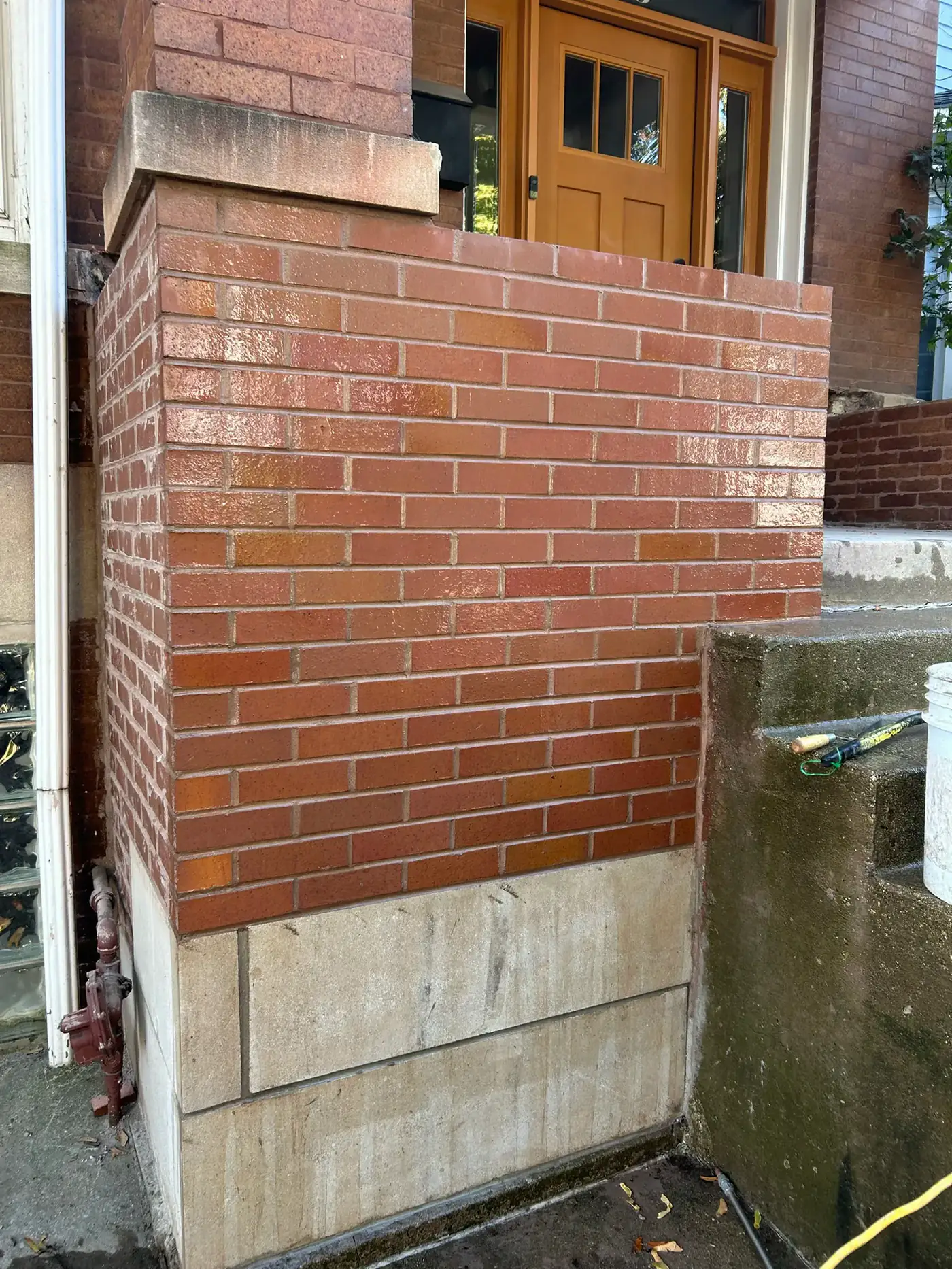
What a Masonry Estimate Should Include
A real masonry estimate names the specific elevations and elements in scope, the mortar type and how it was matched, the joint preparation depth and method, how replacement brick will be sourced and matched, what is being done about the water sources causing the damage, access and staging, protection and cleanup, insurance, warranty terms and a payment schedule. If a proposal is one line and a number, it is not an estimate — it is a placeholder. Emerald Masonry LLC provides free written estimates across Chicago and the Chicagoland suburbs, itemized so you can actually compare them. Family-owned, licensed and insured, career masons with decades of experience. Call (708) 288-1696.
Homeowners routinely get three masonry bids that differ by a factor of three and assume somebody is trying to take advantage of them. Usually nobody is. The contractors scoped different work, and the proposals are too vague to reveal it.
Why Two Bids for "the Same Job" Aren't
Consider a typical Chicagoland brick house where the homeowner asks for "tuckpointing."
- Contractor A prices repointing the front elevation only, skimming new mortar over the existing joints, using whatever bagged mortar is on the truck.
- Contractor B prices repointing all four elevations to proper depth, replacing eleven spalled brick, rebuilding the chimney crown, replacing flashing, and repairing the sill that has been soaking the wall below it for six years.
Both proposals say "tuckpointing." One is a third of the price. They are not competing offers — they are different jobs, and only one of them will still be sound in ten years.
This is why the fix is not "get three quotes." It is get three quotes and compare their scopes.
The Line Items That Should Be Spelled Out
1. Exactly what is in scope
Which elevations. Which elements — joints, brick, chimney, lintels, sills, parapet, foundation. And critically, what is explicitly excluded. "Tuckpointing as needed" is not a scope; it is an argument waiting to happen.
2. The mortar, and why
The mix type — Type N, Type S, or a lime-based blend — and how it was matched to your wall.
This matters more than anything else on the page. A masonry wall is designed so the mortar is softer than the brick it holds: the mortar is the sacrificial layer, absorbing movement and moisture stress and wearing out first, because replacing mortar is cheap and replacing century-old brick is not. Point a soft pre-1930 wall with hard modern Portland mortar and the relationship inverts — the joints become the strong element and every freeze-thaw cycle drives stress into the brick faces, which spall within a few winters.
A contractor who says "we always use the same mix" has told you what you need to know.
3. Joint preparation depth and method
Grinding or raking depth — generally two to two and a half times the joint width, cut back to sound material. Whether joints will be power-ground or hand-raked (soft historic brick requires hand work; aggressive grinding permanently widens joints and chews the brick edges).
This is where cheap bids hide. Skimming mortar over old joints is fast, looks acceptable for about a year, and has almost no bond.
4. Joint profile
Concave, weathered, raked, grapevine — tooled to match what your wall was built with. A repair tooled to the wrong profile is visible forever even when the color matches.
5. Brick sourcing and matching
Whether replacement units will be salvaged or current production, and how they will be matched — size, color, texture, and critically absorption and hardness. On pre-1940 walls, salvaged brick is often the technically correct answer, not merely the authentic one.
6. What happens to the water
This is the item most often missing, and the reason most repairs fail early. Chimney crown and flashing, sills, caulking at window perimeters, gutters and downspouts, grade, weep holes. Repairing masonry while leaving the water source in place is a repair with a countdown on it.
If the proposal does not mention water at all, ask what they found.
7. Access and staging
Ladders, scaffolding, swing stage, boom lift. On multi-story and commercial work, access is frequently the largest single cost component, and it is the item most likely to reappear later as a change order if it was not priced.
8. Protection and cleanup
Landscaping, windows, walkways, neighboring property. Debris removal. On city lots, protection of the gangway and the neighbor's side.
9. Insurance
General liability and workers' compensation, with a certificate of insurance available naming you or your association. On HOA, condo and commercial property this is normally mandatory.
10. Warranty
What is covered, for how long, and what voids it. Be realistic about what any warranty can promise — no workmanship warranty covers new damage from an unaddressed leak somewhere else on the building.
11. Payment schedule
A reasonable deposit and progress-based payments. Very large up-front sums before material or labor are on site are a legitimate concern.
12. Permits, if applicable
Requirements vary by municipality and scope, and landmark or historic-district properties add review. A contractor working in your town should know and should say.
A Comparison Checklist
Put the proposals side by side and fill this in:
| | Bid A | Bid B | Bid C | |---|---|---|---| | Elevations included | | | | | Elements (joints / brick / chimney / lintels / sills) | | | | | Mortar type specified? | | | | | Joint prep depth stated? | | | | | Grind or hand-rake? | | | | | Joint profile named? | | | | | Brick sourcing / matching | | | | | Water sources addressed? | | | | | Access method priced? | | | | | COI available? | | | | | Warranty terms | | | | | Payment schedule | | | |
If a column has more blanks than entries, that is your answer — and it is worth going back and asking rather than assuming.
What a Real Estimate Visit Looks Like
You can tell a great deal about the eventual proposal from how the visit is conducted. A serious masonry assessment is not a five-minute glance from the driveway.
It covers every elevation, not just the one you called about. Damage concentrates where water goes, and the elevation you noticed is frequently downstream of a problem on a different side of the house.
Somebody tests the joints. A screwdriver or key pressed into the mortar tells an experienced mason immediately whether the joints are sound, softening, or gone. If nobody touches your mortar, nobody assessed it.
Somebody gets on or near the roof where a chimney is involved. Chimney condition genuinely cannot be judged from the ground — crown cracking, flashing condition and the state of the top courses are invisible from below.
They look at your gutters, downspouts and grade. Not because that is masonry work, but because it is usually the water source driving everything else. A contractor who ignores water management is going to sell you a repair with a countdown on it.
They look at sills, lintels and the tops of openings for rust staining and cracking — the early evidence of corroding steel inside the wall.
They photograph conditions. Photos are what let you see the roof and the north elevation you cannot get to yourself, and they are what makes a written scope verifiable rather than assertive.
And they tell you what can wait. An assessment that finds everything urgent is a sales call. A real one ranks the work and says plainly which items are this season and which are three years out.
Questions Worth Asking Out Loud
- What mortar are you proposing, and why that one for this wall?
- How did you determine what my original mortar was?
- How deep will you cut the joints out?
- Will you grind or hand-rake, and why?
- Where is water actually getting into this wall?
- What is not included in this price?
- What would make this turn into a change order?
- Can I see a certificate of insurance?
A contractor who answers these specifically is doing the work. Vague answers here reliably predict vague work later.
Red Flags
- A price quoted over the phone without anyone looking at the wall.
- Square-foot pricing applied sight-unseen — no two walls are in the same condition.
- Pressure to sign today, or a discount that expires this afternoon.
- A large cash deposit demanded up front.
- No written scope — just a number.
- Sealing proposed instead of repointing. Sealing a wall with open joints seals water in.
- Sandblasting or high-pressure washing proposed on older brick. Both strip the fired face and accelerate spalling.
- No mention of the chimney on a house where the chimney is visibly failing.
- Reluctance to provide insurance documentation.
What Drives Legitimate Cost Differences
Not every gap between bids is a scope gap. Real drivers include extent and linear footage; height and access; existing mortar hardness (post-war Portland mortar takes longer to grind than soft lime); matching difficulty; the number of openings needing lintel work, which is priced per opening; chimney condition, where cap-and-crown versus a rebuild is a wide range; and season, since cold-weather work needs protection and adds time.
The Chicagoland Context
This matters more here than in milder climates. The region delivers dozens of freeze-thaw cycles each winter, lake-effect moisture keeps north elevations damp, road salt attacks the lowest courses, and a very large share of the housing stock — brick bungalows, two-flats, greystones, worker cottages — is soft, century-old masonry that a hard modern mortar will actively destroy.
A cheap bid that specifies the wrong mortar does not just underperform. It converts a maintenance item into permanent brick loss.
Related Services
Tuckpointing and repointing, brick repair, brick replacement, chimney repair, lintel repair, limestone and sill repair, masonry sealing and historic masonry restoration.
The Bottom Line
The number at the bottom of a masonry proposal is the least informative thing on it. What tells you whether the repair will last is the mortar specification, the joint preparation depth, and whether anybody addressed the water that caused the damage in the first place.
Get those three things in writing from every contractor you are considering. The bids will start making sense immediately — and quite often the expensive one turns out to be the only one that priced the actual job.
Emerald Masonry LLC is a family-owned, licensed and insured masonry contractor serving Chicago and the Chicagoland suburbs led by career masons with decades of hands-on experience in tuckpointing, chimney repair, brick repair and replacement, lintel and parapet repair, foundation and limestone/sill repair, caulking, sealing, and commercial, residential and historic masonry restoration. We write itemized scopes so you can compare them honestly — including against ours.
Free on-site estimates. Call (708) 288-1696 or request an estimate.
Frequently Asked Questions
Why do masonry estimates vary so much for the same house?
Almost always because the contractors scoped different work, not because one is overcharging. One may have priced repointing only while another included the chimney, the lintels and the sills; one may plan to grind joints to full depth while another intends to skim over them. Until you compare scopes line by line, you are not comparing prices.
What should be written on a masonry estimate?
Which elevations and elements are included, the mortar type and how it was matched, joint preparation depth and method, brick sourcing, what is being done about water sources, access and staging, protection and cleanup, insurance, warranty terms and payment schedule. Anything vague enough to be interpreted two ways will be interpreted the cheaper way.
Is the cheapest masonry bid ever the right choice?
Sometimes, if the scopes genuinely match and the contractor is licensed and insured. But a bid that is dramatically lower usually reflects shallower joint preparation, a generic mortar, or work left out — and shallow prep with the wrong mortar is what makes a repair fail in three to five years. Compare what is included before comparing totals.
Should a masonry estimate specify the mortar type?
Yes, and a contractor who cannot tell you why they chose that mix for your wall is a warning sign. Mortar must be softer than the brick it holds, so an old soft-brick house needs a lime-based mix while post-war brick usually takes Type N. A hard mortar on soft brick spalls the faces within a few winters.
How deep should joints be ground out for repointing?
Generally two to two and a half times the joint width, cut back to sound mortar. Skimming fresh mortar over the face of old joints has almost no bond, looks wrong immediately, and fails quickly. If a proposal does not state a depth, ask.
Should I pay a large deposit up front?
A reasonable deposit is normal, but very large up-front payments before any material or labor is on site are a legitimate concern. A clear payment schedule tied to progress protects both parties. Get it in the written proposal rather than agreeing verbally.
What insurance should a masonry contractor carry?
General liability and workers' compensation at minimum, and you should be able to receive a certificate of insurance naming you or your association as certificate holder. On association and commercial property this is usually mandatory. A contractor who hesitates to provide one is telling you something.
What should a masonry warranty actually cover?
It should state what is covered, for how long, and what voids it — typically workmanship on the specific repairs performed. Be realistic: no warranty covers new damage from an unaddressed water source elsewhere on the building, which is another reason the estimate should deal with water first.
Do I need a permit for masonry repair?
It varies by municipality and by scope — routine repointing often does not require one while structural work, chimney rebuilds and some facade work do, and landmark or historic-district properties add review. A contractor working in your town should know and should say so in the proposal.