
Chimney Repair · Chicagoland, IL
Why Brick Chimneys Lean or Pull Away From the House — Causes, Risk, and Repair
A leaning chimney or a visible gap between the chimney and the house is one of the more alarming things a homeowner can spot. Here is what actually causes it, how serious it is, and what repair involves.
2026-06-22
Quick Answer
Brick chimneys lean or pull away from a house mainly because of footing settlement, freeze-thaw heaving, water damage, and rust expansion. A widening gap, a tilt, or stair-step cracks signal real structural movement that should be inspected promptly. Emerald Masonry LLC repairs and rebuilds leaning chimneys across Chicagoland — (708) 288-1696.
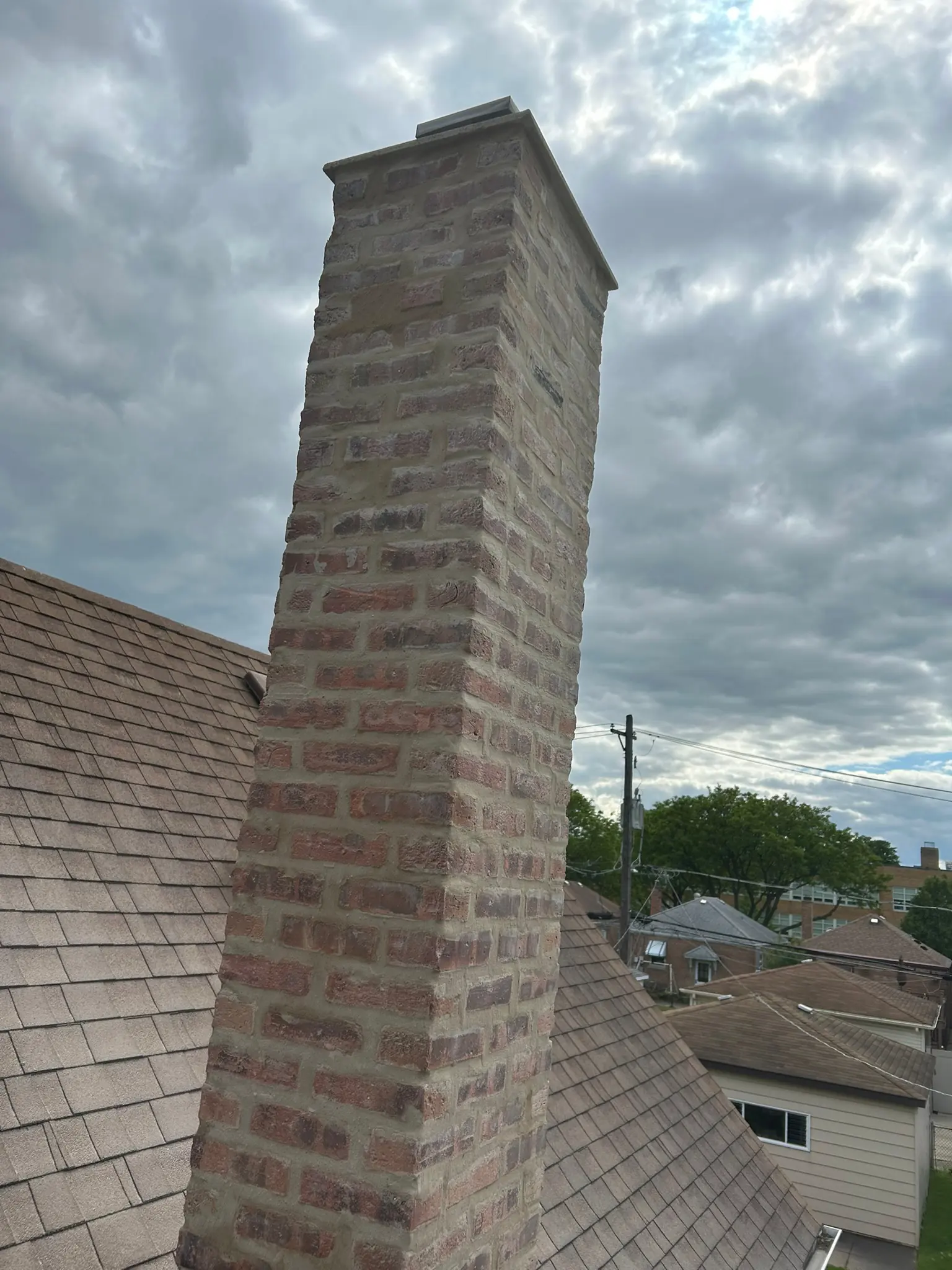
A brick chimney that is visibly leaning, tilting, or pulling away from the side of the house is one of the more alarming things a homeowner can notice — and one of the more commonly misjudged. Some leans are cosmetic and stable; others are a warning that real structural movement is underway. At Emerald Masonry LLC we inspect, repair, and rebuild chimneys across Chicagoland, and a quick call to (708) 288-1696 will get you a straight answer. This guide explains what actually causes a chimney to lean, how to gauge how serious it is, and what repair involves.
A Chimney Is a Tall, Heavy, Exposed Column
Start with the physics. A masonry chimney is a tall, narrow, very heavy stack of brick — and unlike the rest of the house, much of it stands free above the roofline with weather hitting it from every side. It rests on its own footing, and it is only loosely tied to the structure. That combination of height, weight, exposure, and a separate foundation is exactly why chimneys are often the first part of a brick building to show movement.
When something disturbs the footing or weakens the masonry, gravity does the rest: the column tips toward its weak side.
The Main Reasons Chimneys Lean or Pull Away
1. Footing settlement
The most common cause. A chimney sits on a concrete footing, and if that footing was undersized, poured on poorly compacted soil, or has been undermined by water, it settles — and because the chimney is so heavy and narrow, even modest settlement tips it noticeably. A chimney pulling away from the house is very often a footing that has settled on the outside edge.
2. Soil movement and drainage
Chicago-area clay soils swell when wet and shrink when dry, and that seasonal movement works on a chimney footing year after year. Downspouts dumping water near the chimney, poor grading, or a high water table all accelerate it. Water around the base is one of the biggest hidden drivers of a leaning chimney — it both undermines the footing and feeds freeze-thaw damage in the masonry above.
3. Freeze-thaw deterioration of the masonry
Once mortar joints fail and brick begins to absorb water, our freeze-thaw winters expand that water and break the masonry down. A stack that is spalling and losing joints loses stiffness and can begin to bow or lean independent of any footing problem.
4. Rust expansion and failed connections
Steel components — old straps, anchors, or a deteriorating flue support — rust and expand, pushing masonry out of line. And the metal ties that should hold the chimney to the house corrode and let go, allowing the stack to drift away from the wall.
How to Tell How Serious It Is
Not every gap is an emergency, but some signs mean stop waiting:
- A gap between the chimney and the house that is clearly widening over months or seasons — active movement.
- A visible tilt out of vertical — sight it against the corner of the house or a door frame.
- Stair-step cracks climbing through the mortar joints of the chimney or the adjacent wall.
- Crushed or crumbling mortar on one side of the stack — the side it is leaning toward.
- A chimney that moves or feels loose, or daylight visible at the roofline connection.
A hairline gap that has been caulked and hasn't changed in years is far less urgent than one you can watch open up. But because a chimney is heavy and tall, a leaning chimney is a structural and safety issue, not just a cosmetic one — and the cause is usually hidden at the footing. When in doubt, have it looked at.
Why You Can't Just Push It Back
Homeowners sometimes ask whether the chimney can simply be pushed or braced back into place. The answer is that you have to fix the cause first. Stabilizing or rebuilding the masonry without addressing a settling footing or chronic water problem just means the lean comes back. A real repair starts at the bottom — the footing and drainage — and works up.
What Repair Involves
The right repair depends on the cause and how far it has gone:
- Inspection. We evaluate the footing, the soil and drainage around the base, the condition of the brick and joints, and how the chimney is tied to the house.
- Address the cause. That can mean correcting drainage and grading, stabilizing or extending the footing, or both — so the chimney has solid support again.
- Repair or rebuild the masonry. Sound chimneys with surface deterioration get repointed and have damaged brick replaced; chimneys that have rotated significantly or whose brick is badly spalled are partially or fully rebuilt from a sound course up.
- Re-secure and weatherproof. New ties to the structure where appropriate, a sound crown, proper flashing, and — on sound masonry — a breathable sealer to slow future water entry.
Don't Wait Out a Leaning Chimney
A lean rarely corrects itself, and the freeze-thaw cycle that often drives it runs every single winter in the Chicago area. The longer a leaning chimney goes, the more likely a targeted repair turns into a full rebuild — and the higher the risk of falling brick. If your chimney is tilting, pulling away from the house, or showing stair-step cracks, get it inspected before the next freeze.
Emerald Masonry LLC is a family-owned, licensed and insured masonry contractor serving Chicago and the Chicagoland suburbs led by career masons with decades of hands-on experience in tuckpointing, chimney repair, brick repair and replacement, lintel and parapet repair, foundation and limestone/sill repair, caulking, power washing, sealing, and commercial, residential, and historic masonry restoration. Free on-site estimates — call (708) 288-1696.
For related reading and services, see our chimney repair and rebuilding, foundation masonry repair, tuckpointing and repointing, and brick repair.
Frequently Asked Questions
Is a leaning chimney dangerous?
It can be. A chimney that is visibly tilting or pulling away from the house has lost some of its support and is at risk of cracking further or, in severe cases, collapsing. It is also a flue safety concern. Any visible lean or a widening gap should be inspected promptly rather than left for another season.
Why is there a gap between my chimney and the house?
A widening gap usually means the chimney is settling or rotating away from the structure — most often because its footing has settled, the soil beneath it has shifted, or freeze-thaw and water damage have weakened the masonry. A thin gap that is sealed with caulk and not growing is less urgent than one that is clearly opening up over time.
Can a leaning chimney be straightened, or does it need a rebuild?
It depends on the cause and severity. Minor lean from a settling footing may be addressed by stabilizing the footing and repairing the masonry; a chimney that has rotated significantly or whose brick is badly deteriorated usually needs partial or full rebuilding. A close inspection of the footing, the brick, and the connection to the house determines the right fix.
Frequently Asked Questions
Is a leaning chimney dangerous?
It can be. A chimney that is visibly tilting or pulling away from the house has lost some of its support and is at risk of cracking further or, in severe cases, collapsing. It is also a flue safety concern. Any visible lean or a widening gap should be inspected promptly rather than left for another season.
Why is there a gap between my chimney and the house?
A widening gap usually means the chimney is settling or rotating away from the structure — most often because its footing has settled, the soil beneath it has shifted, or freeze-thaw and water damage have weakened the masonry. A thin gap that is sealed with caulk and not growing is less urgent than one that is clearly opening up over time.
Can a leaning chimney be straightened, or does it need a rebuild?
It depends on the cause and severity. Minor lean from a settling footing may be addressed by stabilizing the footing and repairing the masonry; a chimney that has rotated significantly or whose brick is badly deteriorated usually needs partial or full rebuilding. A close inspection of the footing, the brick, and the connection to the house determines the right fix.