
Masonry Restoration · Chicagoland, IL
Why Masonry Contractors Won't Quote Over the Phone — and What It Means If One Does
Ask a roofer for a ballpark and you'll often get one. Ask a mason and you'll get an appointment. That isn't evasiveness — it's that the three things driving masonry cost are all invisible from a phone description, and a contractor who commits to a number without seeing them has either padded it heavily or is planning to renegotiate on site.
2026-08-06
Quick Answer
Masonry contractors decline phone quotes because the three biggest cost drivers — how deep the damage actually goes, what mortar and brick the wall needs, and how crews will access the work — cannot be judged from a description. A firm phone price usually means the number is padded to cover unknowns or will be renegotiated on site. Emerald Masonry LLC gives free written on-site estimates across Chicagoland. Family-owned, career masons, licensed and insured. Call (708) 288-1696.
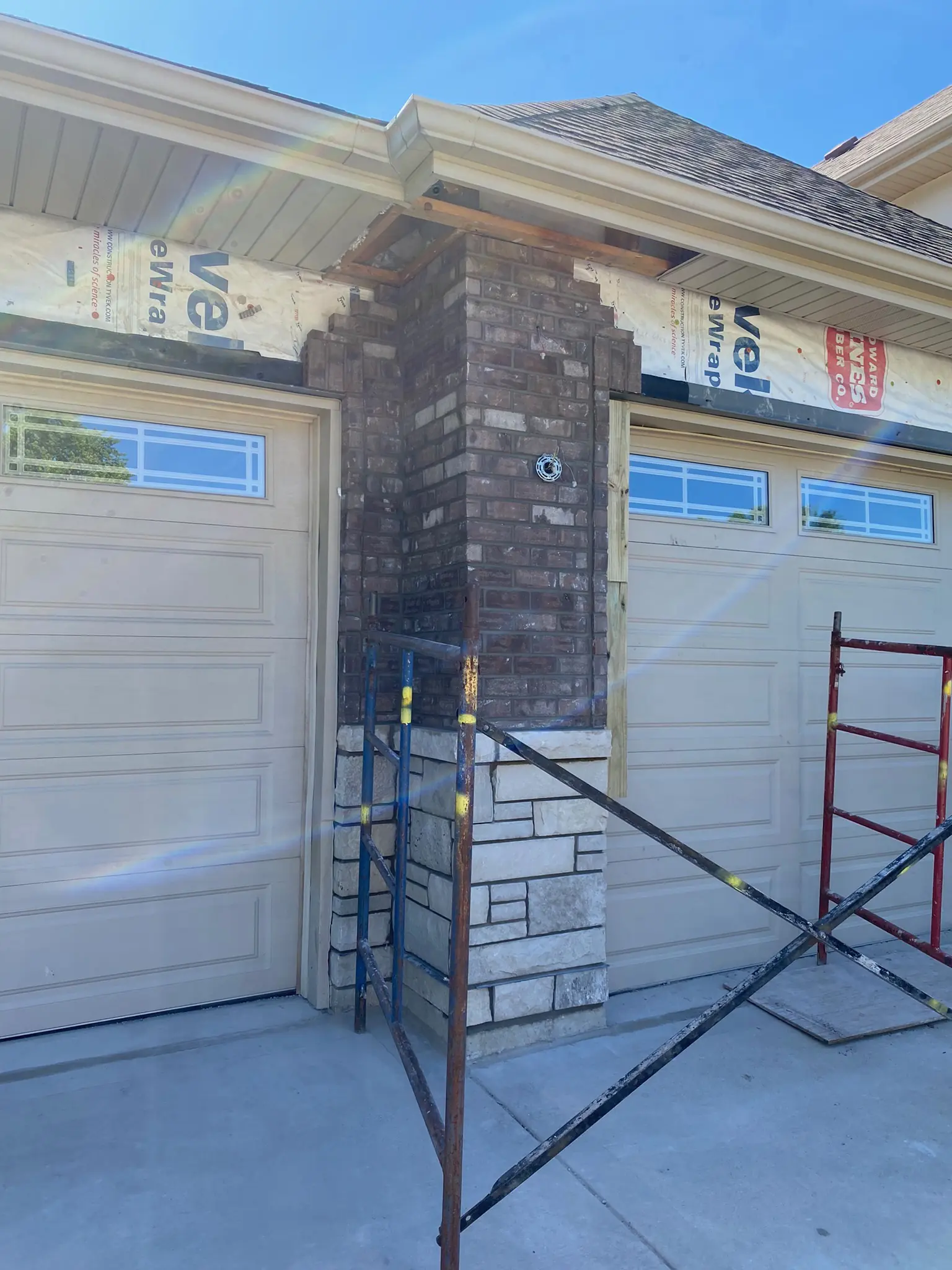
Why You Can't Get a Masonry Price Over the Phone
Because the three things that determine the cost are all invisible from a description: how deep the damage actually goes, what mortar and brick the wall requires, and how crews will physically reach the work. A contractor who commits to a firm number without seeing those has either padded it heavily to protect themselves, or intends to revise it once work is underway. Emerald Masonry LLC gives free written on-site estimates across Chicago and the Chicagoland suburbs — family-owned, licensed and insured, career masons with decades of experience. Call (708) 288-1696.
This frustrates people, understandably. You can get a ballpark on a roof, a driveway, a furnace. Masonry is genuinely different, and it is worth understanding why rather than assuming the trade is being cagey.
The Three Invisible Variables
1. How deep the damage goes
From the street, two walls can look identical. One needs surface repointing; the other needs joints ground to full depth, thirty spalled units cut out and replaced, and a corroding lintel addressed.
Nothing in a phone description distinguishes them. "The mortar looks bad" covers a modest maintenance job and a small restoration project equally well.
And masonry hides its worst news. Rust jacking — a steel lintel corroding and expanding inside a rigid wall — is invisible until the crack appears. Failed ties behind veneer cannot be seen at all. Deteriorated inner wythes in solid masonry show nothing from outside.
2. What the wall actually needs
The governing rule in masonry is that mortar must be softer than the brick it holds. Mortar is the sacrificial layer — it absorbs movement and moisture stress and wears out first, because replacing mortar is cheap and replacing century-old brick is not.
Satisfying that rule means knowing how soft your brick is. A 1958 ranch and an 1890s greystone need different mixes — Type N on one, Type O or a custom lime blend on the other — and getting it backwards spalls the brick faces within a few winters.
Then there is the brick itself. If units need replacing, is there a current-production match, or does it mean salvaged brick sourced from a yard? That is a real difference in both cost and lead time, and it cannot be determined over the phone.
3. How anyone reaches the work
Access is frequently the largest single line item in a masonry estimate, and it is entirely site-specific: ladders versus staging versus a lift versus a swing stage; a tight city gangway; landscaping and decks in the way; roof pitch on a chimney; sidewalk protection and permitting downtown.
Two identical chimneys, one on a walkable roof and one on a steep three-story pitch above a narrow side yard, are not the same job.
What a Phone Quote Actually Means
If someone gives you a firm number without looking, one of three things is true.
It is padded. They have priced in the worst case to protect themselves, which means you are paying a premium for their uncertainty.
It is going to change. The number gets you to sign, then the scope "grows" once crews are on site. This is the more common version, and it is why change-order disputes are so frequent in this trade.
It is for less work than you think. Cheap because they priced one elevation, or surface repointing rather than proper preparation. This is the version that looks fine for a year and fails in four.
Occasionally a genuinely simple, well-described job can be ballparked honestly — a chimney cap, a single ground-floor sill. The tell is not whether they give a number; it is whether they will commit to it in writing without having seen the wall.
What a Real Estimate Visit Covers
A serious assessment is not a five-minute glance from the driveway.
- Every elevation, not just the one you called about. Damage concentrates where water goes, and the wall you noticed is often downstream of a problem on another side.
- The screwdriver test on the joints. If nobody touches your mortar, nobody assessed it.
- Eyes on the chimney, from the roof where feasible. Crown cracking, flashing condition and top-course deterioration are invisible from below.
- Gutters, downspouts and grade. Not masonry work, but usually the water source driving everything else.
- Sills, lintels and openings, looking for rust staining and cracking.
- Photographs, so you can see the roof and the north elevation you cannot reach.
- A ranking of what is urgent versus what can wait a season.
An assessment that finds everything urgent is a sales call. A real one tells you what to defer.
What You Should Get Afterward
A written scope that states:
| Item | Why it matters | |---|---| | Elevations and elements included — and excluded | "Tuckpointing as needed" is an argument, not a scope | | Mortar type and how it was matched | The single most consequential technical decision | | Joint preparation depth and method | Where cheap bids hide — grind or hand-rake, and how deep | | Joint profile | Concave, weathered, raked — tooling makes a repair invisible | | Brick sourcing and matching | Salvaged or current production | | What is being done about the water | Repairs that ignore the source have a countdown on them | | Access method | Frequently the largest cost, and the most common change order | | Insurance, warranty, payment schedule | Standard, and revealing when missing |
Bids that differ by a factor of three usually differ in scope, not price. Line those columns up before comparing totals.
What a Contractor Can Honestly Tell You by Phone
Declining to quote is not the same as declining to help. A good contractor can give you real, useful information on that first call — it just is not a number.
Which category your problem is in. Describe rust staining below a window and any competent mason will tell you it is likely a lintel, that lintel work is priced per opening, and that it is not something to sit on for three years. That is genuinely actionable.
What drives your cost up or down. Ask directly: what would put my job at the expensive end? Expect answers like height and staging, how hard the existing mortar is to grind out, whether brick needs matching from salvage, and whether the chimney is involved. Now you know what to look at.
Relative scale. Not a price, but a shape. Repointing one elevation, replacing a dozen brick, and rebuilding a chimney above the roofline occupy three clearly different tiers, and a contractor can place your likely job among them without committing to a figure.
Whether it is urgent. A leaning chimney, a bulging wall or fresh debris after a freeze should change how the call is handled. Receded joints should not. That triage is free and immediate.
Whether they are the right trade at all. Sometimes the honest phone answer is that sounds like your gutters or that is a roofer. We would rather say so than book a visit.
What to have ready for the visit, and roughly when they could schedule it — which in peak season is genuinely useful planning information.
A reasonable way to ask
Rather than what does tuckpointing cost, try: "What are the main things that would make my job expensive versus cheap, and which category do you think I'm in from what I've described?"
That question gets you the substance without asking anyone to commit to a number they cannot stand behind — and how a contractor handles it tells you a great deal about how they will handle the estimate.
Red Flags Worth Naming
- A firm price quoted by phone on a wall nobody has seen.
- Square-foot pricing applied sight-unseen — it prices area, not condition.
- Pressure to sign today, or a discount expiring this afternoon.
- Door-knocking with "leftover materials" from a nearby job. Established contractors schedule work in advance and do not have surplus mortar and brick to unload.
- A large cash deposit demanded before anything is on site.
- No written scope — just a number.
- Sealing proposed instead of repointing. Sealing a wall with open joints seals water in.
- Sandblasting or high-pressure washing proposed on older brick. Both strip the fired face and accelerate spalling.
- Reluctance to provide a certificate of insurance.
- The same mortar mix for every house. A contractor who never varies it is not matching anything.
Getting Value From the Visit
- Give access to all four elevations, including the side nobody walks down.
- Say when prior masonry work was done, and by roughly whom — old repairs are diagnostic.
- Report where you have seen water inside, even if it seems unrelated.
- Show photographs of seasonal conditions the visit will miss — ice damming, spring seepage, summer algae.
- Know your build era, roughly. It drives the mortar decision.
- Ask what is not included, and what would trigger a change order.
- Ask what can wait. The answer tells you a great deal about who you are dealing with.
Why Online Cost Calculators Mislead
Search for masonry pricing and you will find per-square-foot calculators and national cost guides. They are not useless — they establish rough magnitude — but they systematically miss the things that actually move a Chicagoland number.
They assume average condition, which is precisely the variable in question. They rarely account for access, frequently the largest single line item. They almost never distinguish mortar type, so a soft-brick greystone and a modern veneer wall price identically when they should not. They do not know whether your brick can be matched from current production or requires salvage sourcing. And they cannot see the rusting lintel that turns a repointing job into a structural one.
Use them to sanity-check whether a bid is wildly out of range. Do not use them to decide a real proposal is overpriced.
Chicagoland Context
This matters more here than in milder climates. The region delivers dozens of freeze-thaw crossings each winter, and the housing stock — brick bungalows, two-flats, greystones, worker cottages, post-war ranches, modern veneer — spans a century and a half of wildly different materials.
A contractor quoting your 1912 two-flat by phone is quoting a wall whose brick hardness, mortar composition, wythe construction and prior repair history they know nothing about. Those four facts determine most of the job.
Related Services
Tuckpointing and repointing, brick repair, brick replacement, chimney repair, lintel repair, limestone and sill repair, masonry sealing and historic masonry restoration.
The Bottom Line
The refusal to quote by phone is not gatekeeping. It is the same reason a doctor will not prescribe from a description of symptoms: the thing that determines the answer has not been examined yet.
What you should insist on is that the visit produces something real — a written scope naming the mortar, the preparation depth, the access method and the water source. That document is what makes competing bids comparable, and it is the actual product of an estimate.
A number without it is just a guess with a signature line.
Emerald Masonry LLC is a family-owned, licensed and insured masonry contractor serving Chicago and the Chicagoland suburbs led by career masons with decades of hands-on experience in tuckpointing, chimney repair, brick repair and replacement, lintel and parapet repair, foundation and limestone/sill repair, caulking, sealing, and commercial, residential and historic masonry restoration. We write itemized scopes so you can compare them honestly — including against ours.
Free on-site estimates. Call (708) 288-1696 or request an estimate.
Frequently Asked Questions
Why won't a masonry contractor give me a price over the phone?
Because the three things that drive the cost are invisible from a description: how deep the damage actually goes, what mortar and brick the wall requires, and how crews will physically reach the work. A number given without seeing those is either padded to cover the unknowns or is going to change once someone is on site.
Is it a red flag if someone does quote me over the phone?
It is worth being cautious. Either they have padded the price to protect themselves from what they cannot see, or they intend to revise it upward after work begins. Occasionally a very simple, well-described job can be ballparked honestly — but a firm commitment on a wall nobody has looked at is not a good sign.
Why can't masonry be priced by the square foot?
Because two walls of identical size can need completely different work. One may need surface repointing while the other needs joints ground to full depth, thirty spalled brick replaced and a rusting lintel addressed. Square-foot pricing sight-unseen prices the area, not the condition.
What makes the estimate visit worth my time?
A real assessment covers every elevation rather than the one you called about, tests the mortar joints, gets eyes on the chimney, and traces where water is actually entering. That produces a written scope you can compare against other bids — which is the only way competing prices become meaningful.
Should an estimate cost anything?
Emerald Masonry provides free on-site estimates across Chicagoland. Be cautious of anyone charging for a basic residential assessment, and equally cautious of anyone unwilling to put their findings in writing afterward. A free look that produces nothing documented is not much better than a phone guess.
What if I just want a rough range for budgeting?
That is a reasonable ask, and a good contractor can usually describe the cost drivers and the general shape of the job without committing to a figure. What they should not do is give you a number that becomes an anchor for a job nobody has assessed. Ask what would put your project at the high end versus the low end.
Someone knocked on my door offering a discount price for leftover materials — is that legitimate?
Treat it as a warning sign. Established masonry contractors schedule work in advance and do not have surplus mortar and brick to unload, and pressure tactics tied to a same-day discount are a recognized pattern. Verify licensing and insurance and get a written scope before agreeing to anything.
How many masonry bids should I get?
Two or three is reasonable, but comparing scopes matters far more than comparing totals. Bids that differ by a factor of three usually differ because the contractors scoped different work, not because one is overcharging. Line up what each proposal actually includes before you look at the numbers.
What should I have ready when a mason comes out?
Access to all four elevations, knowledge of any prior masonry work and roughly when it was done, awareness of where you have seen water inside, and photographs of anything seasonal they will not see that day. Knowing your home's approximate build era helps too, since it drives the mortar decision.