
CMU Block Repair · Romeoville, IL
CMU Block Wall Repair in Romeoville, IL — Commercial & Industrial Masonry Contractor
Romeoville's industrial and commercial corridor along I-55 is dense with CMU block construction — warehouses, distribution centers, and light industrial facilities that depend on their block walls for structural integrity and weather resistance. Emerald Masonry LLC provides expert CMU block repair and repointing for commercial and industrial properties throughout Romeoville and Will County.
Quick Answer
Romeoville's industrial and commercial corridor along I-55 is dense with CMU block construction — warehouses, distribution centers, and light industrial facilities that depend on their block walls for structural integrity and weather resistance. Emerald Masonry LLC provides expert CMU block repair and repointing for commercial and industrial properties throughout Romeoville and Will County.
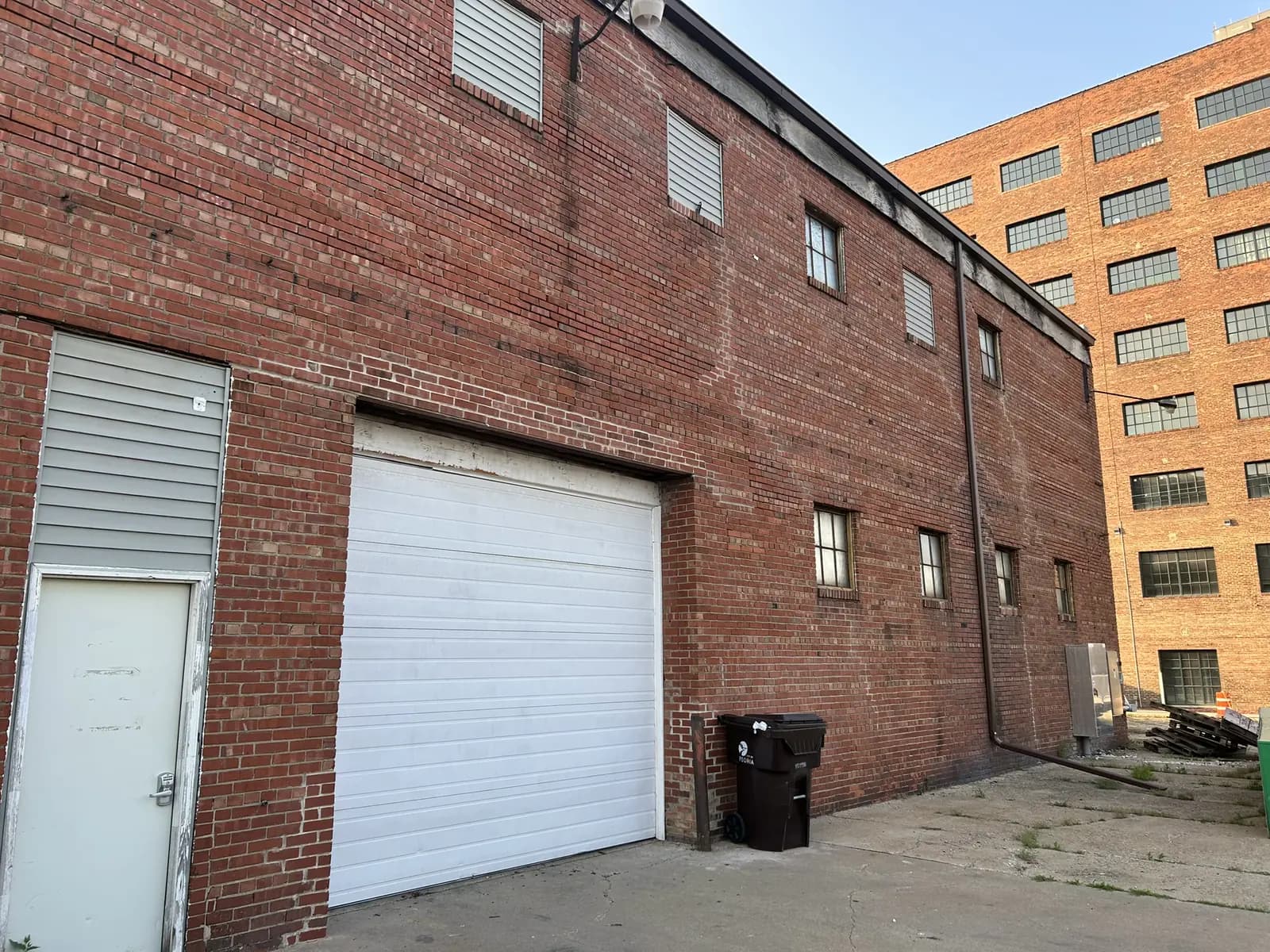
Romeoville sits at the intersection of I-55 and Route 53 in Will County — one of the busiest industrial corridors in the southwest Chicago suburbs. The commercial and industrial buildings lining Weber Road, Normantown Road, and the I-55 frontage are predominantly CMU block construction: warehouses, distribution facilities, light manufacturing, and retail. These buildings are built to handle heavy use, but their masonry requires maintenance the same as any other block or brick structure.
CMU block walls fail differently than brick — the mortar joint profile is different, the block units themselves present different failure modes, and the typical building use (industrial, high traffic, forklift exposure) adds factors you don't see in residential work. Emerald Masonry LLC handles CMU block repair for commercial and industrial properties throughout Romeoville, Bolingbrook, Joliet, and the Will County area.
How CMU Block Walls Fail
Understanding the failure modes is the first step to knowing what kind of repair is needed.
Mortar Joint Deterioration
Like brick, CMU walls rely on mortar joints for water resistance. CMU mortar joints are typically tooled flat or slightly recessed — a different profile than the concave joints common on brick. Over time, joints crack, recess, or erode, particularly at grade level where splash-back and soil contact accelerate deterioration.
On Romeoville industrial properties, exterior CMU joints on the north and west elevations often deteriorate fastest — those faces get the most wind-driven rain from the Illinois prevailing wind pattern.
Block Face Cracking
CMU units can crack from several causes: freeze-thaw cycling in saturated block, structural settlement, thermal movement in large unjointed panels, or physical impact (common near dock doors on warehouse properties). Surface cracks that don't penetrate the block may be a cosmetic issue. Full-thickness cracks — visible on both the interior and exterior face — indicate a structural concern that needs immediate assessment.
Efflorescence and Water Infiltration
White staining on CMU walls is common and has the same cause as on brick: soluble salts carried to the surface by water moving through the wall. On CMU, the higher porosity of the block means water infiltration can be more rapid than on dense brick. Persistent efflorescence on an industrial building's interior wall face indicates the exterior envelope is failing.
Grade-Level Deterioration
The bottom 2–3 courses of exterior CMU walls frequently show the most damage. Water from grade-level contact, freeze-thaw action at the foundation line, and physical damage from equipment or vehicles all concentrate at grade. On warehouse and distribution facilities in Romeoville, forklift and dock equipment impact on lower block courses is a specific damage pattern we see regularly.
CMU Block Repair Methods
Repointing
For walls with deteriorated mortar joints but sound block units, repointing is the primary repair. Joint mortar is cut out to proper depth (minimum ¾ inch), the opening is cleaned of loose material, and new mortar is packed and tooled to match the original profile.
CMU repointing mortar spec matters: most Romeoville industrial buildings use Type S mortar, which is appropriate for below-grade and exterior applications subject to freeze-thaw. Using a softer or harder mix creates a mismatch that either traps water or cracks the adjacent block.
Block Replacement
Cracked or spalled CMU units are cut out from the wall, surrounding mortar is removed, and new block is set in fresh mortar. Matching block size is straightforward — standard 8x8x16 CMU units are widely available. Color matching on painted or colored-aggregate block can require more sourcing effort.
For through-cracks affecting structural block in a load-bearing wall, the repair scope may need to address several courses, not just the cracked unit. We assess structural continuity before scoping any crack repair on load-bearing CMU.
Crack Injection and Stabilization
For non-structural cracks in CMU that are stable (not actively moving), low-viscosity epoxy or polyurethane injection can seal the crack without full block replacement. This is typically used on interior partition walls or in situations where block replacement would be disruptive to operations.
Waterproofing
After repointing, CMU walls benefit from a penetrating silane/siloxane waterproofing treatment — particularly on the exterior of unheated warehouse spaces where the temperature differential drives moisture movement through the wall. Waterproofing is always a final step, after all mortar repairs are complete and cured.
Industrial Context: Working Around Operations
Romeoville industrial facilities don't stop operations for masonry work. We plan around production schedules, dock door access, and operational constraints. Most exterior CMU repair work is staged to not interfere with interior operations — we access walls from the exterior and coordinate lane closures or staging areas with facility management.
For large panels requiring aerial lift access, we coordinate equipment placement with property managers to minimize disruption to truck traffic and dock operations.
What a CMU Repair Assessment Covers
Before any repair work, we walk the building with the facility manager or property representative and document:
- Which elevations have active joint deterioration
- Block units requiring replacement
- Evidence of water infiltration (interior staining, efflorescence pattern)
- Grade-level damage extent
- Any evidence of structural cracking requiring engineering review
You'll get a written scope before any work begins. On larger Romeoville industrial properties, we can phase the work by elevation to spread cost across maintenance cycles.
Frequently Asked Questions
Our warehouse CMU walls have white staining on the interior — is that a waterproofing problem or a structural problem? Interior efflorescence on a CMU wall means water is moving through the wall from the exterior. That's a water infiltration problem driven by failed mortar joints or porous block — not a structural issue in itself, but one that will cause structural deterioration if not addressed. Start with an exterior inspection of joint condition and look for grade-level water management issues (grading, drain placement) that may be directing water toward the wall.
How much does CMU repointing cost on an industrial building? Cost is driven by lineal footage of deteriorated joint, wall height (which determines access method), and extent of block replacement needed. We provide line-item estimates so you know exactly what you're paying for — not a lump sum that's hard to benchmark.
Can you work on CMU block that's been painted? Yes. Painted CMU requires that mortar match be compatible with the existing paint — we use mortar that can be painted to match after curing. Penetrating waterproofing is not compatible with painted block surfaces; a film-forming coating or repaint is the appropriate finishing approach in that case.
Our facility has dock door impact damage on lower CMU courses — is that something you repair? Yes. Impact damage to lower CMU courses is a common scope on Romeoville and Bolingbrook industrial properties. We replace damaged block units, fill the surrounding courses back to plumb, and can add corner guard protection at dock door jambs to reduce future impact damage.
Serving Romeoville and Will County Industrial Properties
Emerald Masonry LLC serves commercial and industrial facilities throughout Romeoville, Bolingbrook, Shorewood, Channahon, Joliet, and the I-55 corridor. We're a non-union, family-owned contractor with career masons in Chicagoland commercial masonry.
Call (708) 288-1696 or request a free estimate for your Romeoville facility.
Also see: Commercial Masonry | Tuckpointing | Brick Repair
Ready to get started?
Free on-site estimates for commercial and large-scale projects.