
Brick Repair · Chicagoland, IL
Failing Brick Retaining Walls & Planters in Chicago: Warning Signs, Causes, and How to Fix Them
Leaning, bulging, or cracking brick retaining and garden walls in Chicagoland usually trace back to water and frost. Here's how to read the warning signs, understand why these walls fail, and decide between repair and rebuild.
2026-07-04
Quick Answer
Brick retaining and planter walls in Chicagoland fail mostly from water pressure behind them, missing drainage or weep holes, frost heave, and undersized footings. Watch for leaning, bulging, stair-step cracks, and separating joints. Emerald Masonry LLC repairs and rebuilds these walls with proper drainage. Free on-site estimates — call (708) 288-1696.
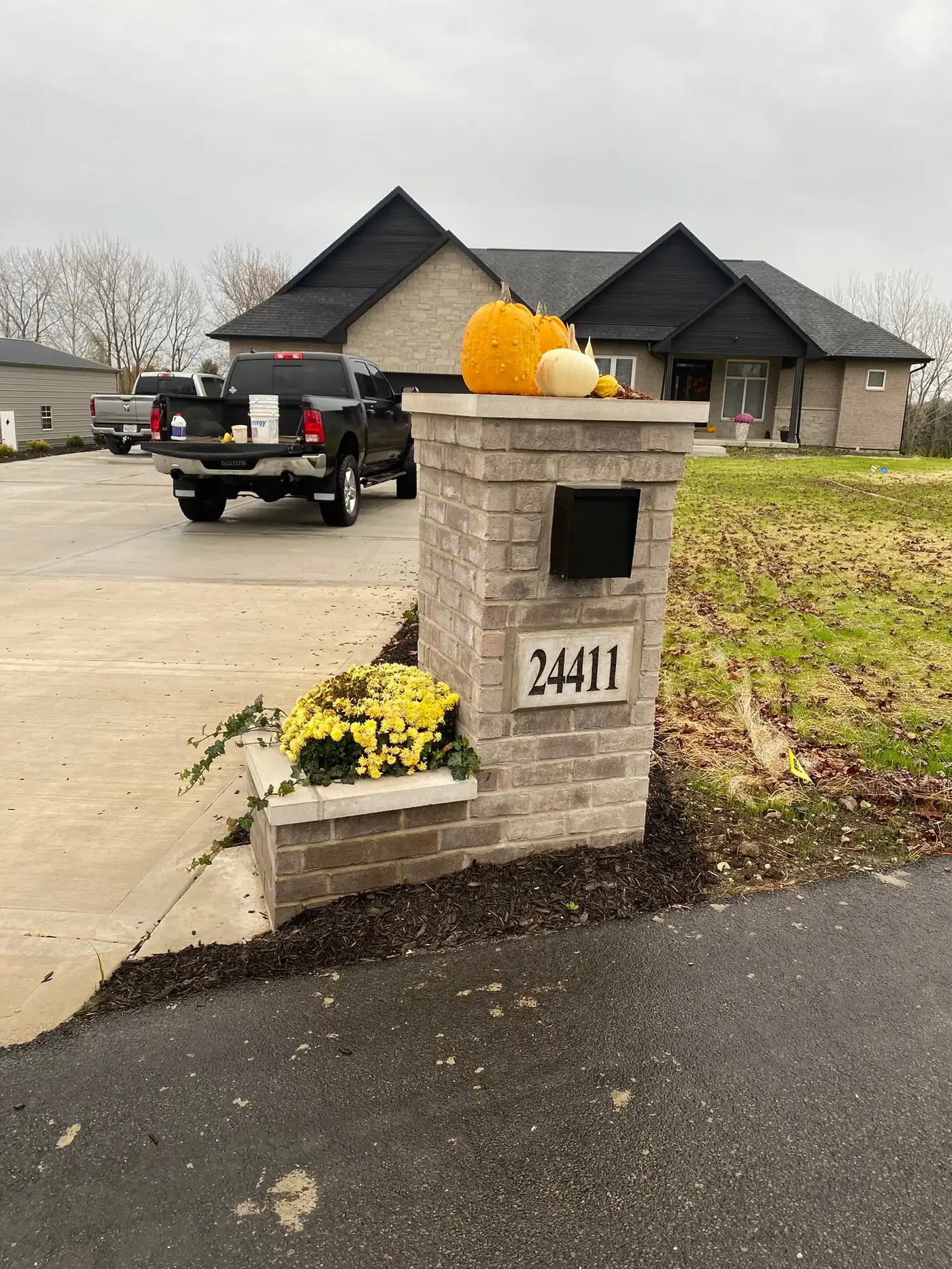
Failing Brick Retaining Walls & Planters in Chicago: Warning Signs, Causes, and How to Fix Them
If your brick retaining wall or garden planter is leaning, bulging, or cracking, the cause is almost always water and frost — not bad bricks. Water trapped in the soil behind the wall builds up pressure with nowhere to go, and Chicagoland's freeze-thaw winters magnify that pressure until the wall starts to move. The good news: many of these walls can be repaired if you catch the warning signs early, and the lasting fix almost always comes down to correcting drainage. Here's how to read your wall and decide what to do next.
The warning signs your retaining wall is failing
Freestanding brick and block retaining walls, garden walls, and planter boxes give clear signals before they fail outright. Watch for these:
- Leaning or tilting. A retaining wall should stand plumb. If the top has visibly rotated toward the low side, soil pressure is winning. Set a level against the face — even a slight, consistent lean is a red flag.
- Bulging or a belly in the wall. When one section pushes outward while the rest holds, water pressure is concentrating in that spot, often where drainage is worst.
- Horizontal or stair-step cracks. A long horizontal crack usually means the wall is being pushed over. Stair-step cracks that climb through the mortar joints point to uneven settling or heaving underneath.
- Separating or open mortar joints. Gaps opening between bricks show the wall is flexing and pulling apart — an early stage that lets even more water in.
- Water seeping or pooling behind the wall. Damp streaks, efflorescence (white salt deposits), or standing water at the base tell you drainage has failed and pressure is building.
- Base settling or heaving. If the bottom courses have sunk on one end or lifted after a hard winter, frost is moving the footing.
- Displaced or loose cap bricks. The caps on top of a planter or garden wall are the first to shift when the structure below starts to move or when water gets into the joints and freezes.
Any one of these is worth an inspection. Two or three together mean the wall is actively failing and should be looked at before another winter.
Why brick retaining and garden walls fail in Chicagoland
Retaining walls do a hard job: they hold back tons of soil, and that soil holds water. Understanding why they fail is what separates a lasting repair from one that fails again in two years.
Hydrostatic pressure. This is the number one killer. Rain and snowmelt saturate the soil behind the wall. Water has weight, and when it can't drain, it presses against the back of the wall with enormous force. A wall built to hold dry soil can be overwhelmed by saturated soil. This is why a wall that stood fine for years can suddenly start to lean after a wet season.
Poor or missing drainage and weep holes. Older brick planters and garden walls were often built solid, with no gravel backfill, no drain pipe, and no weep holes to let water escape. Without a path out, every rainfall adds to the pressure behind the wall. As one rule of thumb we tell homeowners in Orland Park and Tinley Park: a retaining wall is only as good as its drainage.
Frost heave in Chicagoland winters. Saturated soil that freezes expands with tremendous force. That frozen soil pushes the wall outward and lifts the footing upward; when it thaws, the wall settles — rarely back to where it started. Repeat that freeze-thaw cycle a few dozen times each winter and the cumulative movement opens joints, cracks bricks, and tilts the wall.
Undersized or shallow footing. A retaining wall needs a footing wide and deep enough to spread the load and sit below the frost line. Many failing walls were built on a thin footing — or no real footing at all — so they were never able to resist the soil and frost pressure working against them.
Put simply: trapped water plus Chicago frost, working on a wall that can't drain, is what tears these structures apart. If you'd like a professional to identify the exact cause on your property, our brick repair team inspects the wall, the joints, and the drainage behind it as part of a free estimate.
Repair or rebuild? How to decide
Not every failing wall needs to come down. The decision comes down to how far the wall has moved and whether its base is sound.
A candidate for repair typically has:
- Only minor tilt, still close to plumb
- Localized cracking or a few displaced or spalled bricks
- Open or eroded mortar joints that can be repointed
- A footing that is still level and intact
In these cases we can repoint the joints, carry out targeted brick replacement for cracked or spalled units, reset cap bricks, and — critically — add or restore drainage so the underlying cause is addressed.
A candidate for rebuild usually shows:
- Significant lean (several inches out of plumb) or a pronounced bulge
- A long horizontal crack running through the wall
- Base settling or heaving that means the footing has failed
- Widespread deteriorated brick or mortar
When the footing has moved or the wall has rotated, patching the face won't hold — the drainage and foundation have to be corrected from the ground up. Rebuilding lets us install a proper footing below the frost line, gravel backfill, a drain pipe, and weep holes, so the new wall doesn't repeat the failure. Where a wall ties into a structure or sits on a compromised base, our foundation masonry repair experience helps us build the new wall on solid, well-drained footing.
A quick field test: if you can rock the wall or slide a hand into a lean at the top, or if the base has clearly shifted, plan on a rebuild. If the wall is still standing true and the problems are on the surface, repair is usually the smarter, more affordable route.
Drainage and weep holes: the part every lasting fix shares
Whether we repair or rebuild, the fix that actually lasts always solves the water problem. Cosmetic patching without drainage is how walls end up failing twice.
A proper drainage system behind a retaining wall includes weep holes — small openings near the base that let water escape through the face — paired with clean gravel backfill and, on taller walls, a perforated drain pipe (a French drain) that carries water away. Together these relieve the hydrostatic pressure that pushes walls over. On planters and garden walls we also make sure caps shed water outward and that joints are sealed against freeze-thaw intrusion.
The takeaway for any Chicagoland homeowner: if your retaining wall repair doesn't include drainage, it isn't a real repair. Give the water a way out, and the same wall that was failing can stand for decades.
Talk to a Chicagoland masonry contractor
Emerald Masonry LLC is a family-owned, licensed and insured masonry contractor serving Chicago and the Chicagoland suburbs led by career masons with decades of hands-on experience in tuckpointing, chimney repair, brick repair and replacement, lintel and parapet repair, foundation and limestone/sill repair, caulking, sealing, and commercial, residential, and historic masonry restoration. Free on-site estimates — call (708) 288-1696.
If your brick retaining wall, garden wall, or planter is leaning, bulging, or cracking, don't wait for another freeze-thaw season to make it worse. Reach out through our contact page or call (708) 288-1696 for a free on-site estimate, and we'll tell you honestly whether your wall needs a targeted repair or a full rebuild — with the drainage to make it last.
Frequently Asked Questions
Why is my brick retaining wall leaning or bulging?
Most leaning and bulging comes from hydrostatic pressure — water trapped in the soil behind the wall pushes outward, especially when there are no weep holes or drainage to relieve it. In Chicagoland, freeze-thaw cycles multiply that pressure as saturated soil expands. Once a brick wall starts to lean or bulge, it rarely corrects itself and should be evaluated by a masonry contractor.
Can a leaning brick retaining wall be repaired, or does it need to be rebuilt?
It depends on how far the wall has moved and whether the footing is sound. A wall with minor tilt, tight joints, and a solid base can often be repaired by repointing, replacing displaced bricks, and adding drainage. A wall that has leaned several inches, bulged, or settled because of a failed footing usually needs to be rebuilt so the drainage and foundation can be corrected.
What are weep holes and does my retaining wall need them?
Weep holes are small openings near the base of a retaining wall that let water drain out from behind it instead of building up. Combined with gravel backfill and a drainage pipe, they relieve the water pressure that causes most brick retaining walls to fail. Almost any lasting retaining wall repair in Chicagoland includes restoring or adding proper drainage and weep holes.
Why do so many retaining walls fail after Chicago winters?
Chicagoland's repeated freeze-thaw cycles are hard on masonry. Water saturates the soil behind the wall, freezes, and expands, pushing the wall outward and heaving the base upward. When it thaws, the wall settles unevenly. Over several winters this movement opens joints, cracks bricks, and tilts the wall — which is why drainage matters so much here.
How much does brick retaining wall repair cost in Chicagoland?
There's no flat price — cost depends on the wall's length and height, how much of it needs rebuilding versus repointing, the condition of the footing, and what drainage work is required. The best way to get an accurate number is a free on-site estimate from Emerald Masonry LLC at (708) 288-1696, where we can inspect the wall and the soil conditions behind it.