
Masonry Restoration · Chicagoland, IL
Graffiti on Brick: Why Fast Removal Beats Aggressive Removal — and What Actually Works
The instinct after finding graffiti is to blast it off. That instinct has permanently ruined more Chicago brick than the graffiti ever did — because the paint comes off the surface, and so does the surface.
2026-08-25
Quick Answer
Graffiti on brick should be removed quickly and gently, not aggressively. Masonry is porous, so paint wicks into the surface within days, and sandblasting or high-pressure washing removes the paint by removing the brick's fired face — permanently increasing water absorption. Correct removal means substrate-appropriate poultices and chemical removers at low pressure, followed by a sacrificial or permanent anti-graffiti coating. Emerald Masonry LLC restores Chicagoland masonry — (708) 288-1696.
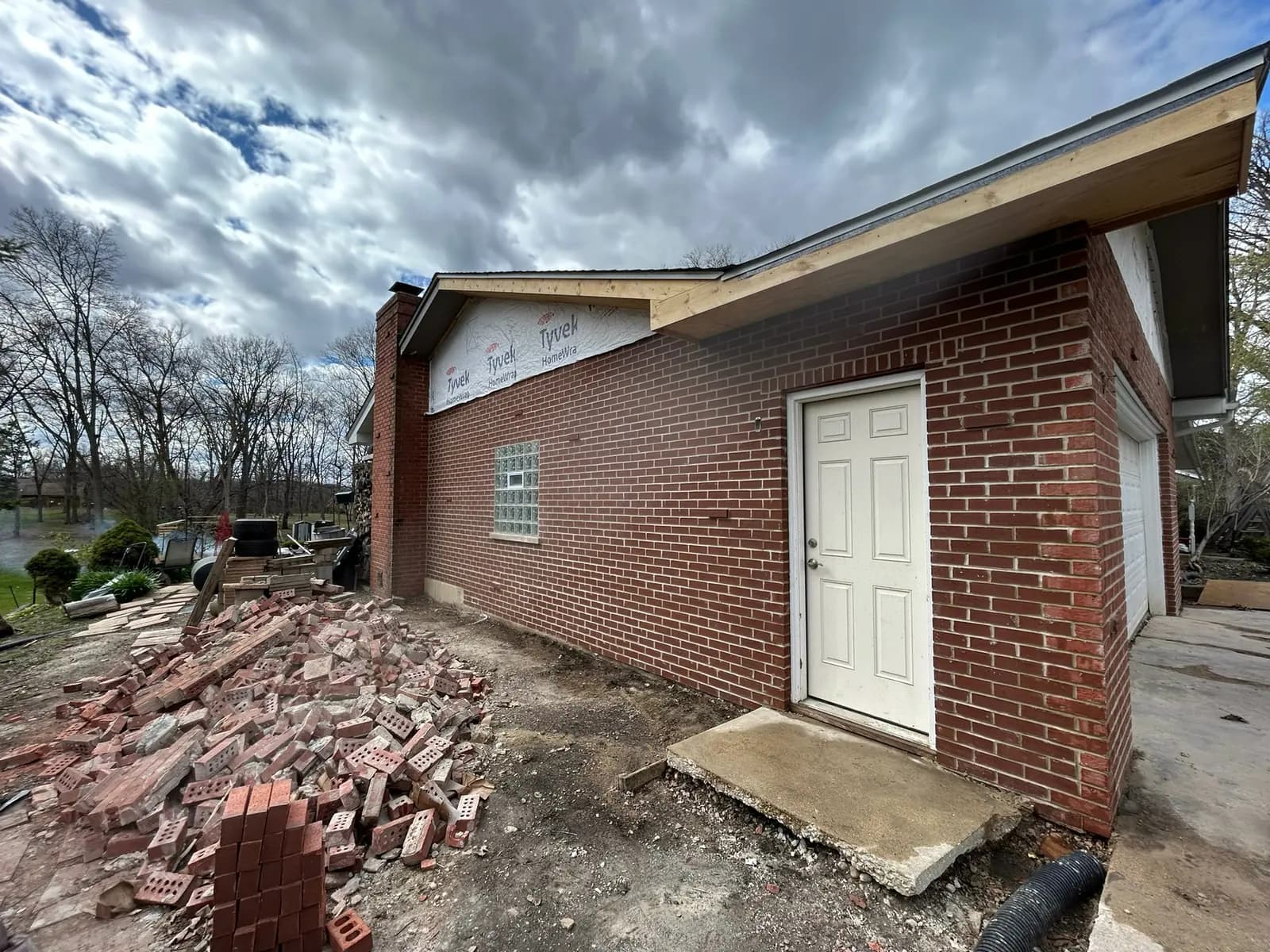
Somebody tags the side of your building on a Friday night. By Monday you want it gone, and the fastest quote in your inbox says sandblasting.
Here is the thing worth knowing before you accept it: the paint is on the surface of the brick, and blasting removes it by removing that surface. The tag disappears and the wall is permanently worse — rougher, more absorbent, and considerably more likely to spall in the next hard winter.
Emerald Masonry LLC cleans and restores masonry on commercial, institutional and residential buildings throughout Chicago and the Chicagoland suburbs. Family-owned, licensed, bonded and insured, career masons with decades of experience, free on-site assessments. Call (708) 288-1696.
Why Masonry Is Difficult to Clean
A brick is not a solid, sealed object. It is a porous ceramic with a network of pores running through it, finished with a harder, denser fired face created in the kiln. That face is what keeps water absorption at a manageable rate, and it is the only part of the brick doing that job.
Two consequences follow, and they explain everything about graffiti on masonry.
Paint goes in, not just on. Spray paint's solvent carries pigment into the pore structure. In the first hours it is largely surface deposit. Over days and weeks it wicks deeper, and what started as a cleaning problem becomes an extraction problem.
Anything that removes the paint by abrasion removes the face. Sand, soda, garnet, or water at high pressure — they do not distinguish between pigment and ceramic. Take the fired face off and the brick underneath drinks water at a much higher rate for the rest of its life. In a region that cycles through freezing and thawing dozens of times a winter, that is a straight line to spalled brick and eroded joints. It is the same mechanism explained in why sandblasting damages brick.
Limestone is worse. Chicago's greystones and stone-trimmed buildings carry a weathered outer skin on the stone that protects the softer body beneath, and abrasive cleaning strips it permanently.
Speed Beats Force
The single highest-leverage thing a property owner can do is remove tags fast.
- Within days: most of the paint is still near the surface. Removal is more complete, gentler, and cheaper.
- After weeks or months: the solvent has carried pigment deeper. Removal takes stronger chemistry, longer dwell times, more passes — and ghosting becomes more likely.
- After a season or more: you are into poultice work on a wall that has also been weathering the paint into itself.
There is a second reason for speed. Tagged surfaces attract more tagging. Buildings that get cleaned within a few days are demonstrably less attractive targets than buildings where work sits untouched for months.
What Actually Works
| Method | How it works | Right for | Risk | |---|---|---|---| | Chemical remover, low-pressure rinse | Solvent breaks the paint's bond, then gentle rinse | Most brick; the everyday answer | Wrong chemistry can stain or etch | | Poultice | Absorbent paste draws pigment back out of the pores | Deep-set paint, limestone, historic masonry | Slow; needs dwell time and testing | | Hot water / low-pressure soft washing | Heat and detergent lift residue | Sacrificially coated walls; light soiling | Ineffective alone on cured paint | | Steam | Heat softens and lifts | Sacrificial coating removal, some residues | Limited on solvent-based paint | | Sandblasting / high-pressure | Abrades the surface away | Essentially nothing on historic or soft masonry | Permanent, irreversible face loss | | Painting over | Hides it | A stopgap only | Traps moisture; commits the wall to being painted |
The two workhorses are chemical removers and poultices, and the skill in both is matching the chemistry to the substrate and the paint, then dwelling it correctly rather than compensating with pressure.
Not All Graffiti Is Paint
The medium changes the method, and assuming everything is spray enamel is how removals go wrong.
- Solvent-based spray enamel — the common case. Wicks deepest into masonry, responds to solvent removers and poultices.
- Water-based latex — often sits more on the surface and can lift with milder chemistry, but softens and smears if attacked wrong.
- Permanent marker and ink — very fine pigment that penetrates porous masonry readily; poultices usually outperform surface removers.
- Shoe polish and oil-based sticks — leave a greasy halo that spreads if solvent is flooded on; needs absorbent poulticing rather than scrubbing.
- Stickers and adhesive residue — mechanical removal plus a residue solvent; the adhesive is frequently harder to clear than the sticker.
- Etch and acid tags — mostly aimed at glass, but where they land on limestone or cast stone they physically etch the surface. That is not a cleaning problem; it is a stone repair, handled with a Dutchman patch or unit replacement.
- Previously painted-over graffiti — now two problems stacked, and the paint film is usually the harder of the two to remove without damaging what is beneath it.
On a wall with mixed media — which most repeat-target elevations are — different areas get different treatments in the same visit.
Our Removal Process
- Identify the substrate. Brick, limestone, cast stone, terra cotta, painted masonry and CMU do not take the same treatment. Getting this wrong is how walls get etched.
- Identify the coating. Spray enamel, latex, marker, etch fluid and adhesive residue respond to different chemistries.
- Test in an inconspicuous area. Always. A test patch establishes both effectiveness and whether the substrate reacts.
- Protect the surroundings — glazing, metal, sealant joints, plantings and pavement below.
- Apply, dwell, and repeat gently. Multiple mild applications beat one aggressive one, every time.
- Rinse at low pressure, with heat where it helps.
- Poultice the residue where pigment has set into the pores.
- Assess what is underneath. If the wall was previously blasted, or if joints have eroded, cleaning has just uncovered a repair conversation.
- Repair before protecting. Spalled units replaced, failed joints repointed.
- Apply protection, if the location warrants it.
Anti-Graffiti Coatings: Sacrificial vs. Permanent
For repeat-target walls — alley elevations, viaducts, corridor-facing storefronts, loading areas — a protective coating changes the economics substantially.
Sacrificial coatings are typically wax-based and breathable. Paint lands on the wax rather than the masonry, and removal is hot water: the coating comes off carrying the graffiti, and a fresh coat goes on. Advantages: genuinely vapor-permeable, forgiving, easy to reapply. Trade-off: it must be reapplied after each incident and periodically anyway.
Permanent (non-sacrificial) coatings are urethane- or fluoropolymer-based and survive repeated cleanings. Advantages: multiple removals without reapplication. Trade-offs: they generally alter appearance more, they are less forgiving to install, and breathability is the make-or-break specification.
That last point is not a detail. A masonry wall has to dry outward. Put a non-breathable film on it and the moisture already in the wall — and there always is some — has nowhere to go, which spalls the brick face from behind. It is the same failure that ruins painted masonry, covered in why painted brick traps moisture.
Whatever the product, require a test patch. Coatings change how masonry looks, and finding that out across an entire facade is an expensive way to learn it.
After Cleaning: Ghosting and the Clean-Patch Problem
Two cosmetic outcomes surprise owners.
Ghosting — a faint shadow where the tag was, from pigment that reached deep into the pores. It usually fades with weathering. The temptation is to attack it with something stronger, which is precisely when irreversible damage happens.
The clean patch — the removal area now reads noticeably lighter than the surrounding soiled wall. This is not a defect; it is decades of urban soiling everywhere else. The fix is not scrubbing the patch harder but cleaning a wider area or feathering the edges so there is no hard line.
Chicagoland Context
The buildings most often tagged here are also, unhelpfully, the ones least able to survive aggressive cleaning.
Chicago common brick — the soft, salmon-colored brick behind and beneath much of the city's housing and commercial stock — is porous and comparatively soft, exactly as described in why Chicago common brick crumbles. Blast it and you have opened up a wall that was already vulnerable.
Greystones and limestone-fronted buildings carry stone that cannot be re-skinned once its weathered surface is gone.
Storefronts, viaducts and alley elevations in the older commercial corridors take repeat hits, which is where sacrificial coatings genuinely pay for themselves.
And the climate does the rest. A wall whose face has been opened by aggressive cleaning absorbs more water, holds it longer, and goes through dozens of freeze-thaw cycles a season. Spalling that would have taken decades arrives in a few winters — the mechanism laid out in freeze-thaw masonry damage in Chicago.
What Drives the Cost
- Area and reach — a tag at street level versus a two-story elevation needing a lift
- How long it has been there — the single biggest variable in removal difficulty
- Substrate — brick, limestone, cast stone or previously coated masonry
- Paint type and number of layers
- Whether the wall has been previously blasted, which changes both the method and the outcome
- Repairs uncovered — repointing or unit replacement revealed by cleaning
- Protective coating and whether the specification is sacrificial or permanent
- Season — most chemistries have temperature limits, and rinse water freezing on a facade is its own problem
Emerald Masonry provides a free written on-site assessment, with a $5,000 project minimum.
DIY vs. Hiring a Mason
A single small tag on sound, hard, modern brick at ground level is within reach for a careful owner using a proprietary masonry-safe remover, a test patch and a garden hose. Everything else is not, for reasons that are specific rather than snobbish:
- Substrate identification. Treating limestone like brick etches it.
- Chemistry selection. The wrong remover stains masonry permanently or drives pigment deeper.
- Pressure discipline. Rented pressure washers make it very easy to do irreversible damage in under a minute.
- Reading what is underneath. Cleaning frequently exposes eroded joints and spalled units that need repair before anything is coated.
- Coating specification. A non-breathable anti-graffiti coating on a masonry wall is a slow-motion spalling problem.
Prevention and Maintenance
- Remove tags within days, not seasons
- Coat repeat-target elevations with a breathable sacrificial or permanent system
- Light the vulnerable elevations — alley walls, loading areas, blank side elevations
- Keep the wall sound. Repointed, unspalled masonry cleans far better than deteriorated masonry
- Photograph incidents for police reports and, where relevant, insurance
- Never let anyone blast the facade, whatever the schedule pressure
- Inspect after cleaning — treat it as an opportunity to see the wall clearly for once
Related Services
- Commercial masonry restoration — storefronts, multi-tenant and institutional buildings
- Historic masonry restoration — greystone, limestone and soft-brick facades
- Tuckpointing and repointing — joints exposed or eroded by past aggressive cleaning
- Brick repair and brick replacement — spalled units
- Masonry sealing — breathable water repellents after repair
The Short Version
Graffiti removal on masonry is a race against absorption, not a contest of force. Remove it fast, remove it gently, test before you commit, and never let anything abrasive touch the wall. If the elevation gets hit repeatedly, a breathable sacrificial coating turns a masonry problem into a maintenance routine.
And if a previous removal already opened up your brick, that damage does not heal — but the wall can be repaired, repointed and protected so it stops getting worse.
Emerald Masonry LLC is a family-owned, licensed and insured masonry contractor serving Chicago and the Chicagoland suburbs led by career masons with decades of hands-on experience in tuckpointing, chimney repair, brick repair and replacement, lintel and parapet repair, foundation and limestone/sill repair, caulking, sealing, and commercial, residential, and historic masonry restoration. Free on-site estimates — call (708) 288-1696.
Dealing with graffiti on a building — or with brick that a previous removal already damaged? Request a free on-site estimate or call (708) 288-1696.
Frequently Asked Questions
What is the best way to remove graffiti from brick?
Quickly, and with the gentlest method that works — typically a substrate-appropriate chemical remover or poultice, dwelled properly, then rinsed at low pressure. Speed matters more than force, because paint wicks deeper into porous masonry with every day it sits.
Can I just sandblast or pressure wash graffiti off brick?
You can, and it is the most common way good masonry gets permanently ruined. Blasting and high-pressure washing remove paint by removing the brick's hard fired face, leaving a rough, open surface that absorbs far more water — which then spalls in Chicago's freeze-thaw cycling.
How fast should graffiti be removed?
Within days if possible. Solvent-based paint continues wicking into the pore structure over time, so a tag removed within a week comes off far more completely than one left for a season, and it also reduces the likelihood of the wall being tagged again.
What is a sacrificial anti-graffiti coating?
It is a breathable coating — often wax-based — that sits over the masonry so paint lands on the coating rather than the brick. It is removed along with the graffiti using hot water and then reapplied, which is why it is called sacrificial.
Will removal leave a shadow or clean patch?
Often some of both. Faint ghosting can remain in porous masonry, and the cleaned area may read lighter than the surrounding soiled wall. Cleaning a slightly wider area or feathering the edges usually resolves the visual difference better than scrubbing the tag harder.
Does anti-graffiti coating change how brick looks?
It can. Some products darken masonry or add sheen, and any non-breathable coating traps moisture in the wall, which causes spalling. Always require a test patch on an inconspicuous area, and only use vapor-permeable products.
Is graffiti removal different on limestone or greystone?
Yes, and it is less forgiving. Limestone is softer and more porous than brick and has a weathered outer skin that abrasive cleaning destroys permanently, so stone requires poulticing and specific chemistries rather than anything aggressive.
Can graffiti be painted over instead of removed?
Painting over it is a short-term visual fix with a long-term cost. Paint films on masonry trap moisture in the wall and eventually blister and spall the face, and once a wall has been painted it generally has to stay painted.
What if a previous removal already damaged my brick?
That is a repair conversation rather than a cleaning one. Blasted brick with an opened face absorbs water rapidly, so the usual path is replacing badly spalled units, repointing eroded joints, and applying a breathable water repellent once the masonry is sound.