
Masonry Restoration · Chicagoland, IL
Selling a Brick House: Which Masonry Repairs Are Worth Doing First
You are not restoring the building. You are trying to keep masonry from becoming a negotiating item. Those are different jobs with different price tags, and the repairs that protect a sale are not always the ones that look worst from the curb.
2026-08-15
Quick Answer
When selling a brick home, prioritize masonry that will appear in an inspection report and trigger a contingency: chimney crown and flashing, rust-stained lintels, loose or spalled brick, and anything actively admitting water. Cosmetic mortar color and efflorescence rarely move a deal. Emerald Masonry LLC provides pre-listing masonry assessments across Chicagoland. Family-owned, career masons, licensed and insured. Call (708) 288-1696.
A Different Job Than Restoration
If you are selling, you are not restoring the building. You are trying to keep masonry from becoming a negotiating item.
That is a narrower job with a smaller budget, and the repairs that serve it are not always the ones that look worst from the curb. Emerald Masonry LLC provides pre-listing masonry assessments across Chicago and the Chicagoland suburbs — family-owned, licensed and insured, career masons with decades of experience, free on-site. Call (708) 288-1696.
The organizing question is simple: what will end up in the inspection report, and what will a buyer's agent do with it?
What Inspectors Reliably Flag
A general home inspector is not a mason, but the masonry items they consistently write up are predictable:
- Loose, missing or spalled brick — visible and unambiguous.
- Mortar joints visibly receded behind the brick face.
- Rust staining above windows and doors — the steel lintel corroding.
- Cracked or missing chimney crown, deteriorated flashing, missing cap.
- Step cracks running diagonally through joints.
- Efflorescence, especially on a basement wall.
- Any active water entry or staining on interior surfaces.
- Grade or mulch piled against the brick.
- Bowing, bulging or leaning masonry — which escalates immediately.
Every one of those becomes a line item. And a line item without a number attached is the expensive kind, because the buyer fills in the number themselves.
What Inspectors Generally Do Not Evaluate
Worth knowing, because it tells you where not to spend:
- Mortar hardness relative to the brick — the most consequential thing about your wall, and a trade judgment.
- Joint preparation depth on a past repointing job.
- Whether the mortar color matches — cosmetic, rarely mentioned.
- Joint profile and tooling quality.
- Whether the correct mortar type was used on a prior repair.
So a wall with a slightly mismatched previous repair is usually a non-event in a sale, while a chimney crown with a visible crack is a line item every time.
The Priority Ranking for Sellers
Tier 1 — Fix these
Things that trigger a contingency, imply water in the house, or read as a safety issue.
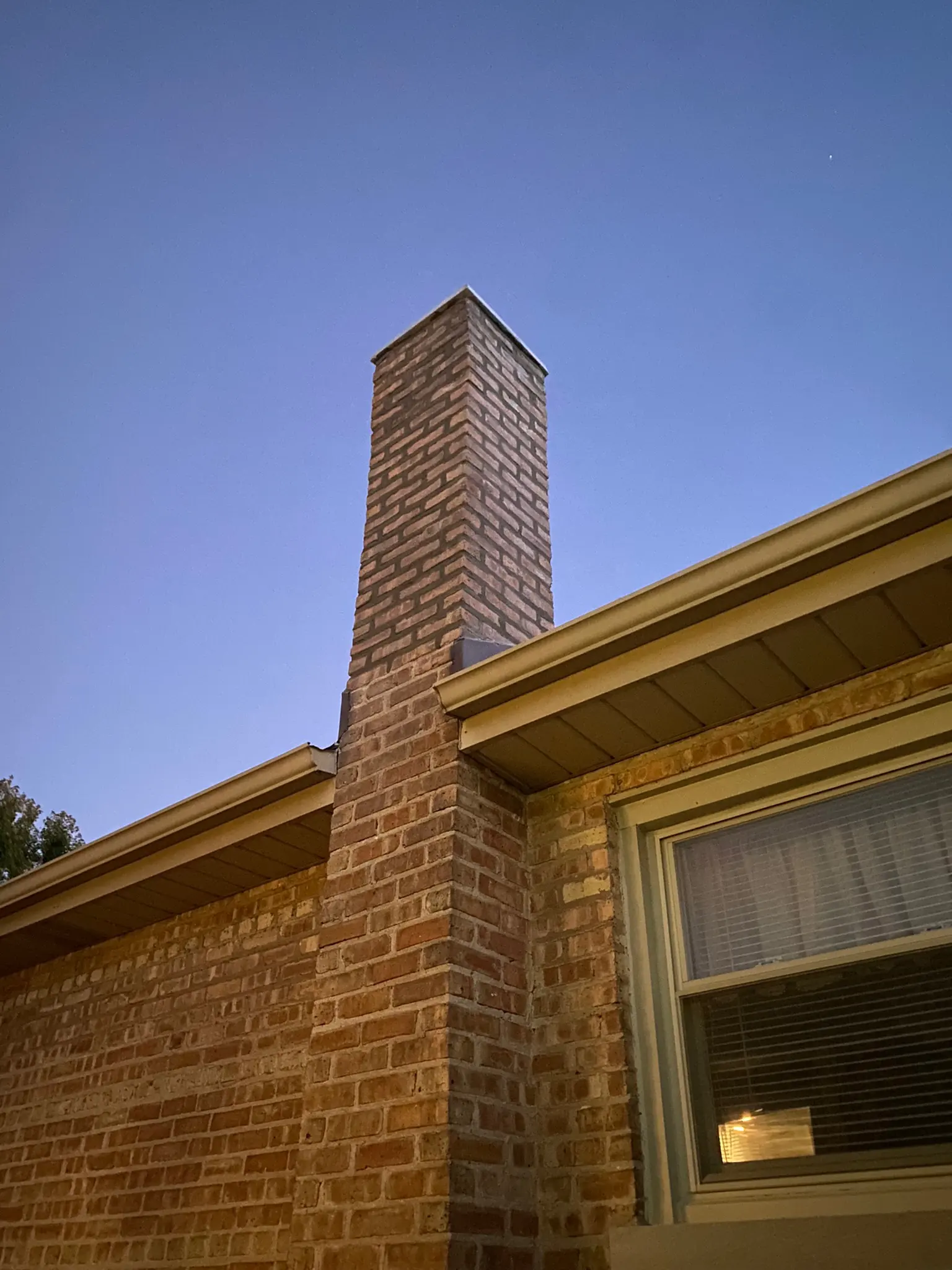
Chimney crown, cap and flashing. The chimney is the most exposed masonry on the house and inspectors always look at it. A cracked crown is cheap to address and expensive to have written up.
Rust-stained lintels. Visible, unambiguous, and a buyer will assume the worst about what is behind it.
Loose or spalled brick anywhere reachable. Reads as neglect and as a safety issue.
Anything actively admitting water. Interior staining traced to masonry is the single worst item to leave on the table.
Obviously receding joints on the front elevation. Highest visibility, first impression, first photograph.
Tier 2 — Get priced, then decide
Repointing a secondary elevation. Get the number; whether it pays depends on how bad it looks and how the market is moving.
Sill repair. Worth doing if cracked or dropped, less so if merely weathered.
Step cracks. Worth an assessment so you can say whether they are dormant — a documented dormant crack is a far smaller negotiating item than an undocumented one.
Grade and drainage. Often nearly free and it removes an inspection note.
Tier 3 — Usually skip
Mortar color mismatch from an old repair. General staining and algae — a gentle cleaning is enough. Efflorescence with no active water behind it. Full-envelope repointing on a house you are leaving. Cosmetic tuckpointing on the back elevation nobody photographs.
The Repair-vs-Credit Math
Sellers regularly ask whether to fix it or credit it. In most cases, fixing costs less.
A repair costs what the repair costs. A credit costs what the buyer imagines the repair costs — and buyers, advised by agents, imagine generously. An inspection note reading "deteriorated mortar joints observed, recommend evaluation by a qualified contractor" has no ceiling on it. The buyer's number will be larger than yours, and it will be argued from a position where you have already accepted the premise.
There is also the risk that is not about money: masonry uncertainty is a common reason buyers walk. Brick problems sound structural to people who do not know masonry, and "the inspector flagged the brick" ends more deals than the actual repair cost would justify.
The cheapest move, regardless of which you choose, is having a written scope with a real number in hand before you list. Then the negotiation is against your document rather than their imagination.
What a Pre-Listing Assessment Should Produce
Not a conversation — a document. It should state:
- Which elevations and elements were examined, and what could not be reached.
- Every condition an inspector is likely to flag, photographed.
- A priority grade per item — fix before listing, optional, or leave.
- What each item costs to address.
- What genuinely does not need doing — frequently the more valuable half, because it tells you where not to spend.
- The mortar type appropriate to the wall, so any work done is correct rather than merely fast.
How to Talk About Masonry With a Buyer
Once the inspection report exists, the conversation is about framing as much as facts, and sellers regularly damage their own position in predictable ways.
Do not minimize it. "That's normal for an old brick house" is often true and always sounds like a dodge. It invites the buyer to get their own opinion, and now you have lost control of the number.
Do produce your document. A written scope with photographs, priorities and a real price converts an open-ended worry into a defined line item. Buyers negotiate line items. They walk away from open-ended worries.
Do separate the fixed from the remaining. If you repaired the chimney and left the back elevation, say exactly that, with the invoice for one and the quote for the other. Partial work you can document reads as maintenance. Partial work you cannot document reads as a cover-up.
Do let a mason answer masonry questions. Buyers ask what caused it and whether it will come back, and those are trade questions. A contractor's written answer carries more weight than a seller's reassurance, and costs nothing to obtain.
Do not over-repair to win the argument. Full-envelope repointing on a house you are leaving rarely returns what it costs. The goal is to remove line items, not to hand over a restored building.
Timing and Weather
Start earlier than feels necessary, for two reasons.
Mortar needs temperature to cure. Chicagoland late-fall and winter work is restricted or requires protection, so a repair you planned in November may not happen on your schedule.
Fresh mortar cures lighter and keeps darkening for weeks to months. Work done in early spring reads as settled by summer; work done the week before photos reads as brand new.
If you are listing in spring — which most Chicagoland sellers are — the practical window for masonry is the preceding fall or the first workable stretch of the year.
Do the Repair Properly Even Though You Are Leaving
There is a temptation to have the cheapest available crew smear something over the problem, since you will not be there.
Two reasons not to.
A bad repair is visible to the next inspector. Mortar skimmed over old joints, hard gray mortar packed against soft brick, or caulk troweled into brickwork are all recognizable, and finding a bad repair is worse in a negotiation than finding the original problem — because now the buyer distrusts everything.
Disclosure. Illinois sellers complete a residential real property disclosure regarding known material defects. A documented, properly executed repair is a straightforward thing to describe. A cover-up is a different situation, and one worth discussing with your attorney rather than improvising.
If You Are Buying Instead
The same list read backwards is a buyer's checklist, and it is worth stating because the two sides misread each other constantly.
A masonry note in an inspection report is not a reason to walk. Older brick homes in this market have masonry line items — that is normal, and a seller who has documented and priced theirs is doing you a favor rather than hiding something.
What deserves a closer look before the contingency expires is the same Tier 1 list: chimney crown and flashing, rust staining above openings, spalled or loose brick, and anything suggesting active water entry. Those are the items where the real number and the imagined number diverge most.
Get the assessment inside the window. An inspection note recommending evaluation by a qualified contractor has no price attached, and without a price it is not negotiable. A written scope is.
The reason this matters to a seller is that a well-advised buyer will do exactly this, so the seller who has already done it is negotiating from the same document rather than against a stranger's estimate.
Chicagoland Context
Local factors that shape this decision here.
The stock is old brick. Bungalows, two-flats, Georgians, greystones and post-war ranches across Chicago and the suburbs are predominantly masonry, and buyers in this market are used to seeing masonry line items. That cuts both ways: a modest amount of wear is normal and expected, but a chimney in visibly poor condition stands out because buyers here have seen plenty of good ones.
Freeze-thaw makes deterioration visible. Dozens of crossings of the freezing point each winter mean damage progresses on a schedule everyone can see. A wall that looked acceptable two springs ago may not now.
Soft brick punishes cheap repairs. Pre-1930 Chicago common brick is softer than modern face brick, and a repointing job done in hard Portland-heavy mortar will spall the faces within a few winters. If you are doing the work, do it with the right mix — it costs essentially the same and it does not backfire.
What Not to Do Before Listing
Four moves that reliably cost sellers more than they save.
Do not paint the brick. It is the fastest way to make a tired elevation look uniform and the fastest way to alarm an informed buyer, because paint on masonry traps moisture and is effectively irreversible. Buyers and inspectors in this market know that, and painted brick reads as something covered up.
Do not power-wash it. High pressure strips the fired skin off older brick and drives water deep into the wall. A gentle, low-pressure cleaning is fine; a pressure washer on soft Chicago common brick causes damage that will still be visible at the next inspection.
Do not caulk your mortar joints. A bead of sealant troweled into deteriorating brickwork is one of the most recognizable cover-ups there is, and finding it costs you far more credibility than the eroded joints would have.
Do not seal the wall to hide staining. A film-forming waterproofer over damaged masonry traps whatever is already in there, and if the buyer's inspector notices fresh sealer over spalled brick, every other item on the report gets read less charitably.
The pattern in all four is the same: cheap cosmetic fixes on masonry are legible to anyone who knows the material, and being caught doing one turns a repair negotiation into a trust negotiation.
Related Services
Pre-sale masonry work most often involves chimney repair, tuckpointing, lintel repair, brick repair and brick replacement, and occasionally limestone and sill repair. Related reading: buying a home with masonry problems and what a masonry estimate should include.
The Bottom Line
Fix what an inspector will write up and what implies water in the house. Skip what is merely cosmetic. And whichever you choose, get a written scope with a real number before you list — because the most expensive masonry item in any sale is the one with no price attached to it.
An honest assessment often ends with a shorter list than the seller expected. That is a good outcome, and it is worth an hour of somebody's time to find out.
Emerald Masonry LLC is a family-owned, licensed and insured masonry contractor serving Chicago and the Chicagoland suburbs led by career masons with decades of hands-on experience in tuckpointing, chimney repair, brick repair and replacement, lintel and parapet repair, foundation and limestone/sill repair, caulking, sealing, and commercial, residential and historic masonry restoration. We give honest pre-listing assessments, including telling you what does not need doing.
Free on-site estimates. Call (708) 288-1696 or request an estimate.
Frequently Asked Questions
Should I tuckpoint before selling my house?
It depends where the deterioration is and how visible it is. Repointing an elevation with obviously receding joints or a chimney in poor condition usually pays for itself in avoided negotiation; repointing all four elevations of a house you are leaving rarely does. Get it scoped by elevation and decide from there.
What masonry problems show up in a home inspection?
Inspectors reliably flag loose or spalled brick, visibly deteriorated mortar joints, rust staining above windows, cracked chimney crowns, step cracks, efflorescence and any active water entry. They generally do not evaluate mortar hardness or joint preparation depth, which are trade judgments.
Is it better to repair or to offer a credit?
Repairing usually costs less than the credit a buyer will ask for, because a credit gets negotiated against a worst-case number the buyer imagines rather than an actual scope. Getting a written scope in hand before listing is the cheapest version of this either way.
Will a masonry repair pay for itself?
The ones that prevent a contingency usually do. A repair that removes a line item from an inspection report avoids both the credit and the risk of a buyer walking, which is a bigger number than the repair. Purely cosmetic work does not pay for itself as reliably.
Do I have to disclose masonry problems?
Illinois sellers complete a residential real property disclosure covering known material defects, and known masonry or water-entry issues can fall under that. Ask your attorney or agent about your specific situation rather than guessing — and note that a documented repair is generally easier to disclose than an unaddressed condition.
How late is too late to start masonry work before listing?
Earlier is better, mostly because of weather. Mortar needs suitable temperatures to cure, so late-fall and winter work in Chicagoland can be delayed or restricted. Fresh mortar also cures lighter and darkens over the following months, so work done well before listing looks more settled.
Will new mortar look obviously new to buyers?
Somewhat, for a season. Fresh mortar cures lighter than its final color and keeps darkening for weeks to months. That reads as a recent repair, which in a sale is generally a positive rather than a negative.
What if I find something major right before listing?
Get a written scope and a real number rather than delisting or guessing. A documented condition with a documented price is a manageable negotiation item; an undocumented one that surfaces during inspection is where deals actually fall apart.
Is a pre-listing masonry assessment worth it?
On an older brick home, usually yes. It tells you what an inspector will flag, what it costs to address, and what genuinely does not need doing — which is often the more valuable half. Emerald Masonry provides these free on-site across Chicagoland.