
Caulking & Joint Sealant · Carol Stream, IL
Masonry Caulking & Joint Sealant in Carol Stream, IL — Sealing Expansion Joints and Gaps That Let Water In
Failed masonry caulking lets water into your walls long before mortar does. Emerald Masonry LLC reseals expansion joints, control joints, and window perimeters across Carol Stream, IL with the correct flexible sealant for each joint.
Quick Answer
Emerald Masonry LLC provides masonry caulking and joint sealant in Carol Stream, IL — resealing expansion joints, control joints, window and door perimeters, and dissimilar-material transitions with the correct flexible sealant. Family-owned, led by career masons with decades of hands-on experience, licensed and insured, offering free on-site estimates. Call (708) 288-1696.
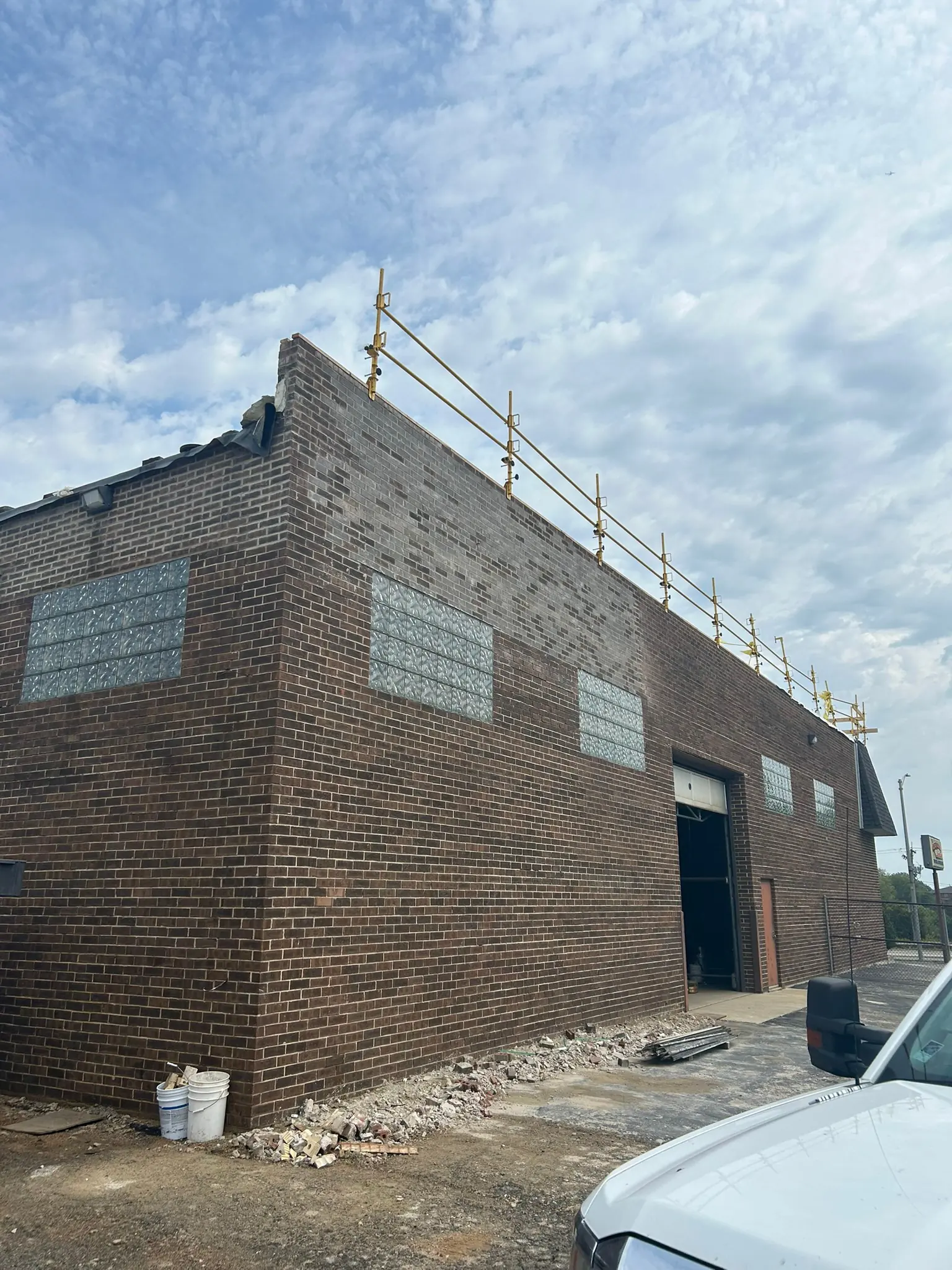
If failed caulking is letting water into your walls in Carol Stream, Emerald Masonry LLC provides professional masonry caulking and joint sealant throughout Carol Stream, IL — resealing expansion joints, control joints, window and door perimeters, and dissimilar-material transitions with the correct flexible sealant for each joint. We're family-owned, licensed and insured, and offer free on-site estimates. Call (708) 288-1696 to get your joints inspected before the next freeze.
What Masonry Caulking and Joint Sealant Actually Is
Masonry caulking is the application of a flexible, elastomeric sealant into joints that are designed to move. Unlike mortar, which is rigid and bonds brick into a solid wall, sealant stretches and compresses as a building expands and contracts with temperature. That flexibility is exactly why caulking belongs in specific places — and why it fails when the wrong product is used.
The joints that need flexible sealant include:
- Expansion joints — the deliberate vertical or horizontal gaps built into brick and block walls so the façade can move without cracking.
- Control joints — planned breaks in concrete masonry units (CMU) that direct where shrinkage cracks form.
- Window and door perimeters — the seam between the frame and the surrounding masonry, where two materials with different movement rates meet.
- Dissimilar-material transitions — where brick meets steel, limestone meets concrete, or masonry meets a different cladding.
- Copings and parapets — joints at the top of walls that take the worst of the weather and the most movement.
Anywhere a building needs to flex, you need flexible sealant — not mortar.
The Key Distinction: Caulking vs. Tuckpointing
This is the single most important thing to understand about masonry maintenance, and it's where a lot of damage starts. Caulking and tuckpointing are not interchangeable.
Tuckpointing repairs the mortar joints between individual bricks — the rigid, structural joints that hold the wall together. Caulking seals the flexible, moving joints described above. Mortar packed into an expansion joint will crack apart within a season because it can't move. Sealant smeared over brick mortar joints will peel and trap moisture because it isn't meant to carry load or breathe like mortar.
A contractor who knows the difference seals the moving joints with sealant and repoints the brick joints with matching mortar. If you've been told "we'll just caulk over that," on what is actually deteriorated mortar, that's a warning sign. Our tuckpointing service in DuPage County handles the mortar joints, and our masonry caulking work handles the flexible ones — using the right method in each place. For a deeper breakdown, see our guide on tuckpointing vs. caulking in masonry.
Sealant flexes; mortar holds. Put either one where the other belongs and water gets in.
Signs You Need Masonry Caulking in Carol Stream
Failed sealant is usually easy to spot once you know what to look for:
- Caulking that is cracked, split, or crumbling along its length.
- Sealant that has hardened and lost its rubbery give.
- Beads that have pulled away from one or both edges of the joint, leaving a visible gap.
- Missing sections where the old sealant has fallen out entirely.
- Gaps around windows and doors, especially at the bottom corners.
- Water staining, efflorescence, or interior leaks that line up with a joint.
- Failed or empty expansion joints on commercial walls.
Any of these means water now has a direct path into the wall.
The Risks of Waiting
Caulking is a small line item that prevents large repairs. When a joint fails, water enters the wall assembly and the damage compounds:
- Water intrusion soaks into brick, block, and the cavity behind it.
- Freeze-thaw cycling — a defining feature of Carol Stream winters — expands that trapped water, spalling brick faces and widening cracks.
- Interior leaks appear on drywall, ceilings, and around windows.
- Façade deterioration sets in as saturated masonry weakens, mortar washes out, and lintels and shelf angles begin to rust.
A failed expansion joint left for a few winters can turn a same-day reseal into a structural repair. Sealing on time is the cheapest masonry maintenance there is.
Our Caulking Process
We don't just lay a fresh bead over old failed material — that's the most common shortcut and it never lasts. Our process is built to make the new seal last its full service life:
- Remove old, failed sealant completely, cutting it out of the joint down to clean substrate.
- Clean and prep the joint faces so the new sealant can bond — dust, old adhesive, and loose material all prevent adhesion.
- Install backer rod to the correct depth, which controls the sealant's shape and lets it stretch and compress properly.
- Apply the correct-grade sealant and tool it firmly into the joint for full contact and a clean, weather-shedding profile.
Tooling matters as much as the product. A properly tooled joint is pressed into both faces and shaped to drain water away — not just smeared across the surface.
Materials: Why Sealant Grade Matters
Not all caulk belongs on masonry. Hardware-store painter's caulk will fail fast on a moving exterior joint. For masonry we use professional-grade polyurethane and silicone sealants rated for the movement, UV exposure, and substrate involved, paired with the right diameter backer rod.
Polyurethane sealants bond aggressively and take paint well, which suits many masonry joints. Silicone offers excellent UV and weather resistance for high-exposure locations. Choosing the correct grade — and matching it to the joint width and expected movement — is what separates a seal that lasts 15 years from one that splits in two. Color is matched to the masonry so the repair disappears into the wall.
Serving Carol Stream and DuPage County
Carol Stream's mix of commercial and retail buildings, condo associations, HOAs, and residential masonry all face the same DuPage County climate — hard freeze-thaw winters followed by hot, sun-baked summers that work every exterior joint hard. That movement is exactly what flexible sealant is built to absorb, which is why local buildings need it resealed on schedule rather than left until water shows up inside.
We work throughout Carol Stream and the surrounding DuPage County suburbs, for property managers maintaining commercial portfolios, HOA boards keeping façades watertight, and homeowners who've spotted gaps at their windows. While we're on site we'll also flag related issues — like masonry sealing on a porous wall or parapet wall repair on a commercial roofline — so you get one clear picture of the building's envelope.
Emerald Masonry LLC is a family-owned, licensed and insured masonry contractor serving Chicago and the Chicagoland suburbs led by career masons with decades of hands-on experience in tuckpointing, chimney repair, brick repair and replacement, lintel and parapet repair, foundation and limestone/sill repair, caulking, power washing, sealing, and commercial, residential, and historic masonry restoration. Free on-site estimates — call (708) 288-1696.
Frequently Asked Questions
How much does masonry caulking cost in Carol Stream, IL?
Cost depends on total linear footage, the joint type and width, and how easy the joints are to reach — ground-level window perimeters cost far less than high expansion joints needing lift access. Removing failed sealant and installing backer rod also affects the figure. We don't quote prices sight-unseen, so we provide a free on-site estimate.
What is the difference between caulking and tuckpointing?
Caulking uses a flexible sealant to seal moving joints — expansion joints, control joints, and gaps where two different materials meet. Tuckpointing replaces deteriorated mortar in the rigid joints between bricks. Using one where the other belongs almost always fails, because mortar can't flex and sealant can't carry structural load.
How often does masonry caulking need to be replaced?
Most masonry sealants last roughly 10 to 20 years depending on product grade, sun exposure, and joint movement. Carol Stream's freeze-thaw winters and summer heat shorten that lifespan on south- and west-facing walls. Once you see cracking, hardening, or pulling away from the edges, it's time to reseal.
Do you caulk commercial buildings and HOAs in Carol Stream?
Yes. We regularly reseal commercial and retail buildings, condo associations, and HOA-managed properties throughout Carol Stream and DuPage County. We work with property managers on scheduled maintenance and can sequence larger buildings around access and tenant needs.
Get a Free Caulking Estimate in Carol Stream
Don't wait for water to show up inside. If your expansion joints, control joints, or window perimeters are cracked, hardened, or pulling away, Emerald Masonry LLC will inspect them and reseal them with the correct flexible sealant. Request your free on-site estimate or call (708) 288-1696 today.
Ready to get started?
Free on-site estimates for commercial and large-scale projects.
Caulking & Joint Sealant in Carol Stream, IL — Frequently Asked Questions
How much does masonry caulking cost in Carol Stream, IL?
Cost depends on total linear footage, the joint type and width, and how easy the joints are to reach — ground-level window perimeters cost far less than high expansion joints needing lift access. Removing failed sealant and installing backer rod also affects the figure. We don't quote prices sight-unseen, so we provide a free on-site estimate.
What is the difference between caulking and tuckpointing?
Caulking uses a flexible sealant to seal moving joints — expansion joints, control joints, and gaps where two different materials meet. Tuckpointing replaces deteriorated mortar in the rigid joints between bricks. Using one where the other belongs almost always fails, because mortar can't flex and sealant can't carry structural load.
How often does masonry caulking need to be replaced?
Most masonry sealants last roughly 10 to 20 years depending on product grade, sun exposure, and joint movement. Carol Stream's freeze-thaw winters and summer heat shorten that lifespan on south- and west-facing walls. Once you see cracking, hardening, or pulling away from the edges, it's time to reseal.
Do you caulk commercial buildings and HOAs in Carol Stream?
Yes. We regularly reseal commercial and retail buildings, condo associations, and HOA-managed properties throughout Carol Stream and DuPage County. We work with property managers on scheduled maintenance and can sequence larger buildings around access and tenant needs.
Caulking & Joint Sealant in Nearby Areas
Learn more about our caulking & joint sealant services across Chicagoland, or view all service areas.