
Lintel Replacement · Streamwood, IL
Lintel Replacement in Streamwood, IL — Corroded Steel Lintel Repair for Cook County Brick Buildings
Cracking or displaced brick above a window or door opening in a Streamwood home or commercial building is almost always caused by a corroded steel lintel. Emerald Masonry LLC identifies and replaces failing lintels for residential and commercial properties throughout northwest Cook County.
Quick Answer
Cracking or displaced brick above a window or door opening in a Streamwood home or commercial building is almost always caused by a corroded steel lintel. Emerald Masonry LLC identifies and replaces failing lintels for residential and commercial properties throughout northwest Cook County.
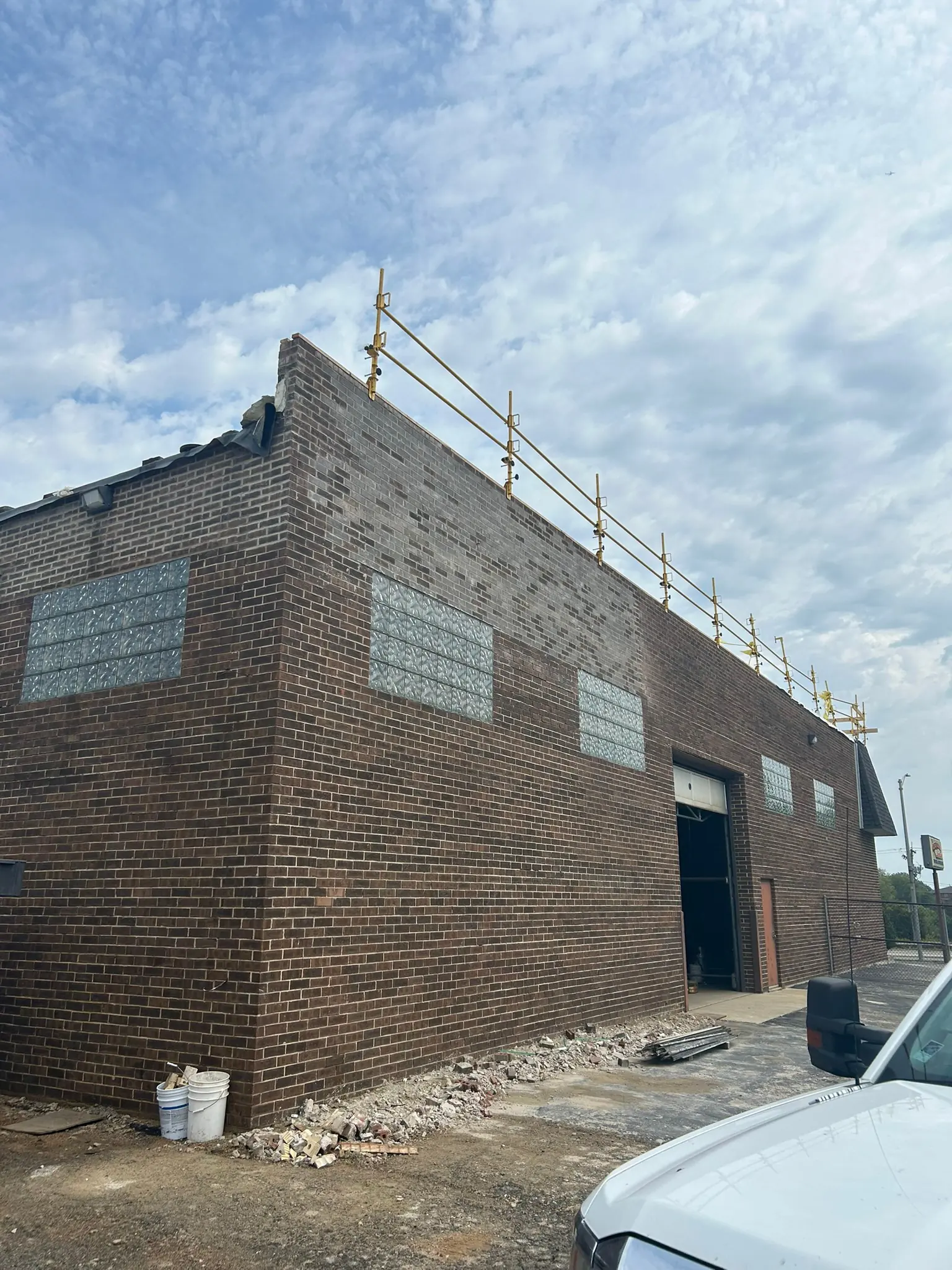
What a Lintel Is — and Why It Fails in Streamwood
A lintel is the structural element — typically a steel angle or pair of steel angles — that spans each window and door opening in a brick wall. It carries the weight of the brick courses above the opening and transfers that load to the wall on both sides. Without a functioning lintel, the brick above an opening has nothing structural to bear on.
In most Streamwood residential and commercial construction from the 1960s through the 1990s, lintels are standard galvanized steel angles — the right material for the era, but with a finite service life. At 30 to 60 years of age, depending on how well the surrounding mortar joints have been maintained and how much water has reached the steel, many of these lintels have progressed from surface rust to active corrosion.
The problem with corroding steel inside masonry is expansion. As steel oxidizes it grows in volume — sometimes by a factor of six to eight compared to the original steel. That expansion has to go somewhere. It goes into the surrounding mortar and brick, producing the horizontal cracking above window and door openings that is the most reliable field indicator of lintel failure.
The Visual Signature of Lintel Failure
The failure pattern is specific enough to be diagnosable from the sidewalk on most buildings:
Horizontal crack at the first or second course of brick above a window or door head — this is the lintel pushing upward through the mortar bed joint as the steel expands.
Brick displacement — individual bricks in the courses above the opening shift outward or begin to step-crack as the expanding lintel forces them apart.
Rust staining on the brick face — orange or brown streaks running down the wall from the joint level where the lintel bears, particularly visible on lighter brick.
Accelerated joint erosion above openings — mortar at and just above lintel level deteriorates faster than adjacent joints because expanding rust is actively destroying the mortar bond.
A building with one actively failing lintel almost always has others at earlier stages of the same process. When we're called to assess one lintel, we evaluate every opening.
The Lintel Replacement Process
Temporary Shoring
Before any lintel work begins, temporary shoring is installed to carry the brick load above the opening while the old lintel is removed. This typically involves timber or steel beams spanning the opening and bearing on the wall on each side. No lintel work should proceed without proper shoring — this is the step that prevents the courses above from dropping.
Removing the Old Lintel
We cut the mortar bed where the lintel bears on the wall at each end, and carefully extract the corroded steel angle. The bearing pocket on each side is cleaned of all rust scale and deteriorated mortar before the new lintel is installed.
New Lintel Installation
Replacement lintels are hot-dip galvanized steel angles, sized for the original span and bearing conditions. We set each lintel on fresh mortar beds and verify proper bearing length on each end — typically four inches minimum. The lintel is allowed to set before shoring is removed.
Brick Reset and Repointing
After the new lintel is seated, any brick above the opening that was displaced or cracked by the old lintel is reset or replaced. Mortar joints in the immediate area — stressed by years of lintel expansion — are cut and repointed. Where practical, we extend the repointing to the full affected wall section to avoid visible patching against weathered mortar.
Streamwood Building Types Where Lintel Failure Is Most Common
Streamwood's development history concentrated largely between the 1960s and 1990s — colonials, ranches, and split-level homes with brick veneer, plus commercial development along Sutton Road, Bartlett Road, and Irving Park Road. Both the residential and commercial building types share the same lintel corrosion timeline.
On residential colonials, the most common pattern is lintel failure at first-floor windows after 35–45 years. On commercial strip centers and small retail buildings from the same era, lintels above storefronts and loading dock openings are often the first to show active expansion, because these openings are wider and the lintels carry more load.
FAQ
How many lintels does a typical Streamwood house have?
Most residential homes in Streamwood have a lintel at every window and door opening in the brick facade — typically 8 to 15 openings depending on the floor plan and which elevations are brick. Not all deteriorate at the same rate, but if you're seeing active cracking at one or two openings, the rest of the lintels should be assessed. They're the same age and were installed in the same conditions.
Is lintel failure a structural issue or just cosmetic?
Structural. A lintel is load-bearing — it carries the weight of the brick above the opening. A lintel that has failed and is allowing brick displacement is actively worsening until the lintel is replaced. In advanced cases, brick courses above the opening can lose proper support and become a falling hazard. Horizontal cracking above a window is not cosmetic and should be assessed promptly.
Can the cracked mortar above a failing lintel just be repointed?
No. Repointing the cracked joint without replacing the lintel is a cosmetic fix that fails within one or two freeze seasons. The cracking is caused by an expanding steel element inside the wall. Until that steel is replaced, the force causing the cracking continues acting. We will not repoint joints above an opening with active lintel corrosion — we'll only complete repointing after the lintel is replaced.
How long does a single lintel replacement take?
A residential window lintel — shoring, extraction, new lintel installation, brick reset, and repointing — typically takes 4–8 hours for a two-person crew, depending on the extent of brick damage above the opening. Multiple openings in the same project are more efficient because shoring can sometimes span adjacent openings and mortar work can be batched.
Service Area
Emerald Masonry LLC serves Streamwood and surrounding northwest Cook County — including Hanover Park, Bartlett, Carol Stream, Bloomingdale, and Schaumburg. We're based in Palos Heights, roughly 25 miles south. Phone: (708) 288-1696 | emeraldmasonryil@gmail.com | Free on-site estimates.
For lintel replacement, brick repair, or full masonry restoration in Streamwood and the northwest suburbs, contact us to schedule your assessment.
Ready to get started?
Free on-site estimates for commercial and large-scale projects.