
Masonry Restoration · Olympia Fields, IL
Masonry Restoration in Olympia Fields, IL — Full-Scope Brick and Stone Repair for South Suburban Estates and Institutional Buildings
Olympia Fields has a higher-end built environment than most of the south suburbs — larger custom homes, a country-club legacy, medical and institutional campuses, and substantial brick and stone construction. Emerald Masonry LLC provides full-scope restoration that treats these buildings as the whole systems they are, not a list of isolated patches.
Quick Answer
Olympia Fields has a higher-end built environment than most of the south suburbs — larger custom homes, a country-club legacy, medical and institutional campuses, and substantial brick and stone construction. Emerald Masonry LLC provides full-scope restoration that treats these buildings as the whole systems they are, not a list of isolated patches.
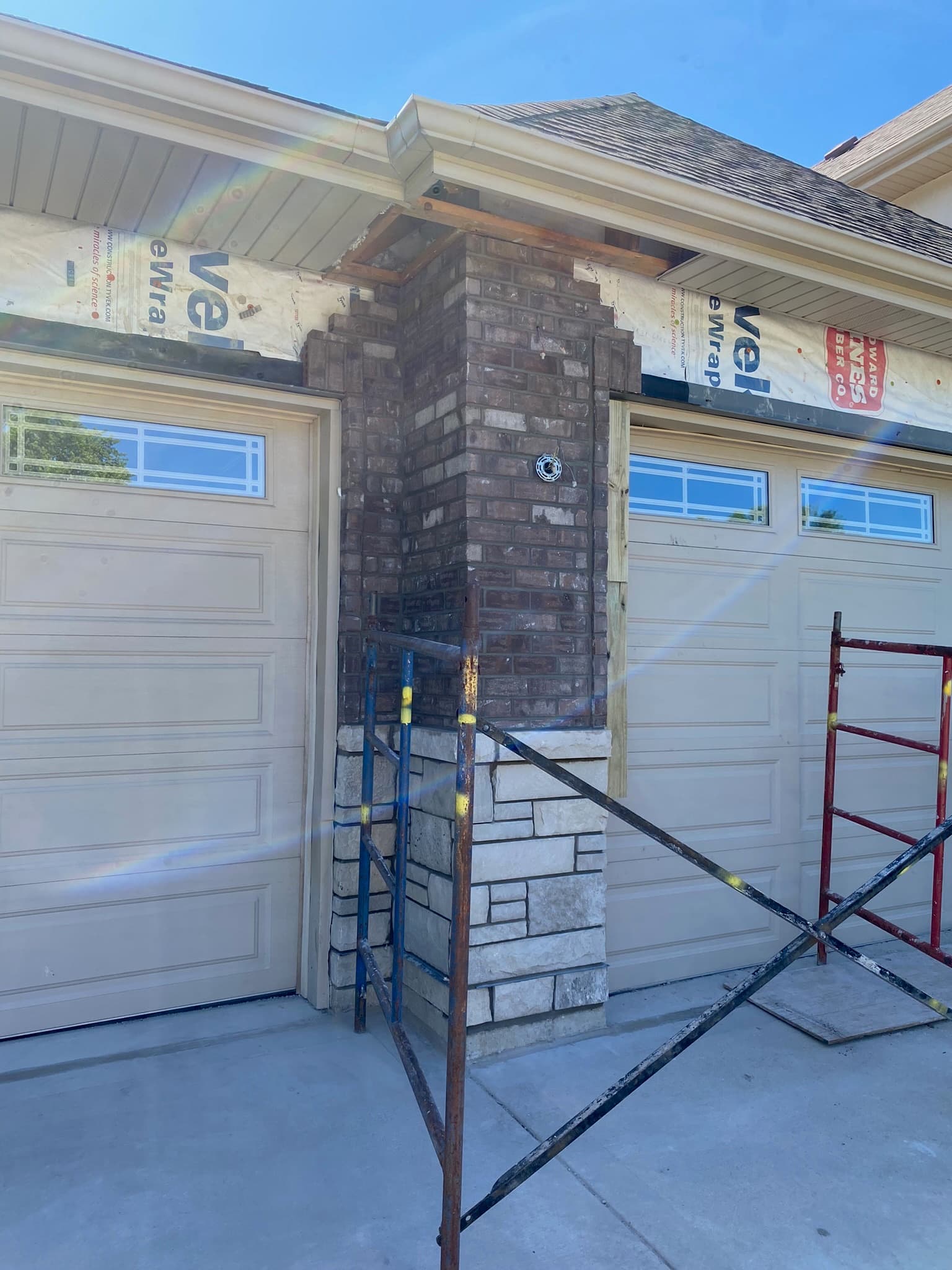
What "Restoration" Means — and Why Olympia Fields Needs It
There's a difference between a masonry repair and a masonry restoration. A repair fixes one thing: a cracked lintel, a spalled brick, a leaking joint. A restoration treats the building as a whole system — diagnosing every way water is getting in, prioritizing the work by urgency, and bringing the masonry envelope back to sound condition in a planned, coordinated scope rather than a string of disconnected patches.
Olympia Fields is a community where that distinction matters. This is one of the more affluent villages in south suburban Cook County, anchored by its country-club history and known for larger custom homes, generous lots, and a built environment that includes substantial estate-scale residences, the medical and institutional buildings around the Olympia Fields hospital campus, and quality brick-and-stone construction. These are buildings worth restoring properly — and buildings where a quick cosmetic patch tends to fail and look worse than no work at all.
Emerald Masonry LLC provides full-scope masonry restoration for Olympia Fields homes, commercial buildings, and institutional properties — the comprehensive approach these structures call for.
How Water Works Its Way Through a Masonry Building
Almost every masonry failure is a water failure. Brick and stone don't decay on their own; they decay where water gets in, freezes, and pries the material apart. A real restoration starts by tracing every path water is using:
From the top down
- Copings, caps, and crowns — the horizontal surfaces at the top of walls, parapets, and chimneys. When they fail, water runs straight down into the wall below. The top of the building is almost always where a restoration starts.
- Mortar joints — the weakest path into any wall. Eroded, cracked, or washed-out joints across an elevation let water in everywhere at once; comprehensive tuckpointing closes that path.
- Lintels and shelf angles — corroding steel that expands and cracks the masonry above openings.
- Flashing transitions — wherever the masonry meets a roof, a window, or a different material, the detail can leak.
- Spalled and cracked units — once the brick or stone face itself is compromised, water reaches the wall's interior directly.
A restoration addresses these in the right order — top-down, source-first — so the building is genuinely watertight when the work is done, not just patched where the damage was visible.
The Restoration Process
Assessment and documentation
We walk the entire building, not just the area you noticed. We document the condition of every elevation, identify the water sources, and produce a written scope that prioritizes the work — what's urgent, what's important, and what can be planned for a future budget cycle. On larger estate and institutional properties, that documentation is what owners and facilities managers use for capital planning.
Matching materials
Restoration lives or dies on material matching. We match mortar strength to the existing masonry — softer mortar for softer, older brick and stone — so the repair protects rather than damages the original material. We source replacement brick and stone to match size, color, and texture. A restoration that uses the wrong mortar or mismatched units isn't a restoration; it's a cosmetic problem in waiting.
Coordinated, prioritized execution
We sequence the work so it makes sense as a whole — top-down, source-first — and we phase it across budget cycles where that fits the owner better than a single large project. The result is a building brought back to sound condition by a plan, not a pile of unrelated invoices.
Protecting the envelope
Where appropriate, we close out a restoration with breathable waterproofing on exposed elevations — never a film-forming sealer that traps moisture and accelerates the next round of spalling.
What Sets a Real Restoration Contractor Apart
When you're restoring a substantial Olympia Fields property, look for a contractor who:
- Assesses the whole building, not just the spot you pointed at. Water that shows up in one place often enters somewhere else.
- Matches mortar to the masonry. This is the most important and most commonly skipped step. Hard modern mortar on softer older brick causes spalling.
- Provides a written, prioritized scope you can budget against and phase if needed.
- Sources matching replacement material rather than dropping in whatever's on the truck.
- Has the experience to manage scale — estate, commercial, and institutional restorations require coordination, not just bricklaying.
Frequently Asked Questions
What's the difference between restoration and just tuckpointing? Tuckpointing is one component — replacing failed mortar. Restoration is the whole-building approach: tuckpointing plus brick and stone replacement, lintel and coping work, crown and cap repair, and addressing every water source in a coordinated, prioritized scope. On a building with multiple issues, doing only the tuckpointing leaves the other water paths open.
Can you phase a large restoration over a few years? Yes. For estate and institutional properties, we routinely break a restoration into prioritized phases so the most urgent work happens first and the budget is spread across cycles. The written scope is built to support exactly that.
Will the restored masonry match the original? That's the goal, and it's why material matching is central to how we work. We match mortar color and joint profile and source replacement units to match the existing masonry as closely as possible. On historic or character-defining work, that matching is the difference between a restoration and a patch.
Do you work on institutional and commercial buildings, not just homes? Yes — estate residences, commercial buildings, and institutional properties including campus-scale work. We provide the documentation and itemized, phased estimates that facilities managers and property owners need.
Serving Olympia Fields and the South Suburbs
Emerald Masonry LLC is a family-owned, non-union masonry contractor based in Palos Heights with more than 40 years of Chicagoland experience. We're licensed, bonded, and insured, and we serve homeowners, property managers, HOAs, churches, and institutional owners across the south and southwest suburbs — Olympia Fields, Flossmoor, Matteson, Park Forest, Homewood, and the surrounding south suburban Cook County communities. We carry a $5,000 project minimum and provide free on-site estimates.
If you own or manage an Olympia Fields property with multiple masonry issues — failing joints, spalling brick or stone, a leaking parapet or coping, or damage you suspect is water-driven — a comprehensive assessment will tell you what you're actually dealing with. Contact Emerald Masonry for a free on-site restoration evaluation and a written, prioritized scope. Call (708) 288-1696 or email emeraldmasonryil@gmail.com.
Ready to get started?
Free on-site estimates for commercial and large-scale projects.