
Masonry Restoration · Yorkville, IL
Masonry Restoration in Yorkville, IL — Brick and Stone Repair for Historic Downtown Buildings and Newer Fox River Subdivisions
Yorkville is two masonry towns in one — a 19th-century limestone-and-brick downtown along the Fox River, and decades of newer brick-veneer subdivisions that grew up around it. Emerald Masonry LLC restores both, from landmark-sensitive repointing to modern veneer repair, across Kendall County.
Quick Answer
Yorkville is two masonry towns in one — a 19th-century limestone-and-brick downtown along the Fox River, and decades of newer brick-veneer subdivisions that grew up around it. Emerald Masonry LLC restores both, from landmark-sensitive repointing to modern veneer repair, across Kendall County.
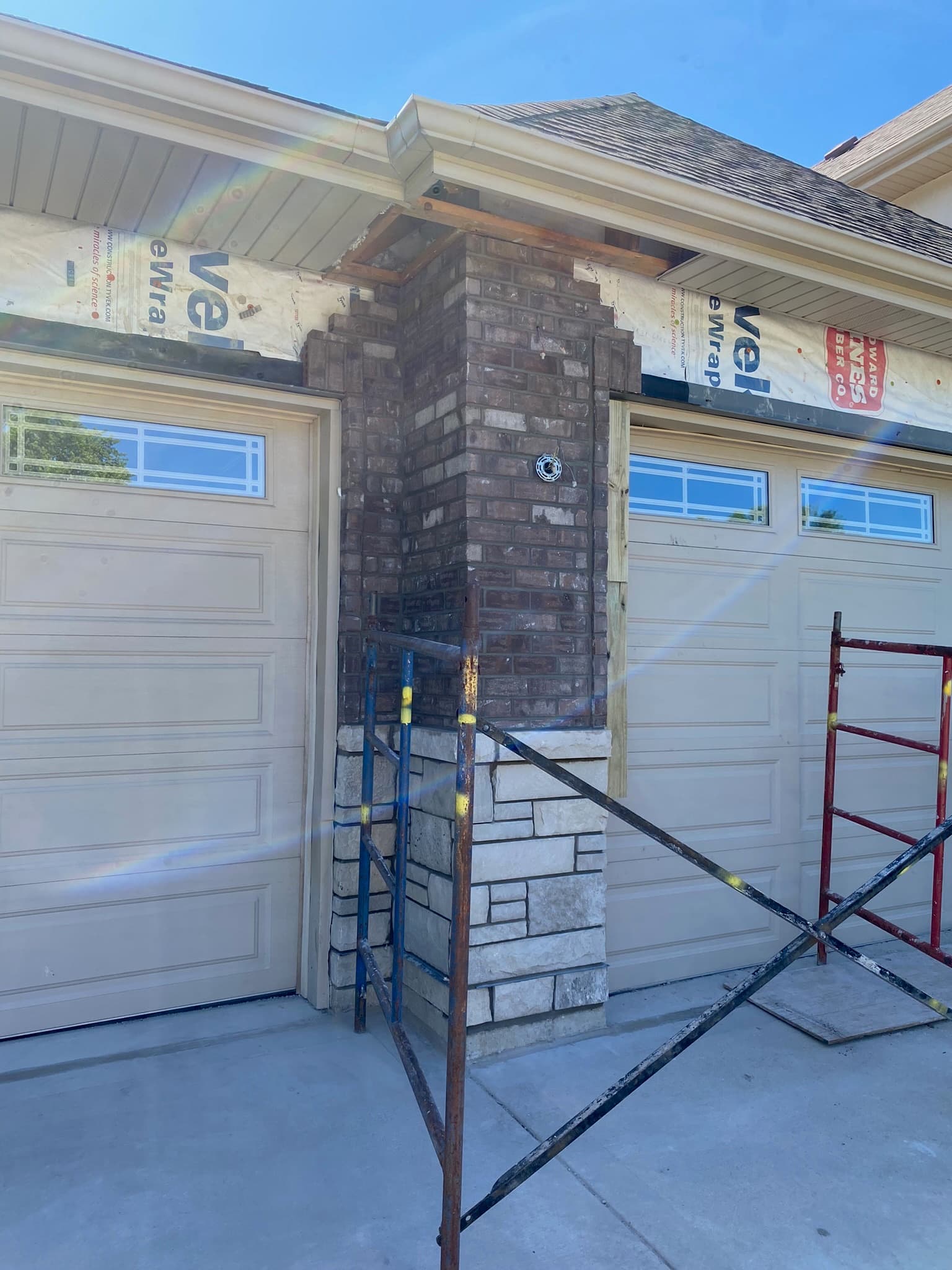
One Town, Two Kinds of Masonry
Most masonry restoration pages treat a town as a single thing. Yorkville isn't. The county seat of Kendall County is really two masonry towns layered on top of each other, and restoring them well means understanding the difference.
There's old Yorkville — the 19th-century downtown straddling the Fox River, with its limestone foundations, soft-fired common brick, and historic commercial and institutional buildings dating to the 1800s. And there's new Yorkville — the enormous wave of subdivision growth from the 1990s through the 2010s that made Kendall County one of the fastest-growing counties in the country, built largely in modern brick veneer.
Those two kinds of wall fail differently, age differently, and have to be restored differently. A restoration approach that's right for a 160-year-old solid limestone-and-brick building will damage a modern veneer wall, and vice versa. Emerald Masonry LLC restores both, and the first thing we do on any Yorkville building is figure out which kind of masonry we're actually working on.
Restoring Yorkville's Historic Downtown Masonry
The buildings along the river and through the old commercial core are solid masonry — thick, multi-wythe walls of soft historic brick and local limestone, laid up with lime-based mortar long before Portland cement was the standard. That construction is the reason these buildings have lasted, and it's also the reason they need a careful hand.
Soft mortar for soft brick
The single most important rule in historic restoration: the mortar has to be softer than the brick. The original lime mortar was sacrificial — it flexed and weathered so the brick wouldn't. When historic buildings get repointed with hard modern Portland mortar, the joints become stronger than the masonry around them, and the brick is forced to absorb the stress and moisture instead. The result is spalled, cracked historic brick — irreplaceable units destroyed by a "repair." We match historic mortars in composition, color, and softness so the wall keeps working the way it was built to.
Sensitive cleaning and repointing
Historic brick and stone can't be aggressively cleaned or sandblasted without stripping the hard fired surface and opening the masonry to faster decay. Restoration here means gentle methods, careful repointing of failed joints, and replacing only the units that are truly gone — sourced to match the original as closely as the material allows.
Stone and structural work
Limestone foundations and trim, stone sills and lintels, and the structural connections in these old buildings all need their own attention. We assess and restore the stone alongside the brick rather than treating it as an afterthought.
This is historic and full-scope restoration work, and it rewards a contractor who's done it before.
Restoring Yorkville's Newer Subdivision Masonry
The brick on Yorkville's newer homes and commercial buildings is a different animal: a single outer wythe of modern brick veneer, hung on a wood or steel structure, with an air gap, weep holes, and flashing behind it doing the water management. These walls are only twenty or thirty years old, but plenty of them already have problems — because veneer depends on details that are easy to get wrong during a fast-growth building boom.
- Failing or missing flashing and weep holes that let water sit in the wall cavity instead of draining out.
- Cracking at lintels and shelf angles as steel rusts or moves.
- Sealant and expansion-joint failure that opens the veneer to water.
- Premature joint erosion where the original mortar work was rushed.
Restoring veneer is less about historic-matching and more about getting the wall's water-management system working again. The repairs look similar from the street — repointing, brick replacement, sealing — but the diagnosis and the priorities are different from a solid-wall building.
What Masonry Restoration Actually Covers
Whether the building is 1870 or 1998, full restoration is more than tuckpointing. Depending on what the assessment finds, a Yorkville restoration can include:
- Repointing failed joints with the correct mortar for the wall type.
- Brick and stone replacement for spalled, cracked, or missing units, matched to the original.
- Lintel and shelf-angle repair where rusting steel is cracking the masonry above openings.
- Parapet and roofline rebuilds on commercial buildings.
- Waterproofing and sealing as the final step, once the masonry is sound — never as a way to paper over unrepaired joints.
The order matters. Sealing a wall before fixing the joints just traps water inside it.
Frequently Asked Questions
My building is in downtown Yorkville and it's old — does it need special treatment? Yes. Historic solid-masonry buildings need soft, lime-based mortar matched to the original, gentle cleaning instead of abrasive blasting, and unit-for-unit replacement of only the brick or stone that's truly failed. Using modern hard mortar or harsh cleaning on a 19th-century building does real, often irreversible, damage. We restore historic masonry with the methods it requires.
My house is in a newer subdivision — why is the brick already cracking after only 25 years? Because brick veneer relies on hidden details — flashing, weep holes, expansion joints, and lintel steel — and when any of those weren't done well during construction, the wall starts taking on water early. The brick isn't the problem so much as the system behind it. We diagnose what's actually failing and restore the water management, not just the surface.
What's the difference between restoration and just tuckpointing? Tuckpointing is one part of restoration — repairing the mortar joints. Full restoration addresses everything that's compromising the wall: joints, failed brick and stone, lintels, parapets, flashing, and sealing, in the right sequence. If your building has more than worn joints, restoration is the scope that actually fixes it.
Do you serve all of Kendall County, or just Yorkville? We serve Yorkville and the surrounding Kendall County and Fox Valley communities. Our crews regularly work the far west suburbs, so reaching Kendall County is routine for us.
Will a restoration match the look of my building? That's the standard we work to. On historic buildings that means matching mortar color and profile and sourcing period-appropriate replacement units; on newer homes it means matching the existing veneer brick and joint work. Done right, a restoration reads as "original," not as a patch.
Serving Yorkville and Kendall County
Emerald Masonry LLC is a family-owned, non-union masonry contractor based in Palos Heights with more than 40 years of Chicagoland experience. We're licensed, bonded, and insured, and we restore masonry for homeowners, property managers, HOAs, churches, commercial owners, and institutions across Yorkville and the wider Kendall County and Fox Valley area — Oswego, Montgomery, Plano, Sugar Grove, Plainfield, and the surrounding communities. We carry a $5,000 project minimum and provide free on-site estimates.
Whether you own a 19th-century building in downtown Yorkville or a newer brick home in one of the Fox River subdivisions, the right restoration starts with correctly reading the wall. Contact Emerald Masonry for a free on-site masonry restoration assessment — we'll tell you what your building actually needs and why. Call (708) 288-1696 or email emeraldmasonryil@gmail.com.
Ready to get started?
Free on-site estimates for commercial and large-scale projects.