
Tuckpointing & Repointing · Beverly, Chicago, IL
Tuckpointing in Beverly, Chicago, IL — Mortar Matching for Century-Old Brick Homes and Greystones
Beverly and Morgan Park are full of century-old brick homes and greystones built with soft lime mortar. Emerald Masonry LLC repoints them with matched mortar that protects the brick instead of cracking it.
Quick Answer
Emerald Masonry LLC provides tuckpointing and repointing in Beverly, Chicago, IL. For century-old brick homes and greystones built with soft lime mortar, Emerald matches mortar color and hardness so repairs protect historic brick instead of damaging it. Free on-site estimates. Call (708) 288-1696.
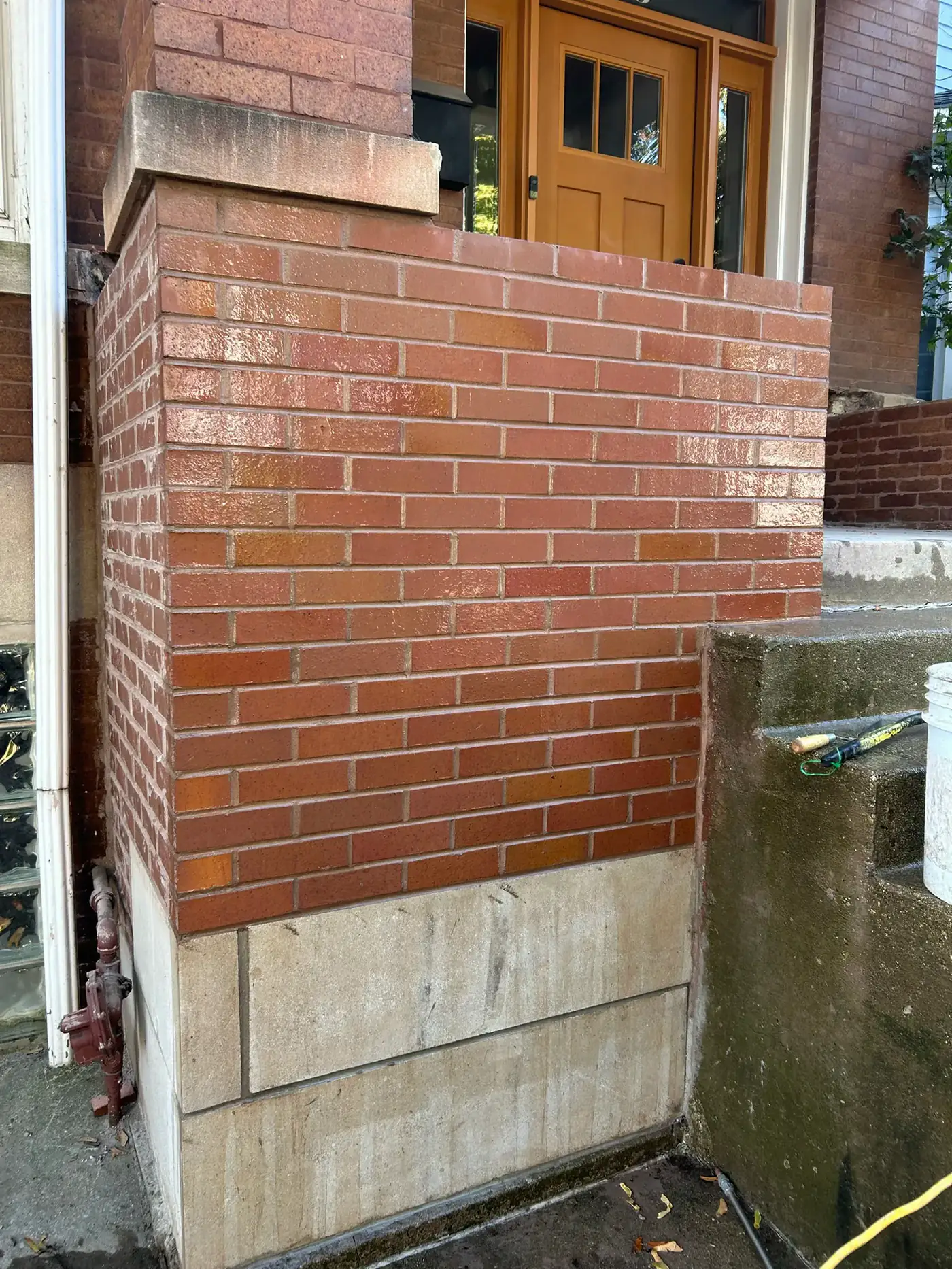
Tuckpointing for Beverly's Historic Brick Homes and Greystones
If you own a brick home or greystone in Beverly, Chicago, and the mortar between the bricks is cracking, recessing, or crumbling, Emerald Masonry LLC provides tuckpointing and repointing matched to your home's original masonry. We specialize in the soft lime mortar these century-old homes were built with, so the repair protects the brick instead of damaging it. Call (708) 288-1696 for a free on-site estimate anywhere in Beverly or Morgan Park.
Beverly and the surrounding 19th-ward neighborhoods hold some of the finest historic masonry on the Chicago South Side — brick and limestone worth preserving, repaired by someone who understands how it was originally built.
What Tuckpointing Actually Is
Tuckpointing — often used interchangeably with repointing — is the process of removing deteriorated mortar from between brick or stone units and packing in fresh mortar tooled to match the original joint. The bricks usually stay; it's the mortar that wears out first.
Mortar is the sacrificial part of a masonry wall — designed to take on weather, movement, and moisture so the brick doesn't have to. Over decades, joints erode, crack, and pull away. Once that happens, the wall loses its ability to shed water, and the clock starts on much more expensive damage.
Signs Your Beverly Masonry Needs Attention
- Mortar joints that look cracked, recessed, or hollowed out between bricks or stones
- Mortar that crumbles to sand when you scratch it with a key or screwdriver
- Visible gaps or missing sections of mortar anywhere on the facade
- White mineral staining (efflorescence) bleeding through the brick face
- Water showing up in the basement or on interior walls near exterior masonry
- Spalling — brick or stone faces flaking, popping, or breaking off
- A home that's 50, 80, or 100+ years old and has never been repointed
On greystones, watch the limestone joints and the transition between the stone facing and the masonry behind it — failed joints there let water in behind the stone, where it does the most damage.
The Risk of Waiting
Masonry looks permanent, but failing mortar is an open door for water. In a Chicago winter, water that soaks into a wall freezes, expands, thaws, and refreezes — over and over. Each cycle pries the masonry apart a little more. This freeze-thaw action is the single biggest reason small mortar problems become structural ones on the South Side.
Wait too long and tuckpointing alone won't fix it. Saturated brick begins to spall, lintels can rust, and on a greystone the limestone itself can fracture — at which point you're looking at brick or stone replacement and possible structural work instead of a straightforward repointing. Addressing failing joints early is almost always far cheaper than dealing with years of accumulated water damage.
Why Hard Modern Mortar Harms Old Beverly Brick
This is the most important thing to understand about repointing a historic home, and it's where a lot of cheap jobs go wrong.
The brick in century-old Beverly and Morgan Park homes was fired softer and is more porous than modern brick. It was laid with lime-based mortar that is intentionally soft, flexible, and breathable. That softness is a feature: the mortar flexes with seasonal movement and lets moisture wick out and evaporate through the joints.
When someone repoints an old wall with hard, high-Portland-cement modern mortar, the mortar ends up stronger than the brick. The brick becomes the sacrificial element, and the moisture and stress the soft mortar used to absorb get forced into the brick faces instead — so the brick cracks and spalls, often within a few winters. We see it constantly on the South Side: homes "repaired" with the wrong mortar that are now in worse shape than before.
Matching the original mortar's hardness, not just its color, is what separates restoration from harm.
Our Tuckpointing Process
- Inspection — We walk the property and assess every elevation: joint failure depth, mortar type, brick or stone condition, and any related issues like spalling or failing lintels.
- Mortar matching — We evaluate the original mortar's color, texture, and composition and specify a mix compatible with your historic masonry — soft enough to protect old brick and matched to blend with the existing joints.
- Removal — Deteriorated mortar is cut out to proper depth, carefully, without chipping or undercutting the surrounding brick or stone.
- Repointing — Fresh mortar is packed into the joints and tooled to match the original profile so the repair reads as part of the wall.
- Cleanup and walkthrough — We clean the work area and walk you through the finished repair before we leave.
Materials We Use
The right mortar mix depends entirely on the wall. For older Beverly homes and greystones, that usually means a softer, lime-rich mortar matched to the original in both performance and appearance. For newer brick, a more standard mix is appropriate. We don't apply a one-size-fits-all mortar to every job — that's exactly the mistake that damages historic brick. Joint profile, tooling, and color are all matched to what's already there.
What Affects the Price
Every Beverly home is different, so we quote after seeing the property. The main factors are the square footage of joints needing repair, the number of elevations and stories, access and staging (greystones and tall facades may need scaffolding), the depth and condition of the failed mortar, whether brick or stone replacement is also needed, and the degree of mortar matching required. We provide a free on-site estimate so you get a real number for your wall. Emerald Masonry LLC has a $5,000 project minimum.
Local Context: Beverly and Morgan Park
Beverly and Morgan Park have one of the densest concentrations of historic masonry in Chicago — brick foursquares, bungalows, and the limestone greystones the neighborhoods are known for, much of it pushing or past the century mark. The Ridge Historic District covers a large share of these homes, and their masonry deserves period-appropriate care.
These homes have stood through a hundred Chicago winters. Original lime mortar at that age is frequently past the end of its service life, and South Side freeze-thaw cycles are relentless. If your Beverly or Morgan Park home has never been repointed — or was repointed with the wrong hard mortar — it's worth an honest look.
Related Masonry Services
If tuckpointing reveals more than mortar failure, we also handle related work:
- Brick repair for spalled, cracked, or deteriorated brick faces
- Brick replacement when individual units are too far gone to save
- Masonry restoration for full historic-home masonry revival
- Chimney repair for one of the most weather-exposed and neglected spots on any house
Frequently Asked Questions
Why does my old Beverly home need soft mortar instead of standard mortar?
Century-old brick was fired softer than modern brick and was laid with lime-based mortar designed to flex and breathe. If you repoint it with hard modern Portland mortar, the mortar becomes stronger than the brick and forces moisture and stress into the brick faces, causing them to spall. Matching the original mortar hardness protects the brick.
Can you match the mortar color on a historic greystone or brick home?
Yes. We assess your existing joints and aim for the closest practical match in color, texture, and joint profile. On very old masonry an exact match can be challenging, but in most cases we get close enough that the repointed areas blend in rather than stand out.
How do I know if I need tuckpointing or full brick replacement?
If the brick units are still sound and only the mortar joints are cracked, recessed, or crumbling, tuckpointing is usually the right fix. If brick faces are spalling or units are broken, those individual bricks may need replacement. We assess both during the free on-site estimate.
Do you work on Beverly and Morgan Park homes in the historic district?
Yes. We regularly work on the older brick homes and greystones throughout Beverly and Morgan Park and focus on period-appropriate mortar and joint finishing. Call (708) 288-1696 to schedule a free on-site estimate.
Get a Free Estimate in Beverly
Your Beverly brick home or greystone can outlast almost anything else you own — but only if the mortar is maintained and repaired the right way. If you've been looking at crumbling joints or a past repointing job that doesn't look right, get an honest assessment from a contractor who understands historic masonry.
Emerald Masonry LLC is a family-owned, licensed, bonded, and insured masonry contractor led by career masons with decades of hands-on Chicagoland experience. We'll come out, look at your specific wall, and give you a straight answer.
Request a Free On-Site Estimate or call (708) 288-1696.
Ready to get started?
Free on-site estimates for commercial and large-scale projects.
Tuckpointing & Repointing in Beverly, Chicago, IL — Frequently Asked Questions
Why does my old Beverly home need soft mortar instead of standard mortar?
Century-old brick was fired softer than modern brick and was laid with lime-based mortar designed to flex and breathe. If you repoint it with hard modern Portland mortar, the mortar becomes stronger than the brick and forces moisture and stress into the brick faces, causing them to spall. Matching the original mortar hardness protects the brick.
Can you match the mortar color on a historic greystone or brick home?
Yes. We assess your existing joints and aim for the closest practical match in color, texture, and joint profile. On very old masonry an exact match can be challenging, but in most cases we get close enough that the repointed areas blend in rather than stand out.
How do I know if I need tuckpointing or full brick replacement?
If the brick units are still sound and only the mortar joints are cracked, recessed, or crumbling, tuckpointing is usually the right fix. If brick faces are spalling or units are broken, those individual bricks may need replacement. We assess both during the free on-site estimate.
Do you work on Beverly and Morgan Park homes in the historic district?
Yes. We regularly work on the older brick homes and greystones throughout Beverly and Morgan Park and focus on period-appropriate mortar and joint finishing. Call (708) 288-1696 to schedule a free on-site estimate.
Tuckpointing & Repointing in Nearby Areas
Other Masonry Services in Beverly, Chicago, IL
Learn more about our tuckpointing & repointing services across Chicagoland, or view all service areas.