
Chimney Repair · Beverly, Chicago, IL
Chimney Repair in Beverly, Chicago, IL — Historic Stacks, Crowns and Rebuilds
Beverly's chimneys are not standard suburban stacks — they are tall, corbelled, multi-flue chimneys on century-old homes in the Ridge Historic District, built with soft brick and lime mortar. Emerald Masonry LLC repairs and rebuilds them with materials matched to how they were built.
Quick Answer
Emerald Masonry LLC provides chimney repair in Beverly, Chicago, IL (60643) — crown rebuilding, caps, flashing, lime-mortar repointing, brick replacement and full rebuilds on the historic multi-flue chimneys of the Ridge Historic District. Family-owned, licensed and insured, career masons with decades of Chicagoland experience, free estimates. Call (708) 288-1696.
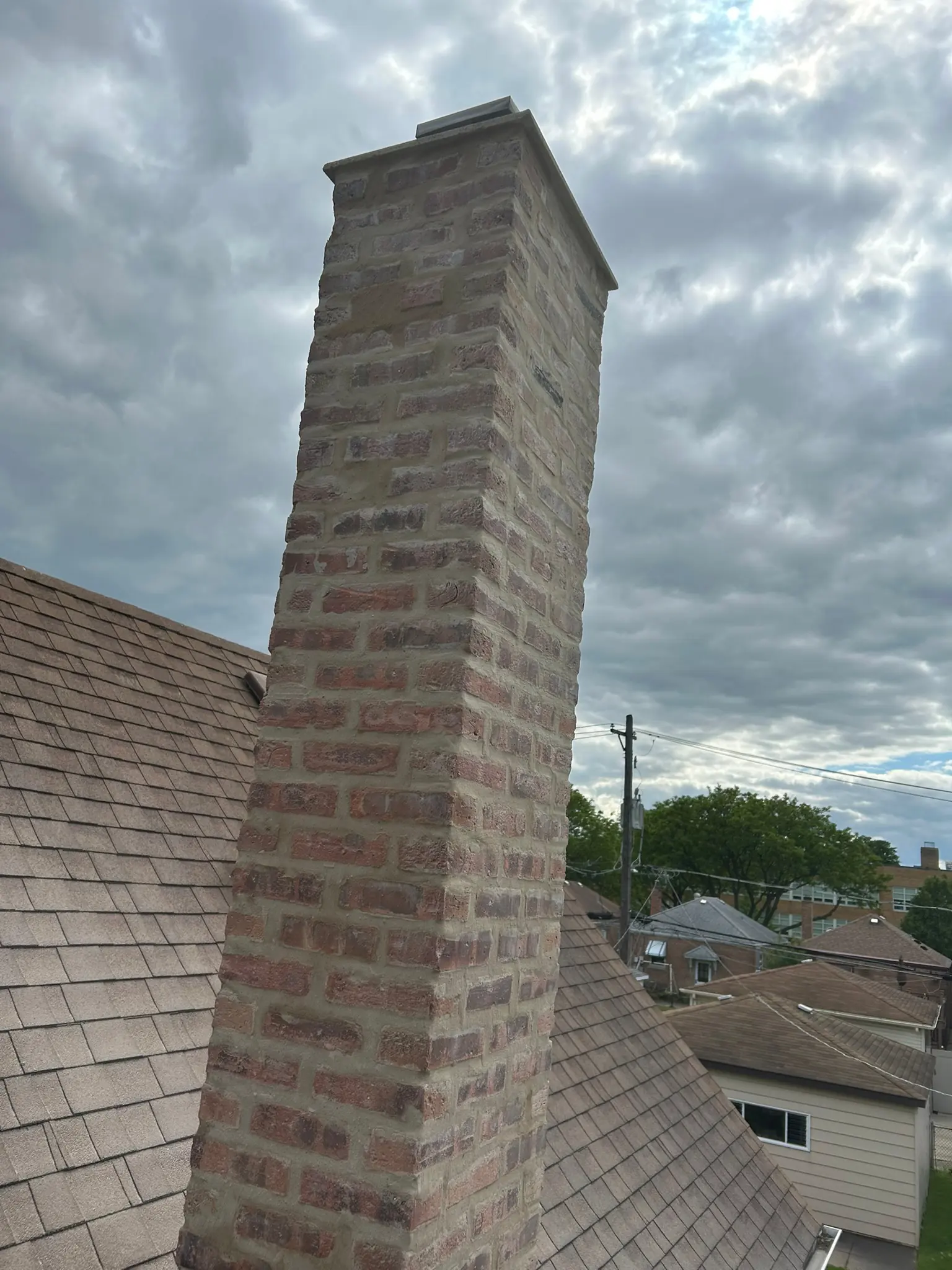
Chimney Repair in Beverly, Chicago, IL
Chimney repair in Beverly, Chicago, IL means working on some of the tallest and oldest residential chimneys in the city — corbelled, multi-flue stacks on century-old homes, built with soft brick and lime mortar that will not tolerate a modern hard-mortar repair. Emerald Masonry LLC rebuilds crowns, installs caps, replaces flashing, repoints with matched lime-based mortar, and rebuilds stacks above the roofline. Family-owned, licensed, bonded and insured, career masons with decades of Chicagoland experience, free on-site estimates. Call (708) 288-1696.
Beverly is not a typical Chicago neighborhood, and its chimneys are not typical chimneys. The neighborhood sits on the Blue Island Ridge — the highest ground in the city — and much of it falls inside the Ridge Historic District, one of the largest urban historic districts in the country. The housing is Victorians, Queen Annes, Prairie School homes, stone mansions along Longwood Drive, and the Walter Burley Griffin houses on 104th Place, mixed with 1920s bungalows and post-war Georgians toward the Mount Greenwood side.
What that means practically: a great many Beverly chimneys are three stories tall, carry two or three flues, have decorative corbelled tops, and were laid before 1930 with lime mortar and soft brick. They are the single most exposed masonry on the property, and they are usually the first thing on the house to fail.
Why Beverly Chimneys Fail First
Every brick wall on your house has a roof over it and a heated interior behind it. A chimney has neither. It stands above the roofline exposed on four sides, takes wind-driven rain from every direction, and has no warm interior drying it out between storms.
Beverly's stacks make that worse in three specific ways:
- Height. A three-story chimney on a Ridge-area home has far more exposed surface than a suburban ranch chimney, and every square foot of it is absorbing water.
- Corbelled and decorative tops. The stepped, projecting brickwork that makes these chimneys handsome also creates dozens of horizontal ledges that hold water instead of shedding it.
- Age and materials. Soft pre-1930 brick and lime mortar are more absorbent than modern materials, and a hundred and twenty winters is a very long service life for a mortar joint.
Add Chicago's freeze-thaw cycling — dozens of crossings of the freezing point every winter — and water inside saturated masonry expands, freezes, and works the stack apart from the inside.
The Repair Ladder: What Your Chimney Actually Needs
Most chimney problems fall on a predictable ladder, and knowing which rung you are on is most of the decision.
| Repair | What it fixes | When it is the right call | |---|---|---| | Chimney cap | Rain, snow and animals dropping down an open flue | Any uncapped or unused flue | | Crown rebuild | Cracked top slab letting water into the stack | Crown cracking or crumbling | | Flashing replacement | Water entering at the roof-to-chimney joint | Ceiling stains near the chimney chase | | Lime-mortar repointing | Failed joints in the stack | Receded or sandy joints, sound brick | | Brick replacement | Spalled and flaking units | Localized face damage, stack otherwise sound | | Corbel / top rebuild | Deteriorated decorative top courses | Damage concentrated in the projecting brickwork | | Rebuild above roofline | Structurally compromised or leaning stack | Deep joint failure, widespread spalling, lean |
An honest contractor tells you which rung you are on. The pages that only ever recommend the top of the ladder are selling, not diagnosing.
Signs Your Beverly Chimney Needs Work
- White efflorescence staining on the stack — proof water is moving through the masonry.
- Spalling brick faces, flaking or popping, especially on the north and west sides.
- Mortar joints that rake out under a screwdriver, or that have receded behind the brick.
- A cracked or crumbling crown at the top of the chimney.
- Rusted, lifted or tar-patched flashing at the roofline.
- Water stains on ceilings or in the attic near the chimney chase.
- A visible lean, or a gap opening between the chimney and the house.
- Brick or mortar debris on the roof, in gutters, or in the yard.
- Deteriorated corbelling — missing or crumbling units in the decorative top courses.
- Daylight visible through the stack from the attic.
A lean or falling debris on a three-story stack over a walkway is a safety matter, not a spring project.
Why the Mortar Matters More Here Than Anywhere
This is the point the competing pages skip entirely, and on a historic Beverly chimney it decides whether the repair protects the house or damages it.
A masonry wall is designed so the mortar is softer than the brick. Mortar is the sacrificial element — it absorbs movement and moisture and wears out first, because replacing mortar is cheap and replacing century-old brick is not.
Pre-1930 Beverly masonry was laid with lime-rich mortar and soft, often locally made brick, and that relationship holds. Repoint it with hard modern Portland-based mortar and the relationship inverts: the joints become the strongest part of the stack, and every freeze-thaw cycle drives the stress into the brick faces instead. Three to eight winters later the faces start popping off — permanent loss of original material on a house in a National Register historic district.
We match hardness first, then color, sand and joint profile.
Our Chimney Repair Process
- Free on-site inspection, from the ground and the roof — crown, cap, flashing, joints, brick faces, corbelling and plumb of the stack.
- Identify the actual water path. Crown, flashing or joints. Sealing the wrong one changes nothing.
- Written scope naming exactly which repairs are included, with photos of the conditions found.
- Repair or rebuild — lime-mortar repointing, brick replacement with salvaged matches, crown rebuilding with a proper overhang and drip edge, flashing replacement, or rebuilding above the roofline with the original brick reused where sound and the corbelled profile reconstructed.
- Cap and protect. A stainless or galvanized cap where appropriate, and a breathable masonry sealer only where warranted — never a film-forming coating that traps moisture in a stack that needs to dry.
- Cleanup and photo documentation of the finished work.
Materials We Use
Lime-based and lime-modified mortars custom-blended for pre-1930 masonry, Type N where a later chimney calls for it, salvaged Chicago brick matched for size, color and softness, poured or cast concrete crowns with overhang and drip edge, stainless and galvanized chimney caps, new step and counter flashing, and vapor-permeable sealers. Chimney work frequently connects to other repairs on the same house: tuckpointing, brick repair, historic masonry restoration and masonry sealing.
What Drives Chimney Repair Cost in Beverly
- Which rung of the ladder the chimney is actually on — cap and crown work versus a full rebuild is a wide range.
- Height and access. Three stories, steep roof pitches and tight side yards mean real staging or a lift.
- Number of flues. A wide multi-flue stack is substantially more masonry than a single narrow one.
- Decorative corbelling. Rebuilding stepped brickwork to the original profile is slower, more skilled work than a plain stack.
- Mortar matching. A custom lime blend takes more work than an off-the-shelf mix.
- Salvaged brick sourcing for units that must be replaced.
- Extent of spalling and how much brick is beyond saving.
We never quote a chimney sight unseen, and we do not lead with teaser inspection pricing. Free on-site estimate, written scope, honest number.
Serving Beverly, Morgan Park and the Southwest Side
We work throughout 60643 and the surrounding area — the Ridge Historic District homes along Longwood Drive and Seeley, the Prairie School blocks near Walter Burley Griffin Place, the Victorians and Queen Annes on the ridge itself, the bungalow and Georgian streets running toward Mount Greenwood, and Morgan Park to the south. We also serve neighboring Evergreen Park, Oak Lawn and Burbank. Homeowners here often need residential masonry restoration and tuckpointing alongside the chimney work.
Emerald Masonry LLC is a family-owned, licensed and insured masonry contractor serving Chicago and the Chicagoland suburbs led by career masons with decades of hands-on experience in tuckpointing, chimney repair, brick repair and replacement, lintel and parapet repair, foundation and limestone/sill repair, caulking, sealing, and commercial, residential and historic masonry restoration. Free on-site estimates — call (708) 288-1696.
What Waiting Costs on a Historic Chimney
On a Beverly stack, deferral does not just raise the bill — it destroys original material. Once the face spalls off a hundred-year-old brick, that brick is gone, and every replacement is a compromise against the original. Deteriorated corbelling that could have been repointed becomes corbelling that has to be rebuilt. And a leaning three-story chimney over a gangway is a liability question, not a maintenance one.
Get a Free Chimney Inspection in Beverly
If you are seeing white staining, flaking brick, a cracked crown, crumbling corbelling or water stains near the chimney chase, get eyes on it before winter.
Call (708) 288-1696 or request a free estimate.
Ready to get started?
Free on-site estimates for commercial and large-scale projects.
Chimney Repair in Beverly, Chicago, IL — Frequently Asked Questions
How much does chimney repair cost in Beverly, Chicago?
It depends on which part of the chimney has failed and how tall the stack is. Rebuilding a crown or adding a cap is a modest repair; repointing a three-story Beverly chimney with lime mortar is mid-range; a full rebuild above the roofline is the largest. Emerald Masonry inspects in person and gives a free written estimate with the scope spelled out.
Do historic Beverly chimneys need different mortar?
Yes. Most homes in the Ridge Historic District were built before 1930 with soft brick and lime-rich mortar, and that masonry needs a soft, lime-based mix — not hard modern Portland mortar. Using a hard mix on a soft historic chimney drives freeze-thaw stress into the brick faces and spalls them within a few winters.
Why do Beverly chimneys deteriorate faster than the walls below them?
A chimney is exposed on all four sides, sits above the roofline in the wind, and has no heated interior drying it from behind. Beverly's tall, corbelled, multi-flue stacks have even more exposed surface area than a typical suburban chimney. That combination is why the chimney is almost always the first masonry on a Beverly home to fail.
Should my chimney be repaired or rebuilt above the roofline?
If the stack is plumb and the brick is sound, repointing and replacing damaged units restores it. If it leans, the joints are gone through their full depth, or the brick is spalling across multiple faces, rebuilding above the roofline is the honest answer. We photograph what we find so you can see the condition yourself rather than taking our word for it.
Can you match the original brick on a Beverly chimney rebuild?
Yes. We salvage and reuse the original brick wherever it is still sound, and source matched salvaged units for the rest — important on Ridge Historic District homes where a mismatched rebuild is visible from the street. We also rebuild corbelled tops to the original profile rather than simplifying them.
Do you work on chimneys in Morgan Park and Mount Greenwood too?
Yes — we work throughout the 60643 and 60655 area and the surrounding southwest side. The housing runs from century-old Ridge homes to 1920s bungalows to post-war Georgians, and each era needs a different mortar and approach. Emerald Masonry is licensed, bonded and insured across all of it.
Chimney Repair in Nearby Areas
Other Masonry Services in Beverly, Chicago, IL
Learn more about our chimney repair services across Chicagoland, or view all service areas.