
Tuckpointing vs Brick Replacement · Chicagoland, IL
Tuckpointing vs. Brick Replacement: Which Does Your Wall Actually Need?
If your brick is sound but the mortar is crumbling, you need tuckpointing. If the brick itself is cracked, spalling, or hollow, you need replacement. Here's how to tell which problem you actually have — and why many walls need both.
Quick Answer
If the brick is solid but the mortar joints are crumbling, you need tuckpointing. If the brick is cracked, spalling, or hollow, it needs replacement. Many older Chicagoland walls need both. Emerald Masonry diagnoses it on-site for free — call (708) 288-1696.
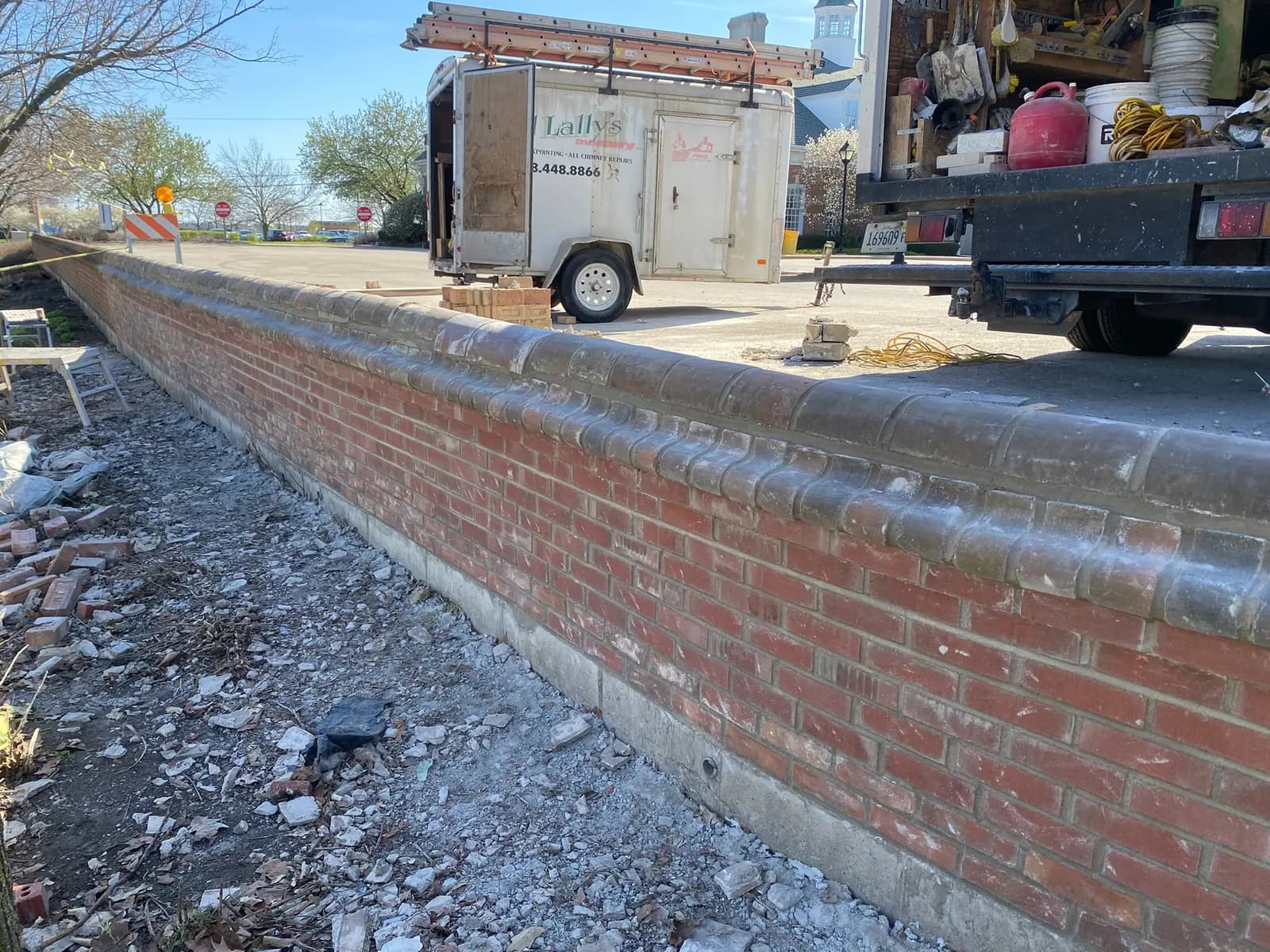
If the brick on your wall is still solid but the mortar between it is crumbling, cracking, or falling out, you need tuckpointing. If the brick itself is cracked, flaking, spalling, or sounds hollow when you tap it, that brick needs to be replaced. Many older Chicagoland walls have both problems at once — failed joints and a scattering of failed brick — and the right fix addresses both.
Tuckpointing and brick replacement get confused because they look similar from the curb and both fall under "brick repair." But they fix two completely different failures. Emerald Masonry repairs brick walls across Chicagoland, and this page lays out how to tell which one your wall actually needs so you do not overpay for the wrong work.
What Tuckpointing Is
Tuckpointing — also called repointing — is the process of grinding out old, deteriorated mortar from the joints between brick and packing in fresh mortar. The brick stays exactly where it is. You are renewing the lines that hold the wall together and keep water out, not touching the brick units themselves.
Mortar is sacrificial by design: it is meant to wear before the brick does. In the Chicago area's freeze-thaw climate, mortar joints typically start failing decades before the brick. When you see joints that are recessed, cracked, sandy to the touch, or have gaps you can slide a key into, that is a tuckpointing job. Left alone, open joints let water into the wall, which then accelerates damage to the brick — turning a tuckpointing job into a replacement job.
What Brick Replacement Is
Brick replacement is cutting out individual brick that have physically failed and setting matching brick in their place. This is the right call when the masonry unit itself — not the mortar around it — has broken down.
The telltale signs are spalling (the face of the brick flaking or popping off), cracks running through the brick body, a hollow or dull sound when you tap it, and crumbling that sheds grit. Once a brick spalls, its weather-resistant outer face is gone and the soft inner clay soaks up water fast, so the damage spreads. No amount of fresh mortar fixes a bad brick; it has to come out.
How to Tell Which You Need
Walk the wall and check the brick and the joints separately:
| Factor | Tuckpointing | Brick Replacement | | --- | --- | --- | | What has failed | The mortar joints | The brick units | | What you see | Cracked, recessed, sandy, missing mortar | Spalling, cracking, flaking, hollow brick | | Tap test | Brick rings solid | Brick sounds dull or hollow | | Water concern | Joints let water in | Spalled face soaks water up | | Scope | Renew joint lines | Cut out and reset units | | Relative cost | Lower per square foot | Higher per brick | | Longevity when done right | Decades on sound brick | Matches surrounding sound wall |
If the brick is solid and only the joints are bad, tuckpoint. If brick faces are popping off or cracking, replace those units. If you see both — which is common on homes 40-plus years old — you need both, usually in the same visit.
Cost and Longevity Trade-Offs
Tuckpointing covers more wall for less money because it is joint work, not unit work. Brick replacement costs more per brick because each unit is individually cut out and reset, and good color and texture matching takes skill. But cost-per-square-foot is the wrong way to decide. Tuckpointing a wall full of spalled brick is money wasted, and ignoring failed joints around good brick guarantees you will be paying for replacement later. Done correctly on the right wall, tuckpointing lasts decades, and replaced brick blends in to match the lifespan of the surrounding sound masonry.
How Emerald Assesses It On-Site
We do not guess from the driveway. On a free on-site estimate, we tap and inspect the brick to separate sound units from failed ones, probe the mortar joints to see how deep the deterioration runs, and look for the water entry points feeding the damage. From there we tell you honestly whether it is a tuckpointing job, a brick replacement job, or a combination — and we match new mortar and brick to your existing wall. For ongoing weather wear, we also handle full tuckpointing and targeted brick repair so the wall is sealed against the next freeze-thaw season.
Frequently Asked Questions
Is tuckpointing cheaper than replacing brick?
Generally yes, because tuckpointing reworks the mortar joints rather than removing and resetting masonry units. But the right answer depends on what has actually failed — paying to tuckpoint a wall full of spalled brick wastes money. An on-site look tells you which is truly cheaper over the long run.
Can you tuckpoint over cracked or spalling brick?
No. Tuckpointing renews the mortar joints, but it does nothing for brick that is cracked, flaking, or crumbling. New mortar around failing brick just hides the problem and lets water keep getting in. Damaged brick has to be cut out and replaced.
How do I know if my brick is hollow or sound?
Tap it firmly. Sound brick gives a sharp ring; failing brick sounds dull or hollow and may shed sand or flakes. Spalling — where the face pops off — is another clear sign the brick itself has failed and needs replacement, not just repointing.
Do most older Chicagoland homes need both?
Very often, yes. Decades of freeze-thaw weather usually wears the mortar joints first, but once water gets in, individual brick faces start to spall too. Many walls get the joints tuckpointed and a handful of bad brick swapped out in the same visit.
Get a Straight Answer on Your Wall
Stop guessing whether you need joints or brick fixed. Emerald Masonry LLC is a family-owned, licensed, bonded, and insured contractor with 40-plus years of Chicagoland experience, and our on-site estimates are free. We will tell you exactly what your wall needs — and what it does not.
Call (708) 288-1696 or request a free on-site estimate today.
Ready to get started?
Free on-site estimates for commercial and large-scale projects.
Tuckpointing vs Brick Replacement in Chicagoland, IL — Frequently Asked Questions
Is tuckpointing cheaper than replacing brick?
Generally yes, because tuckpointing reworks the mortar joints rather than removing and resetting masonry units. But the right answer depends on what has actually failed — paying to tuckpoint a wall full of spalled brick wastes money. An on-site look tells you which is truly cheaper over the long run.
Can you tuckpoint over cracked or spalling brick?
No. Tuckpointing renews the mortar joints, but it does nothing for brick that is cracked, flaking, or crumbling. New mortar around failing brick just hides the problem and lets water keep getting in. Damaged brick has to be cut out and replaced.
How do I know if my brick is hollow or sound?
Tap it firmly. Sound brick gives a sharp ring; failing brick sounds dull or hollow and may shed sand or flakes. Spalling — where the face pops off — is another clear sign the brick itself has failed and needs replacement, not just repointing.
Do most older Chicagoland homes need both?
Very often, yes. Decades of freeze-thaw weather usually wears the mortar joints first, but once water gets in, individual brick faces start to spall too. Many walls get the joints tuckpointed and a handful of bad brick swapped out in the same visit.
Tuckpointing vs Brick Replacement in Nearby Areas
Learn more about our tuckpointing vs brick replacement services across Chicagoland, or view all service areas.