
Tuckpointing & Repointing · Worth, IL
Tuckpointing in Worth, IL — A Low Village, Wet Ground, and Mortar That Goes From the Bottom Up
On most Chicagoland houses the weather elevation goes first. In Worth it is usually the bottom of the wall — a low village on flat, slow-draining ground, where the worst mortar on the house is often in the three courses nobody looks at.
Quick Answer
Emerald Masonry LLC provides tuckpointing in Worth, IL — cutting failed mortar joints to proper depth and repointing with mortar matched by color, texture and profile, with particular attention to the wet base courses and splash line common on the village's low, flat lots. Licensed, bonded and insured. Free on-site assessment — call (708) 288-1696.
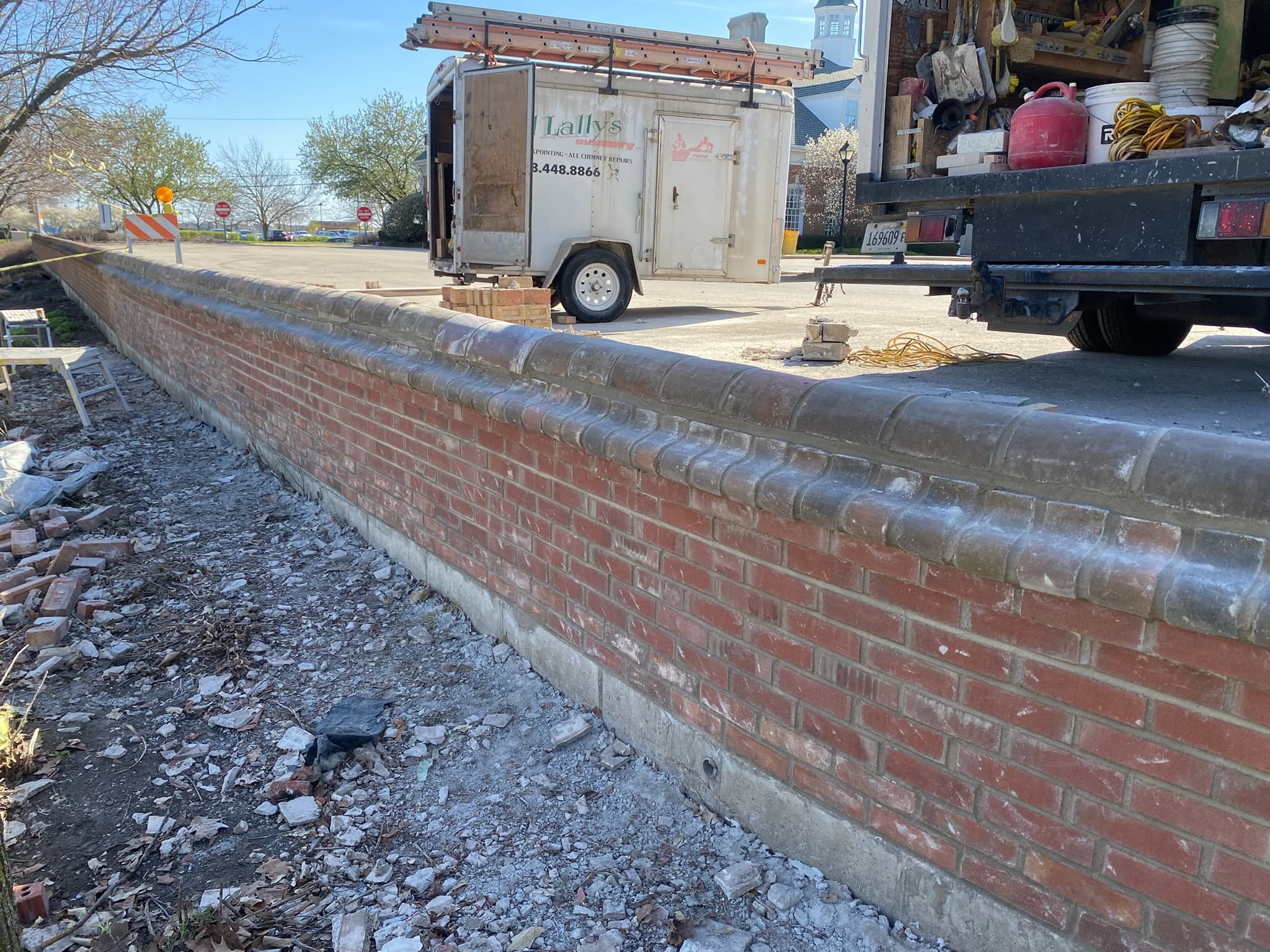
Tuckpointing in Worth, IL
Emerald Masonry LLC provides tuckpointing in Worth, IL — cutting failed mortar joints out to proper depth and repointing them with mortar matched by color, texture and profile, on homes, small commercial buildings and multi-unit properties. Licensed, bonded and insured. Free on-site assessment: (708) 288-1696.
Nearly every article about tuckpointing tells you to look at the weather elevation — the west or northwest wall that takes the wind-driven rain. That is good advice in most of Chicagoland.
In Worth, start at the bottom instead.
The village sits low, in the Cal-Sag corridor, on flat ground with heavy clay soils that hold water rather than shed it. Much of the housing stock went up through the 1950s and 1960s on lots with very little fall away from the house. The result is a local pattern we see over and over: a wall that is perfectly sound at eye level and genuinely finished in the three courses closest to the ground.
Why the base courses fail first here
Four things converge on the bottom of a wall in Worth, and they compound.
Splash. Rain hitting flat ground next to the foundation bounces back into the lowest courses — thousands of impacts a season, delivering far more water to that band than any other part of the wall receives.
Grade that has crept up. Decades of mulch, regrading and landscaping raise the soil line. Brick that was built to sit above grade ends up in direct contact with wet clay.
Snow. Shoveled off the walk and piled against the wall, where it sits for weeks and melts slowly into the same courses.
Salt. De-icing salt from walks and driveways arrives in solution, moves into the masonry, and crystallizes inside the pore structure. Salt crystallization is a mechanical process — it breaks the material apart from within.
Then the freeze-thaw cycle does the rest. Chicagoland runs through dozens of crossings of 32°F in a typical winter, and each one catches that saturated band wet. Wet masonry plus repeated freezing is the entire mechanism of mortar failure, and no part of your wall is wetter for longer than the bottom of it.
So a Worth assessment starts with a hand on the base course, not a look at the gable.
The rest of the house, in order
Once the base courses are accounted for, the honest priority order on most Worth properties looks like this:
- The chimney. Exposed on four sides and the top with nothing sheltering it. Chimneys weather on a much faster clock than walls, and it is entirely normal for a chimney to need full repointing while the house needs very little.
- The base courses and splash line. For the reasons above.
- Anywhere water is being delivered by something broken — an overflowing gutter, a downspout discharging at the foundation, a sill that has lost its pitch, a rusting lintel over a window.
- The weather elevation. West and northwest facing, where joints recede behind the brick face.
- The shaded elevation. North walls and gangway walls that get almost no solar drying and stay damp days longer after rain.
- Everything else, which on a lot of houses genuinely does not need doing yet.
Check your own mortar in ten minutes
You do not need a contractor to tell you whether a joint is finished.
The key test. Push a house key or flat screwdriver tip firmly into a joint and drag it. Sound mortar resists — it scratches but does not give. Failed mortar crumbles, or lets you rake out a channel of sand.
The recession test. Sight along the wall at a low angle. Mortar should sit at or just behind the face of the brick. Joints receded a quarter inch or more, so the units read as individually raised, have lost real section.
The floor test. In the basement, look along the base of the foundation wall. Sand and grit accumulating there is mortar leaving the wall.
Do that at a dozen points — a few per elevation, high and low, plus the chimney and the bottom courses — and you have your own scope to hold any proposal against.
How the work is actually done
Tuckpointing that lasts thirty years and tuckpointing that falls out in three look identical the week it is finished. The difference is in the execution.
- Cut out to depth — roughly two and a half times the joint width. For a standard three-eighths inch joint, close to an inch. Grinders on bed joints where appropriate, hand tools at head joints and anywhere the brick is soft.
- Never skim. Troweling fresh mortar over failed material is the defining shortcut in this trade. It has nothing to bond to.
- Clean the joint. Dust and loose material brushed and blown out — a dusty joint prevents bond.
- Match the mortar. Type N for most residential and light commercial work of this era; Type S only where exposure or structure genuinely calls for it. Mortar always stays softer than the unit it holds, so it remains the sacrificial element.
- Match color and texture against a cured sample. Wet mortar reads a different color than set mortar, and matching wet is how walls end up two-tone.
- Pack in lifts on deep joints, compacting each pass.
- Tool to the original profile — concave, weathered, struck. The profile is part of how the wall reads and part of how it sheds water.
- Cure and protect. Kept damp and shaded in summer heat so it does not flash-dry; heated and covered in cold, or scheduled for a workable window.
Fix the water, or do it again
On a Worth property this is not optional advice. Repointing the base courses while a downspout still discharges at the foundation is scheduling the same job for a second time.
Before or alongside the masonry, we look at:
- Downspout discharge — extended well away from the house, onto ground that falls away
- Gutters — overflow sheets water down a wall all season
- Grade — the ground should fall away for the first several feet
- Soil height against the base course
- Sump discharge, which we regularly find running back toward the foundation
- Sprinkler heads aimed at the house
That work is usually the cheapest line in any masonry scope and the one that protects everything else in it.
What drives the cost
The wall area actually failing, not the size of the house. How many elevations are involved. Height and access — a two-story rear elevation over a deck is not a front wall off a driveway. Joint width and depth, since wider and deeper joints take more time and material. How difficult the mortar is to match. Whether brick replacement is needed where units have spalled through. And whether water-source correction is part of the scope. We assess it on site, price the scope, and put exclusions in writing.
Trust signals
Emerald Masonry LLC is a family-owned commercial masonry contractor serving Chicago and the Chicagoland suburbs, established 2024 and led by career masons with decades of hands-on Chicagoland experience, in commercial tuckpointing, façade and parapet repair, lintel replacement, chimney and stack rebuilds, CMU block repair, brick repair and replacement, foundation and limestone/sill repair, caulking, sealing, and commercial, residential and historic masonry restoration. Licensed, bonded and insured, non-union, based at 7156 W. 126th St. Suite 136, Palos Heights, IL 60464. Free on-site assessments — call (708) 288-1696.
Related services
- Tuckpointing and repointing — mortar matching, joint depth and profiles
- Brick repair — spalled and flaking units at the splash line
- Chimney repair — the fastest-weathering masonry on the property
- Foundation masonry repair — where the wet band is the foundation itself
- Masonry sealing — breathable sealers, after the joints are sound
- Residential masonry restoration — whole-property scope and phasing
Get an assessment in Worth
If you have white efflorescence blooming on the brick, a soft grainy band in the lowest courses, or mortar you can rake out with a key, get it assessed before winter drives water back into the same joints. Emerald Masonry LLC — (708) 288-1696 — or request an on-site assessment.
Ready to get started?
Free on-site estimates for commercial and large-scale projects.
Tuckpointing & Repointing in Worth, IL — Frequently Asked Questions
How much does tuckpointing cost in Worth, IL?
It is priced by the wall area actually failing, not by the house. The drivers are how many elevations are involved, height and access, joint width and depth, how difficult the mortar is to match, and whether brick replacement or a water-source correction is part of the work. Emerald Masonry LLC gives a free on-site assessment and a written scope — call (708) 288-1696.
How do I know if my mortar has failed?
Push a house key or screwdriver tip firmly into a joint. Sound mortar resists and barely marks. Failed mortar crumbles, gives way, or lets you rake out sand and dust. Also sight along the wall — joints that have receded a quarter inch or more behind the brick face have lost enough section to matter.
Why is the bottom of my wall the worst part?
Splash. Rain bounces off flat ground back into the lowest courses thousands of times a season, snow gets shoveled against them, and de-icing salt arrives in solution. On Worth's low, slow-draining lots that band stays wet longest and freezes wet, so it usually deteriorates well ahead of the wall above it.
Do I have to tuckpoint the whole house?
Usually not. Mortar fails by exposure, so the chimney, the weather elevation and the base courses commonly need work while sheltered walls stay sound for years. A proper assessment is written elevation by elevation so you can see exactly what needs doing now.
How deep should the joints be cut?
About two and a half times the joint width — for a standard three-eighths inch joint, close to an inch. Anything shallower gives the new mortar nothing to grip, which is why skim-coated tuckpointing starts falling out within a few winters.
Will the new mortar match?
It should. We match color, texture and joint profile against a cured sample rather than a wet one, since wet mortar reads a different color than cured. It will look newer at first and blend as it weathers — an invisible match to decades-old mortar is not a realistic promise.
Can tuckpointing be done in winter?
Only with heat and protection, and often it is better scheduled. Fresh mortar needs temperatures reliably above freezing to cure properly, so cold-weather work either carries proper protection or it should wait for a workable window.
Do you serve Worth and the nearby suburbs?
Yes — Worth, 60482, and the surrounding Cook County communities including Palos Heights, Chicago Ridge, Palos Hills, Alsip, Crestwood, Oak Lawn and Bridgeview. Emerald Masonry LLC is based at 7156 W. 126th St. Suite 136, Palos Heights, IL 60464. Call (708) 288-1696.
Tuckpointing & Repointing in Nearby Areas
Other Masonry Services in Worth, IL
Learn more about our tuckpointing & repointing services across Chicagoland, or view all service areas.