
Residential Masonry Restoration · Chicagoland, IL
American Foursquare Brick Home Masonry Repair: A Guide for Chicago and Suburban Owners
The brick American Foursquare is one of Chicagoland's most common early-1900s homes: a two-storey box with a hipped roof, a wide front porch on brick piers, limestone trim and soft, lime-mortared brick. Here's where Foursquare masonry fails, how to repair it properly, and what to fix first.
2026-10-26
Quick Answer
American Foursquare brick home masonry repair in Chicagoland usually starts at the front porch piers and steps, the limestone sills and water table, the side chimney, and walls soaked by failing built-in gutters. Repairs need soft lime-rich mortar and matched century-old brick. Emerald Masonry LLC restores Foursquares across Chicago and the suburbs: (708) 288-1696.
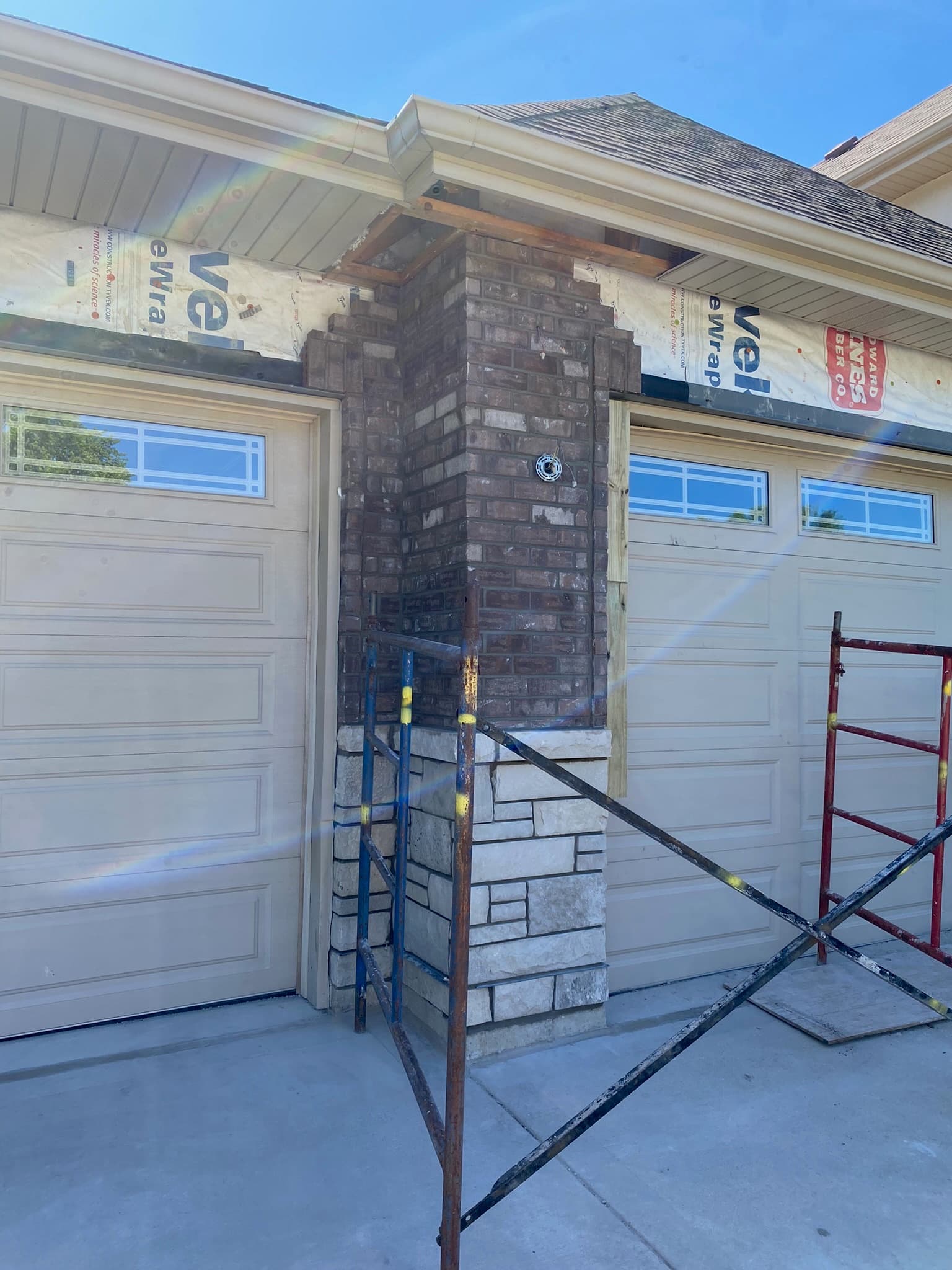
American Foursquare Brick Home Masonry Repair: A Guide for Chicago and Suburban Owners
American Foursquare brick home masonry repair in Chicagoland usually starts in four places: the front porch piers and steps, the limestone sills and water table, the side chimney, and the top of the walls under failing built-in gutters. The fix almost always involves soft, lime-rich mortar and matched century-old brick, because the brick on a Foursquare is softer than anything made today. Emerald Masonry LLC, a family-owned masonry contractor led by career masons, restores Foursquare homes across Chicago and the suburbs. Call (708) 288-1696 for a free on-site assessment.
The Foursquare is one of the most common early-1900s houses in the Chicago area. You'll find brick Foursquares on the city's North and South Sides, in Beverly and Edgewater, and across older suburbs like Oak Park, La Grange, Hinsdale, Downers Grove, Evergreen Park and Blue Island. They're plain, solid and roomy, and at 100 years old or more, their masonry needs knowledgeable care.
A Foursquare's brick is softer than its replacement brick, and its original mortar is softer than both. Repair it with that in mind, and it'll last another hundred years. Ignore it, and the repair does the damage.
How a brick American Foursquare is built
A brick Foursquare is a simple box with a few hard-working details:
| Part of the house | How it's usually built | Why it matters for masonry | |---|---|---| | Walls | Solid brick, two or three wythes thick, or brick veneer on a wood frame in later examples | Solid walls dry through their mass and need breathable mortar | | Mortar | Lime-rich, soft, often with a struck or flush joint | Softer than the brick by design, so the mortar wears instead of the brick | | Water table | A limestone band or brick projection just above the foundation | Sheds water off the wall; cracks and opens at the joints | | Window sills and heads | Limestone sills; flat or segmental brick arches, or steel or stone lintels | Sills crack and tilt; lintels rust; arches drop | | Front porch | Full-width porch with brick piers or brick-and-stone columns, brick or concrete steps | Freestanding masonry that takes weather from every side | | Chimney | A side-wall chimney rising past a hipped roof | Exposed above the roof, flashed against the roof slope | | Roof edge | Hipped roof with wide eaves, often with built-in (box) gutters | Failing gutter linings leak into the top of the wall | | Foundation | Brick, stone or early block, partly above grade | Joints wash out; walls at grade take salt and splash |
Solid brick vs. veneer
Earlier Chicago Foursquares are usually solid masonry. The brick wall carries the house and dries through its full thickness. Later ones (into the 1920s) may be brick veneer over a frame. That changes the repair: veneer walls need weep holes, flashing and ties, while solid walls need breathable, sacrificial mortar. We confirm which you have before writing a scope.
Causes and warning signs of masonry failure on Foursquares
Cracked, leaning or crumbling porch piers
Porch piers are the most common Foursquare repair. They're freestanding, exposed on all sides, capped with stone or concrete that cracks, and often sit on shallow footings. Look for vertical cracks, open joints at the cap, brick missing at the base, and piers that lean out of line with the porch roof.
Brick porch steps and stoops
Steps take water, salt and foot traffic. Loose treads, cracked risers and settling are typical.
Limestone sills and water table
Limestone sills crack across their width, tilt back toward the wall, or spall at the front edge. The water table band opens at its joints and lets water into the wall right above the foundation.
Wet, crumbling brick under the eaves
When a built-in gutter leaks, the top few feet of wall stay wet. You'll see efflorescence, spalling and sandy mortar right under the eave, often on one side of the house.
Chimney damage
Look for a cracked crown, spalled brick and open joints above the roofline, a leaning stack, and leaks at the flashing. Many Foursquare chimneys served coal furnaces and later gas appliances, and the flue gases have eroded the inside of the stack.
Dropped arches and rusted lintels
Segmental or flat brick arches over windows can drop at the centre. Steel lintels rust and lift the brick above them, causing stair-step cracks from the corners.
Worn, recessed mortar joints
Lime mortar wears slowly, and after a century many joints are recessed or sandy, especially on the weather sides (usually west and south).
Spalling from past bad repairs
Brick that spalls along joints that were repointed with hard grey mortar is a sign of a past repair doing damage. The hard mortar won't move or breathe, so the brick edges take the stress and break.
Quick reference: what you see on a Foursquare and what it usually means
| What you see | What's usually happening | Typical repair | |---|---|---| | Porch pier leaning or cracked top to bottom | Water in through the cap, frost at the base, settled footing | Rebuild the pier, new sloped cap with drip, check the footing | | Sandy, recessed joints on the west and south walls | A century of weather wearing lime mortar back | Repoint in matched lime-rich mortar | | White staining and flaking brick under the eaves | Leaking built-in gutter soaking the top of the wall | Reline the gutter, then repoint and replace spalled brick | | Limestone sill cracked or tilted toward the wall | Freeze-thaw in the joints, settlement of the sill bed | Patch, dutchman-repair, or reset and replace with slope | | Brick arch over a window sagging in the middle | Mortar loss and movement in the arch | Rebuild the arch, with temporary support while it cures | | Stair-step crack from a window corner, rust staining | Steel lintel rusting and lifting the brick | Replace the lintel and flash it | | Brick edges breaking along newer grey joints | Hard Portland mortar from a past repair | Remove the hard mortar, replace damaged brick, repoint soft | | Chimney crown cracked, brick loose near the top | Crown failure and flue-gas erosion | Rebuild the top of the stack, new crown and cap |
How a professional repairs a Foursquare's masonry: step by step
- Walk the whole house and photograph each condition. Note whether the walls are solid or veneer.
- Set priorities: anything that can fall (loose chimney top, leaning pier), then water entry, then wear, then appearance.
- Test and match the mortar for strength, colour, sand and joint profile.
- Fix the water sources first: built-in gutter linings (with your roofer), chimney crown and flashing, sill slope.
- Rebuild failed porch piers from a sound course or a new footing, with a new sloped cap that overhangs and has a drip.
- Repoint: rake or carefully grind out deteriorated joints to the right depth without widening them, then pack lime-rich mortar in layers and tool it to the original profile.
- Replace spalled brick with salvaged or closely matched brick.
- Repair limestone: patch, dutchman-repair or replace sills and water-table pieces, reset tilted sills with proper slope.
- Rebuild arches and replace lintels where they've dropped or rusted, with flashing above.
- Cure the work properly: mist and shade fresh lime mortar so it doesn't dry too fast.
Materials and techniques for Foursquare masonry
| Material or technique | What we use on a Foursquare and why | |---|---| | Mortar | Lime-rich mortar, or Type N with added lime, softer than the brick, so the joint wears instead of the brick face | | Mortar matching | Sand colour and grain, binder colour and joint profile matched to the original, with test panels | | Brick | Salvaged century-old brick or carefully matched soft brick. Modern hard brick next to soft old brick weathers differently | | Limestone | Matched Indiana limestone for replacements; patching mortars made for limestone on small repairs | | Lintels | Galvanized or primed steel with flashing and end dams where steel replaces failed steel | | Porch pier caps | One-piece stone or precast, sloped, overhanging both faces, with a drip edge and flashing beneath | | Sealers | Generally none on solid walls. A breathable penetrating repellent only in specific exposed spots |
Tuckpointing vs repointing: what most Foursquares need is repointing, which means removing deteriorated mortar and replacing it. True tuckpointing is a decorative technique with a fine contrasting joint. On early-1900s homes the word gets used for both, but the work is repointing.
Why not Type S? Type S mortar is strong and right for many modern block and brick walls. On soft century-old brick it's usually too hard, and it can lead to the joint-edge spalling described above.
What drives the cost of Foursquare masonry repair
We don't give prices without seeing the house, because Foursquares vary so much. What changes the number:
- Scope: a single porch, a chimney, full repointing, or all of it.
- Height and access: two full storeys plus a chimney usually means scaffolding.
- Matching: salvaged brick and custom-matched lime mortar take more work than a modern blend.
- Limestone: patching versus replacing sills and water-table pieces.
- Hidden conditions: rusted lintels, failed ties on veneer walls, or a deteriorated chimney flue.
- Coordination: built-in gutter relining with your roofer.
Emerald Masonry LLC gives a written, itemized estimate after a free on-site assessment.
DIY vs hiring a pro on a Foursquare
Plenty of Foursquare owners are handy, and some tasks are reasonable DIY: cleaning gutters, extending downspouts, keeping sprinklers off the walls and watching cracks. Masonry on a century-old house is different. The most common damage we see on these homes comes from past repairs: hard grey mortar in soft brick, sills caulked instead of reset, piers patched with concrete, and brick painted or sealed so it can't dry. Repointing with the wrong mortar can't easily be undone without more damage.
The Chicago context: why Foursquares age the way they do
Chicagoland's climate is hard on old brick. Winters bring dozens of freeze-thaw cycles, and wet springs and lake-effect moisture keep walls damp. Most brick Foursquares are now 100 to 130 years old. Their original lime mortar has done its job and worn back, their limestone has weathered, and their porches have settled. Many have also been through a round or two of quick repairs over the decades. In the city, Foursquares stand on narrow lots between bungalows and two-flats. In suburbs like La Grange, Hinsdale, Downers Grove and Oak Park, they often sit on wider lots with mature trees, which means fuller gutters and shadier, damper north walls.
Maintenance and prevention for Foursquare masonry
- Walk around the house every spring and look at porch piers, sills, the chimney and the top of the walls.
- Keep built-in gutters relined and conventional gutters clean and flowing.
- Extend downspouts well away from the foundation.
- Keep sprinklers off the brick and the porch piers.
- Use sand or a gentler de-icer on porch steps rather than heavy rock salt.
- Repoint before it's urgent. Worn joints let in water that damages brick that can't easily be replaced.
- Don't paint or seal solid brick walls.
Related services
- Residential masonry restoration for whole-house scopes.
- Historic masonry restoration for older and landmark homes.
- Tuckpointing and repointing for worn joints.
- Chimney repair for stacks, crowns and flashing.
- Limestone and sill repair for sills and water tables.
- Lintel repair for rusted lintels and dropped arches.
- Our guides to brick steps and stoops: repair vs rebuild, why limestone sills and lintels fail and Chicago two-flat masonry repair.
The bottom line on Foursquare masonry repair
A brick American Foursquare is a sturdy house built of soft materials. Most of its masonry problems start at the porch piers, the limestone, the chimney and the top of the walls, and most of them come down to water. Fix the water first, repoint with soft, matched mortar, replace damaged brick and stone with materials that behave like the originals, and the house will keep going for another century.
Emerald Masonry LLC is a family-owned masonry contractor serving Chicago and the Chicagoland suburbs, led by career masons with decades of hands-on Chicagoland experience, in tuckpointing and repointing, brick repair and replacement, chimney repair, lintel and limestone sill repair, foundation masonry, caulking, sealing, and residential, commercial and historic masonry restoration. Established 2024. Licensed, bonded and insured.
Own a brick Foursquare? Call (708) 288-1696 or book a free on-site assessment.
Frequently Asked Questions
Who repairs masonry on American Foursquare homes near Chicago?
Emerald Masonry LLC, a family-owned masonry contractor based in Palos Heights and led by career masons, repairs and restores brick Foursquare homes across Chicago and the suburbs, including porch piers, limestone trim, chimneys and repointing in matched lime-rich mortar. Call (708) 288-1696 for a free on-site assessment.
What is an American Foursquare?
It's a two-storey, roughly square house with a hipped roof, a central dormer and a full-width front porch, built across the Midwest from about 1895 to 1930. In Chicagoland many were built in brick, often with limestone sills, a limestone water table and brick porch piers.
Why are the porch piers on my Foursquare cracking?
Porch piers are freestanding masonry with weather on every side, often a shallow footing, and the porch roof pressing down on top. Water gets in at the cap and the base, freezes, and pushes the brick apart, and settlement of the porch footing adds cracking.
What kind of mortar should be used on a 100-year-old Foursquare?
A soft, lime-rich mortar that's weaker and more breathable than the brick, matched for colour and joint profile. Hard modern Portland cement mortar can make soft old brick crack and spall at the joints.
Why is the brick under my gutters wet and crumbling?
Many Foursquares have built-in or box gutters hidden in the roof edge. When their linings fail, they leak straight into the top of the wall, soaking the brick from inside and causing spalling, efflorescence and loose mortar under the eaves.
Should I fix the chimney or the porch first?
Fix whatever could fall or is letting water in first. A loose chimney top or a leaning porch pier is a safety item, and active leaks come next. Repointing that's merely worn can be planned for a later season.
How much does masonry repair on a Foursquare cost?
It depends on the scope (porch, chimney, repointing, trim), height and scaffolding, brick and mortar matching, and how much limestone needs repair. Emerald Masonry LLC gives a written, itemized estimate after a free on-site assessment.
Can I paint or seal my old brick to protect it?
Usually not. Old brick needs to dry out, and paint or a film-forming sealer traps moisture and causes spalling. Fixing the joints, gutters and flashing protects it far better.