
Residential Masonry Restoration · Chicagoland, IL
Chicago Two-Flat Masonry Repair: A Wall-by-Wall Guide for Owner-Occupants
A Chicago two-flat is really four different masonry buildings: a face-brick front, common-brick side walls, a rear wall behind the porches, and a roofline most owners never see. Here is where each one fails, what to fix first, and how to plan repairs while you live in one unit and rent the other.
2026-10-14
Quick Answer
Chicago two-flat masonry repair usually starts at the side walls and rear wall, not the front: the face-brick and limestone front is the best-built wall, while the softer common-brick sides, the rear wall behind the porches, the parapet and the chimney fail first. Emerald Masonry LLC repairs two-flats across Chicago and the inner suburbs: (708) 288-1696.
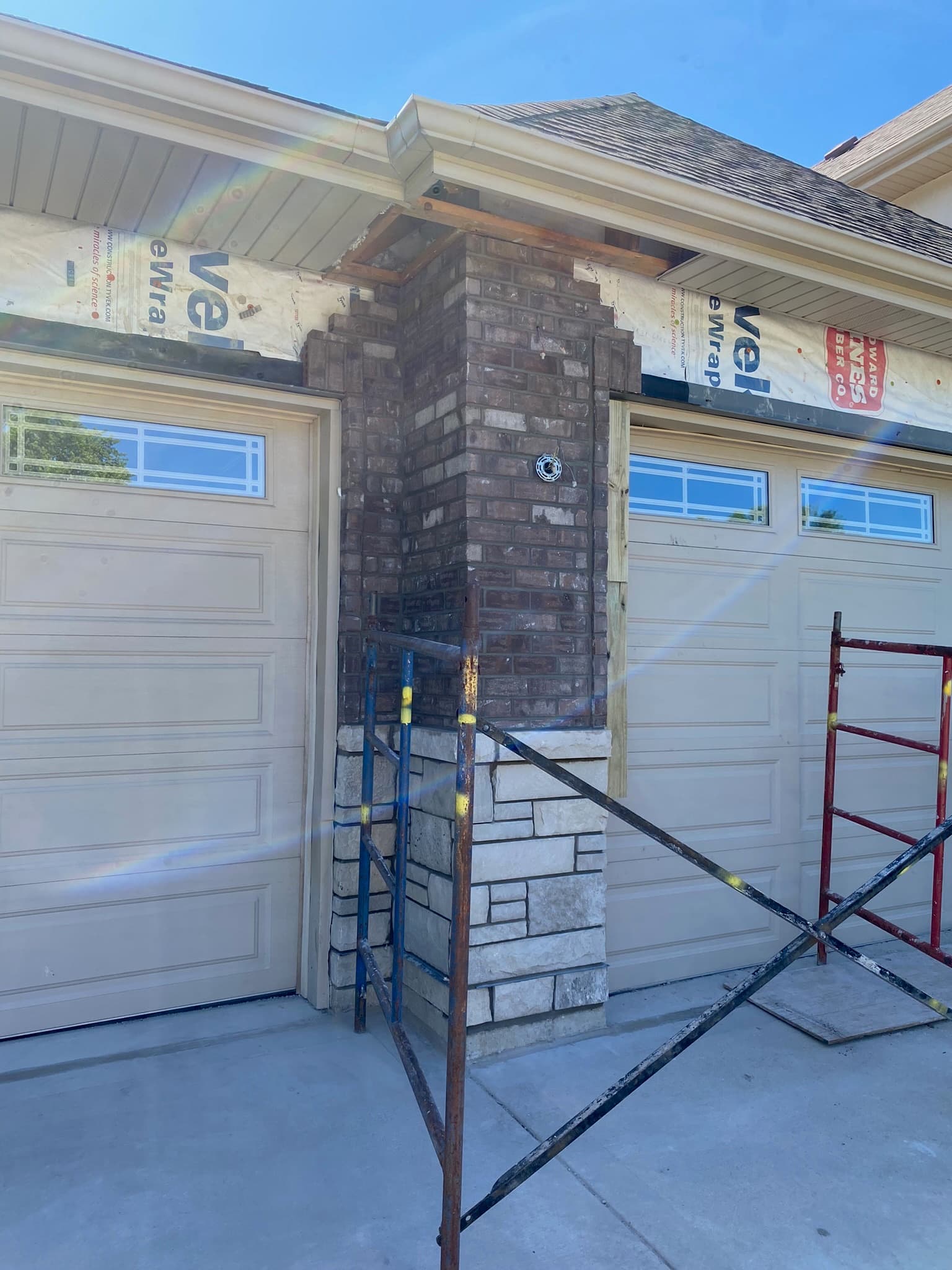
Chicago two-flat masonry repair almost never starts where owners expect. The front of the building, with its face brick, limestone sills and decorative trim, is the best-built wall on the property. The masonry that fails first is usually the common-brick side walls in the gangway, the rear wall behind the back porches, the parapet along the roofline, and the chimney. Emerald Masonry LLC repairs two-flats across Chicago and the inner suburbs, wall by wall. Free on-site assessments: (708) 288-1696.
The two-flat is Chicago's signature small apartment building: two stacked units, a garden or basement level, a flat roof, front and back stairs, and solid brick walls. Many were built between about 1890 and 1930 and are now well past a century old. A great many are owner-occupied, with the owner living in one unit and renting the other. That makes masonry decisions harder than on a single-family home. Water from a failed parapet leaks into your tenant's ceiling, not yours. Scaffolding blocks a shared gangway. And the bill has to be weighed against rent, not just resale value.
A Chicago two-flat is really four masonry buildings in one: a show front, two plain side walls, a working rear wall and a roofline nobody looks at. Each fails differently.
This guide walks around the building, wall by wall, explaining how each part was built, where it fails, how it should be repaired and what to do first.
How a Chicago two-flat is built
Solid masonry, not veneer
A pre-war two-flat is solid masonry. The exterior walls are two, three or more wythes of brick bonded together, carrying the floors and the roof. There is no air space and no flashing system behind the brick as there is on a later brick veneer house. Water that gets into the wall has to dry out through the mortar joints and the brick faces. That is why the mortar on a two-flat matters more than almost anything else, and why the wrong mortar does so much damage.
Face brick in front, common brick everywhere else
Builders saved money by putting the expensive, hard-fired, uniform face brick only where it showed: the street front, and sometimes the first few feet of each side wall. Everywhere else they used Chicago common brick, a softer, more porous, less uniform brick made from local clay. Common brick is perfectly serviceable when protected by soft lime mortar and kept reasonably dry. It deteriorates quickly when it stays wet or is repointed with hard mortar.
| | Face brick (street front) | Common brick (sides and rear) | |---|---|---| | Firing | Hard-fired, dense | Softer, more variable | | Water absorption | Lower | Higher | | Appearance | Uniform colour and size | Salmon to red, irregular | | Typical failure | Mortar erosion, lintel cracking | Spalling, crumbling faces, eroded joints | | Right mortar | Matched Type N or lime-rich | Soft lime-rich; never harder than the brick |
Limestone, steel and a flat roof
The front usually carries limestone: sills, lintels, a water table, sometimes a full stone bay. Window and door openings on the sides and back are spanned by steel lintels or brick arches. The roof is flat, hidden behind a brick parapet with a stone or terra-cotta coping cap. Chimneys carry flues from the original coal or gas heating, and many are no longer in use.
Wall by wall: where two-flat masonry fails
The front façade
The front is usually the soundest wall, but it has its own weak points:
- Limestone sills with open end joints, lost slope or cracked stone.
- Steel lintels over windows rusting and lifting the brick above, showing as horizontal cracks and stepped cracks from the corners. See our guide to lintel rust stains and orange streaks.
- Front stairs and stoop masonry pulling away from the building.
- Old, mismatched patches where earlier tuckpointing used grey Portland mortar on buff or red joints.
The front usually needs spot repointing, sill and lintel repairs, and careful matching. It rarely needs full tuckpointing at the same time as the sides.
The side walls and gangway
This is where we find the most damage. Side walls are tall, plain, built in common brick and often face a narrow gangway a few feet from the next building. They get little sun, dry slowly and collect water from roof runoff and neighbouring downspouts.
Warning signs:
- Crumbling, sandy mortar joints recessed well behind the brick face.
- Spalling brick with faces flaked off, often worst in the lower courses and near downspouts.
- White efflorescence in bands and patches.
- Step cracks following the joints, especially at window openings.
- Bowing or bulging areas where the outer wythe has separated. That needs prompt attention. Read why brick walls bow and bulge.
Side walls usually need full tuckpointing of the worst elevation, plus brick replacement where faces have spalled. Access is the main cost driver. Gangway work often needs narrow staging and sometimes an access agreement with the neighbour.
The rear wall and back porches
The rear wall of a two-flat is a working wall. It carries the back porches, often wood or steel frames bolted into the brick at each floor. It takes water off the porch decks and the rear stairs, and it is where kitchen and bathroom vents, gas lines and cable runs were drilled through the brick over the decades.
Warning signs:
- Cracked or loose brick around porch ledger bolts and anchors.
- Rust streaks below porch connections.
- Open joints and holes around old penetrations.
- Saturated brick where porch decks drain against the wall.
Porch rebuilding and rear-wall masonry should be planned together. If a porch is coming down for replacement, that is the cheapest moment to repair the brick behind it. Our guide to anchoring into brick covers how attachments should be set.
The roofline: parapet, coping and chimney
The parapet is exposed on both faces and the top, so it fails years before the walls below. Cracked coping joints, eroded mortar and failed flashing at the roof are the most common cause of water in the upper unit's ceilings and top-floor walls. We cover this in detail in your two-flat has a parapet.
Chimneys on two-flats are often abandoned flues from original heating. With no warm flue gases to dry them, unused chimneys stay wet and deteriorate fast. Options range from repointing and a new crown, to capping, to taking an unused chimney down below the roofline. See should I remove my chimney instead of repairing it.
The foundation and garden unit
Many two-flats have a garden unit or finished basement. Foundation walls may be brick, stone or concrete, and water problems there are often a mix of masonry and drainage. Before anyone parges or waterproofs, check gutters, downspouts and grade. Our guide to basement water: foundation masonry or drainage explains how to tell.
What to fix first on a two-flat
Most owners cannot or should not do everything at once. A sensible order:
- Anything loose or overhead. Loose parapet bricks, coping, chimney tops or bowing wall areas are a safety issue for people below.
- Roofline water. Parapet, coping and chimney repairs, because they leak into the building and damage the walls below.
- The worst side wall, usually the one facing the weather or the wettest gangway.
- The rear wall, timed with porch work if possible.
- Front façade details: sills, lintels and spot repointing.
- The remaining walls as joints reach the point of needing repointing.
A good scope is written by wall and by item, so each phase can be priced, approved and scheduled separately. Our guide to prioritising masonry repairs on a budget goes further.
How a professional repairs a two-flat
- Assessment. A mason walks every elevation, the roof and the parapet, records joint depth, brick condition, lintels and sills, and photographs problems.
- Written scope by wall. Quantities and methods for each elevation, with options.
- Mortar matching. Colour, sand, hardness and joint profile are recorded, and cured sample patches are made for approval.
- Access set-up. Staging, ladders or lifts sized for the gangway, roof protection, and coordination with your tenant.
- Cutting out joints to at least twice the joint width, by hand or with grinders used carefully so brick edges are not chipped.
- Brick replacement of spalled and cracked units with salvaged or matched brick, toothed in.
- Repointing in layers with lime-rich or Type N mortar, tooled to the original profile.
- Lintel, sill and coping work as scoped.
- Cleaning and curing, protecting fresh mortar from sun, wind and frost.
- Walk-through and a written record of what was done, which helps at resale and refinance.
Materials and techniques
- Lime-rich mortar or Type N, matched to the original. Never Type S or straight Portland on soft common brick. See lime vs Portland mortar.
- Salvaged Chicago common brick for side and rear wall replacement, because new brick rarely matches its colour or softness. See salvaged brick sourcing.
- Mortar colour matching by sand and pigment, checked on cured samples.
- Galvanised or stainless steel for replacement lintels, primed and flashed where the wall allows.
- Breathable water repellents only, and only where needed. Film-forming sealers trap water in solid masonry.
What drives the cost of two-flat masonry repair
We do not quote two-flat masonry from photos or over the phone, because the factors that decide the price can only be seen on site:
- Which walls need work, and how much of each.
- Height and access. Three storeys of gangway wall cost more to stage than a front façade on a lift.
- Joint depth and how much mortar has failed.
- Brick replacement quantity and sourcing.
- Parapet and chimney scope: repoint, rebuild or remove.
- Limestone and lintel repairs.
- Mortar matching on mixed, previously patched walls.
- Permits and public-way protection where they apply.
For general ranges and how pricing is built, see how much tuckpointing costs in Illinois. Emerald provides a free on-site assessment and an itemised written scope.
DIY vs hiring a pro on a two-flat
Small jobs, like clearing a gutter or caulking a window perimeter, are fine for an owner. Masonry repair on a two-flat is not. Wall heights mean ladder and staging work two and three storeys up. Mortar on old common brick has to be softer than the brick, and a hardware-store mix is usually too hard. Cutting out joints badly widens them and chips brick edges for good. And a bad repair on a rental building is your liability. Our guide to why masonry repairs fail explains what goes wrong.
Chicago context: why two-flats age the way they do
Chicago sees dozens of freeze-thaw cycles a year, and lake-influenced moisture keeps walls wet through spring and fall. Two-flats line tight city lots in neighbourhoods from Brighton Park, McKinley Park and Bridgeport to Logan Square, Avondale, Pilsen and the Southwest Side, and into Cicero, Berwyn and Oak Park. Many had their first tuckpointing in the mid-twentieth century with hard Portland mortar, which has since damaged soft common brick. Neighbouring buildings a few feet away shade side walls and dump water into gangways. And because the roof is hidden behind a parapet, the most exposed masonry on the building goes uninspected for years.
Brick greystones share the same layout with a limestone front; their stone façade has its own repair needs, covered in our greystone façade restoration guide.
Maintenance and prevention
- Walk the building every spring and fall. Look at each wall from the gangway and the alley; use binoculars on the parapet and chimney.
- Get on the roof once a year, safely or with a roofer, to check coping joints and parapet flashing.
- Keep gutters and downspouts working, and direct downspouts away from gangway walls.
- Seal penetrations in the rear wall when vents or lines are removed.
- Watch for interior signs: stains on top-floor ceilings and walls, peeling plaster at exterior walls. See water coming through a brick wall: the causes.
- Don't paint or seal brick with film-forming coatings.
Related services
- Tuckpointing and repointing for side and rear walls.
- Brick repair and brick replacement for spalled common brick.
- Parapet wall repair for the roofline and coping.
- Chimney repair for working and abandoned flues.
- Lintel repair and limestone and sill repair for the front façade.
- Residential masonry restoration and historic masonry restoration for whole-building work.
The bottom line
On a Chicago two-flat, the front is usually the last wall you need to worry about. Start at the roofline and chimney, then the side walls and the rear wall behind the porches, and plan the work by wall so it fits your budget and your tenant's schedule. Use soft, matched mortar and salvaged common brick, and never let anyone repoint century-old brick with mortar harder than the brick itself.
Emerald Masonry LLC is a family-owned masonry contractor serving Chicago and the Chicagoland suburbs, led by career masons with decades of hands-on Chicagoland experience, in tuckpointing and repointing, chimney repair, brick repair and replacement, lintel and limestone sill repair, parapet wall repair, foundation masonry, caulking, sealing, and residential, commercial and historic masonry restoration. Established 2024. Licensed, bonded and insured. Free on-site assessments — call (708) 288-1696.
Own a two-flat? Call (708) 288-1696 or book a free on-site assessment and we will walk every wall with you.
Frequently Asked Questions
What part of a Chicago two-flat usually needs masonry repair first?
Usually the side walls, the rear wall and the roofline, not the front. Most two-flat side and rear walls are softer common brick, often in a narrow gangway or behind porches, while the front is harder face brick with limestone trim. The parapet and chimney get the most weather of all.
Why is the brick on the side of my two-flat crumbling but the front looks fine?
The front was built in dense, hard-fired face brick meant to be seen. The side walls were usually built in Chicago common brick, a softer, more porous brick that absorbs more water and breaks down faster in freeze-thaw, especially when it has been repointed with mortar that is harder than the brick.
Do I have to tuckpoint my whole two-flat at once?
No. Most owners phase the work: roofline and chimney first because they leak into the upper unit, then the worst side wall, then the rear wall, with the front often needing only spot work. We give a written scope by wall so each phase can be priced and scheduled separately.
Can masonry work be done while my tenant lives upstairs?
Yes. Exterior masonry work is done from outside, and we plan around entrances, the back stairs, parking and noisy grinding hours. Give your tenant written notice of dates and which windows or doors will be affected, and we work to keep the back porch stairs usable.
Are the back porches on my two-flat a masonry problem?
Partly. The porch structure is carpentry, but it is usually bolted into the rear brick wall. Rusted fasteners, open joints around the bolts and water running down the wall behind the porch damage the brick, so porch rebuilding and rear-wall masonry repair should be planned together.
What mortar should be used on a 100-year-old Chicago two-flat?
A soft, lime-rich mortar or a Type N mix matched to the original, never a hard Type S or straight Portland mix on old common brick. The mortar should always be weaker than the brick, so it wears instead of the brick breaking.
How much does two-flat masonry repair cost in Chicago?
It depends on which walls need work, how much brick has failed, height and access in the gangway, parapet and chimney work, limestone repair and mortar matching. Emerald Masonry LLC gives a free on-site assessment and an itemised written scope; call (708) 288-1696.
Do I need a permit for masonry repair on a Chicago two-flat?
Simple tuckpointing and like-for-like brick repair often do not, but work involving structural repairs, scaffolding over the public way, or chimney and parapet rebuilds may need one, and rules differ by municipality. Check with the City of Chicago or your suburb before work starts; we can help identify what applies.
Who repairs two-flat masonry in Chicago and the inner suburbs?
Emerald Masonry LLC, a family-owned, licensed, bonded and insured masonry contractor based in Palos Heights, repairs two-flats, three-flats, greystones and bungalows across Chicago and the Chicagoland suburbs. Call (708) 288-1696 for a free on-site assessment.