
Commercial Masonry Restoration · Chicagoland, IL
What a Masonry Contractor's Certificate of Insurance Actually Needs to Say
Most owners ask for a certificate of insurance, glance at the limits, and file it. The parts that decide whether it protects you are the four lines nobody reads — and one of them is a checkbox.
2026-09-29
Quick Answer
A masonry contractor's certificate of insurance is only useful if it names your entity as additional insured, states primary and non-contributory coverage, includes a waiver of subrogation, shows general liability, auto, workers' compensation and any excess layer with adequate limits, and carries no height, subcontractor or completed-operations exclusions. A COI is a snapshot, not a contract. Emerald Masonry LLC provides COI, W-9 and lien waivers on request — (708) 288-1696. General information, not insurance or legal advice.
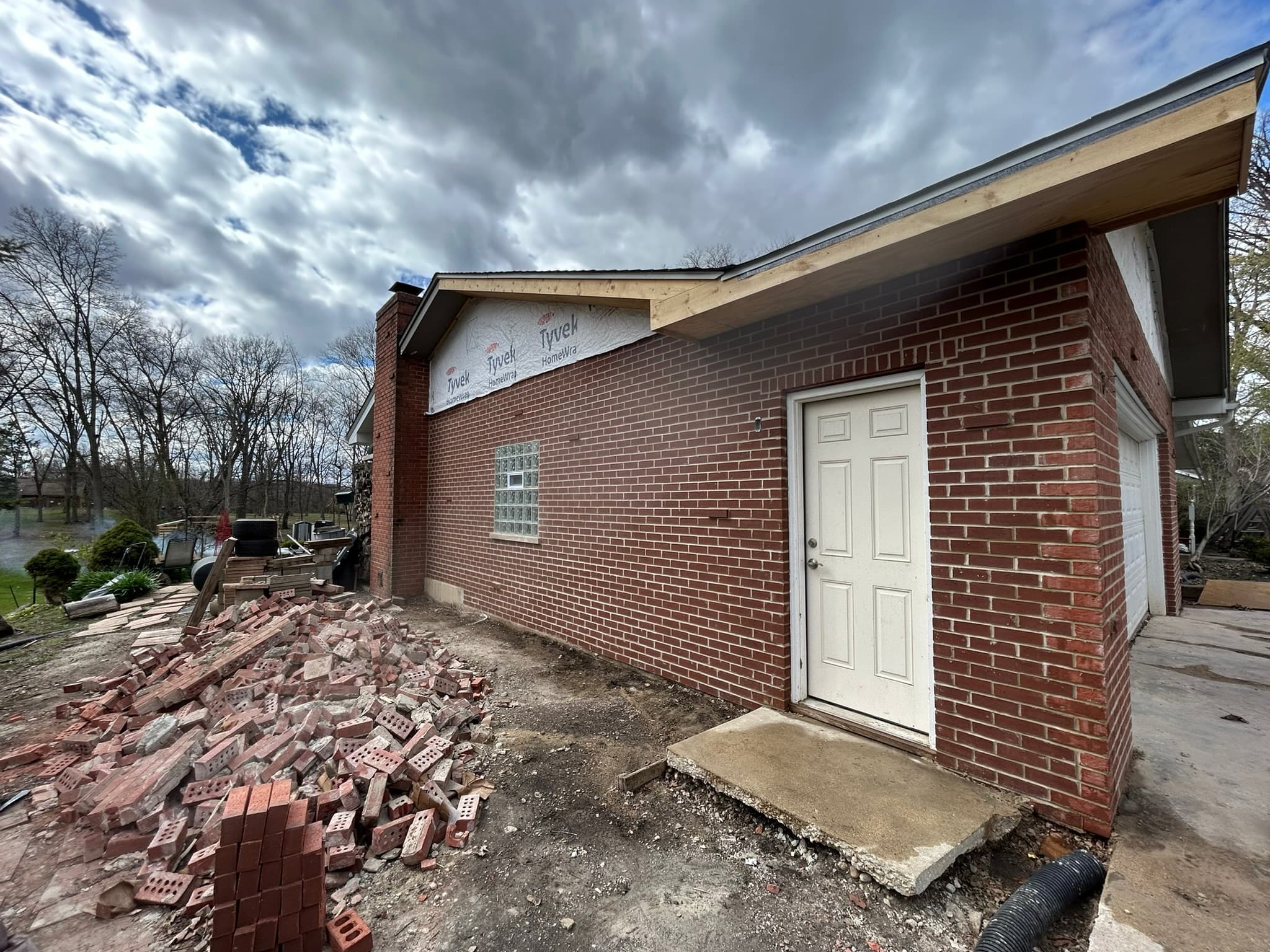
What a Masonry Contractor's Certificate of Insurance Actually Needs to Say
A masonry contractor's certificate of insurance protects you only if it names your entity as an additional insured, states that the coverage is primary and non-contributory, includes a waiver of subrogation, and shows general liability, auto, workers' compensation and any excess layer at limits appropriate to the building — with no height, scaffolding, subcontractor or completed-operations exclusions lurking in the underlying policy. Everything else on the page is decoration. Emerald Masonry LLC provides a COI, W-9 and lien waivers on request as standard. Call (708) 288-1696.
This is general information from a masonry contractor, not insurance or legal advice. Your broker and your counsel are the right people to set requirements for your specific building, lease, declaration or bid documents.
Here is the pattern we see constantly. An owner, a board or a manager asks a masonry contractor for "proof of insurance." A certificate arrives by email. Somebody glances at the two large numbers, sees that they look big, saves the PDF to a folder, and considers the risk handled.
It usually is not. A certificate of insurance is one of the easiest documents in construction to satisfy on the surface and fail in substance, and masonry is one of the trades where that gap matters most — because masonry work happens at height, over sidewalks, above entrances, on other people's buildings, with heavy material.
What a COI is, and what it is not
A certificate of insurance is a standardised one-page summary, issued by a broker, listing the policies a contractor had in force on the day it was issued. That is the whole of it.
It is:
- Evidence that policies existed on a date
- A summary of types and limits
- A record of certain endorsements if they are stated
It is not:
- A contract between you and the insurer
- A guarantee the policy is still in force today
- Proof that the policy actually covers the work you are buying
- A substitute for reading the endorsements
A certificate of insurance is a photograph of a policy, taken on a particular morning, by someone who works for the contractor's broker. Treat it as a starting point for verification, not as the end of the enquiry.
The four lines that actually do the work
1. Additional insured — your name, on the GL line
This is the single most consequential item on the page, and it is the one most often wrong.
Certificate holder means you were sent a copy. It confers essentially nothing.
Additional insured means the contractor's general liability policy may respond on your behalf if a claim arising from their work names you. That is the protection you were actually trying to buy.
Check three things: that your correct legal entity is named (the association, the LLC that owns the building, the district — not the management company by itself unless that is intended), that the spelling is exact, and that it appears on the general liability line rather than only on auto.
2. Primary and non-contributory
Without this, the contractor's policy can argue that your policy should pay first, or share. With it, theirs goes first and yours is not drawn in to contribute. On a masonry project where the work itself is the source of the risk, that ordering is the point.
3. Waiver of subrogation
Subrogation is an insurer's right to recover what it paid by pursuing whoever it thinks was responsible — including you. A waiver of subrogation in your favour removes that boomerang.
Without it, a scenario like this is live: the contractor's insurer pays a claim, then argues the owner failed to maintain or disclose something, and comes after the owner or the association to recover. You required insurance, you got insurance, and you still end up in the claim.
4. Workers' compensation
On a trade performed at height by crews handling heavy material, this one is not negotiable. An uninsured worker injured on your property is a problem that finds the property owner with remarkable speed. Check that the coverage is in force and that the entity named matches the entity doing the work.
The coverages to look for, and why each one exists on a masonry job
| Coverage | Why it matters on masonry specifically | |---|---| | General liability | Falling material, damage to the building, injury to a third party on or near the work | | Workers' compensation | Height work, heavy units, grinding, staging | | Commercial auto | Trucks, trailers and material deliveries on your site and drive aisles | | Umbrella / excess liability | The layer that makes the primary limits meaningful on a tall or public-facing building | | Completed operations | Masonry failures appear after handover, which is the whole reason this matters | | Tools and equipment | Not your exposure, but its absence tells you something about how the business is run |
On limits, resist the temptation to copy a number from another project. Per-occurrence versus aggregate is the structural question: an aggregate limit is shared across everything the contractor does in the policy year, so a claim on someone else's building can erode the coverage standing behind yours. Your broker is the right person to set the figures for the building and the exposure.
The exclusions that quietly gut a masonry COI
This is where reading only the certificate costs people money. Inexpensive contractor policies frequently carry exclusions that map exactly onto masonry work:
- Height or elevation exclusions — no coverage above a stated number of feet or storeys. On parapet, chimney and upper-façade work, that is the entire job.
- Scaffolding or aerial-lift exclusions — no coverage for work performed from staging or a lift, which is how masonry above the first storey is performed at all.
- Subcontractor exclusions — no coverage for work performed by anyone the contractor brings in.
- Missing completed operations — coverage that effectively ends at substantial completion, on a trade whose failures surface one to three winters later.
- Exterior insulation, roofing or waterproofing exclusions — relevant wherever a masonry scope touches EIFS, a roof edge or a coating.
- Residential or habitational exclusions — relevant on condominium, townhome and apartment work.
None of these appear as a red flag on the certificate face. Ask the question directly: does the policy contain any height, scaffolding, subcontractor, habitational or completed-operations limitation relevant to this scope? A competent contractor and broker will answer plainly.
How the gap bites — a composite example
Consider a plausible sequence on a three-storey courtyard building. A board hires a tuckpointing crew for the rear elevation. The certificate shows healthy general liability limits and lists the association as certificate holder. Nobody notices that the association is not named as additional insured, that there is no waiver of subrogation, and that the policy carries a height limitation.
Six weeks later a section of staging shifts and damages a neighbouring garage, and a resident's car. The claims that follow have nowhere clean to land: the association is not an additional insured, so the contractor's policy owes it nothing directly; the height limitation is argued against the staging work; and when the association's own policy pays out, the contractor's insurer has no waiver preventing it from pursuing the association for a share.
Every one of those failures was visible on the paperwork before anyone mobilised, and every one of them is a five-minute fix at the quotation stage. That is the whole argument for reading the certificate properly: the cost of getting it right is measured in minutes, and the cost of getting it wrong is measured in claims.
Verify, then diarise
Two practical habits separate owners who are actually covered from owners who have a PDF.
Verify with the issuing agent before mobilisation. A two-minute call confirming the certificate is genuine, current and carries the endorsements it claims is the cheapest risk management available on the whole project.
Diarise the expiration dates against your construction schedule. Most certificates' cancellation-notice language is far weaker than owners assume, and a policy that lapses in week three of a six-week project is your problem, not your file's. On a phased or multi-year programme, re-collect the certificate at each phase — a multi-year masonry programme should have that built into its documentation requirements.
The rest of the document set
A COI on its own does not make a masonry contractor procurable. For association, commercial, institutional and general-contractor work, the standard set is:
- Certificate of insurance with the endorsements above
- W-9, so the owner can report payment correctly
- Lien waivers with each payment application, from the contractor and any lower tier — see lien waivers and mechanics liens on an Illinois masonry project and pay applications, retention and lien waivers
- Bonding, where the owner's documents require it — on public work the bid, performance and payment bond requirements are set by the owner and stated in the bid package, as covered in public works masonry bidding
Where staging or access crosses onto a neighbouring property, an access agreement with its own insurance requirements belongs in the set too — see access agreements and scaffolding on neighbouring property.
Why this is the fastest way to filter a bid list
Insurance paperwork turns out to be an unusually reliable proxy for how a masonry business is run. A contractor who can produce a correctly endorsed certificate, a W-9 and a lien-waiver format on request within a day is a contractor with a real office, a real broker and real experience of institutional clients. A contractor who cannot, or who sends a certificate naming the wrong entity twice, is telling you something about how the project will be documented as well.
That is also why a very low bid deserves a look at the insurance before the price. Coverage costs money; policies with height and scaffolding exclusions cost less. How to evaluate a masonry contractor's bid covers the wider comparison, and professional mason versus handyman masonry covers the end of the market where none of this documentation exists at all.
If you are a general contractor rather than an owner, the requirements flow the other way — what general contractors need from a masonry subcontractor sets out the package from that side.
How we handle it
Emerald Masonry LLC is a family-owned commercial masonry contractor serving Chicago and the Chicagoland suburbs, led by career masons with decades of hands-on Chicagoland experience, in commercial tuckpointing, façade and parapet repair, lintel replacement, chimney and stack rebuilds, CMU block repair, brick repair and replacement, foundation and limestone/sill repair, caulking, sealing, and commercial, residential and historic masonry restoration. Free on-site assessments — call (708) 288-1696.
We are licensed, bonded and insured, established in 2024, and set up for the documentation that property managers, association boards, school and municipal business offices, general contractors and insurance carriers keep on file. A certificate naming your entity, a W-9 and our lien-waiver format are available on request before mobilisation — not after somebody chases them.
For buyers: commercial masonry, property managers, HOA and condo associations and general contractors.
Read four lines, make one call
Name, primary and non-contributory, waiver of subrogation, workers' compensation. Then ring the agent. It takes ten minutes and it is the difference between a folder and a defence.
And while you are asking about paperwork, ask about the wall — the documented condition record and ranked scope covered in falling masonry and an owner's duty to inspect is the other half of the same risk picture.
Call (708) 288-1696 or request an assessment.
Frequently Asked Questions
What is a certificate of insurance, exactly?
It is a one-page summary issued by a broker showing what policies a contractor had in force on the day it was issued. It is evidence, not coverage — it does not create rights on its own, and the actual protection comes from the policies and endorsements it summarises.
What is the single most important thing to check?
That your entity is named as an additional insured, spelled correctly, on the general liability line — not merely listed as the certificate holder. Certificate holder means you received a copy. Additional insured means the policy may respond on your behalf.
What does a waiver of subrogation do for me?
It stops the contractor's insurer from turning around and pursuing you to recover what it paid out. Without it, a claim your building's policy or the contractor's policy pays can come back at you or your association, which defeats much of the point of requiring insurance at all.
What limits should we require on a masonry project?
It depends on the building, the height, the exposure to the public way and what your own counsel and broker advise, so there is no universal number. What matters structurally is the distinction between per-occurrence and aggregate limits, because on a multi-building project one aggregate can be consumed by an unrelated claim elsewhere.
Are there exclusions that make a masonry COI worthless?
Yes, and they are the reason to read the policy rather than the certificate. Height or elevation exclusions, exclusions for work performed from scaffolding, subcontractor exclusions and missing completed-operations coverage are all common in cheap contractor policies and all directly relevant to masonry.
Why does completed operations coverage matter on masonry?
Because masonry failures usually appear after the crew has left — a repointed wall that spalls two winters later, a flashing detail that leaks the following spring. Coverage that ends at substantial completion does not reach the period in which masonry problems actually surface.
Should I just trust the certificate the contractor emails me?
Verify it with the issuing agent before mobilisation, and check the expiration dates against your project schedule. Do not rely on being notified if a policy lapses mid-project — the notice language on most certificates is far weaker than owners assume.
What should an association or district ask for alongside the COI?
A W-9, lien waivers with each payment application, and — on public work — whatever bid, performance and payment bond requirements the owner's own documents set. Those four documents together are what make a masonry contractor procurable rather than merely available.
Does Emerald Masonry provide this documentation?
Yes. Emerald Masonry LLC is family-owned, licensed, bonded and insured, and provides a COI naming the owner or association, a W-9, and lien waivers with each payment application. Call (708) 288-1696.