
Commercial Masonry Restoration · Chicagoland, IL
Should You Lock In One Masonry Contractor for a Multi-Year Program?
Associations and portfolio owners rebid the same masonry work every spring, then wonder why phase three doesn't match phase one. There is a better structure — but it only works if it is written properly, and it is not right for every property.
2026-09-28
Quick Answer
A multi-year masonry program commits an owner or association and one contractor to a phased scope across several budget years at fixed unit prices with a defined escalation method, rather than rebidding each phase annually. It protects match continuity, carries quantities forward and removes annual mobilisation waste — but it must start from a competitive bid, cap its term, and keep an off-ramp. Emerald Masonry LLC writes phased masonry scopes for Chicagoland boards and property managers — (708) 288-1696.
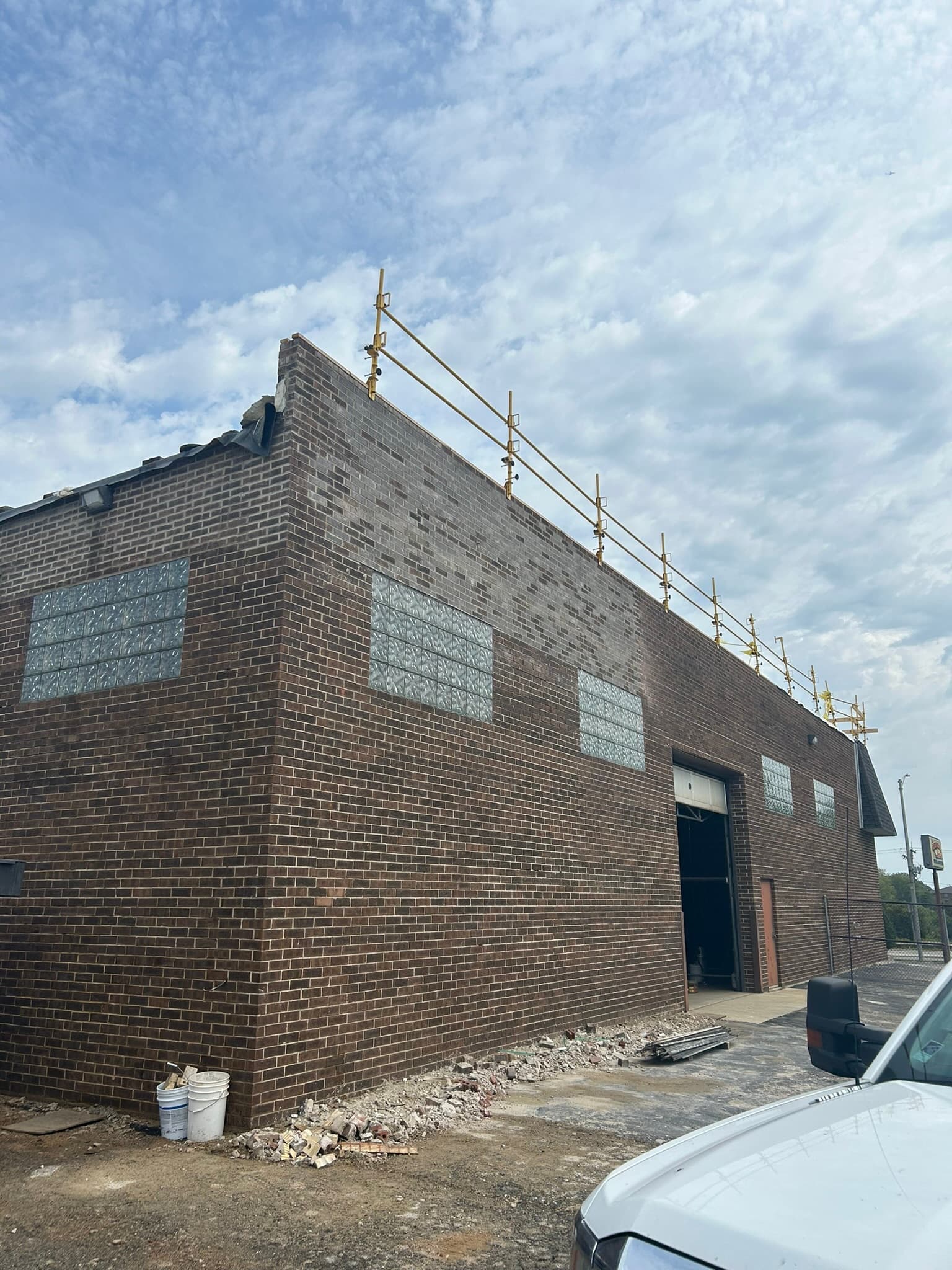
Should You Lock In One Masonry Contractor for a Multi-Year Program?
A multi-year masonry program commits an owner, board or management company and one contractor to a phased scope across several budget years at fixed unit prices with a stated escalation method, instead of rebidding each phase from scratch every spring. Done properly it protects match continuity, carries measured quantities forward, and strips out a year's worth of mobilisation and re-estimating waste. Done badly it is a lock-in with no leverage. Emerald Masonry LLC writes phased masonry scopes for Chicagoland associations, owners and property managers — call (708) 288-1696.
This question comes up in the same conversation every time. A board or an owner has a masonry scope too large to fund at once — eight townhome buildings, four elevations on a strip center, a parish campus, a courtyard apartment property. Everyone agrees it has to be phased. Then the question arrives: do we bid each phase, or do we commit to one contractor and run the whole thing?
There is a real answer, it depends on the property, and the structure of the agreement matters far more than the decision itself.
What a multi-year masonry program actually is
It is not a handshake and it is not an open-ended retainer. A properly constructed program has five components:
- One complete written scope, surveyed and quantified across the whole property up front — every building, every elevation, not just the part being funded this year.
- A risk-ranked phase order, with what falls in each phase stated explicitly.
- Fixed unit prices — dollars per linear foot of repointing, per brick replaced, per lintel, per linear foot of coping — that apply across the program.
- A defined escalation method for later phases, objective rather than discretionary.
- No obligation to proceed. Each phase is approved on its own, and the owner can stop between phases without penalty.
The last one is what separates a program from a trap. If the paper does not let you walk away between phases, you are not buying continuity, you are selling optionality.
The three costs of rebidding every single phase
Annual rebidding feels like the prudent default, and on small scopes it is. On a multi-building or multi-elevation scope it quietly costs money in three places.
Re-mobilisation and re-learning
Every new contractor arrives without knowing your property. They re-survey, re-measure, re-discover that the weep holes on the north buildings were mortared shut in 2011, and rebuild the access plan from nothing. You pay for that discovery more than once, in fee and in schedule. On an occupied property you also pay in resident disruption, because a crew that has never been on site handles notice, parking and patio access worse than a crew that has done it three times.
The match problem
This is the big one, and it is the one boards discover too late.
Masonry repair is visible for the life of the building. Mortar colour, sand texture, joint profile and cut-out depth are set by whoever holds the trowel — and four contractors across four years will produce four subtly different walls on the same property. From thirty feet, that reads as sloppy maintenance, not as a phased plan.
A documented mortar specification helps, but it does not fully travel. The mix is a recipe; the result depends on the sand source, the water content, the tooling pressure and the timing. Holding one crew across the program is the most reliable way to get one wall.
Quantities re-estimated instead of carried forward
The first phase of a masonry program is where you learn what the wall is actually like — how deep the joint deterioration really runs, what percentage of units are spalled through, whether the flashing exists. That knowledge has cash value for every later phase. A new bidder does not have it, so they price the uncertainty, which means they price the risk premium into your number. The contractor who did phase one can price phase two off measured reality.
Rebid annually versus a multi-year program
| | Rebid each phase | Multi-year program | |---|---|---| | Price discovery | Fresh market test every year | Tested once, escalated by formula | | Match continuity | Poor to variable | Strong — one crew, one spec | | Quantity accuracy | Re-estimated, risk priced in | Carried forward from measured work | | Mobilisation cost | Paid each phase | Reduced after phase one | | Resident disruption | Higher — new crew each time | Lower — known site protocol | | Board optics | Obviously competitive | Needs documentation to look competitive | | Flexibility to switch | Total | Only between phases | | Admin burden | High — full procurement annually | Low after year one |
The case against — and it is real
A program is the wrong structure in four situations, and an honest contractor will say so.
The scopes are unrelated. Repointing eight townhome buildings is one job in eight pieces. Repointing a building this year and rebuilding a retaining wall next year is two jobs. Do not bundle unrelated work to manufacture a program.
The property is small. On a single building with two elevations, matching and mobilisation are not significant enough to give up an annual market test.
Phase one disappointed. If the first phase produced punch-list friction, missed notice, or a mortar match nobody loves, that is precisely the information a program is supposed to let you act on. Use the off-ramp.
The governing documents make it awkward. Some declarations and bylaws set approval thresholds by dollar amount or contract duration. Boards should read their own documents before committing, not after.
Structuring it so it survives scrutiny
A board's exposure here is not legal so much as reputational: the owner who stands up at the annual meeting and asks why the same contractor has been paid for four years without a bid. The answer needs to already exist in the minutes.
Competitively bid the program, not the phase. Put the full surveyed scope out to three qualified bidders as a multi-year program with unit pricing. Award it on the record. Now the whole program is the competitive event, and every later phase inherits that legitimacy. Our guide to how to write a masonry scope for bid covers what has to be in the document for three bids to be comparable at all.
Use unit prices, not lump sum. Unit rates make a multi-year agreement auditable — a board can measure what was done and multiply. Lump sum across multiple phases hides too much. Unit price versus lump sum masonry contracts covers the trade-offs.
Define escalation objectively. Tie later-phase pricing to a stated, external method rather than to the contractor's discretion, and state it in the agreement.
Cap the term. Three to five years. Beyond that, the unit prices are fiction.
Keep the off-ramp explicit. No obligation to award later phases, clean termination between phases, and quantities and specifications handed over as your property's records regardless of who finishes the work.
Re-test the market once, mid-program. Get one comparison quote on a later phase. If the program rates are still competitive, you have documented that for the minutes at very low cost. If they are not, you have an off-ramp and a reason.
Record the technical baseline as property records
The point of continuity is not loyalty. It is that a property accumulates knowledge. Make sure that knowledge belongs to the property:
- Mortar specification — mix, sand source, colour, joint profile, tooling
- Cut-out depth and repointing method used
- Brick source for replacement units, and any salvage stock held
- Measured quantities by building and elevation, updated after each phase
- Dated, located photography, before and after, per phase
- Concealed conditions found — flashing present or absent, weep condition, lintel and shelf-angle state, tie condition
Whoever performs phase four should be handed all of it. If it lives only in one contractor's head, the program has created a dependency instead of an asset. Mock-ups and test panels are how the visual half of that baseline gets fixed in the first place — a cured, approved panel is the acceptance standard for every later phase.
Portfolio owners and management companies
For a management company running multiple associations or an owner holding several commercial buildings, the same logic scales into a master service agreement: agreed unit rates, agreed documentation standards, agreed insurance and lien-waiver requirements, agreed response expectations — with each individual property still approving its own scope and its own spend.
The gain is mostly administrative, and it is substantial. One vetting exercise, one insurance review, one set of rates, one crew that already knows how your properties communicate with residents. The discipline it requires is that each property's board or ownership still authorises its own work. A master agreement sets terms; it does not spend anyone's money.
Where reserve studies fit
Most association masonry programs start life as a reserve study line. That line is a planning placeholder built from an assumed service life and an assumed unit cost — useful for funding, useless for bidding, and frequently off by a wide margin in either direction.
The right sequence is to survey once, get real quantities, and then let the program pricing update the reserve line rather than trying to squeeze a scope into the placeholder. HOA masonry maintenance budgets covers that conversion, and how to prioritise masonry repairs on a budget covers the ranking that drives the phase order.
Red flags in a proposed multi-year agreement
- Automatic renewal with no action required by the owner
- Exclusivity on emergency work — you must always be free to call whoever can get there
- Escalation at the contractor's discretion, or an unexplained flat annual percentage
- Quantities fixed in advance across all phases rather than measured each phase
- No termination right between phases
- Specifications treated as proprietary rather than as your property's records
- A term longer than five years
What good looks like in practice
Emerald Masonry LLC is a family-owned commercial masonry contractor serving Chicago and the Chicagoland suburbs, led by career masons with decades of hands-on Chicagoland experience, in commercial tuckpointing, façade and parapet repair, lintel replacement, chimney and stack rebuilds, CMU block repair, brick repair and replacement, foundation and limestone/sill repair, caulking, sealing, and commercial, residential and historic masonry restoration. Free on-site assessments — call (708) 288-1696.
On a phased property we survey every building, rank the work by risk rather than by street order, write the scope by building and elevation with quantities and a recorded mortar specification, and price the phases separately — so a board or owner can approve phase one against real numbers, hold the rest, and keep the option to change their mind. COI, W-9 and lien waivers come with the work as standard.
That is the useful version of a multi-year program: the continuity without the handcuffs.
Get the survey first
You cannot decide between rebidding and a program until you know the whole scope, because the scope is what determines whether continuity is worth anything. Start with a full-property assessment and a written, quantified, risk-ranked scope. Then choose the contracting structure with the facts in hand.
Emerald Masonry LLC was established in 2024 and is led by career masons with decades of hands-on Chicagoland experience. We are family-owned, licensed, bonded and insured, and assessments are free.
If your board or your ownership is looking at a masonry scope that will not fit in one budget year, call (708) 288-1696 or request an assessment. You will get a document you can bid — to us or to anybody.
Frequently Asked Questions
Is it legal for an HOA board to use the same masonry contractor for several years without rebidding?
Generally yes, provided the board followed a competitive process to select that contractor and documented the decision. What boards should confirm against their own declaration and bylaws is whether a contract above a certain dollar amount or duration requires additional approval, since those thresholds vary by association.
How long should a multi-year masonry program run?
Three to five years covers the useful range for most Chicagoland properties. Shorter than three and the structure is not buying you much; longer than five and the unit prices stop being meaningful because material and labour costs will have moved too far for any honest escalation formula.
How do you keep prices honest over multiple years?
With fixed unit prices for the first phase and a stated, objective escalation method for later phases — not a blanket percentage chosen by the contractor. The unit prices should also be public within the agreement so a board can sanity-check them against a fresh quote at any point.
What is the biggest advantage of not rebidding each phase?
Match continuity. The mortar mix, the joint profile, the brick source and the cut-out depth used in phase one carry forward, so the building repaired in year four does not read as a different job from the building repaired in year one. That is very hard to reproduce across four different contractors.
What should we insist on before signing a multi-year masonry agreement?
A full written scope with quantities by building and elevation, fixed unit prices, a documented mortar specification, a defined escalation method, no obligation to award later phases, and a clean termination right. If the agreement does not let you walk away between phases, it is not a program, it is a lock-in.
Does a multi-year program mean the contractor can raise the quantities?
It should not. Quantities are measured and agreed each phase, priced at the agreed unit rates, and hidden conditions are handled through a defined change-order process rather than absorbed silently. That is exactly why unit pricing rather than lump sum is the right structure here.
When is rebidding every year the better choice?
When the scopes are genuinely unrelated, when the property is small enough that mobilisation and matching are not real issues, when the first phase went badly, or when the association's governing documents effectively require it. A program only earns its keep on a multi-building or multi-elevation scope that must look like one repair.
Can a property management company set this up across several properties?
Yes, and that is often where it pays best. A master service agreement with agreed unit rates and documentation standards across a portfolio removes a great deal of annual procurement work, while each property still approves its own scope and its own spend.
Does Emerald Masonry work this way?
Yes. We write masonry scopes in separately priced phases with quantities carried forward and the mortar specification recorded, so a board or owner can approve one phase at a time without losing continuity. Call (708) 288-1696 for a free on-site assessment.