
Commercial Masonry Restoration · Chicagoland, IL
When Masonry Falls: What an Owner or Manager Is Actually Responsible For
A single brick from a parapet is a few pounds of clay. Landing on a sidewalk from four storeys up, it becomes the most expensive object your building owns — and the question that follows is never about the brick. It is about what you knew, and when.
2026-09-28
Quick Answer
When masonry falls from a building, the exposure for an owner or manager turns on whether the condition was reasonably discoverable and what was done about it. That makes a documented inspection cadence, a dated condition record, a written priority ranking and prompt overhead protection the practical defence — not the repair itself. Emerald Masonry LLC produces documented façade condition records and prioritised scopes for Chicagoland owners and property managers — (708) 288-1696. This is general information, not legal advice.
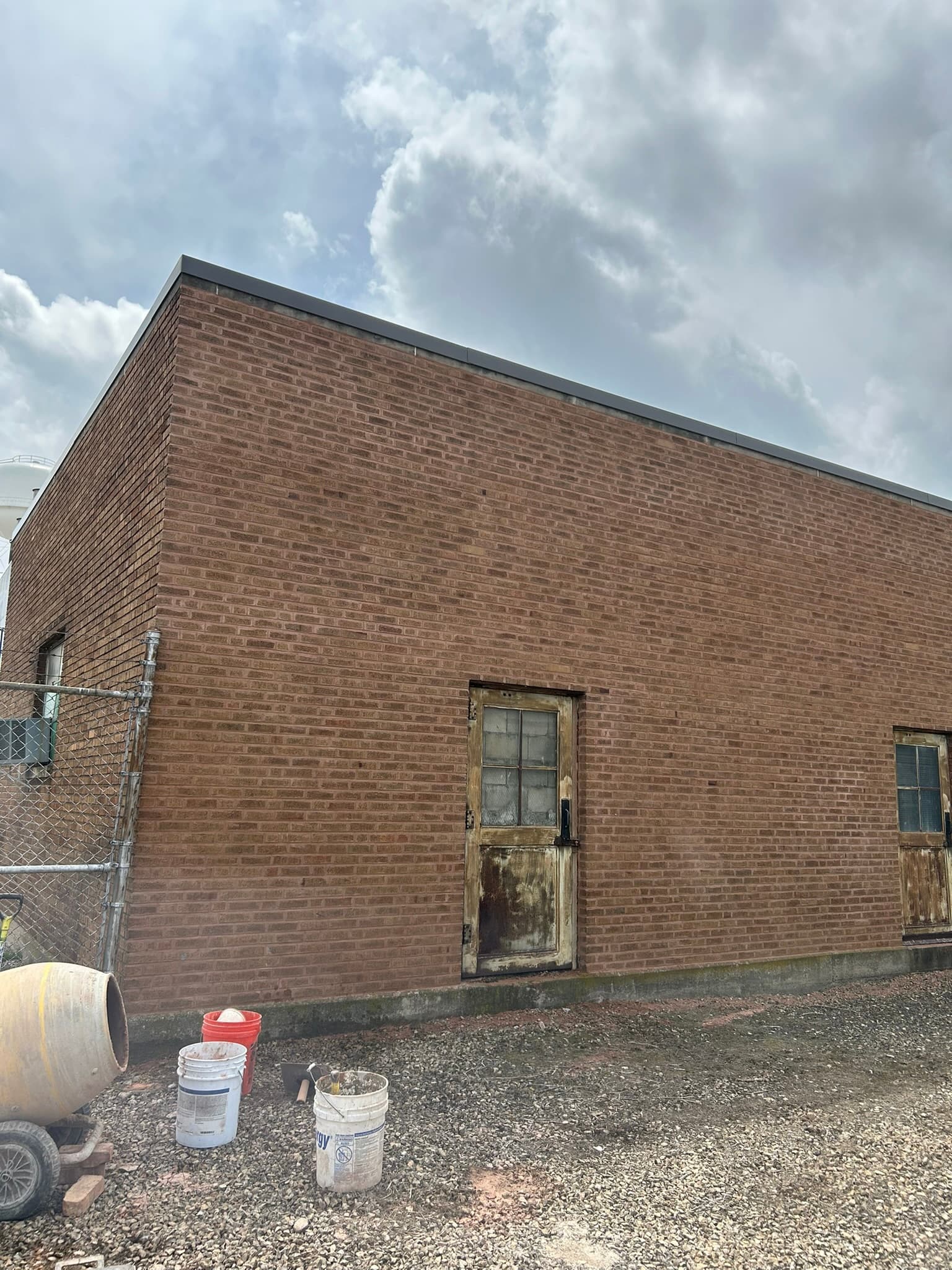
When Masonry Falls: What an Owner or Manager Is Actually Responsible For
When masonry comes off a building, the exposure that follows turns much less on the brick than on what was known and what was done about it. A condition that was reasonably discoverable, documented, ranked and being addressed puts an owner in a completely different position from one that nobody had looked at in fifteen years. That makes a documented inspection cadence and a dated condition record the practical protection — and both are cheap relative to what they protect. Emerald Masonry LLC produces documented façade condition records and prioritised repair scopes for Chicagoland owners, boards and property managers. Call (708) 288-1696.
This is general information from a masonry contractor, not legal advice. Your counsel and your insurance carrier are the right people to interpret your specific lease, policies and obligations.
A brick weighs about four and a half pounds. From forty feet, that is not a maintenance issue. It is the single largest uninsured-exposure event a mid-market Chicagoland building is realistically likely to generate, and it almost never arrives without warning. In our experience the warning was visible from a lift eighteen months earlier and nobody was on a lift.
What actually falls off buildings
It is worth being specific, because the elements that fall are not the ones owners worry about.
Spalled brick faces. A brick that has taken on water and frozen loses its face in a plate. On a wall, that plate lets go and drops. It is the most common falling-masonry event and the most consistently ignored, because a spalled brick looks cosmetic from the ground.
Coping and cap stones. Stone, precast or terra-cotta copings sit on top of a parapet, bedded in mortar that is eighty years old and exposed on every face. When the bed joint fails they are held by friction. They are heavy, they sit at the highest point on the building, and they are invisible from the sidewalk. Parapet wall failure signs on commercial buildings covers what to look for from the roof.
Cornice and ornament. Projecting terra cotta, cast stone and pressed metal cornices are attached with concealed steel anchors that have been corroding since installation. When the anchor goes, the whole unit goes. See terra cotta and cast stone façade repair.
Veneer panels. On a cavity-wall building, the brick veneer is held to the backup by wall ties. Corroded ties let the veneer bow, and a bowed veneer panel can shed a substantial area at once rather than a unit at a time. Ties, shelf angles and hidden steel covers how to read it.
Brick above a failing lintel. A corroding steel lintel over a storefront or window rust-jacks the courses above it and eventually loses support for them.
Notice the pattern: four of those five are invisible from grade, and three of them involve steel you cannot see.
The concept that matters: reasonably discoverable
Strip the legal vocabulary away and what remains is a single practical question that gets asked after every incident:
Could a reasonable owner, looking with reasonable care, have found this condition before it fell — and if so, what did they do about it?
That framing has three useful consequences for anyone managing a masonry building.
First, looking is the controllable variable. You cannot make a hundred-year-old cornice young. You can absolutely demonstrate that you looked at it on a schedule, by a competent method, and acted on what you found.
Second, "we didn't know" is a weak position and is getting weaker. Façade condition is a documented, inspectable, well-understood engineering subject. Not knowing is a choice about inspection frequency, and it reads that way afterwards.
Third, documentation of a problem is protective, not incriminating. Owners resist writing down conditions they cannot immediately fund. That instinct is backwards. An undocumented hazard is still a hazard; a documented hazard with protection in place and a funded phase plan is an owner behaving reasonably. Our note on how to read a masonry assessment report covers what that record should look like.
What an inspection has to involve to count
A walk around the building is a screening, not an inspection. For falling-hazard purposes it misses the two conditions that matter most.
Sounding. A brick that has delaminated internally still looks like a brick. Tapped, it sounds hollow. There is no way to find that from the sidewalk, and no camera resolves it.
Joint probing. Mortar that is solid at the surface can be sand at a quarter inch. The difference decides whether you are looking at spot repointing or a full elevation.
Coping and roof-edge examination. From above, on the roof, checking bed joints, displacement and back-side deterioration.
Steel indicators. Rust staining, hairline horizontal cracking at consistent heights, level cracks at floor lines, bulging, displaced units around openings.
All of which means access — a lift or staging on the elevation. The honest version of the cost conversation is this: a close-up examination of a commercial elevation costs a fraction of one incident's deductible, and it is the only method that finds the conditions that cause incidents.
Between close-up examinations, a disciplined visual cadence still has real value. Annual walk-arounds, documented and photographed. A post-storm masonry inspection after any severe wind, hail or hard freeze-thaw swing. And a standing instruction to site staff that fallen debris of any size gets reported and photographed the same day, never swept up.
A reasonable cadence by building type
There is no universal schedule, but this is the baseline we would defend for Chicagoland stock:
| Building | Visual walk-around | Close-up examination | |---|---|---| | Pre-1940 masonry with cornice or terra cotta, over a public walk | Twice a year, plus after storms | Every 3–5 years | | Mid-rise cavity-wall commercial or multi-family | Annually, plus after storms | Every 5 years | | 1970s–1990s veneer-on-block retail or office | Annually | Every 5–8 years, sooner if cracking repeats | | Townhome or condo association, two to three storeys | Annually | At each phase of a masonry programme | | Any building that has already shed material | Quarterly until resolved | Immediately, then annually |
Move everything up a bracket for any elevation directly above a sidewalk, entrance, play area or parking stall.
Chicago and the suburbs are not the same rulebook
In the City of Chicago, exterior wall condition for buildings above certain heights and construction types is a regulated compliance matter administered by the Department of Buildings, with periodic examination obligations and a reporting mechanism — which means deferred façade condition can generate enforcement independently of anyone being hurt. Our guide to the Chicago façade inspection ordinance covers the shape of it, and your counsel should confirm what applies to your specific building.
In the suburbs the picture is different: there is generally no equivalent periodic examination regime, but municipal building departments do act on unsafe conditions, and a complaint or an observed hazard can produce an order quickly. Permits for the repair itself are a separate matter — see masonry repair permits in the Chicago suburbs.
The practical upshot: suburban owners often have less regulatory prompting and exactly the same physical exposure. The absence of a mandated inspection cycle is not the absence of a reason to inspect.
The first hour after something falls
If material comes off a building, the sequence is not complicated but it has to be immediate.
- Secure the footprint generously. Cordon well beyond where the piece landed — the next one may not land in the same place. Reroute pedestrians. Close the entrance if it is beneath the elevation.
- Do not clean it up yet. Photograph the debris where it lies, then bag and keep it. The piece itself tells a mason what failed.
- Photograph upward. Wide and tight, from several positions, with the date.
- Get a mason on site the same day if anyone walks beneath that elevation. The job on day one is not repair — it is determining what else is loose and getting it down or protected.
- Install overhead protection where the hazard cannot be fully removed immediately.
- Notify your carrier, and your counsel if there is any injury or property damage.
- Write it down — what happened, when, who was called, what was done, in a dated record.
Our notes on what to do when a brick falls off a building and after-hours masonry emergency readiness for property managers cover the operational detail, including having a masonry contractor's number in the emergency call tree before you need it.
Overhead protection is a legitimate first phase
Owners often treat protection as an expense that delivers nothing, because the wall is no better afterwards. That is the wrong frame.
Protection converts an urgent hazard into a funded project. A sidewalk canopy or netted scaffold over a public walk takes the falling-hazard exposure off the table while a board raises money, a reserve cycle turns over, or ownership schedules the capital. It is frequently the single most defensible thing an owner can do in the first month after a bad assessment.
It also often turns out to be the cheapest route to the repair itself, because protection on a sidewalk elevation is generally required for the repair work anyway.
Building the record that protects you
Here is what we produce on a façade assessment, and what we think any owner should hold regardless of who performs it:
- An elevation map with conditions located on it, not described in prose
- Dated, located photographs keyed to that map
- The method and access stated — who looked, from what, at what distance
- Quantities with assumptions — linear feet of joint, unit counts, coping footage, penetration counts
- A risk-ranked priority order: overhead hazard first, then active water entry, then accelerating deterioration, then appearance
- An explicit can-wait list with reasoning, so deferral is a recorded decision instead of an omission
- A phase plan with separate pricing, so partial funding is a plan rather than a gap
That last pair is what turns a scary report into a defensible position. An owner who can show a ranked list, protection over the public way, and phase one under contract is in a fundamentally different place from one holding a report they never acted on.
It also helps at renewal. Carriers and underwriters increasingly ask about façade condition directly, and a documented, ranked, partly executed plan reads far better than silence — see façade condition and insurance renewal.
Who we are, and what we will tell you
Emerald Masonry LLC is a family-owned commercial masonry contractor serving Chicago and the Chicagoland suburbs, led by career masons with decades of hands-on Chicagoland experience, in commercial tuckpointing, façade and parapet repair, lintel replacement, chimney and stack rebuilds, CMU block repair, brick repair and replacement, foundation and limestone/sill repair, caulking, sealing, and commercial, residential and historic masonry restoration. Free on-site assessments — call (708) 288-1696.
We assess from the wall rather than the parking lot, we sound and probe rather than photograph from grade, and we put the hazard ranking in writing including the parts we think can safely wait. Established 2024, licensed, bonded and insured, with COI, W-9 and lien waivers on request. For owners and managers, our commercial masonry and property managers pages set out how we scope, phase and document work.
Do the looking before the deciding
Nobody funds a façade programme off a feeling. Get a real examination, get the record, get the ranking — and then decide what this year can carry. The point is not to fix everything. It is to know what you have, protect anyone standing underneath it, and be able to show both.
If you have a building with a parapet nobody has been on, a cornice nobody has touched, or debris somebody swept up last month and did not report, call (708) 288-1696 or request an assessment.
Frequently Asked Questions
A brick just fell off our building. What do we do first?
Secure the area beneath it before anything else — cordon the footprint generously, reroute pedestrians, and keep it closed until a mason has looked at what is above. Then photograph everything, notify your insurance carrier, and get a qualified masonry contractor on site the same day if anyone walks beneath that elevation.
Does an owner have to inspect a masonry façade even if nothing has fallen?
As a practical risk-management matter, yes — and depending on the building's location, height and construction type there may also be a specific local requirement. What matters afterwards is almost never whether an inspection was mandatory but whether the condition was reasonably discoverable, which is a question about looking rather than about rules.
How often should a commercial façade be inspected?
An annual visual review plus a close-up examination on a defined cycle is a reasonable baseline for most Chicagoland commercial and multi-family buildings, with an extra look after any severe wind, hail or freeze-thaw event. Older buildings, tall buildings, anything with a cornice or terra cotta, and anything directly over a public walk warrant more frequent attention.
Is a ground-level look with binoculars an inspection?
Not for this purpose. The two conditions that most often precede a fall — a brick that has delaminated behind an intact face, and corroding steel behind the wall — are both invisible from grade. Finding them takes sounding the masonry and probing joints at arm's length, which means a lift or staging.
Does documenting a problem we cannot afford to fix make things worse?
No — the opposite, in almost every case. An undocumented hazard is still a hazard. A documented one with a written priority ranking, overhead protection where it is needed and a funded phase plan shows an owner acting reasonably on what was found, which is the entire point.
Who is responsible on a leased building — landlord or tenant?
The lease allocates repair cost between the parties, but that allocation does not by itself resolve a third party's injury claim, and both parties are commonly drawn in. Ask your counsel and your carrier how your particular lease and policies interact rather than assuming the repair clause settles it.
Do we need overhead protection while masonry work is going on?
Wherever anyone walks beneath the work, yes — and often before the work, if the reason for the project is that material is already coming loose. Protection is also frequently the correct first phase on its own, buying time to fund a repair without leaving the public exposed.
What should a façade condition record contain to be useful later?
Dated, located photographs tied to an elevation map; who inspected it and how they got to the wall; conditions described specifically rather than generally; quantities with stated assumptions; a risk-ranked priority order; and an explicit list of what was judged able to wait, with the reasoning.
Can Emerald Masonry produce that record?
Yes. We assess from the wall rather than the parking lot and produce a mapped, photographed condition record with quantities and a risk-ranked priority order that an owner, board, manager, lender or carrier can act on. Call (708) 288-1696 for a free on-site assessment.