
Commercial Masonry Restoration · Chicagoland, IL
Who Pays for Masonry Repair — the Association or the Unit Owner? How Illinois Boards Actually Decide
The brick is common element. The window in it might not be. The chimney serving one unit almost certainly isn't the same answer as the parapet serving all of them — and the declaration, not the contractor, settles it.
2026-08-27
Quick Answer
In Illinois condominium and townhome associations, responsibility for masonry repair is determined by the declaration and bylaws, which classify each element as common, limited common, or unit property. Exterior brick, parapets and structural masonry are commonly association responsibility, while items serving a single unit are often limited common elements with cost allocated differently. Boards should classify the element before assigning cost. Emerald Masonry LLC documents condition for Chicagoland boards — (708) 288-1696.
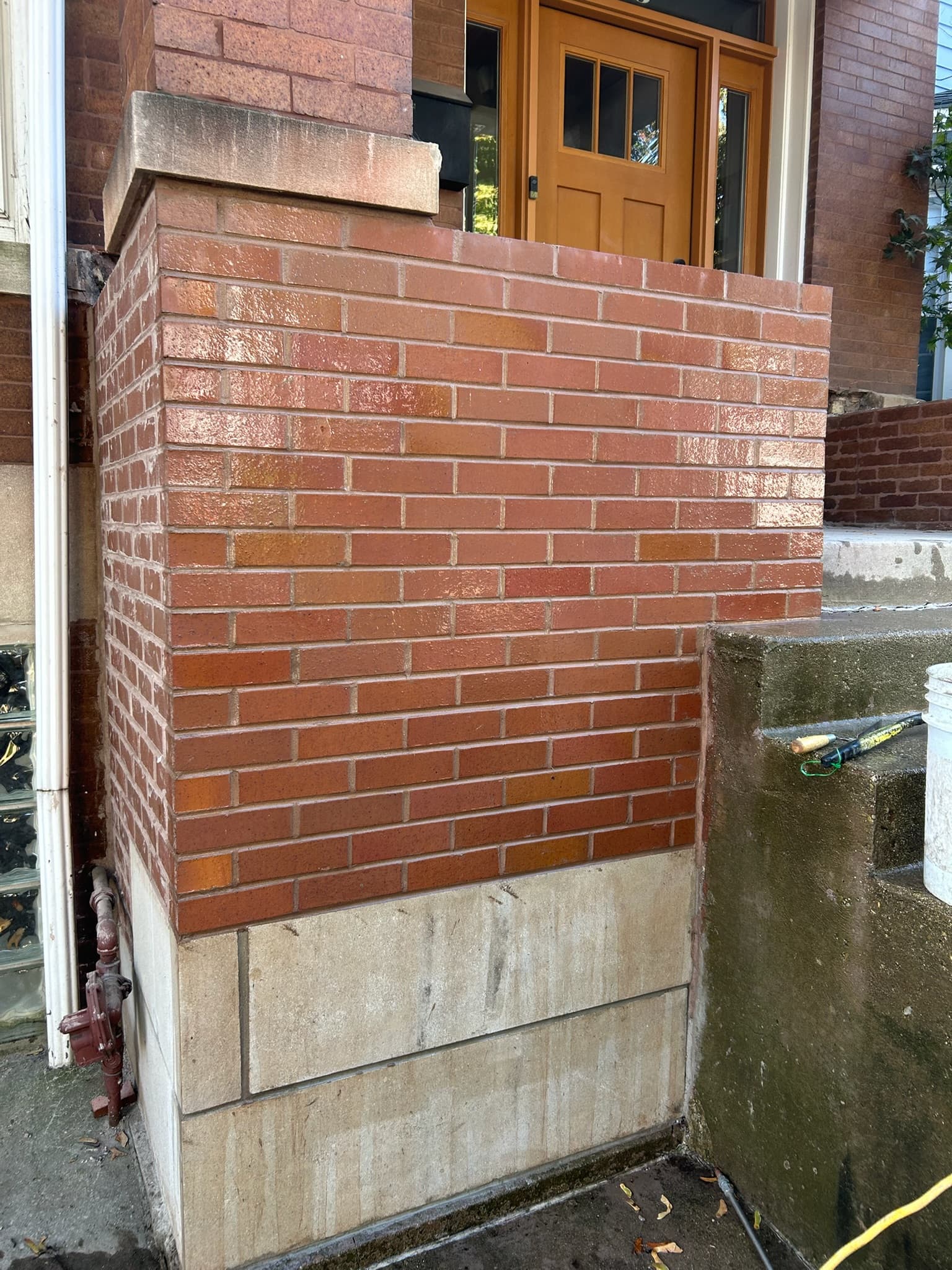
Every Chicagoland property manager has had this call. A unit owner reports water at an exterior wall, the mason says the brick has failed, and the next question arrives immediately: is this the association's bill or the owner's?
The honest answer is that a masonry contractor cannot tell you. Your declaration and bylaws decide it, and they do so by classifying every part of the property into categories that have nothing to do with how the wall was built. What a contractor can do is establish exactly what failed and where — which is the input the board needs before it can apply its own documents.
Emerald Masonry LLC is a family-owned commercial masonry contractor working with HOA and condo associations and property managers across Chicago and the Chicagoland suburbs, led by career masons with decades of hands-on Chicagoland experience. Licensed, bonded and insured; COI, W-9 and lien waivers on request. Free on-site assessments — call (708) 288-1696.
One thing up front: what follows is general information about how association documents typically work in Illinois. It is not legal advice, and it does not override your declaration. For an actual determination, boards should read their own documents and consult association counsel.
The Three Categories That Decide Everything
Illinois condominium declarations generally sort the property into three buckets:
Common elements. Everything not within a unit — structural walls, the roof, the foundation, the masonry envelope. Ordinarily maintained, repaired and replaced by the association, funded through assessments and reserves.
Limited common elements. Portions of the common elements that serve fewer than all units — commonly balconies, patios, entry stoops, exterior doors, and sometimes a chimney or flue serving a single unit. This is the category that generates disputes, because declarations frequently make the association responsible for performing the repair while allocating cost to the benefited unit or units.
Unit property. What the declaration defines as within the unit boundary. Usually finishes inward, though the exact boundary language varies more than people expect.
Townhome and homeowners associations governed by covenants rather than the Condominium Property Act vary far more widely still — some place exterior maintenance squarely on owners. There is no safe default.
How Common Masonry Elements Usually Classify
| Element | Typically | Why it is worth confirming | |---|---|---| | Exterior brick and structural walls | Common element | Rarely disputed | | Parapet, coping, cornice | Common element | Serves the whole building | | Roof-adjacent masonry, flashing transitions | Common element | Often split with the roofing scope | | Lintels over common entries | Common element | Straightforward | | Chimney serving one unit | Often limited common element | Repair by association, cost sometimes allocated | | Balcony, patio, stoop masonry | Often limited common element | The most frequent chargeback dispute | | Window and door units | Frequently unit or limited common | Distinct from the masonry around them | | Sealant at a window perimeter | Often common element | The joint is envelope, the window may not be | | Damage from owner alteration | Often chargeable to owner | Requires documented cause |
Notice the last four rows. A leak at a window is the classic hard case, because the opening, the window unit, the perimeter sealant and the masonry above and below can genuinely fall into three different categories under one declaration.
Establish the Water Path Before the Cost Split
This is where a masonry contractor earns their fee on an association job, and it is a technical question with a factual answer.
A leak showing up inside a unit at an exterior wall commonly traces to one of:
- Failed mortar joints in the field wall above the interior symptom
- Open coping joints at the parapet, admitting water into the top of the wall
- Deteriorated through-wall flashing, so water that enters the cavity cannot drain out
- Blocked or caulked weep holes, turning a drainage wall into one that holds water
- A corroding lintel or shelf angle, opening the joint from behind
- Cracked or eroded sills that have stopped throwing water clear
- Failed perimeter sealant at the window or door
- Roof, gutter or scupper failure discharging onto the wall
Each of those sits in a different place in the classification table. So the sequence that works is: find the path, name the element, then apply the declaration. Boards that reverse that order — deciding who pays before establishing what failed — routinely charge back a repair that was never the owner's, or absorb one that was.
Where Boards Get Into Trouble
Assigning cost by where the symptom appeared. Water showing up in unit 3B does not mean 3B's element failed. Masonry moves water sideways and downward before it surfaces.
Chargebacks without documentary authority. A chargeback needs a basis in the declaration or bylaws. Made without one, it is a dispute waiting to happen.
Treating a reserve study as a condition assessment. A reserve study estimates useful life and funding; it does not inspect your parapets. The strong position is a current masonry condition survey feeding the reserve schedule — a point covered further in HOA masonry maintenance budgets.
Comparing bids built on different assumptions. Three numbers priced against three different quantity sets tell a board nothing. One written scope, three bids.
Deferring an unsafe element to avoid a special assessment. Phasing a ranked scope is good management. Leaving loose masonry over an entrance is a different decision entirely.
Repairing without recording the specification. Mortar mix, sand, joint profile and brick source should be written down, or phase three will not match phase one.
What a Board Should Have in Hand
- A condition survey covering every building, ranked by risk rather than address order
- Photographic documentation tied to specific elevations and locations
- A written scope with stated assumptions — quantities, cut-out depth, mortar specification, access method
- Phased pricing that maps to the reserve schedule and the fiscal year
- The declaration section the board relied on for any cost allocation
- COI naming the association, W-9, and lien waivers
- A recorded materials specification for continuity across phases
That package is not bureaucracy. It is what makes the board's decision defensible if an owner questions it two years later.
The Insurance Question Runs Alongside It
Responsibility for repairing the masonry and responsibility for the resulting damage are separate questions. The association's master policy and the owner's policy typically cover different parts of the loss, and both are distinct from the maintenance obligation set by the declaration.
A related trap: gradual deterioration is generally excluded from property policies as wear and tear, while a sudden covered event generally is not. A wall that has been leaking for six winters is usually a maintenance and reserve question, not a claim. That distinction is covered in masonry insurance claims in Illinois.
Chicagoland Specifics Worth Knowing
The region's association stock concentrates the problem in predictable places. Courtyard and mid-rise condo buildings on the city's older stock have parapets, cornices and shared party walls where responsibility questions cluster. 1970s and 1980s townhome associations across the southwest and west suburbs have per-unit chimneys — the single most common limited-common-element masonry dispute we encounter. Newer veneer associations in Orland Park, Tinley Park, Frankfort and Naperville fail at details rather than at brick: weeps, flashing and sealant, which frequently sit right on a classification boundary.
And Chicagoland's freeze-thaw cycling means none of it stays static. Water in a joint freezes, expands roughly nine percent, and forces the masonry apart dozens of times a winter — so a classification argument that takes two seasons to resolve is also a repair that has grown.
What This Means Practically
For a board or manager, the workable order is:
- Get the condition established and documented by someone who inspects from the wall, not the sidewalk.
- Name the element the failure sits in.
- Read the declaration against that element — with counsel where the answer is not clean.
- Decide funding — reserves, operating budget, assessment, or allocation — on that basis.
- Bid one written scope, not three different ones.
- Record the specification so future phases match.
Steps 1 and 2 are ours. Steps 3 and 4 are the board's. Keeping that line clear protects everybody, and it is why we document rather than opine on responsibility.
A Worked Example
A townhome association gets a report of damp drywall on an upstairs bedroom wall in one unit. The owner assumes the association owns the brick and sends the bill over.
What the assessment finds: the field mortar on that elevation is sound. The water is entering at the chimney serving that unit — a cracked crown and open joints in the top three courses — running down inside the stack and surfacing at the adjacent bedroom wall two floors below.
What that changes. The failed element is not the exterior wall at all. It is a chimney serving a single unit, which in a great many townhome declarations is a limited common element: the association performs the repair, and the declaration determines whether cost sits with the association, the benefited owner, or is split.
And the second question is separate. Repairing the chimney is one obligation; the owner's damaged drywall, paint and any contents is an insurance question between the master policy and the owner's policy.
Three different answers, from one leak — and none of them could be determined until somebody established that the water came from the chimney rather than the wall it appeared on.
What Drives the Cost of Association Masonry Work
- Number of buildings in the phase, and how unevenly deterioration is distributed
- The true percentage of failed joints and units, which sidewalk inspections consistently underestimate
- Chimney and lintel counts across the property — on townhome stock these dominate
- Access and staging across a multi-building site, and where equipment can be positioned
- Overhead protection at entries, walkways and patios
- Resident coordination — notice, patio clearing, parking staging
- Match difficulty for brick and mortar, especially across phases
- Season and curing conditions, which set the calendar as much as labour does
None of that is quotable over the phone, which is why the on-site assessment and written scope come first.
Related Services
- Commercial masonry restoration — multi-building association scopes
- Tuckpointing and repointing — common-element envelope work
- Parapet wall repair — shared, whole-building elements
- Lintel repair — openings at common entries
- Chimney repair — the classic limited-common-element case
- Caulking and joint sealant — window perimeters and material transitions
The Short Version
The masonry does not know who owns it. Your declaration does. Exterior brick, parapets and structural walls are commonly association responsibility; balconies, stoops and single-unit chimneys are frequently limited common elements with cost allocated differently; and a leak at a window can genuinely straddle three categories at once.
So establish the water path first, name the element second, and apply the documents third. A board that works in that order rarely gets the cost split wrong — and never has to defend a chargeback it cannot point to a clause for.
Emerald Masonry LLC is a family-owned commercial masonry contractor serving Chicago and the Chicagoland suburbs, led by career masons with decades of hands-on Chicagoland experience, in commercial tuckpointing, façade and parapet repair, lintel replacement, chimney and stack rebuilds, CMU block repair, brick repair and replacement, foundation and limestone/sill repair, caulking, sealing, and commercial, residential and historic masonry restoration. Free on-site assessments — call (708) 288-1696.
Need a documented, building-by-building condition survey your board can act on? Request a free on-site assessment or call (708) 288-1696.
Frequently Asked Questions
Who is responsible for masonry repair in an Illinois condo association?
The declaration and bylaws decide, not general practice and not the contractor. Those documents classify each part of the property as common element, limited common element, or unit, and responsibility for repair and for cost follows that classification.
Is exterior brick a common element?
In most condominium declarations, yes — the structural exterior walls and the masonry envelope are common elements maintained by the association. Townhome and homeowners associations vary far more, and some place exterior maintenance on the owner, so the documents have to be read rather than assumed.
What is a limited common element?
It is a portion of the common elements that serves fewer than all units — commonly balconies, patios, entry stoops, and sometimes a chimney serving a single unit. Declarations frequently make the association responsible for repairing them while allocating some or all of the cost to the benefited units.
Can a board charge a repair back to one unit owner?
Only where the declaration or bylaws authorise it, typically for limited common elements or for damage caused by an owner's negligence or alteration. Chargebacks made without that authority are a common source of association disputes, so boards should confirm the basis before billing.
Our brick wall is leaking into one unit. Whose problem is it?
Usually two separate questions with two separate answers: repairing the masonry envelope is typically an association responsibility, while damage to the owner's finishes and contents is often an insurance question split between the association's master policy and the owner's policy. Establishing the water path is the first step in both.
Do we need a reserve study before doing masonry work?
It helps, but a reserve study is a funding document, not a condition assessment — it estimates useful life rather than inspecting your actual walls. The strongest position is a current masonry condition survey feeding into the reserve schedule, so funding reflects the buildings you have.
Should the association get one bid or several?
Several, priced against one written scope. Bids on differing assumptions are not comparable, and the most common way boards overpay or under-buy is comparing bottom-line numbers built on different quantities and cut-out depths.
Can masonry work be phased instead of assessed all at once?
Usually, yes, provided the order is right — anything unsafe or actively admitting water in the first phase, preventive and cosmetic work later. Phasing a properly ranked scope is sound management; deferring an unsafe element to avoid an assessment is not.
What documentation should a board require from a masonry contractor?
A written scope with stated assumptions and quantities, photographic documentation by building and elevation, phased pricing, a certificate of insurance naming the association, a W-9, and lien waivers. That package is also what protects the board's decision if it is questioned later.