
Masonry Sealing · Chicagoland, IL
How Often Should You Seal Brick? A Straight Answer for Chicagoland Homeowners
A quality breathable brick sealer lasts about 7–10 years — but most sound, well-maintained brick doesn't strictly need sealing at all. Here's when sealing actually helps, when it hurts, and how often to reapply, from Emerald Masonry LLC.
2026-07-21
Quick Answer
A quality breathable masonry water repellent typically lasts about 7–10 years (some silane/siloxane products up to 10–15) before reapplication, but most sound, well-maintained brick does not strictly need sealing at all. Seal only sound masonry, and only for a real reason. Emerald Masonry LLC advises and seals brick across Chicagoland — free estimates, (708) 288-1696.
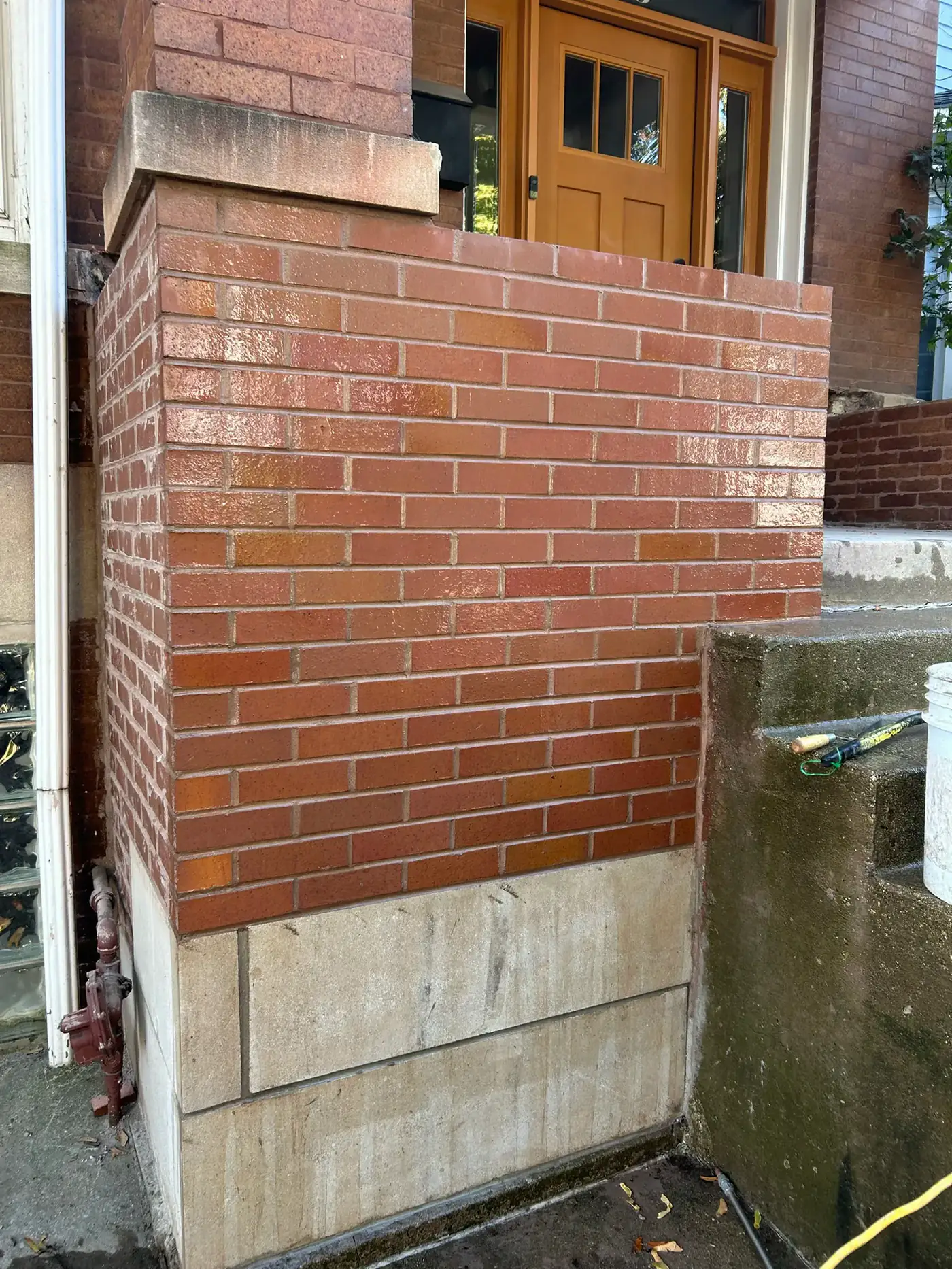
How Often Should You Seal Brick? A Straight Answer for Chicagoland Homeowners
If you're asking how often you should seal brick, here's the honest answer up front: a quality breathable masonry water repellent typically lasts about 7–10 years before it needs reapplication — and some premium silane/siloxane products stretch closer to 10–15 years on sound, well-prepped masonry. But the more useful truth, the one a lot of contractors won't lead with, is that most sound, well-maintained brick does not strictly need sealing at all. Emerald Masonry LLC is a family-owned masonry contractor serving Chicago and the Chicagoland suburbs, and when a homeowner calls us about brick sealing, our first job is to tell them the truth about whether they even need it. Free on-site estimates — call (708) 288-1696.
Brick is not a sponge you have to keep waterproofing, and it's not a wooden deck that needs a fresh coat every couple of years. A brick wall is engineered to absorb a little water during a storm and then dry back out. Your real protection against water damage isn't a sealer at all — it's sound mortar joints, working gutters and downspouts, and good flashing. Sealing has a genuine place, but it's a targeted tool for specific situations, not a default chore for every brick home. Below is exactly how often to reseal when you do seal, how to tell it's time, and — just as important — when you shouldn't seal at all.
What sealing brick actually does
A proper brick sealer is a penetrating, breathable water repellent. It soaks into the surface of the brick and mortar and lines the pores so the wall sheds liquid water — rain beads up and runs off instead of soaking in — while still letting water vapor escape from inside the wall. That last part is the whole game. Masonry always carries some moisture, and it has to be able to breathe and dry outward. A good repellent slows water going in without trapping moisture in.
This is very different from what most people picture when they hear "seal." A breathable repellent is:
- Not a glossy "wet look" coating. Those are film-forming and change the appearance.
- Not paint or elastomeric coating. Those form a skin over the brick.
- Not a permanent waterproof barrier. Nothing makes brick permanently impervious, and you wouldn't want it to be.
The products that do this well on our region's brick are generally silane/siloxane-based penetrating repellents. They go on looking wet and dry nearly invisible, leaving the brick's natural color and texture intact.
The most important rule: never seal over problems
Before anything else, understand the one rule that matters more than the reapplication schedule:
Never seal over failed mortar, cracks, or spalling brick, and never use a film-forming sealer or paint on exterior brick in a freeze-thaw climate. Both mistakes trap water inside the wall and make the damage dramatically worse.
Here's why. If your mortar joints are open, crumbling, or cracked, water is already getting behind the brick face. Spray a repellent — or worse, a film coating — over the outside, and you've just made it harder for that trapped water to escape. Come winter, that water freezes, expands, and pushes the face of the brick off. That's spalling, and film-forming sealers and paint are a classic cause of it on Chicago-area masonry.
So the correct order of operations is always:
- Inspect and diagnose the masonry.
- Tuckpoint failed mortar joints and repair or replace any damaged brick.
- Let it cure and dry.
- Then apply a breathable repellent — but only if there's a real reason to.
Sealing is a finishing step on sound masonry. It is never a substitute for tuckpointing or brick repair. If a contractor offers to "just seal it" over visibly failing joints, that's a red flag — you can read more in our guide on what repointing actually means.
How long does brick sealer last?
When you do seal sound brick with a quality breathable repellent, here's the realistic lifespan:
| Product / situation | Typical service life before resealing | |---|---| | Standard breathable water repellent, average exposure | ~7–10 years | | Premium silane/siloxane, sound brick, good prep | ~10–15 years | | Harsh weather elevation (south/west, wind-driven rain) | Shorter end of the range | | Sheltered or low-exposure wall | Longer end of the range | | Any sealer applied over damp or damaged brick | Fails early — sometimes within a year or two |
The single biggest factor is surface preparation and brick condition at the time of sealing. A repellent applied to clean, dry, sound brick performs to its full life. One sprayed over dirt, moss, damp masonry, or failing joints fails fast — no matter what the label promises.
Exposure is the next factor. In Chicagoland, south- and west-facing walls take the brunt of sun, wind-driven rain, and the worst of the freeze-thaw punishment, so those elevations wear a repellent faster than a protected north wall or a wall under a deep eave. It's completely normal for one side of a house to need resealing before another.
How to tell it's time to reseal
You don't have to guess or track a calendar. The brick will tell you.
The water-drop absorption test
This is the simplest, most reliable check, and you can do it yourself from the ground:
- On a dry day, splash or mist water onto the brick surface.
- If the water beads up and runs off, the repellent is still doing its job — leave it alone.
- If the water soaks straight in and darkens the brick within a minute or so, the repellent has worn off.
A wall that darkens and drinks water isn't an emergency — sound brick is supposed to absorb some water and dry out. But it does tell you the repellent layer is gone, so if you sealed for a specific reason, it may be time to reapply.
Other signs
- Persistent darkening when wet that takes a long time to dry.
- Returning efflorescence — the white chalky bloom — on brick that is otherwise sound. That's water moving through the wall and evaporating out.
- A previously "beading" wall that stopped beading.
If, on the other hand, you're seeing spalling, cracked brick, or crumbling mortar, that's not a resealing question — that's a repair question. Reach for brick repair and tuckpointing, not a sprayer.
When you should seal — and when you shouldn't
This is where most homeowners are steered wrong. Sealing is genuinely useful in some cases and pointless or harmful in others.
| Situation | Seal? | Why | |---|---|---| | Sound newer brick on an exposed south/west weather elevation | Often yes | Reduces water absorption where the wall takes the most punishment | | A sound masonry chimney | Often yes | Chimneys are exposed on all sides and above the roof; a breathable repellent helps after any needed repairs | | Recurring efflorescence on otherwise-sound brick | Consider it | Cutting water absorption can reduce it — after confirming there's no active leak | | High-absorption brick that drinks water and stays damp | Consider it | Some soft or older brick benefits from reduced absorption | | Open or crumbling mortar joints | No — repair first | Sealing traps water behind the wall; tuckpoint first | | Cracked or spalling brick | No — repair first | The defect must be fixed before any sealer | | Already-painted brick | No | Paint already traps moisture; adding sealer compounds it | | As a substitute for tuckpointing | Never | A repellent cannot replace sound mortar joints | | A sheltered, sound wall with no water issues | Usually unnecessary | Brick is designed to shed and dry on its own |
Notice the pattern: seal for a specific, identifiable reason on sound masonry — not as a blanket "protect the house" default. If someone can't tell you why your particular wall needs sealing, it probably doesn't.
The sealing process, done right
When Emerald does seal a wall, the work is more about preparation than spraying:
- Inspect the masonry and identify any mortar or brick that needs repair.
- Tuckpoint and repair first — open joints, cracked brick, failed sills or crowns all get addressed before anything is sealed.
- Clean the surface of dirt, biological growth, and loose material so the repellent can penetrate.
- Let the masonry dry thoroughly — sealing damp brick traps moisture.
- Apply a breathable penetrating repellent at the correct coverage rate, usually flood-coated so it fully saturates the pores, with a second pass where the product calls for it.
- Avoid film-forming products and paint entirely on exterior brick.
Done this way, the repellent disappears into the brick, keeps its natural look, and gives you years of reduced water absorption on masonry that was sound to begin with.
What drives the cost of brick sealing
Emerald doesn't quote flat prices online because brick sealing cost depends on the wall in front of us. The honest factors:
- Square footage of masonry to be sealed.
- Surface prep and repairs needed first — this is usually the bigger line item. If joints need tuckpointing or brick needs replacing, that work comes before sealing.
- Number of coats/passes the product and the brick's porosity call for.
- Height and access — upper stories, chimneys, and hard-to-reach elevations may need scaffolding.
- Condition of the existing surface — cleaning, biological growth removal, stripping old failed coatings.
We give you an itemized number after a free on-site look, and we'll tell you plainly if your brick doesn't need sealing at all. Call (708) 288-1696 to schedule.
DIY vs. hiring a pro
Sealing looks like a weekend job — rent a sprayer, buy a bucket of sealer, done. The trouble is that the mistakes are invisible until they're expensive:
- Sealing damp brick traps moisture and can accelerate spalling.
- Over-applying or using the wrong product can leave a haze or a partial film.
- Choosing a film-forming "waterproofer" or paint is the single most damaging DIY error on Chicago-area brick.
- Sealing over failed mortar locks water into the wall.
The value a masonry contractor adds isn't the spraying — it's the judgment: whether your brick even needs sealing, what has to be repaired first, and which breathable product suits your masonry. Emerald Masonry LLC is a family-owned, licensed and insured masonry contractor serving Chicago and the Chicagoland suburbs led by career masons with decades of hands-on experience in tuckpointing, brick repair and replacement, chimney repair, lintel and parapet repair, foundation and limestone/sill work, caulking, sealing, and commercial, residential, and historic masonry restoration — so the assessment and any needed repairs come from the same crew that would do the sealing. Free on-site estimates — (708) 288-1696.
Why Chicagoland brick is a special case
Our climate is exactly why homeowners here ask about sealing more than in milder regions — and exactly why the "breathable only, sound brick only" rules matter so much. Chicagoland brick endures:
- Hard freeze-thaw cycling. Water that gets into brick and mortar freezes, expands, and thaws dozens of times each winter. Trapped water — behind a film coating or over failed joints — is what turns that cycling into spalling.
- Lake-effect moisture and wind-driven rain that drive water into south and west elevations.
- Old, soft, absorbent brick on the region's century-old bungalows, greystones, and two-flats, alongside newer brick-veneer subdivisions. Different brick, different absorption, different sealing calculus.
On the older, softer brick common across Chicago and its suburbs, a film-forming sealer or paint is especially destructive, because that brick needs to breathe even more than modern hard-fired brick. When in doubt on historic masonry, the answer is almost always "repair the mortar, skip the film coating." Our post on why painted brick traps moisture walks through what happens when that rule gets broken.
Maintenance and prevention: what actually protects brick
If you take one thing from this article, let it be this: sealing is near the bottom of the list of things that keep a brick wall healthy. Far more important, and far more cost-effective:
- Keep your mortar joints sound. Tuckpointing failed joints is the number-one protection against water intrusion. It's the fix that a sealer can never replace.
- Manage your water. Clean gutters, downspouts that carry water away from the wall, and proper grading prevent more brick damage than any sealer.
- Keep flashing, chimney crowns, caps, and sills in good repair. Most "my brick wall is leaking" calls trace back to one of these, not to unsealed brick. Our chimney repair and caulking and joint sealant work often solves the actual water path.
- Inspect annually, and after big storms, from the ground.
- Then, if there's a real reason, consider a breathable repellent on the sound, repaired wall — and note the water-drop test result so you know roughly when to check it again.
If you sealed right after a repointing job, our post on waterproofing after tuckpointing covers the timing, and if you're weighing products, breathable vs. film-forming brick sealers explains why the breathable choice is non-negotiable here.
The bottom line
So, how often should you seal brick? If your brick genuinely benefits from sealing, plan on reapplying a breathable repellent roughly every 7–10 years — up to 10–15 for premium products on sound, well-prepped masonry — and let the water-drop test, not a calendar, be your guide. But don't start from the assumption that you must seal at all. Most sound, well-maintained brick sheds and dries on its own, and your mortar joints and water management protect the wall far more than any sealer. Seal for a real reason, seal only sound masonry, repair first, and never trap water behind a film coating.
If you want a straight answer about whether your specific brick needs sealing — and honest advice about what, if anything, to repair first — Emerald Masonry LLC is a family-owned, licensed, bonded and insured masonry contractor led by career masons with decades of hands-on Chicagoland experience serving homeowners, property managers, HOAs, churches, and insurance companies across Chicago and the suburbs. Get a free on-site assessment: call (708) 288-1696 or reach us through our contact page.
Frequently Asked Questions
How often should you seal brick?
If your brick genuinely benefits from sealing, a quality breathable water repellent typically needs reapplication about every 7–10 years, and some premium silane/siloxane products can last closer to 10–15 years on well-prepped, sound masonry. Exposure matters — a weather-beaten south or west elevation wears faster than a sheltered wall. The honest answer for many homes, though, is that sound brick doesn't strictly need sealing on a schedule at all.
Does brick really need to be sealed?
Most sound, well-maintained brick does not strictly need sealing. Brick walls are built to absorb some water and then dry out, and your real protection is sound mortar joints, working gutters, and good flashing — not a sealer. Sealing is worth considering for specific reasons like high water absorption, exposed weather elevations, chimneys, or recurring efflorescence on otherwise-sound brick, but it is not a mandatory maintenance step for every brick home.
How do I know when it's time to reseal my brick?
Do the water-drop test: splash or mist water on the wall. If it beads up and runs off, the repellent is still working. If it soaks straight in and darkens the brick, the sealer has worn off and reapplication may be worthwhile — provided the mortar and brick are still sound. Returning efflorescence on sound brick is another sign water is getting in again.
Can you seal brick that has cracks or failing mortar?
No — and this is the most important rule. Sealing over open joints, cracks, or spalling brick traps water inside the wall and makes freeze-thaw damage worse. The mortar joints must be tuckpointed and any damaged brick repaired first; sealing is a finishing step on sound masonry, never a substitute for repair. Emerald Masonry inspects and repairs first, then seals only what's sound.
What kind of sealer should be used on brick?
A penetrating, breathable water repellent (typically silane/siloxane-based) that soaks in and lets the wall shed liquid water while still allowing water vapor to escape. Never use a film-forming 'wet look' coating or paint on exterior brick in our climate — those trap moisture behind the surface and cause the brick face to spall and pop off during freeze-thaw cycles.
Will sealing brick stop my basement or wall from leaking?
Usually not on its own. A water repellent reduces how much liquid water sound brick absorbs, but it will not fix a leak coming from failed mortar joints, a cracked chimney crown, bad flashing, a failed lintel, or clogged weep holes. Those defects have to be diagnosed and repaired; sealing sound brick afterward can reduce absorption, but it's the last step, not the cure.
Is sealing brick a DIY job or should I hire a pro?
The application itself looks simple, but the judgment isn't. Sealing damp brick, over-applying, choosing the wrong (film-forming) product, or sealing over failed mortar all cause problems that are expensive to undo. A masonry contractor can tell you whether your brick even needs sealing, repair what needs repairing first, and apply the right breathable repellent at the right coverage. Emerald offers free on-site assessments.
Does sealing brick prevent efflorescence?
It can help, but only when the brick is sound and the water source is addressed. Efflorescence — the white chalky bloom — is caused by water moving through masonry and evaporating out. A breathable repellent on sound brick reduces water absorption and can cut down recurring efflorescence, but if water is entering through open joints or a failed sill or crown, you have to fix that first or the efflorescence will keep coming back.