
Commercial Masonry Restoration · Chicagoland, IL
Senior Living Masonry Repair in Chicagoland: Working on a Building Nobody Can Leave
An office empties at five. A senior living community never does. Masonry repair on assisted living, memory care and nursing buildings has to be planned around residents who live behind every wall the crew touches — day and night, for the whole project.
2026-10-03
Quick Answer
Senior living masonry repair in Chicagoland — assisted living, memory care, independent living and nursing facilities — is planned around residents who cannot relocate: work phased by wing, dust contained away from windows, quiet hours respected, memory-care exits kept secure, and families told in advance. Emerald Masonry LLC scopes and phases this work — (708) 288-1696.
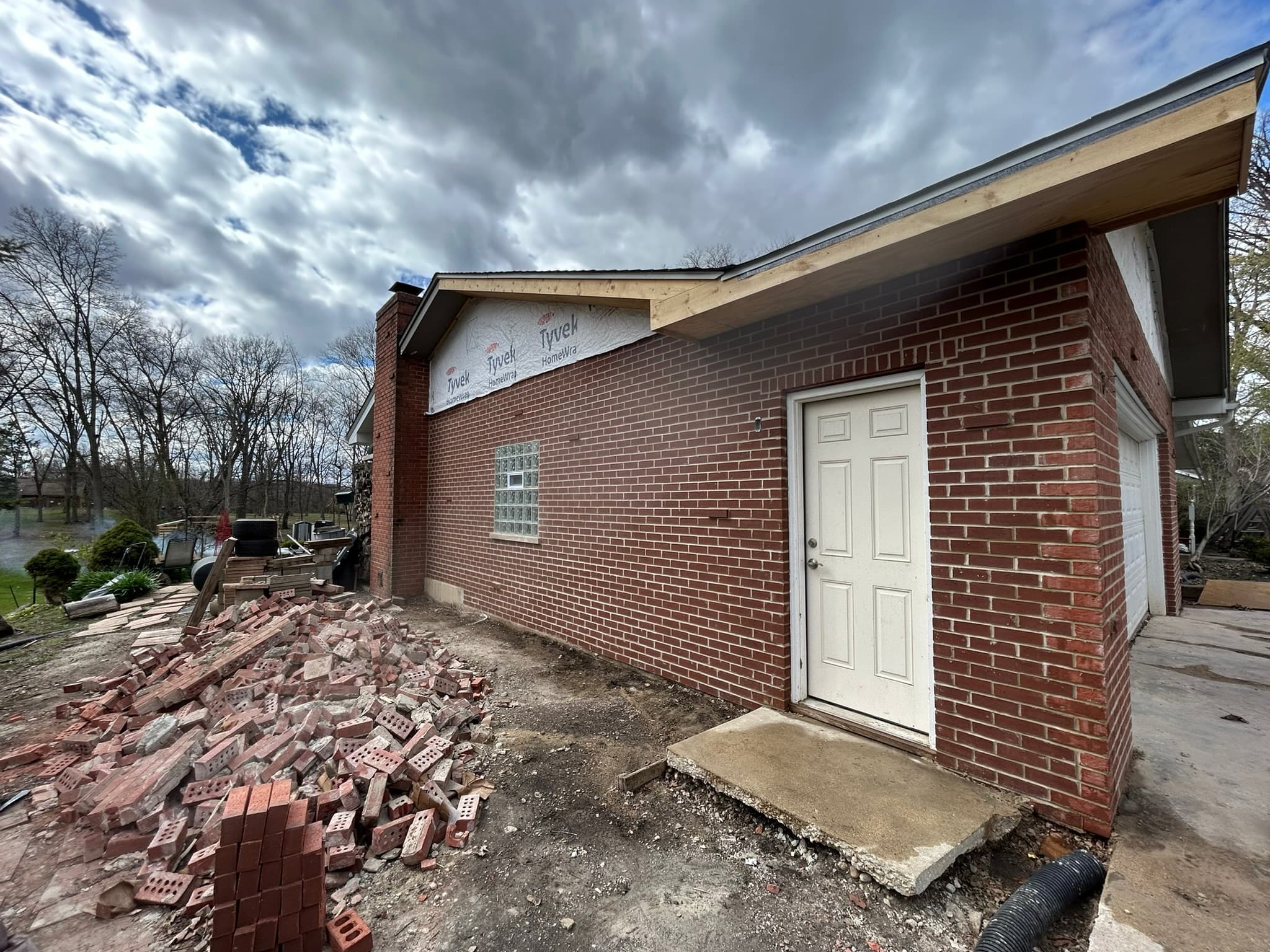
Senior Living Masonry Repair in Chicagoland: Working on a Building Nobody Can Leave
Senior living masonry repair in Chicagoland is a commercial project carried out inside somebody's home. Assisted living, memory care, independent living and skilled nursing buildings are occupied by residents who cannot move out for a few weeks, who are home all day, and who are more vulnerable than anyone else a masonry crew works near. Emerald Masonry LLC plans and phases this work for facility directors, operators and property managers across Cook, DuPage and Will County. Free on-site assessment: (708) 288-1696.
The masonry itself is rarely exotic. What makes senior living different is everything around it.
An office empties at five and a school empties for the summer. A senior living community never empties. Every wall the crew works on has a resident behind it, and every hour of the project is somebody's day.
Why senior living masonry repair is different from other commercial work
A medical office building has patients who leave after an appointment. An apartment building has tenants who go to work. In a senior living community, most residents are on site for the whole project, and many spend most of the day in their rooms or in the common areas next to the walls being repaired. That changes almost every planning decision.
Residents cannot relocate
On a typical commercial job you can empty a floor, close a wing or tell tenants to work from home. In assisted living and memory care, relocation is a clinical decision, often disruptive to residents with dementia, and rarely an option for a masonry project. The work has to come to the residents, not the other way round.
Dust, odour and air quality
Grinding out mortar joints is the dustiest operation in masonry, and respirable silica is a concern near anyone, let alone residents with COPD or on supplemental oxygen. Sealant and some coatings carry odours that travel through operable windows and fresh-air intakes. Containment has to be treated with the seriousness of an infection-control plan, even though it is exterior work.
Noise and daily routines
Residents nap, take meals, receive therapy and sleep at different times than an office workforce. A grinder outside a room at 7:30 a.m. is not a minor inconvenience to someone who was awake at four. Noisy phases are scheduled in short, announced blocks around the care team's routine.
Falls and walkways
A spalled brick or loose coping on the ground is a trip hazard for an able-bodied adult. For a resident with a walker it is a fall. Walkways, entrances, drop-off canopies and courtyard paths must stay clear, level and protected, with barricades that are visible and stable.
Memory care security
Memory care wings rely on secured doors, alarmed exits and fenced courtyards. A contractor's gate left open, a ladder leaned against a courtyard fence, or a delivery propping a door is a real risk. Staging is planned so no secured perimeter is ever opened or bypassed.
Privacy at the window
Staging on an elevation puts workers at resident windows. Residents need notice of exactly which windows and which days, and the crew needs the discipline to treat those windows as bedroom windows — because they are.
What senior living buildings in Chicagoland are made of
Most suburban senior living communities were built or expanded between the 1970s and the 2000s. The stock is fairly consistent:
- Brick veneer over concrete block or steel stud, a drained cavity wall that depends on flashing, weep holes and ties rather than solid masonry.
- Long runs of punched windows, each with a lintel or shelf angle and sealant around the frame.
- Vertical expansion and control joints filled with sealant that has a far shorter service life than the brick.
- Porte-cochères and entrance canopies on brick columns, exposed to de-icing salt and the occasional vehicle.
- Interior courtyards with planters, seat walls and paths — often the only outdoor space memory-care residents use.
- Flat roofs with parapets around mechanical equipment on the larger buildings.
- Wing additions built years apart, with cold joints where new masonry meets old.
Warning signs to look for on your community's exterior
Failed sealant joints
Cracked, shrunken, debonded or missing sealant at window perimeters and expansion joints is the most common source of water in resident rooms on these buildings. See our caulking and joint sealant service.
Rust staining and horizontal cracks above windows
Orange streaks below a window head, or a horizontal crack running along a brick course at a floor line, usually mean a lintel or shelf angle is rusting. Rust expands and lifts the brick. That is a lintel repair job, and it gets more expensive every winter it waits.
Stains, odours and damp walls inside rooms
A resident or caregiver reporting a musty smell, peeling paint or a damp wall below a window is often the first sign of a masonry or sealant leak. In a care setting, damp walls raise mould questions quickly.
Spalling brick and efflorescence
Brick faces popping off (spalling) and white salt bloom (efflorescence) indicate water is moving through the wall. Around entrances, they also indicate salt.
Deteriorated canopy columns and courtyard walls
Crumbling mortar at the base of porte-cochère columns, loose caps on planters, and cracked courtyard seat walls are both a maintenance problem and a resident-safety problem.
Parapet and coping leaks
Water at top-floor ceilings, especially near rooftop units, often comes through open coping joints rather than the roof membrane. Our parapet wall repair hub explains why.
The risks of waiting
Deferring masonry on most buildings costs money. Deferring it on a senior living building costs money and creates exposure:
- Resident safety: falling brick, loose caps and uneven walkways are fall and injury hazards.
- Indoor air quality: chronic water infiltration leads to mould complaints in rooms residents cannot leave.
- Survey and inspection findings: building condition is part of how the operator is judged by regulators, families and referral sources. Keep this conversation with your licensing agency and life-safety advisers; your mason should support it, not interpret it.
- Reputation: families notice scaffolding that never ends and stains that keep coming back.
- Cost growth: rusted steel and saturated walls do not stay the same size. A lintel that needs replacement this year will crack more brick next year.
Element, failure and resident constraint at a glance
| Building element | Typical failure | Main resident constraint | How the work is phased | |---|---|---|---| | Window sealant | Debonded, cracked, missing | Work happens at resident windows | Room by room, with notice by window | | Lintels and shelf angles | Rust jacking, horizontal cracks | Noise and dust at windows | One elevation of one wing at a time | | Brick veneer field | Eroded joints, spalling | Grinding dust and noise | Short announced grinding blocks, HEPA extraction | | Expansion joints | Failed sealant, water entry | Odour from sealant | Low-odour products, windows closed during work | | Porte-cochère / canopy | Salt damage, impact, loose brick | Main entrance must stay open | Half the canopy at a time, protected path | | Courtyard walls and planters | Loose caps, cracks | Memory-care courtyard security | Scheduled with care team; residents elsewhere | | Parapet and coping | Open joints, leaks | Rooftop units, top-floor rooms | Roof access only; no interior disruption |
How we plan and carry out senior living masonry repair
- Walk the whole community with the facility director. Every elevation, the roof, entrances and courtyards, photographed and mapped by wing and room.
- Diagnose the causes separately. Sealant, brick, mortar, steel, flashing and roofing problems are identified one by one so the right trade does the right repair.
- Write an itemised scope by wing and elevation. Quantities, materials and protection measures listed, so the operator can phase, budget and compare bids.
- Build the phasing plan with the care team. Which wing first, which hours, how memory-care exits and courtyards stay secure, where materials are staged and how deliveries arrive.
- Notify staff, residents and families in writing before each phase: wing, dates, hours, what they will hear, and one contact name and number.
- Protect before working. Barricades and covered walkways at entrances, windows closed and sealed in the active zone, air intakes coordinated with maintenance.
- Repair. Rake and repoint joints with shrouded grinders and HEPA vacuums, replace spalled units, replace rusted lintels and shelf angles with flashing and weeps, cut out and replace sealant, reset coping and caps.
- Clean up daily. Walkways swept and checked every evening, staging secured, nothing left that a resident could reach.
- Close out with documentation. Photos, completed quantities, product data for the sealants and sealers used, and lien waivers.
Materials and techniques that suit occupied senior housing
- Type N mortar, colour-matched to the existing joints, is right for most veneer repointing on these buildings; Type S is reserved for below-grade or structural applications. See our tuckpointing service.
- Low-odour urethane or hybrid sealants with backer rod at the correct joint depth, so the joint can move.
- Galvanised or coated steel lintels with new through-wall flashing, end dams and weep vents when steel is replaced.
- Breathable, vapour-permeable masonry sealers only where the brick needs them — never a film-forming coating that traps water. See masonry sealing.
- Matched replacement brick for spalled units, so repairs don't stand out on a building families see every week.
- HEPA-extraction grinding and wet methods where practical, to keep dust out of the air residents breathe.
What drives the cost of senior living masonry repair
No responsible contractor prices a senior living community by phone. The main cost drivers are:
- Quantities: linear feet of sealant and repointing, number of lintels and spalled units.
- Steel: how much lintel and shelf angle work turns up once walls are opened.
- Height and access: lifts versus scaffolding, and how close equipment can get without blocking resident paths.
- Phasing: more wings and shorter work windows mean more mobilisations.
- Protection: covered walkways, dust containment, barricades and secured staging.
- Hours: restrictions on early-morning or loud work add calendar time.
A written, itemised scope lets the operator see exactly where the money goes — and compare bids on the same basis. Our commercial masonry restoration hub covers how we build those scopes.
In-house maintenance staff versus a masonry contractor
Maintenance teams at senior living communities are often excellent at keeping a building running, and they are the first to spot a problem. But repointing, lintel replacement and joint sealant are specialised trades. Hard mortar in soft brick, sealant with no backer rod, or a lintel "fixed" by caulking the crack all create bigger repairs later. The best results come from maintenance staff and masons working together: staff know the residents and routines, masons know the wall.
The Chicagoland context
Chicagoland's freeze-thaw cycles are hard on every brick building, and senior living communities take more of a beating than most: heavy salt use at entrances and drop-offs to protect residents from falls, large areas of window sealant facing west and south-west wind-driven rain, and courtyard masonry that stays wet in shade. Many communities in the south and south-west suburbs, DuPage and Will County were built in phases, so cold joints between additions are common. Emerald works on these buildings from Palos Heights out across Cook, DuPage and Will County.
Maintenance and prevention for senior living buildings
- Walk the exterior every spring and fall with your maintenance lead; photograph sealant, lintels, entrances and courtyards.
- Replace sealant on a schedule, not when it leaks — joint sealant typically lasts far less time than the masonry around it.
- Keep gutters, downspouts and scuppers clear, and direct water away from walls and walkways.
- Use de-icer sparingly near brick and rinse entry walls in spring.
- Fix small things fast: a loose cap or single spalled brick near a walkway is a same-season repair.
- Plan the bigger work in a multi-year capital plan so it is phased, budgeted and scheduled rather than reactive.
Related services and buyer resources
- Commercial masonry restoration
- Tuckpointing and repointing
- Caulking and joint sealant
- Lintel repair and replacement
- Brick repair
- Parapet wall repair
- Masonry sealing
- Buyer resources: commercial clients and property managers
- Related reading: medical office building masonry repair and masonry work in occupied buildings
Plan the work around the people who live there
Emerald Masonry LLC is a family-owned commercial masonry contractor serving Chicago and the Chicagoland suburbs, led by career masons with decades of hands-on Chicagoland experience. We handle commercial tuckpointing, façade and parapet repair, lintel replacement, CMU block repair, brick repair and replacement, caulking, sealing and commercial masonry restoration. Free on-site assessments — call (708) 288-1696.
Established in 2024, licensed, bonded and insured, with COI, W-9 and lien waivers on request, Emerald works for facility directors, operators and property managers who need the wall fixed without disrupting the people who live behind it.
Responsible for a senior living community in Chicagoland? Call (708) 288-1696 or request a free on-site assessment. We will walk the building with you, wing by wing, and write a scope your residents can live with.
Frequently Asked Questions
Can masonry repair be done while residents are living in the building?
Yes — it almost always is, because senior living residents cannot relocate the way office tenants can. The work is phased one wing or elevation at a time, with dust containment, quiet hours, secured walkways and advance notice to residents, families and staff.
Who repairs masonry on assisted living and memory care buildings near Chicago?
Emerald Masonry LLC, a family-owned commercial masonry contractor based in Palos Heights, repairs brick veneer, sealant joints, lintels, parapets, canopies and courtyard walls on senior living communities across Cook, DuPage and Will County. Call (708) 288-1696 for a free on-site assessment.
How do you control dust from grinding mortar near resident rooms?
Grinders are fitted with shrouds and HEPA vacuum extraction, windows in the active work zone are kept closed and sealed off with poly where needed, and air intakes near the work are coordinated with maintenance staff. Grinding is the dustiest phase and is scheduled in short, announced windows rather than all day.
What about memory care exits and fenced courtyards?
Memory care security comes first. Staging, gates and material deliveries are planned so no secured door or courtyard fence is ever left open or bypassed, and any work inside a secured courtyard is scheduled with the care team so residents are elsewhere.
What usually fails on a senior living building's masonry?
On the 1970s–2000s buildings common in the suburbs, the usual failures are sealant joints at windows and expansion joints, rusting shelf angles and lintels cracking the brick, parapet coping leaks, canopy and porte-cochère columns damaged by salt and vehicles, and courtyard planters and seat walls.
How much does masonry repair cost for an assisted living facility?
It depends on the linear footage of sealant and repointing, how much steel has to be replaced, height and access, and — more than on most buildings — how many phases and protection measures the residents require. Emerald provides a written, itemised scope after a free on-site assessment rather than a guess.
How should we tell residents and families about the work?
Give residents and families a short written notice before each phase that says which wing, which days and hours, what they will hear, and who to call. Staff should get the same schedule earlier, so care routines can move around the noisy windows.
Do you provide a COI, W-9 and lien waivers?
Yes. Emerald Masonry LLC is licensed, bonded and insured and provides a certificate of insurance naming the owner and operator as required, a W-9 before mobilisation, and lien waivers with each payment.