
Commercial Masonry Restoration · Chicagoland, IL
When Masonry Repair Needs a Structural Engineer — and When It Doesn't
A mason who tells you to hire an engineer is not passing the buck. There is a real line between masonry that is wearing out and masonry that is moving, and repointing across that line wastes the money entirely.
2026-09-23
Quick Answer
Masonry that is deteriorating — sandy mortar, spalled faces, eroded joints — is masonry repair. Masonry that is moving — bowing walls, offset or widening cracks, sloping floors, racking openings — needs a structural engineer's assessment before any repair, because repointing a wall that is still moving buys nothing. Emerald Masonry LLC documents the distinction for Chicagoland owners and boards — (708) 288-1696.
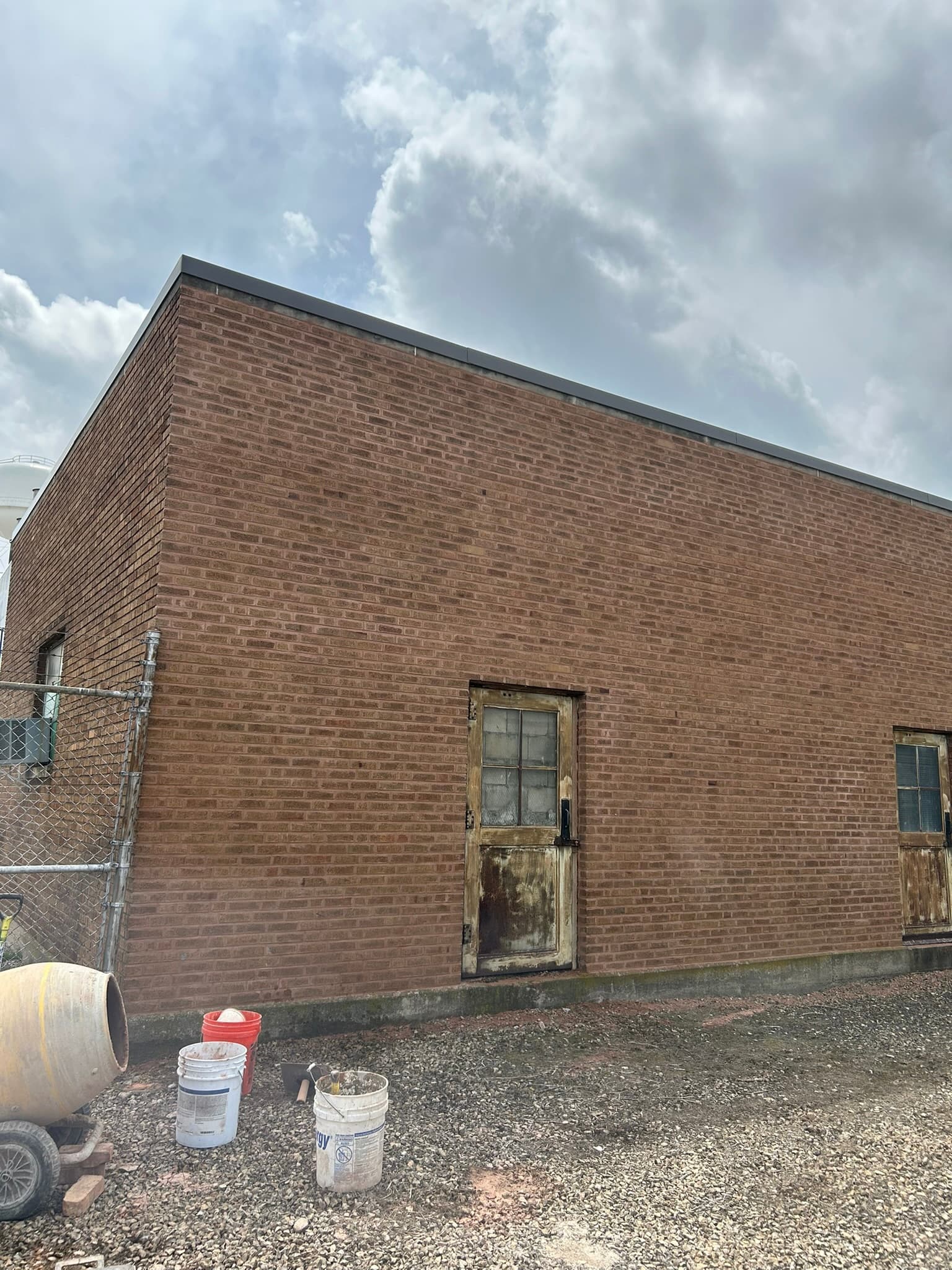
There is a moment in a lot of masonry assessments where the honest answer stops being "here is your repair" and becomes "stop, and get an engineer before anyone touches this wall."
Contractors who never say that are either not looking carefully or are happy to sell a repair that will not hold. When masonry needs a structural engineer is a genuinely learnable distinction, and understanding it saves owners, boards and property managers from the most expensive mistake in the trade: repointing a wall that is still moving.
Emerald Masonry LLC assesses and documents masonry for property managers, associations and building owners across Chicago and the Chicagoland suburbs, led by career masons with decades of hands-on Chicagoland experience. Licensed, bonded and insured; COI, W-9 and lien waivers on request. Free on-site assessments — call (708) 288-1696.
The line: wearing out vs. moving
Everything turns on this.
Wearing out is a materials problem. Mortar loses its binder and goes sandy. Brick faces spall because water got in and froze. Stone sugars. The wall is in the same place it has always been; it is simply losing material. That is masonry repair, and it is our work.
Moving is a structural problem. The wall — or what supports it — has changed position. Something is settling, heaving, pushing, or losing its connection. The masonry cracks because it has to accommodate a geometry change, and the crack is a symptom rather than the disease.
Repointing a deteriorated wall restores it. Repointing a moving wall gives the movement a fresh joint to open, which is why you sometimes see a neatly repointed crack with a new crack running parallel an inch away.
The evidence table
| Deterioration — masonry repair | Movement — engineer first | |---|---| | Mortar sandy, powdery, receded | Joint split cleanly, mortar still hard | | Brick faces spalling and flaking | Brick cracked through, or courses offset | | Damage distributed by exposure | Damage concentrated, or following a diagonal line | | Worst at base course, parapet, chimney | Worst mid-wall, at a corner, or over an opening | | Efflorescence and staining | Cracks offset side to side | | Stable over years | Widening season over season | | No interior symptoms | Sloping floors, doors and windows racking | | Wall plumb | Wall bowing, bulging, or leaning |
Two rows carry the most weight. Offset — one side of the crack displaced out of plane relative to the other — means something moved, not just opened. And widening over time means it is still happening.
The findings that stop us and start an engineer conversation
A bowing or bulging wall
The most urgent item on this list. A wall out of plane is under lateral force or has lost its connection to the structure behind it, and it can fail. Repointing is irrelevant here.
Cracks that are offset or widening
Displacement, and active displacement especially, is engineering territory.
Sloping floors or racking openings
Interior evidence that the movement is real and affecting the structure, not just the veneer.
A parapet visibly out of plumb
Common on older flat-roofed commercial stock, and consequential because the wall stands over a sidewalk.
Veneer separating from the structure
Wall ties that have corroded or were never properly embedded mean the veneer is no longer connected to what is supposed to hold it. That is not a pointing job.
Anything over a public way that could fall
This one is about sequence rather than diagnosis: secure it first, then diagnose. Clearing and cordoning the area below is immediate, whoever ends up doing the repair.
Movement continuing after drainage is corrected
If the water is fixed and the crack keeps growing, the cause is not water.
What is usually not structural
Worth saying plainly, because over-referring wastes money too:
- Sandy, receded mortar joints across an elevation — classic weathering, straightforward repointing
- Spalled brick faces at the base course — freeze-thaw and salt, a repair
- A stable hairline step crack that has not changed in fifteen years — frequently just repointing
- Efflorescence — a water-path symptom, not a structural one
- Horizontal cracking directly above an opening with rust staining — that is a corroding lintel, which is a masonry and steel repair rather than a settlement question
That last one is the most common misdiagnosis in both directions. Rust jacking looks alarming and structural, and it is usually a lintel replacement. Meanwhile genuine settlement sometimes presents quietly and gets dismissed.
Three worked cases
Case one — the widening corner crack. A condo board reports a diagonal crack at a building corner that "seems bigger than last year." The mortar at the crack is still hard; the crack is slightly offset, wider at the top, and a unit owner mentions a bedroom door that sticks in August and not in March. Verdict: engineer. Hard mortar with a clean split, offset faces, seasonal interior symptoms — that is movement, and on this region's clay soil most likely differential settlement. Repointing it would have been money spent on a symptom.
Case two — the alarming-looking elevation. A property manager sends photos of a rear elevation that looks dreadful: white bloom across several courses, joints you can rake out with a key, brick faces flaking off in the lower third. No cracking. Wall plumb. No interior symptoms. Verdict: masonry repair. This is textbook weathering and a drainage problem — almost certainly a downspout or grade issue feeding that elevation — and an engineer would add cost without adding information.
Case three — the one that looks structural and isn't. An owner reports "the wall is cracking above the storefront and the brick is lifting." Photographs show a horizontal crack directly above the opening, brick above it displaced upward, and orange staining bleeding from the steel. Verdict: masonry and steel repair, not settlement. That is rust jacking — a corroding lintel expanding to several times its volume. It needs shoring, lintel replacement, flashing and rebuild, and it is entirely within a mason's scope.
The pattern across all three: the dramatic symptom is a poor guide. The diagnostic weight sits in whether mortar is hard or sandy, whether faces are offset, whether anything is still changing, and whether the building's interior agrees.
For boards, managers and owners: why this matters to governance
Beyond the repair itself, the deterioration-versus-movement call has consequences that land on whoever signs the cheque.
Reserve and capital planning. A deteriorating envelope is a predictable, schedulable expense that belongs in a reserve plan. An actively moving structure is a different category of risk and frequently a different funding conversation.
Bid comparability. If one bidder prices repointing and another prices remediation, those bids are not comparable — and the spread will look like a pricing difference when it is actually a diagnosis difference. Establishing the condition first is what makes a bid set meaningful, which is the argument in how to write a masonry scope that gets comparable bids.
Insurance positioning. Long-term deterioration is generally excluded as wear and tear, while sudden events generally are not. Movement claims frequently turn on causation, and an engineer's report is the document that speaks to it.
Defensibility. A board that repointed a wall which then kept moving will be asked why. A board holding a dated condition record and, where warranted, an engineer's assessment has a straightforward answer.
How to monitor before spending anything
On a crack that might be live, a year of data is worth more than any single opinion:
- Mark both ends with a pencil line and write the date
- Measure the width at a marked point and record it
- Photograph against a ruler in consistent light
- Re-check seasonally — late summer and early spring are the informative moments in a clay-soil climate
- Record interior changes — doors, windows, floors
For a board or a property manager this record is also a governance asset: it shows the decision was made on evidence, and it gives an engineer something real to work from if one becomes necessary.
Why Chicagoland produces so much of this
Expansive clay soil. Northeastern Illinois clay swells when wet and shrinks when dry, so seasonal soil movement is normal here rather than exceptional. Differential movement — one part of a foundation moving more than another — is what cracks masonry, and a large tree drying the soil on one elevation is a reliable way to create it.
Freeze-thaw. Dozens of cycles a winter, which means an open crack becomes a weathering problem as well as a movement one within a single season.
Old, mixed housing stock. Chicago's bungalows, two-flats, three-flats, greystones and pre-war commercial buildings have a century of accumulated repairs, additions, and cold joints — each one a place where two eras meet and move differently.
Flat roofs with parapets. The dominant commercial form here, and the parapet is both the most exposed masonry and the element standing over the public way.
Who does what
The mason establishes and documents the condition: what has failed, where, by what mechanism, with photographs and located findings — and says plainly when something looks like movement.
The structural engineer assesses stability, diagnoses cause, and specifies remediation, typically in a report a board, owner, lender or municipality can rely on.
Then the mason executes the masonry scope that follows from that report.
Keeping that line clean protects everyone. It is also why our written assessments say "this appears structural, and here is why" rather than quietly pricing a repointing job over a wall that is going somewhere.
What the masonry work looks like afterward
Once an engineer has cleared or specified, the masonry follows the usual rules:
Cut out to sound material. Repointing that stops short of sound mortar is a cosmetic skin.
Mortar no harder than the units. On Chicago's soft common brick, greystones and older stock that means a lime-rich, low-Portland mix. A hard modern mortar on soft historic brick pushes future movement into the brick faces.
Match colour, sand, texture and joint profile, so the repair disappears rather than announcing itself.
Replace cracked units rather than filling them where the brick has fractured through.
Rebuild what is past repointing — sections that have lost their bond, and parapets where deterioration runs below the roof line.
And expect to revisit a live crack. Where movement cannot be fully arrested, the honest plan is monitoring and periodic maintenance rather than a promise that one repointing ends it.
What drives the cost
- Whether an engineer is required first, and the scope of their assessment
- Extent of cracking and how much wall is affected
- Whether units are cracked through or only joints have opened
- Shoring, where openings or load-bearing elements are involved
- Height and access — grade level versus an upper elevation needing staging
- Match difficulty for brick and mortar on older stock
- Drainage corrections folded into the scope
- Whether movement is active, which turns a one-time repair into managed maintenance
- Season and curing conditions
We do not price movement cracks over the phone, because the diagnosis is most of the value. The on-site assessment is free and written.
Related services and reading
- Commercial masonry restoration — documented, phased scopes
- Foundation masonry repair — deteriorated and cracked foundation walls
- Tuckpointing and repointing — joints cut to sound depth in compatible mortar
- Lintel repair — the other cause of cracking above openings
- Parapet wall repair — out-of-plumb and deteriorated roof-edge masonry
- Further reading: hairline vs. structural cracks in brick and why brick walls bow and bulge
The short version
Deterioration is a materials problem and it is masonry work. Movement is a geometry problem and it is engineering work first.
Read the evidence: is the mortar sandy or is the joint split clean? Is the crack offset? Is it widening? Is the wall still plumb? Are the doors racking? Those five questions sort almost every case — and getting them right is the difference between a repair that holds and money spent on a wall that was never going to stay still.
Emerald Masonry LLC is a family-owned commercial masonry contractor serving Chicago and the Chicagoland suburbs, led by career masons with decades of hands-on Chicagoland experience, in commercial tuckpointing, façade and parapet repair, lintel replacement, chimney and stack rebuilds, CMU block repair, brick repair and replacement, foundation and limestone/sill repair, caulking, sealing, and commercial, residential and historic masonry restoration. Free on-site assessments — call (708) 288-1696.
Not sure whether what you are looking at is deterioration or movement? Request a free on-site assessment or call (708) 288-1696 — we will document it and tell you honestly if the next call should be to an engineer.
Frequently Asked Questions
When does masonry repair need a structural engineer?
When the wall has moved rather than merely weathered. Bowing or bulging walls, cracks that are offset or widening season over season, sloping floors, and openings racking out of square all call for an engineer's assessment before any masonry is repaired.
Can't a mason just tell me if it's structural?
A good mason can tell you whether something looks structural and should stop there. Diagnosing load paths, specifying remediation, and signing off on stability are engineering work, and a mason who claims otherwise is exceeding their scope.
Is a step crack automatically structural?
No. Step cracks indicate movement, but a great many are old, stable, and long finished moving. What matters is whether the crack is widening, offset side to side, or accompanied by interior symptoms — a stable hairline step crack is frequently just repointing.
What does an engineer actually provide?
An assessment of whether the structure is stable, what is causing the movement, and what remediation is required — often in a written report a board, owner, or municipality can rely on. The masonry scope then follows that report rather than guessing ahead of it.
Will repointing fix a bowing wall?
No, and doing it wastes the money. Repointing restores joints; it does not resist the lateral force pushing a wall out of plane. A bowed wall needs its cause diagnosed and addressed, which frequently involves ties, anchorage, or rebuilding.
How do I know if a crack is still moving?
Monitor it rather than guessing. Mark both ends with the date, measure the width at a marked point, photograph it against a ruler, and re-check seasonally — a year of that record tells an engineer far more than one inspection.
Does an engineer cost more than just fixing it?
Usually far less than repairing the wrong thing. An engineer's assessment is a small fraction of a rebuild, and on a moving wall it is what prevents paying for masonry work twice.
Do lenders, boards or municipalities ever require an engineer?
Frequently, yes — for facade work on certain buildings, for reserve and capital planning, on insurance claims where causation is disputed, and where a municipality has issued a notice. Confirm the requirement with the relevant party rather than assuming.