
Brick Repair · Palos Park, IL
Brick Repair in Palos Park, IL — Wooded Lots, Shaded Walls, and Masonry That Never Gets to Dry
Palos Park is the greenest village in this part of Cook County, and that is exactly the problem for its masonry. A wall under mature canopy gets almost no solar drying, so it stays wet for days after rain and freezes wet all winter.
Quick Answer
Emerald Masonry LLC provides brick repair in Palos Park, IL — replacing spalled and cracked brick, repointing failed joints and correcting the moisture conditions that shaded, tree-canopied lots create on the village's homes and outbuildings. Licensed, bonded and insured. Free on-site assessment — call (708) 288-1696.
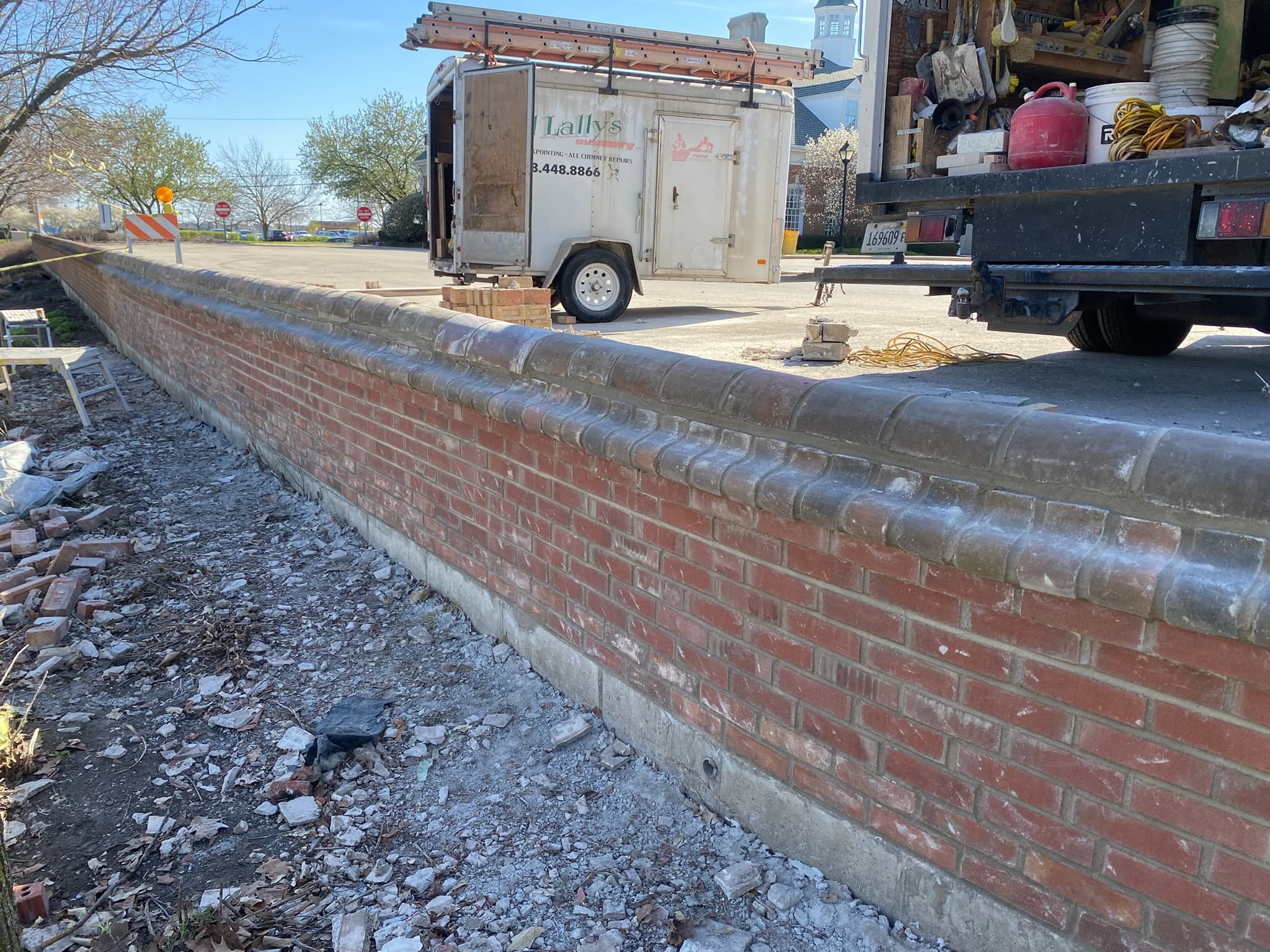
Brick Repair in Palos Park, IL
Emerald Masonry LLC provides brick repair in Palos Park, IL — replacing spalled, cracked and displaced brick, repointing failed joints, and correcting the moisture conditions that cause them. Licensed, bonded and insured, on homes, garages, outbuildings and small commercial properties. Free on-site assessment: (708) 288-1696.
Palos Park is unlike the villages around it. Large wooded lots, mature oak and hickory canopy, the forest preserves pressing in on three sides, ravines and low wet ground, and a housing stock that runs from mid-century ranches through custom homes tucked deliberately into the trees.
It is the most attractive setting in this corner of Cook County. It is also, for masonry, the most demanding.
The problem is not water. It is drying.
Every brick wall in Chicagoland gets wet. Brick and mortar are porous, they absorb water, and wind-driven rain pushes moisture through the face. That is normal and it always has been.
A wall stays healthy because it dries out again between wettings. The moisture it takes on during a storm evaporates back out over the following days, and as long as it dries faster than it wets across a season, the wall lasts a century.
Solar exposure and airflow are what do that drying. And a Palos Park wall under fifty feet of oak canopy gets very little of either.
So the local pattern is consistent and predictable:
- The wall stays saturated for days after rain rather than hours
- Every one of Chicagoland's dozens of annual freeze-thaw cycles catches it wet
- Water inside the brick and mortar freezes, expands, and works the material apart a fraction at a time
- Green film, moss and algae appear — which only grow where masonry stays damp, making them an accurate map of the problem
- Mortar joints go soft, then recede behind the face of the brick
- Then the brick itself begins to spall — faces flaking and popping off
That last step is the one that brings people to a mason, and by then the joints have usually been finished for a while.
Reading your own walls
Walk the house and look for these, in this order:
Green or black film on the brick. Not cosmetic — diagnostic. It marks the elevations that never dry.
Receded mortar joints. Sight along the wall at a low angle. Mortar should sit at or just behind the brick face. Joints set back a quarter inch or more, so the units read as individually raised, have lost real section. Push a house key into a joint: sound mortar resists, failed mortar crumbles.
Spalling. Faces flaking, sheeting or popping off, exposing the softer interior of the brick. Common at the base courses and anywhere water concentrates.
Efflorescence. White mineral bloom on the surface — proof that water is actively moving through the masonry and carrying salts out with it.
Step cracks. Diagonal cracking running through the mortar joints in a stair pattern, usually indicating movement rather than weathering.
Displaced or loose units, and any brick you can move by hand.
Rust staining running down from above a window or door — a corroding steel lintel expanding inside the wall.
Where Palos Park masonry actually fails
The north and canopy-shaded elevations, for all the reasons above. On a great many properties here, one wall is dramatically worse than the other three.
The base courses. Splash off the ground, snow banked against the wall, and on wooded lots a persistent layer of leaf litter and mulch that holds moisture directly against the brick and often creeps above the base course over the years.
Chimneys. Exposed on four sides and the top, and on wooded lots frequently collecting leaves and seed debris on the crown and at the flashing, which holds water exactly where it does the most harm.
Garages, sheds and outbuildings. Usually set further back under heavier canopy, rarely inspected, and often the worst masonry on a property.
Freestanding walls, piers and entrance columns. Weathered on every face with no building mass to shelter them, and common on Palos Park's larger lots.
Anywhere trees are involved. Vines on masonry hold moisture against the wall and their tendrils work into joints. Roots near a foundation, a chimney footing or a garden wall are worth looking at before they become a structural conversation rather than a maintenance one.
Repair or replace an individual brick
| Condition | What it needs | | --- | --- | | Sound face, failed joints around it | Repoint — the unit is fine | | Hairline crack, face intact | Usually monitor; repoint and correct the water source | | Face spalled or popped off | Replace — the exposed interior is soft and absorbent | | Unit loose or displaced | Replace and re-bed, and find out what moved it | | Several courses displaced or bulging | Rebuild the section; this is movement, not weathering |
The rule underneath all of it: replacing brick without correcting the water source guarantees a repeat. The new units are only as durable as the conditions you put them back into.
Our process
- Walk every elevation and sound the wall with a hammer handle — spalling is often audible before it is visible.
- Find the water. Gutters, downspout discharge, grade, mulch and leaf litter height, canopy, sills, lintels, chimney, vines.
- Mark the failed units and quantify honestly — usually far fewer than a homeowner fears, occasionally more.
- Correct the water source first, because everything else depends on it.
- Cut out failed units carefully, preserving the surrounding brick, shoring where the section carries load.
- Match the replacement brick by size, color, texture and era — reclaimed period brick where production units will not match, salvage from a concealed elevation where nothing else is close.
- Set in matched mortar, always softer than the brick it holds — soft, lime-rich mixes on older soft units, Type N for most residential work, Type S only where genuinely warranted.
- Repoint the surrounding joints to depth, roughly two and a half times the joint width, never skimming over failed material.
- Match color, texture and profile against a cured sample, and cure and protect the work.
On cleaning: the gentlest method that works. No sandblasting, no high-pressure washing — both permanently strip the weathered outer skin off brick and leave a more absorbent surface that fails faster than what you started with. Biological growth comes off with low-pressure washing and appropriate cleaners, not force.
Prevention that actually works here
- Thin the canopy over the roof and walls where you can, and keep growth off the masonry
- Remove vines from brick entirely
- Pull mulch and leaf litter back below the base course and keep it there
- Extend downspouts well away from the foundation onto ground that falls away
- Keep gutters clear — on a wooded lot that is a seasonal job, not an annual one
- Clear the chimney crown and flashing of leaves and seed debris
- Inspect the shaded elevation and the outbuildings deliberately, because nobody does
What drives the cost
The number of units involved. How difficult the brick is to match — an unusual size, color or era takes sourcing. How much repointing surrounds the replacements. Access, including whether staging can reach a wall on a wooded, sloped or ravine lot. Whether steel or a water source has to be corrected as part of the work. And what is found once the wall is opened. We assess it on site, price the scope, and state exclusions in writing.
Trust signals
Emerald Masonry LLC is a family-owned commercial masonry contractor serving Chicago and the Chicagoland suburbs, established 2024 and led by career masons with decades of hands-on Chicagoland experience, in commercial tuckpointing, façade and parapet repair, lintel replacement, chimney and stack rebuilds, CMU block repair, brick repair and replacement, foundation and limestone/sill repair, caulking, sealing, and commercial, residential and historic masonry restoration. Licensed, bonded and insured. Non-union, based at 7156 W. 126th St. Suite 136, Palos Heights, IL 60464 — the next village over. Free on-site assessments — call (708) 288-1696.
Related services
- Brick repair — spalled, cracked and displaced units
- Brick replacement — matched units where the face has failed
- Tuckpointing and repointing — the joints that fail before the brick does
- Chimney repair — crowns, caps and flashing under heavy canopy
- Masonry sealing — breathable sealers, after the masonry is sound
- Residential masonry restoration — whole-property scope and phasing
Get an assessment in Palos Park
If one wall of your house is green and soft while the rest looks fine, if brick faces are flaking off near the ground, or if the garage under the trees has been quietly deteriorating for a decade, get it looked at before another winter freezes into the same joints.
Emerald Masonry LLC — (708) 288-1696 — or request an on-site assessment.
Ready to get started?
Free on-site estimates for commercial and large-scale projects.
Brick Repair in Palos Park, IL — Frequently Asked Questions
How much does brick repair cost in Palos Park, IL?
It is priced by the number of units involved, how difficult the brick is to match, the amount of repointing around them, and access. Replacing a scattered dozen spalled units is a very different job from rebuilding a section of wall. Emerald Masonry LLC gives a free on-site assessment and a written scope — call (708) 288-1696.
Why is one wall of my Palos Park house so much worse than the others?
Almost always exposure. A wall under mature canopy or facing north gets very little direct sun, so it stays saturated for days after rain rather than hours — and every freeze-thaw cycle catches it wet. Same house, same brick, very different condition.
What is the green film on my brick, and does it matter?
Algae and moss, and it matters as a symptom rather than as damage. It only grows where the masonry stays damp, so it is a reliable map of which parts of your wall are not drying — which is the same map as where the mortar will fail first.
Should I cut back the trees around my house?
Thinning canopy and keeping growth off the walls helps a great deal, because it restores airflow and some solar drying. Vines on masonry are worth removing entirely, and roots close to a foundation or chimney footing are worth a look before they become a structural conversation.
Can spalled brick be repaired, or does it have to be replaced?
Once the face has popped off, the unit is compromised and should be replaced — the exposed interior of the brick is soft and absorbent and will deteriorate quickly. What matters more is correcting whatever kept it wet, or the replacement units will do the same thing.
Will the replacement brick match?
In most cases closely. We match by size, color, texture and era, using reclaimed period brick where current production will not match and salvaging from a concealed elevation where nothing available is close enough. New masonry always reads brighter at first and blends as it weathers.
Do you serve Palos Park and the surrounding suburbs?
Yes — Palos Park, 60464, and the surrounding southwest Cook County communities including Palos Heights, Palos Hills, Orland Park, Homer Glen, Lemont and Worth. Emerald Masonry LLC is based in Palos Heights, IL. Call (708) 288-1696.
Brick Repair in Nearby Areas
Other Masonry Services in Palos Park, IL
Learn more about our brick repair services across Chicagoland, or view all service areas.