
Brick Repair · Burbank, IL
Brick Repair in Burbank, IL — Why a Whole Street of 1950s Houses Fails at the Same Height
Drive any Burbank block built in the 1950s and the damage repeats at the same height on house after house. That is not coincidence — it is a build era, a brick type and a splash line doing exactly what they always do, and it tells you precisely what the repair has to address.
Quick Answer
Emerald Masonry LLC performs brick repair in Burbank, IL — replacing spalled and cracked brick, rebuilding damaged sections, and repairing stoops, steps and garage walls on the village's post-war bungalows, ranches and Georgians. Family-owned, licensed and insured, career masons with decades of Chicagoland experience, free on-site estimates. Call (708) 288-1696.
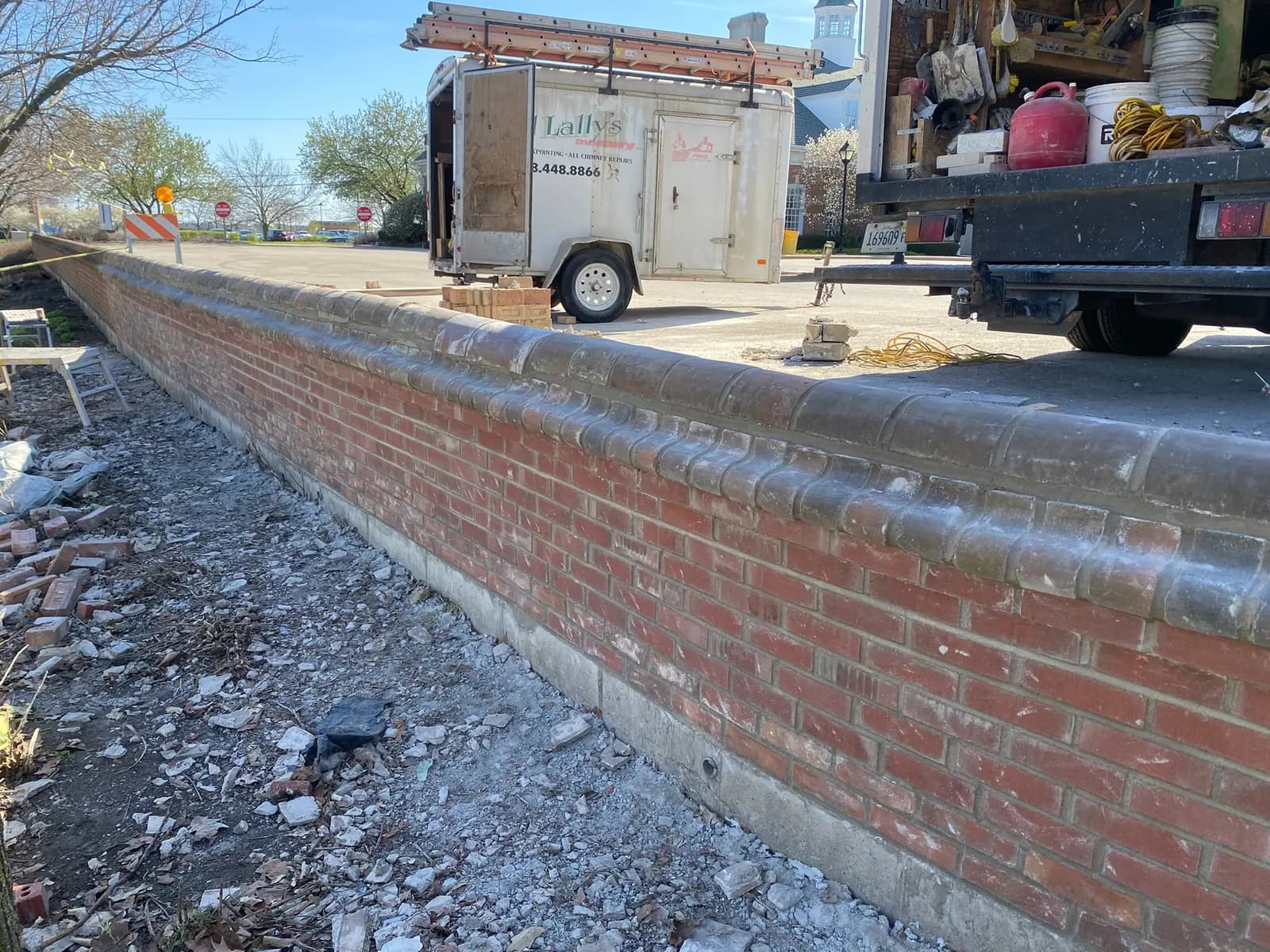
Brick Repair in Burbank, IL
Brick repair in Burbank, IL is unusually predictable, and that is genuinely good news. Emerald Masonry LLC repairs and replaces damaged brick on homes, garages, stoops, steps and commercial buildings throughout the southwest suburbs. Family-owned, licensed, bonded and insured, career masons with decades of Chicagoland experience, free on-site estimates. Call (708) 288-1696.
Burbank is one of the most architecturally consistent towns in Cook County. The village built out fast, mostly in the 1950s and 1960s, in brick — ranches, Cape Cods, Georgians and Chicago-style bungalows, block after block of them, built by the same trades with the same materials at the same time.
Which produces something you can see from a car window: the damage repeats at the same height, on house after house.
The Same Band on Every Block
Stand at the end of a Burbank street and look at the bottom of the walls. You will very often find a horizontal band of spalled, flaking brick starting near grade and stopping a foot or two up, with sound brick above it.
That band has three overlapping causes, and every one of them is about water and where it lands.
Splash-back. Rain running off a roof edge, or out of an overflowing gutter, lands on the walk, driveway, stoop or patio and bounces. That spray wets the lowest courses over and over, and because those courses are closest to the ground they dry the slowest.
Road and walk salt. Southwest Cook County uses a lot of de-icer, and Burbank's tight lot spacing puts drives, walks and stoops right against the masonry. Salt dissolves in meltwater, enters the brick, and crystallizes inside the pore structure as it dries. Those crystals exert pressure that pops the face off from within.
Ground moisture. Soil, mulch and turf against the wall wick moisture upward into the lowest courses continuously through the wet season.
Then Chicagoland freeze-thaw finishes it. Water in saturated brick freezes, expands about nine percent, and lifts the face off in flakes. Repeat that dozens of times a winter for six decades and you get exactly the band you are looking at.
The band is at a consistent height because the splash line is at a consistent height. Same era, same setbacks, same roof overhangs, same result.
The Other Burbank Pattern: Hard Mortar
There is a second failure signature common on this housing stock, and it is worth knowing because it changes the repair.
Many Burbank houses have been repointed at least once since the 1980s, frequently with a mortar mix considerably harder than the original. Mortar is supposed to be softer than the brick it sits against — it is the sacrificial component, designed to fail first, because a joint can be replaced and a brick face cannot.
When the joints are harder than the brick, that relationship inverts. Movement, moisture and freeze pressure that should be relieved in the joint get forced into the brick faces instead. The tell is unmistakable: crisp, intact grey mortar joints standing slightly proud of brick faces that are crumbling and spalled. If you see that, replacing the brick alone will produce the same failure again.
Signs You Need Brick Repair
- Brick faces flaking, sheeting, or crumbling — spalling
- A horizontal band of damage near grade, at the splash line
- Damage concentrated beside a downspout, or under a gutter joint
- Cracked or broken individual units, often from impact
- Brick you can move, or that sounds hollow when tapped
- Mortar joints standing proud of receded brick faces
- White efflorescence — proof water is moving through the wall
- Rust staining and a horizontal crack above a window or garage door, which means a corroding steel lintel
- Stair-step diagonal cracking, which means movement rather than weather
- Stoop and step treads spalling at the nosing, or courses separating
Risks of Waiting
A spalled brick has lost its hardest, most weather-resistant layer. What is exposed behind it is more absorptive, so it takes on water faster and the following winter does more damage than the last. Damage spreads outward through neighbouring units for exactly this reason.
Water passing through open faces and joints also reaches whatever steel is in the wall and any structural framing behind it. And the cost curve is steep in a specific way: scattered unit replacement is straightforward, but once a section has lost bond it becomes a rebuild, and a rebuild on an upper elevation brings staging costs that dwarf the masonry itself.
Our Brick Repair Process
- Diagnose the cause — splash and salt, impact, corroding steel, or structural movement. These are four different jobs.
- Sound the surrounding masonry. Tapping finds units that have lost bond behind faces that still look acceptable; those come out too, and this is what makes an estimate honest.
- Check the existing mortar hardness, because a hard-mortar wall needs a different plan.
- Source the match — size, colour range, texture and face treatment, verified against the wall in daylight.
- Cut out damaged units by removing surrounding mortar and extracting the brick without disturbing the courses above.
- Correct what caused it — downspout and splash management, grade, blocked weep holes, or corroded steel.
- Set replacement brick in matched mortar, keyed to the existing coursing and bond.
- Blend rather than block — scatter replacements through the surrounding field so the eye reads a wall, not a rectangle.
- Repoint the transition and any hard-mortar joints that are driving the failure.
- Clean down and review the finished work with the owner.
Materials
Type N mortar is typical for this post-war brick, mixed to be softer than the units it serves. Colour matching is a function of sand selection, cement colour and curing, and it is judged wet-to-cured rather than wet-to-wet, because mortar lightens as it dries. Joint profile — concave, weathered or flush — is matched to the surrounding field, and profile is most of what makes a repair disappear.
Related services that often run alongside: tuckpointing and repointing, brick replacement, limestone and sill repair, foundation masonry repair, and masonry sealing where genuinely appropriate.
What Drives the Cost
- How many units come out once the wall is properly sounded
- Access and height — a stoop is not a second-story elevation
- Match difficulty on discontinued or unusual brick
- Whether hard mortar has to be removed and the wall repointed as well
- Underlying corrections — drainage, steel, or movement
- Site conditions, including tight side yards and neighbouring property protection
We do not quote brick work over the phone. Estimates are free, on-site and written.
Serving Burbank and the Southwest Suburbs
Emerald Masonry LLC is a family-owned, licensed and insured masonry contractor serving Chicago and the Chicagoland suburbs led by career masons with decades of hands-on experience in tuckpointing, chimney repair, brick repair and replacement, lintel and parapet repair, foundation and limestone/sill repair, caulking, sealing, and commercial, residential, and historic masonry restoration. Free on-site estimates — call (708) 288-1696.
We work throughout Burbank and neighbouring Oak Lawn, Bridgeview, Hickory Hills and Chicago Ridge, for homeowners, property managers, HOAs, churches and insurance companies. $5,000 project minimum.
Get a Free Burbank Brick Repair Estimate
If the bottom of your walls is flaking, your stoop is coming apart, or your mortar looks better than your brick, get it assessed before another salt season. Call (708) 288-1696 or request a free estimate.
Ready to get started?
Free on-site estimates for commercial and large-scale projects.
Brick Repair in Burbank, IL — Frequently Asked Questions
How much does brick repair cost in Burbank, IL?
It is driven by how many units genuinely have to come out once the wall is sounded, how hard the brick is to match, access, and whether the underlying water source has to be corrected too. Scattered face replacement at ground level is a modest job; a section that has lost bond is not. Emerald Masonry provides a free on-site assessment and a written estimate.
Why is the brick damaged in a band about a foot off the ground?
That is the splash line. Rain falling off the roof edge onto a walk, drive or stoop bounces back and repeatedly wets the lowest courses, and in winter that water carries de-icing salt. Freeze-thaw and salt crystallization then flake the faces off — which is why the band sits at a consistent height across whole blocks of similar houses.
Can you match brick on a 1950s Burbank house?
Usually very closely. Post-war Chicagoland brick was machine made in identifiable colour ranges and textures, and while many exact runs are discontinued, close matches exist. What makes a repair invisible is less the brick itself than blending replacements through the surrounding field and matching mortar colour and joint profile exactly.
My brick is flaking but the mortar looks fine. Do I still need work?
Yes, and that combination is meaningful. It usually means the mortar is harder than the brick — often from an earlier repointing with too strong a mix — so stress and moisture are being forced into the brick faces instead of the joints. Replacing the brick without addressing that mortar just repeats the failure.
Do you repair brick stoops, steps and porch walls?
Yes, and in Burbank that is a large share of the work. Front stoops and steps take direct splash, shovel and salt exposure every winter, and their horizontal surfaces hold water in a way wall brick does not, so they typically need attention well before the house does.
Should the wall be repaired or rebuilt?
Scattered damage is repaired unit by unit. Once a section has lost bond, sounds hollow, or is out of plane, rebuilding that section is safer and less expensive than patching it twice. We sound the surrounding area before quoting so the number reflects what actually has to come out.
Do you serve Burbank and the surrounding southwest suburbs?
Yes. Emerald Masonry works throughout Burbank and the neighbouring southwest suburbs and Chicago city limits for homeowners, property managers, HOAs, churches and insurance companies, with free on-site estimates.
Brick Repair in Nearby Areas
Other Masonry Services in Burbank, IL
Learn more about our brick repair services across Chicagoland, or view all service areas.