
Brick Replacement · Homer Glen, IL
Brick Replacement in Homer Glen, IL — Rebuilding the Freestanding Masonry First
On Homer Glen's larger lots the masonry that fails first usually isn't the house. It's the pillars, planters, mailbox and entrance monument — exposed on every face with a cap that stopped shedding water.
Quick Answer
Emerald Masonry LLC provides brick replacement in Homer Glen, IL — rebuilding failed sections of house walls, columns, piers, planters and entrance monuments with matched units and matched mortar, after correcting the water path that caused the failure. Licensed, bonded and insured. Free on-site assessments — call (708) 288-1696.
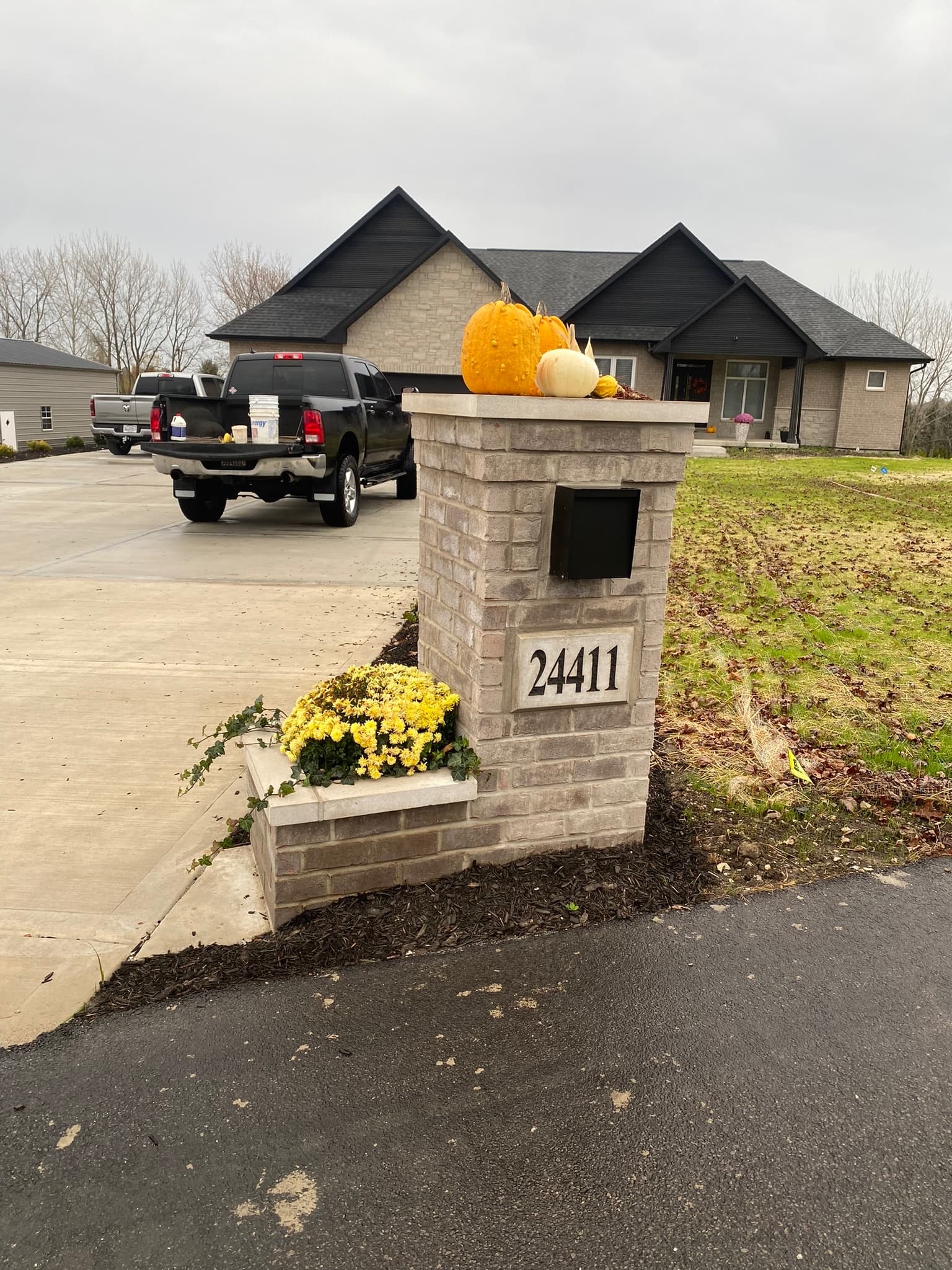
Brick Replacement in Homer Glen, IL
Brick replacement in Homer Glen, IL usually starts somewhere homeowners do not expect. On the village's larger lots, the masonry that fails first is rarely the house — it is the freestanding brickwork: the entrance pillars, the planters, the mailbox structure, the low garden and retaining walls, and the subdivision monument at the road. Emerald Masonry LLC serves Homer Glen and the surrounding Will, Cook and DuPage County communities, led by career masons with decades of hands-on Chicagoland experience. Licensed, bonded and insured. Free on-site assessments — call (708) 288-1696.
Why Freestanding Masonry Goes First
A wall attached to a house has one exposed face, a warm side, and a roof overhead. A pillar has none of that.
- Exposed on every face — it wets and freezes from all directions
- No heat behind it, so it never dries from the inside
- A cap doing all the work. Once the cap cracks or its joints open, water goes straight into the top of the structure, which is the direction masonry has no answer for
- Sitting at grade in the splash zone, buried in plowed snow, and absorbing de-icing salt from the drive and the road
- Nobody inspects it. People look at their house; they walk past the pillar
Add the mechanism that governs everything here — water enters, freezes, expands roughly nine percent, and forces the masonry apart, dozens of times each winter — and a pillar at the end of a Homer Glen driveway can be structurally spent while the house it belongs to is fine.
The Signs It Has Gone Past Repair
- Spalled faces across a continuous area rather than a few scattered units — once the fired face is off, the softer interior absorbs faster and the failure spreads sideways
- Brick you can move by hand, or that sounds hollow when tapped
- A pillar, pier or wall visibly out of plumb when sighted along its length
- A cracked or displaced cap on freestanding masonry — the single most common root cause we find
- Step cracks running diagonally through the joints, which indicate movement rather than weathering
- White efflorescence blooming on the face, meaning water is moving through the masonry
- Mortar you can rake out with a key, sandy and receded well behind the brick face
- Debris on the ground below a pillar or wall — the masonry is already releasing material
The first four generally mean rebuilding. The rest may still be a repointing or spot-repair scope, which is a much smaller job — and worth catching at that stage.
Repair or Replace
- Scattered individual failed units in sound masonry → brick repair, cut in one at a time
- A continuous failed area — spalled, cracked or displaced → brick replacement, rebuilt as a section
- A pier, pillar or wall out of plane → rebuild, and correct what pushed or undermined it
- Cracked, lifted brick in a line above an opening → lintel repair first, then rebuild the masonry above
We will tell you plainly which one you have — including when the answer is that it does not need rebuilding yet.
What We See on Homer Glen Property
Homer Glen built out substantially from the 1990s onward on generous lots, with a good deal of brick and stone veneer housing, plus the hardscape that came with that era: columns flanking driveways, brick-and-stone mailbox structures, planters, seat walls and neighbourhood entrance monuments.
On the houses, veneer rarely fails because the brick wore out. It fails at the details — blocked or caulked weep holes, short or missing flashing, a corroding shelf angle or lintel, or a downspout discharging at a corner for twenty years. Correcting the detail is what makes the rebuild permanent.
On the freestanding masonry, the failure is nearly always the cap and the base — water in from the top, salt and splash from the bottom, working toward each other.
Our Replacement Process
- Find the true edge of the failure. We sound and probe past the visible damage so the rebuild reaches solid masonry rather than unzipping at the seam later.
- Fix the cause first — cap, flashing, weeps, grade, downspout discharge, or a corroding lintel.
- Support and remove. Where the area carries load, the surrounding masonry is supported before anything comes out.
- Source and approve the match, dry-laid against your wall for approval before a single unit is set.
- Rebuild in matched mortar — colour, sand, texture, joint profile, and hardness matched to the units.
- Cap and detail it properly so the rebuilt structure sheds water instead of drinking it.
- Clean down and blend so the work reads as original.
What Drives the Cost
Size of the failed section · veneer, structural, or freestanding masonry · height and access · brick-match difficulty · underlying corrections such as caps, flashing, lintels or drainage · season and curing conditions. Emerald Masonry does not quote brick work over the phone; the on-site assessment is free and written.
Emerald Masonry LLC is a family-owned commercial masonry contractor serving Chicago and the Chicagoland suburbs, led by career masons with decades of hands-on Chicagoland experience, in commercial tuckpointing, façade and parapet repair, lintel replacement, chimney and stack rebuilds, CMU block repair, brick repair and replacement, foundation and limestone/sill repair, caulking, sealing, and commercial, residential and historic masonry restoration. Free on-site assessments — call (708) 288-1696.
Serving Homer Glen and Will County
We rebuild brick throughout Homer Glen's 60491 and across Will, Cook and DuPage County. Related work on the same property often includes tuckpointing in Homer Glen, chimney repair in Homer Glen, lintel repair in Homer Glen and foundation masonry repair in Homer Glen. We do the same work in Lockport, Lemont, Orland Park and Mokena.
Why Homer Glen Owners Call Emerald
We find out why the masonry failed before we rebuild it, because on newer property the cause is almost never the brick itself. We correct the detail, match the units and the mortar, and lay the match up against your wall so you approve it first. Family-owned, licensed, bonded and insured, led by career masons with decades of Chicagoland experience.
Spalled, cracked or leaning brick on a Homer Glen home, pillar or entrance monument? Request a free on-site assessment or call (708) 288-1696.
Ready to get started?
Free on-site estimates for commercial and large-scale projects.
Brick Replacement in Homer Glen, IL — Frequently Asked Questions
How much does brick replacement cost in Homer Glen, IL?
The size of the failed section drives it most, and it is nearly always larger than what looks bad from the driveway. Beyond that: whether the area is veneer or freestanding, height and access, brick-match difficulty, and whether a cap, lintel or drainage problem must be corrected first. Emerald Masonry provides a free written on-site assessment.
Why do my brick pillars and mailbox fail before the house does?
Because freestanding masonry is exposed on every face rather than one, sits at grade in the splash and de-icing salt zone, and usually has a cap that has stopped shedding water. Water gets into the top of an unprotected structure, and that is the direction masonry defends worst.
When does brick need replacing instead of repairing?
When the failure has spread into a continuous area rather than scattered units, when a wall or pier is leaning or out of plane, or when spalling has gone deep enough that the units cannot be relied on. At that point rebuilding the section is sounder and usually cheaper than cutting in unit after unit.
Can you match brick on a 1990s or 2000s Homer Glen home?
Usually. Blends from that era are often still produced or available as reclaimed stock, and where a run is discontinued we source the closest current match and, on a fully bricked house, salvage units from a concealed elevation so the visible wall stays original.
What causes brick to spall in the first place?
Water and freeze-thaw. Water enters a tired unit or an open joint, freezes, expands about nine percent, and forces the masonry apart — repeat that dozens of times a winter for decades and the hard fired face pops off, after which the softer interior absorbs faster.
Do you rebuild entrance monuments and subdivision signage walls?
Yes. Those structures take the worst exposure on any property — weather on every face, salt from the road, and often a failed cap — so they commonly need rebuilding decades before the homes behind them.
Will the rebuilt area be obvious?
Not when it is done properly. A rebuild disappears when the brick match and the mortar match — colour, sand, texture and joint profile — are both right, and we lay the replacement up dry against your wall so you approve the blend before anything is set.
Can brick be replaced in winter?
Small protected repairs can, with proper enclosures and cold-weather practice, but mortar needs sustained above-freezing conditions to cure correctly. On a larger rebuild we would rather schedule it properly than rush a cure that fails.
Brick Replacement in Nearby Areas
Other Masonry Services in Homer Glen, IL
Learn more about our brick replacement services across Chicagoland, or view all service areas.