
Foundation Masonry Repair · Homer Glen, IL
Foundation Masonry Repair in Homer Glen, IL — Block Walls, Cracks and Parging
Homer Glen sits on heavy clay that swells and shrinks with the seasons, and that movement shows up in foundation walls as step cracks, horizontal cracking and bowing. Emerald Masonry LLC repairs block, brick and stone foundation masonry across Will County.
Quick Answer
Emerald Masonry LLC provides foundation masonry repair in Homer Glen, IL — repointing and rebuilding concrete block, brick and stone foundation walls, repairing step and horizontal cracks, and parging deteriorated masonry at grade. Family-owned, licensed and insured, career masons with decades of Chicagoland experience, free estimates. Call (708) 288-1696.
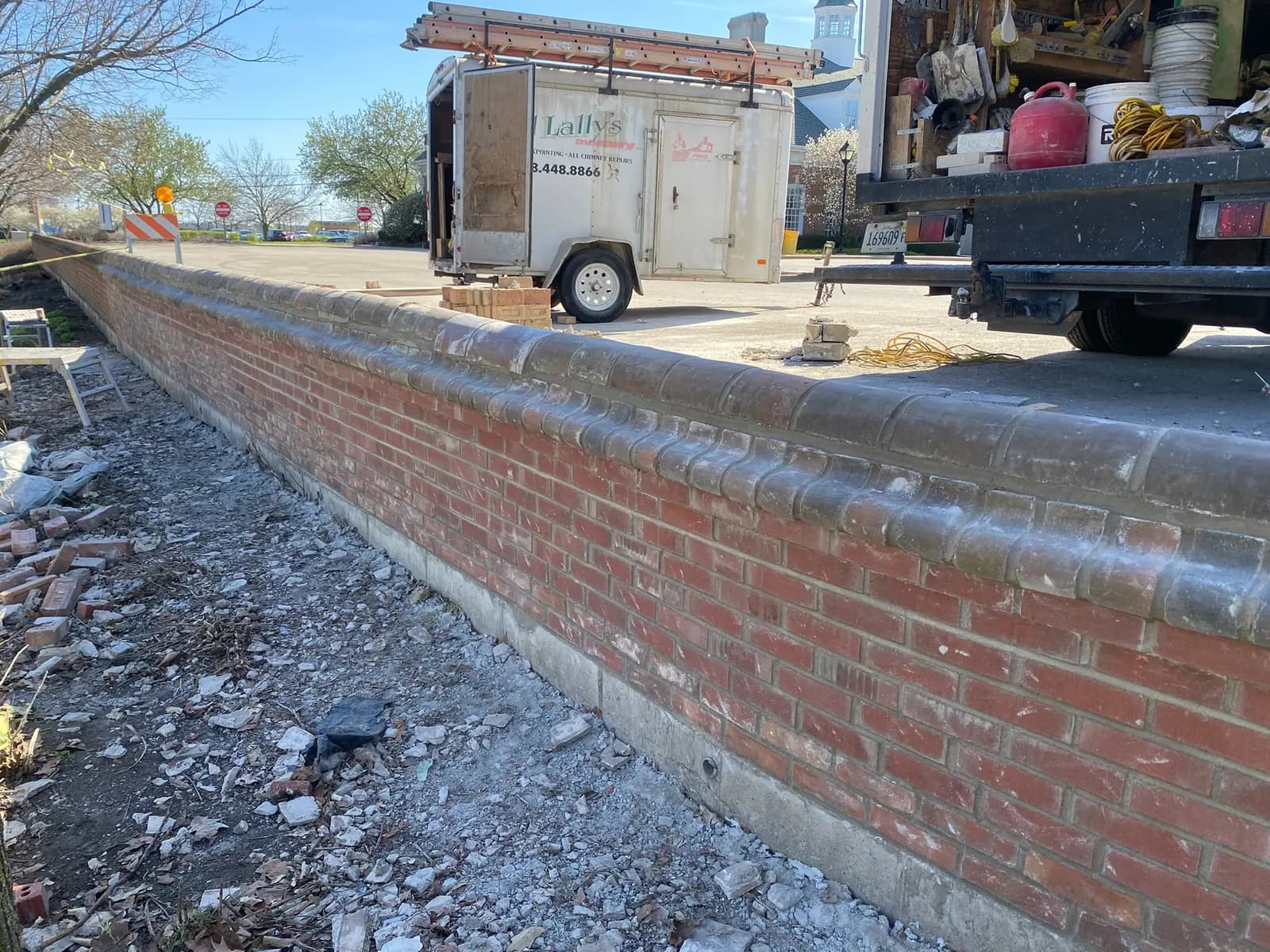
Foundation Masonry Repair in Homer Glen, IL
Foundation masonry repair in Homer Glen, IL means restoring the block, brick or stone your house actually stands on — repointing failed joints, repairing step and horizontal cracks, rebuilding deteriorated sections, and parging and protecting the wall so water stops driving the damage. Emerald Masonry LLC does this work across Will County and greater Chicagoland. Family-owned, licensed, bonded and insured, career masons with decades of experience, free on-site estimates. Call (708) 288-1696.
Homer Glen has a soil problem, and it is the defining factor in foundation masonry here. The village sits on the heavy glacial clay that runs across this part of Will County — soil that swells substantially when it takes on water and shrinks as it dries. That is not a defect; it is simply what this clay does, every year, in both directions.
Foundation walls are what stand in the way of that movement.
The Three Foundation Types We Repair
| Foundation type | Typical Homer Glen era | How it fails here | Usual repair | |---|---|---|---| | Concrete block (CMU) | 1960s–present, the majority | Horizontal cracks, bowing, step cracks, joint failure | Repointing, crack repair, block replacement, parging | | Poured concrete with masonry above | 1980s–present | Cracking at the masonry transition, brick veneer at grade spalling | Repointing, brick replacement, drainage correction | | Brick and stone | Older farmsteads and pre-village homes | Mortar erosion, displaced units, spalling at grade | Repointing, resetting, parging |
Homer Glen was largely developed after the mid-century — much of it from the 1970s through the 2000s as the area transitioned from farmland and large-lot country properties into a village — so concrete block foundations dominate, with older brick and stone under the surviving original farmhouses and the oldest properties along the historic corridors.
Reading the Cracks: What Each Pattern Means
Not all foundation cracks mean the same thing, and the pattern tells you most of what you need to know.
- Hairline vertical cracks. Often shrinkage from curing, common and usually minor.
- Stair-step cracks climbing diagonally through the mortar joints. Differential settlement or soil movement — worth evaluating, especially if widening.
- Horizontal cracks, typically partway up a block wall. This is the one to take seriously in Homer Glen. It indicates lateral soil pressure pushing the wall inward, which is exactly what saturated clay does.
- Cracks wider at one end than the other. Rotational movement — the wall is not just cracked, it is moving.
- Bowing or bulging visible when you sight along the wall. The wall is deflecting under load and needs professional evaluation before anything else is scoped.
- Cracks with displacement — where one side sits proud of the other. Active movement.
Signs Your Homer Glen Foundation Needs Masonry Repair
- Mortar crumbling or washing out from between blocks, brick or stone.
- Step cracking through the joints of a block or brick foundation.
- Horizontal cracking or bowing in a block wall.
- Spalling and flaking in the first courses above grade where splash-back keeps masonry wet.
- Parging falling away in sheets, exposing the wall behind it.
- Water entering the basement at the wall–floor joint or through visible joints.
- Efflorescence — white powdery deposits on interior basement walls.
- Doors and windows on the level above sticking or going out of square.
- A damp or musty basement with no plumbing source.
Why Homer Glen Foundations Deteriorate
Clay soil movement. The dominant factor. Saturated clay expands and presses laterally against the wall; dry clay shrinks and withdraws support. That cycle repeats seasonally, year after year, and block walls take it in the form of horizontal cracks and bowing.
Water at grade. The base of a foundation is the wettest masonry on any property. Rain splashes back, downspouts discharge beside the wall, grade slopes the wrong way, and soil holds moisture against the masonry for days. Mortar in constant contact with wet soil erodes — and every gallon that soaks the clay also feeds the pressure cycle above.
Large lots and mature landscaping. Homer Glen's characteristically large, heavily wooded lots mean substantial tree root systems near foundations, drawing moisture unevenly from the clay in dry spells and adding another movement variable.
Freeze-thaw. Will County runs through dozens of freeze-thaw cycles each winter with no lake buffer. Water inside a saturated joint expands as it freezes and works the mortar apart from within, concentrated at the wettest part of the building.
Our Foundation Masonry Repair Process
- Free on-site inspection. We evaluate the foundation inside and out, read the crack patterns, and check grading, downspouts and drainage — determining whether the wall is deteriorating, actually moving, or both.
- Diagnosis before scope. Water management problems get identified up front, because repairing masonry while leaving the water source in place guarantees a repeat.
- Joint preparation. Failed mortar raked and cleaned out to sound material.
- Repointing. Joints packed with mortar matched to the wall — an appropriate structural mix on block, a softer, more forgiving mix on old brick and stone.
- Crack repair and rebuilding. Cracks repaired appropriately to their cause; failed block or brick replaced with matched units; deteriorated sections rebuilt.
- Parging and protection of the exposed portion where appropriate, to shed water and protect the masonry.
- Drainage recommendations. Grade, downspout extensions and splash control — the low-cost measures that protect the repair for decades.
Where a wall shows genuine structural movement rather than masonry deterioration, we will say so plainly and tell you what kind of evaluation it needs. Not every foundation problem is a masonry problem, and we would rather tell you that than sell you repointing on a wall that is moving.
Materials We Use
Mortars matched to the wall type — Type S and Type M where structurally appropriate on block and below grade, lime-modified mixes for old brick and stone foundations; matched replacement block and brick; parging and cementitious coatings; and salvaged or matched stone for rebuilding older sections. Related work often includes brick repair, tuckpointing and masonry sealing.
What Drives Foundation Repair Cost in Homer Glen
- Linear footage and wall height of the section needing work.
- Above grade versus below grade — excavation is the single largest cost multiplier.
- Deterioration versus movement — a bowing wall is a different scope from eroded joints.
- Foundation type — resetting old stone is slower work than repointing block.
- Access — landscaping, decks, patios and the mature plantings common on Homer Glen's large lots.
- Related water work — grading, downspout extension, parging.
- Interior finish — whether a finished basement complicates interior-side access.
Serving Homer Glen and Southern Will County
We work throughout 60491 — the subdivisions off 143rd and 151st Street, the large-lot properties along Bell Road and Parker Road, the older homes along the historic corridors, and the commercial and church properties along the main routes.
We also serve neighboring Lockport, Orland Park, Mokena and New Lenox. Homer Glen homeowners frequently pair foundation work with chimney repair or lintel repair.
Emerald Masonry LLC is a family-owned, licensed and insured masonry contractor serving Chicago and the Chicagoland suburbs led by career masons with decades of hands-on experience in tuckpointing, chimney repair, brick repair and replacement, lintel and parapet repair, foundation and limestone/sill repair, caulking, sealing, and commercial, residential and historic masonry restoration. Free on-site estimates — call (708) 288-1696.
What Happens If You Wait
Foundation masonry is where deferral compounds fastest, because the water and the soil pressure keep arriving whether you address them or not. Open joints admit water into the wall and the basement. Saturated masonry spalls and loses section. Loss of section in a bearing wall turns a maintenance item into a structural one — and structural foundation work is an order of magnitude more disruptive and more expensive than repointing was.
Get a Free Foundation Inspection in Homer Glen
If mortar is washing out of your foundation, cracks have opened up, the parging is falling away, or your basement has started taking water, have it properly assessed.
Call (708) 288-1696 or request your free estimate.
Ready to get started?
Free on-site estimates for commercial and large-scale projects.
Foundation Masonry Repair in Homer Glen, IL — Frequently Asked Questions
How much does foundation masonry repair cost in Homer Glen, IL?
It depends on how much of the wall is involved and how much sits below grade. Repointing and parging an exposed section at grade is a modest job; excavating to reach deteriorated masonry below grade is a much larger one. Emerald Masonry inspects the foundation in person and gives a free written estimate with the scope spelled out.
Is a crack in my foundation structural or cosmetic?
Hairline vertical and shrinkage cracks are often minor. Stair-step cracks through mortar joints, horizontal cracks, bowing walls, and cracks noticeably wider at one end signal movement and need real evaluation. In Homer Glen's clay soils, horizontal cracking in a block wall is the pattern that warrants attention soonest.
Why do foundation walls bow in Homer Glen?
Lateral soil pressure. The heavy clay soils here swell substantially when saturated and shrink when dry, and that seasonal cycle pushes against foundation walls from outside. Concrete block is strong in compression but comparatively weak against that sideways load, which is why horizontal cracks and bowing show up in block walls specifically.
What is parging and does my foundation need it?
Parging is a cementitious coat applied over a masonry foundation to protect it and shed water, used most often on the exposed portion of block and stone walls above grade. It needs redoing when it cracks, blisters or falls away in sheets. Parging is protective rather than structural — if the wall behind it is failing, the wall gets repaired first.
Do you repair foundations from the outside or the inside?
Both, depending on the wall. Repointing and parging of the exposed portion is done from outside; deteriorated masonry below grade may require excavation to reach properly, and interior-side repointing is sometimes appropriate on an unfinished basement wall. We recommend the approach that actually reaches the failed masonry, not the one that is easiest.
Will fixing the drainage stop the foundation problem?
It is usually a necessary part of the fix rather than the whole fix. Correcting grade, extending downspouts and controlling splash reduces how much water saturates the clay against your wall, which reduces the pressure cycle driving the damage. But masonry that has already deteriorated or moved still needs repairing.
Foundation Masonry Repair in Nearby Areas
Other Masonry Services in Homer Glen, IL
Learn more about our foundation masonry repair services across Chicagoland, or view all service areas.