
Masonry Sealing / Waterproofing · Chicagoland, IL
Do You Need Waterproofing After Tuckpointing? A Straight Answer
Tuckpointing itself restores your wall's weather resistance, so sealing is not always required. Here is when a breathable water repellent is worth it in Chicagoland — and when it just wastes money.
Quick Answer
VERDICT: Usually no. Tuckpointing restores a wall's primary weather barrier, so sealing is not always required. A breathable, vapor-permeable water repellent is an optional added layer for highly exposed or soft, absorptive brick — applied only after the new mortar fully cures. Emerald Masonry LLC advises free on-site; call (708) 288-1696.
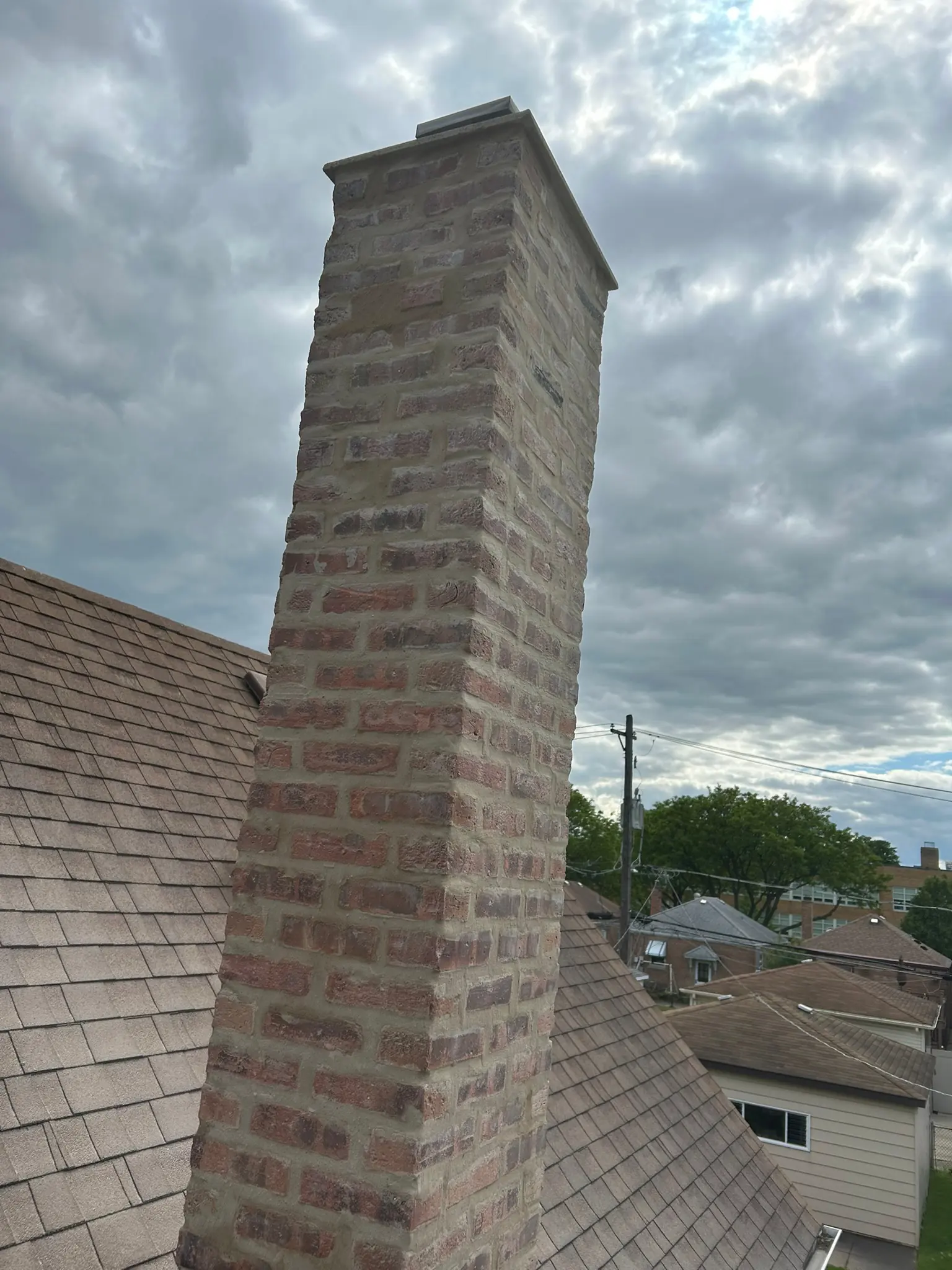
Do You Need Waterproofing After Tuckpointing?
Short answer: usually no. Tuckpointing itself restores your wall's weather resistance. The fresh, tight mortar joints you just paid for are the primary barrier that keeps rain and snowmelt out of the wall. Waterproofing is an optional second layer — worth it on some walls, a waste of money on others, and actively harmful if the wrong product is used.
Here is how to decide, with the rules that matter in Chicago's climate.
The verdict in one line: Repointing restores the weather barrier. A breathable water repellent is an optional upgrade for exposed or absorptive brick — never a substitute for good joints, and never a film-forming coating.
What tuckpointing actually does for water resistance
Water almost never soaks through the face of a sound brick. It gets in through the joints — where the mortar has weathered, cracked, or fallen out. That is exactly what tuckpointing (also called repointing) fixes: the old, failed mortar is ground out and replaced with fresh mortar that seals the joint line and sheds water back off the wall.
When that work is done correctly, the restored joints are the weather barrier. You have already fixed the part of the wall that was letting water in. That is why, for the majority of homes and buildings in Chicagoland, quality tuckpointing alone is enough — no sealer required.
This is also why sealing can never replace repointing. A water repellent brushed over open, crumbling joints does nothing but trap moisture behind it. Repair first. Always.
When a breathable sealer actually helps
Sealing is not useless — it is just situational. A breathable water repellent adds real value in these cases:
- Highly exposed elevations. South and west walls, tall gable ends, and anything that takes driving rain and wind head-on get saturated far more than a sheltered wall. On these faces a repellent measurably reduces water uptake.
- Soft, older, or absorptive brick. Vintage Chicago common brick and other soft, porous units drink water. On absorptive masonry, a penetrating repellent slows saturation and gives the wall a better chance to dry between storms.
- A history of chronic saturation. Walls that stay damp, show recurring efflorescence, or sit where splash-back and poor drainage keep them wet can benefit from cutting down the water they take in — after the drainage and joint issues are addressed.
- Chimneys and parapets. These take weather on multiple faces and have limited ways to dry. A breathable repellent on an already-sound, repointed chimney is a reasonable added defense.
Sealing is an insurance policy on an already-repaired wall — not a repair, and not a paint job.
When sealing is unnecessary
For a lot of walls, sealing adds cost without adding protection:
- Sound, well-fired hard brick that already sheds water does not need help resisting it.
- Sheltered elevations — north walls, protected courtyards, walls under deep eaves — rarely see enough water exposure to justify a repellent.
- Interior or below-grade masonry, where a surface repellent is the wrong tool entirely.
- Any wall that still has open joints or cracked brick. Here sealing is worse than unnecessary — it locks moisture in.
The critical rules — get these wrong and you damage the wall
If you do seal, these are non-negotiable, especially in a freeze-thaw climate like Chicagoland:
-
Use a breathable, vapor-permeable water repellent — never a film-forming coating. A penetrating siloxane or silane repellent lets the wall keep breathing: it repels liquid water from the outside while still allowing vapor to escape from the inside. A glossy, film-forming "waterproofing" or masonry paint does the opposite — it traps moisture inside the wall. In Chicago winters that trapped water freezes, expands, and spalls the brick face right off. The cure becomes the disease.
-
Apply only after the new mortar has fully cured. Fresh mortar needs time to hydrate and carbonate — generally about 28 days, longer in cool or damp weather. Seal too soon and you trap lime and moisture in the joints, causing haze, efflorescence, and weak bonds.
-
Repair first, then seal. A repellent is the last step, not the first. Fix open joints, replace cracked or spalled brick, and address flashing and drainage before any sealer touches the wall. Sealing over unrepaired masonry just locks the problem inside.
Seal it if… vs. skip it if…
| Seal it if… | Skip it if… | | --- | --- | | The wall faces driving rain (south/west, tall, wind-exposed) | The wall is sheltered (north side, deep eaves, courtyard) | | Brick is old, soft, or noticeably absorptive | Brick is hard, well-fired, and already sheds water | | There's a history of chronic dampness or efflorescence | The wall has always stayed dry | | It's a chimney or parapet exposed on multiple faces | It's low-exposure, protected masonry | | Joints are freshly repointed and fully cured | Joints are still open, cracked, or newly placed | | You want a breathable, penetrating repellent as extra insurance | You'd be tempted by a film-forming "waterproof" coating |
The Chicago freeze-thaw factor
Chicagoland puts masonry through dozens of freeze-thaw cycles every winter. Water that gets into a brick or joint and then freezes expands with enough force to crack mortar and pop the face off brick — that's spalling. This cuts two ways for the sealing question:
- It's the reason tuckpointing matters so much here: tight joints keep water from getting in where it can freeze.
- It's also the reason a breathable repellent is the only safe choice. Anything that traps moisture inside the wall guarantees that the next hard freeze has water to work on. The wrong sealer doesn't just fail — it accelerates the damage it was supposed to prevent.
The bottom line
Tuckpointing restores your wall's weather barrier, so waterproofing is optional, not automatic. Add a breathable repellent when the wall is exposed, absorptive, or chronically damp — and only after the joints are repaired and the mortar has cured. Skip it on sound, sheltered, hard-brick walls. And never let anyone brush a film-forming coating over Chicago brick.
Not sure which category your wall falls into? That's exactly what an on-site look answers.
Emerald Masonry LLC is a family-owned, licensed and insured masonry contractor serving Chicago and the Chicagoland suburbs led by career masons with decades of hands-on experience in tuckpointing, chimney repair, brick repair and replacement, lintel and parapet repair, foundation and limestone/sill repair, caulking, sealing, and commercial, residential, and historic masonry restoration. Free on-site estimates — call (708) 288-1696.
Learn more about our masonry sealing / waterproofing, tuckpointing & repointing, and brick repair services.
Want a straight answer for your wall? Request a free on-site estimate or call (708) 288-1696 — we'll tell you honestly whether sealing is worth it or whether your fresh joints already have you covered.
Ready to get started?
Free on-site estimates for commercial and large-scale projects.
Masonry Sealing / Waterproofing in Chicagoland, IL — Frequently Asked Questions
Do you have to seal brick after tuckpointing?
No — in most cases you do not have to. Fresh tuckpointing restores tight, weather-resistant mortar joints, which are the primary barrier that keeps water out of a wall. Sealing is an optional added layer, most useful on highly exposed elevations or older, soft, absorptive brick.
How long should you wait to seal after tuckpointing?
Wait until the new mortar has fully cured — typically about 28 days, and longer in cool or damp conditions. Sealing too early traps moisture and lime in the joints and can cause haze, efflorescence, or bond problems.
What kind of sealer is safe for brick?
Use only a breathable, vapor-permeable water repellent (a penetrating siloxane or silane type). Never use a film-forming coating or glossy 'waterproofing' paint — those trap moisture inside the wall, and in Chicago's freeze-thaw cycles that trapped water can spall the brick face.
Will sealing fix a leaking or damp brick wall?
Not by itself. A sealer is not a repair. If a wall is leaking, the cause is usually failed mortar joints, cracked brick, or bad flashing — those must be repaired first. Sealing a wall that still has open joints just locks moisture in.
Does Emerald Masonry offer sealing after tuckpointing?
Yes. Emerald Masonry LLC evaluates exposure, brick condition, and moisture history on a free on-site estimate, repairs any open joints or damaged brick first, and applies a breathable repellent only when it genuinely adds value. Call (708) 288-1696.
Masonry Sealing / Waterproofing in Nearby Areas
Learn more about our masonry sealing / waterproofing services across Chicagoland, or view all service areas.