
Limestone & Sill Repair · Evanston, IL
Limestone & Sill Repair in Evanston, IL — Why Two Identical Sills Age Completely Differently
Two limestone sills, same building, same age, same weather — one is shedding in sheets and the other is fine. The difference is usually which way the stone was laid, and it was decided a century ago at the quarry.
Quick Answer
Emerald Masonry LLC provides limestone and sill repair in Evanston, IL — restoring delaminating and cracked stone sills, lintels, water tables and greystone facades using dutchman inserts, matched patching and correct lime-based mortar. Family-owned, licensed and insured, career masons with decades of Chicagoland experience, free estimates. Call (708) 288-1696.
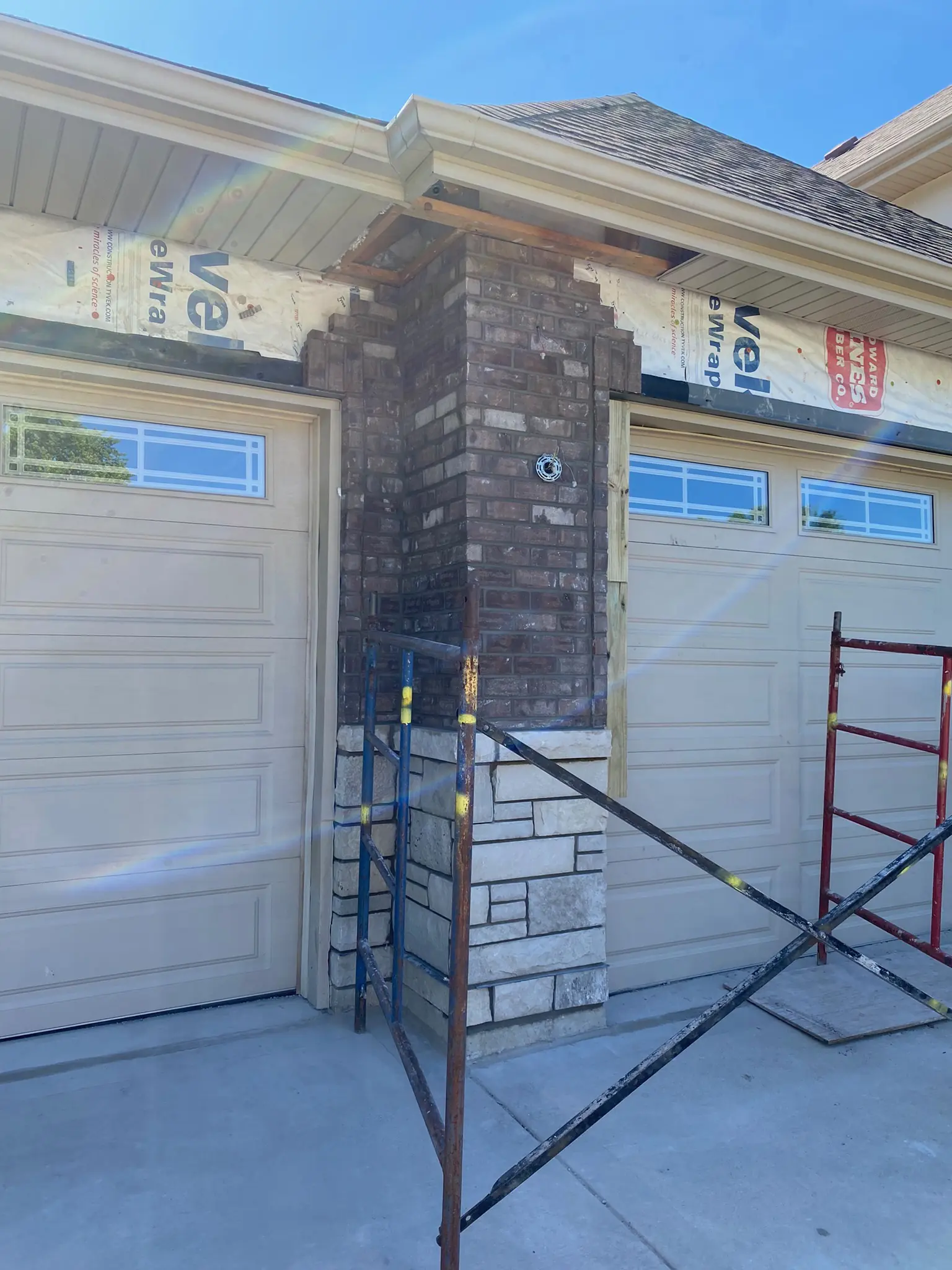
Limestone & Sill Repair in Evanston, IL
Limestone and sill repair in Evanston, IL means restoring the stone sills, lintels, water tables, steps and greystone facades on the city's older housing stock — with matched stone, correct lime-based mortar, and dutchman inserts rather than replacement wherever the original can be saved. Emerald Masonry LLC brings career masons with decades of Chicagoland experience to this work. Family-owned, licensed, bonded and insured, free on-site assessments. Call (708) 288-1696.
Here is a question we get on nearly every Evanston stone job, and the answer surprises people.
Why is one sill shedding in sheets while the identical sill six feet away is untouched?
Same building. Same stone. Same age. Same weather. And one of them is losing its face while the other looks nearly new.
The Answer Is Bedding Planes
Limestone is a sedimentary rock. It formed in horizontal layers over an enormous span of time, and those layers — bedding planes — are still there inside every piece of it, whether or not you can see them from the street.
They are the stone's grain, and they are its weakness.
Set naturally bedded, with the layers running horizontally as they formed, a sill sheds water across the top of the layers. Water runs off. The stone lasts a very long time.
Set face-bedded, with the layers turned vertical and facing out, the exposed edges of every layer face the weather. Water gets between the layers, freezes, and splits them apart. The face comes off in sheets rather than crumbs — that is delamination, and it is the signature of face-bedded stone.
Which way any given piece was laid was decided a century ago at the quarry and the jobsite. It is why two sills in identical conditions age completely differently, and it is the first thing worth understanding before deciding what to do about it.
What Fails on Evanston Stone
Delamination
Face shedding in flat sheets or plates. Bedding-plane failure, accelerated by any water that reaches the stone.
Spalled edges and corners
The exposed arrises of a sill or water table take the most weather and the most physical contact.
Cracks across the span
Sills span an opening. A settling foundation, a corroding steel lintel below, or a hard mortar bed can crack one straight across.
Erosion of carved profiles
Drip edges, moldings and carved detail wear away, and once the drip edge is gone the sill stops throwing water clear and starts running it down the wall below.
Dropped or displaced units
When the mortar bed under a stone fails, the unit settles, opens a joint at the top, and starts admitting water directly.
Damage from the wrong repair
Hard Portland-heavy mortar against soft limestone, or a film-forming sealer over it, both drive moisture into the stone and cause the exact failures they were meant to prevent.
Why Horizontal Stone Fails First
Every piece of stone on your building that is horizontal — sills, water tables, steps, coping, belt courses — fails before the vertical stone does, for one reason: it holds water instead of shedding it.
A vertical wall sheds. A sill collects. That is why sills, treads and copings are consistently the most deteriorated stone on an Evanston greystone or brick-and-limestone home, even when the walls are sound.
Signs Your Stone Needs Attention
- Flat plates or sheets lifting off the face of a sill or stone unit.
- Spalled, rounded or broken edges where a crisp arris used to be.
- A crack across a sill, particularly at midspan or near one bearing.
- Rust staining on stone below a window — steel corroding under or behind it.
- Open or washed-out joints around stone units.
- Efflorescence blooming on the stone or the masonry below it.
- A sill sitting visibly lower at one end than the other.
- Water staining on the wall directly below a sill — the drip edge has eroded away.
- Hard gray mortar packed around soft stone from a previous repair.
Our Stone Repair Process
- Assess the stone — identify bedding orientation, the extent of delamination, and whether the unit is structurally sound.
- Check what is under and behind it. A cracked sill frequently has a corroded lintel or a failed bed beneath it, and repairing the stone without that is temporary.
- Decide unit by unit — patch, dutchman, repin, reset, or replace. Preservation of the original is the default.
- Dutchman repairs — cut the failure out to a clean geometric shape, fit a matched stone insert, set and pin it.
- Matched patching with stone-specific compounds where a full insert is not warranted, colored and textured to the original.
- Reset displaced units on a correct, appropriately soft mortar bed.
- Repoint around the stone with lime-based mortar softer than the stone itself.
- Restore the drip edge and drainage so the sill throws water clear of the wall again.
- Gentle cleaning and breathable protection only — no sandblasting, no high-pressure washing, no film-forming sealers.
Materials We Use
Indiana limestone and matched dolomitic stone for dutchman and replacement units, lime-based and lime-modified mortars blended to be softer than the stone they serve, matched sands for true color, stone patching compounds tinted and textured to the original, stainless pins and anchors, through-wall flashing where a sill needs it, and vapor-permeable consolidants and sealers only. Related work: historic masonry restoration, tuckpointing, lintel repair, brick repair and masonry sealing.
What Drives Cost
- Number of units and how many need dutchman work versus patching.
- Repair versus replacement — replacement requires sourcing and cutting matched stone.
- Access and height — grade-level water tables versus third-floor sills.
- Whether steel is involved beneath or behind the stone.
- Carved or profiled detail, which is slow, skilled work to reproduce.
- Stone sourcing and matching difficulty on unusual or discontinued material.
- Undoing prior repairs in hard mortar or sealer, often the largest single variable.
Working in Evanston and the North Suburbs
Evanston has one of the richest masonry inventories in the Chicago area — greystone two-flats and apartment buildings, brick homes with limestone sills, lintels, water tables and porches, church and institutional stone, and the substantial early-twentieth-century housing stock through the older neighborhoods. Much of it is soft, absorbent stone that has been standing for a hundred years or more, and much of it has been repaired at least once with materials that were harder than they should have been.
Exposure is demanding. Lake Michigan is a few blocks away for much of the city, which means high humidity, wind off the water carrying moisture into the east and north elevations, and freeze-thaw cycling that arrives with the stone already saturated. Mature tree canopy keeps shaded elevations damp for long stretches, and that combination is why north and east stone in Evanston often deteriorates faster than the sunnier sides — the reverse of the usual pattern inland.
We serve 60201, 60202 and 60203 and the surrounding north-suburban communities. Evanston owners frequently pair sill work with historic masonry restoration or tuckpointing, since stone repair and the joints around it are the same water problem.
Emerald Masonry LLC is a family-owned, licensed and insured masonry contractor serving Chicago and the Chicagoland suburbs led by career masons with decades of hands-on experience in tuckpointing, chimney repair, brick repair and replacement, lintel and parapet repair, foundation and limestone/sill repair, caulking, sealing, and commercial, residential and historic masonry restoration. Free on-site estimates — call (708) 288-1696.
Request a Free Limestone & Sill Assessment in Evanston
If your sills are shedding in sheets, your greystone is streaked with efflorescence, or somebody packed hard gray mortar around soft stone, have it assessed before more of the original is lost.
Call (708) 288-1696 or request your free estimate.
Ready to get started?
Free on-site estimates for commercial and large-scale projects.
Limestone & Sill Repair in Evanston, IL — Frequently Asked Questions
Why is one of my limestone sills flaking while the identical one next to it is fine?
Usually because of how the stone was laid relative to its natural bedding planes. Limestone forms in layers; set with those layers horizontal, it sheds water across them, but set with the layers vertical, water gets between them and freezing splits the face off in sheets. That orientation was decided when the stone was cut.
How much does limestone sill repair cost in Evanston, IL?
It depends on whether the stone is patched, given a dutchman insert, or fully replaced, how many units are involved, and access height. Patching a spalled edge and replacing a cracked full-width sill are very different jobs. Emerald Masonry provides a free written estimate itemized by unit.
Can a cracked limestone sill be repaired, or does it need replacing?
Most can be repaired. A dutchman repair cuts out the failed section and sets a matched stone insert into it, preserving the original unit and most of its weathered surface. Full replacement is reserved for stone that has lost structural integrity or broken through.
What is a dutchman repair?
It is the standard restoration method for damaged stone: the deteriorated area is cut out to a clean geometric shape and a matched piece of new stone is fitted and set into the void. Done well it retains the original unit and reads as part of the stone rather than a patch.
What is the white crust on my stone sills and greystone facade?
Efflorescence — mineral salts carried out of the masonry by water and left on the surface as it evaporates. It is not itself damaging, but it is proof that water is actively moving through the stone or the joints, which is what you actually need to address.
Should I seal my limestone?
Only with a vapor-permeable product, and only after the joints and the stone are sound. Film-forming sealers on limestone trap moisture behind the surface and accelerate the delamination they were bought to prevent — a common and expensive mistake on Evanston greystones.
Limestone & Sill Repair in Nearby Areas
Learn more about our limestone & sill repair services across Chicagoland, or view all service areas.