
Limestone / Sill Repair · Aurora, IL
Limestone and Sill Repair in Aurora, IL — Restoring Stone Sills, Lintels and Trim
Aurora built itself out of stone — and the sills, lintels and trim on its older homes and downtown buildings are now the first elements to fail. Emerald Masonry LLC repairs and restores limestone rather than defaulting to replacement.
Quick Answer
Emerald Masonry LLC provides limestone and sill repair in Aurora, IL — restoring cracked, spalled and eroded stone window sills, lintels, water tables, steps and ornamental trim on homes and commercial buildings. Family-owned, licensed and insured, 40+ years of Chicagoland experience, free on-site estimates. Call (708) 288-1696.
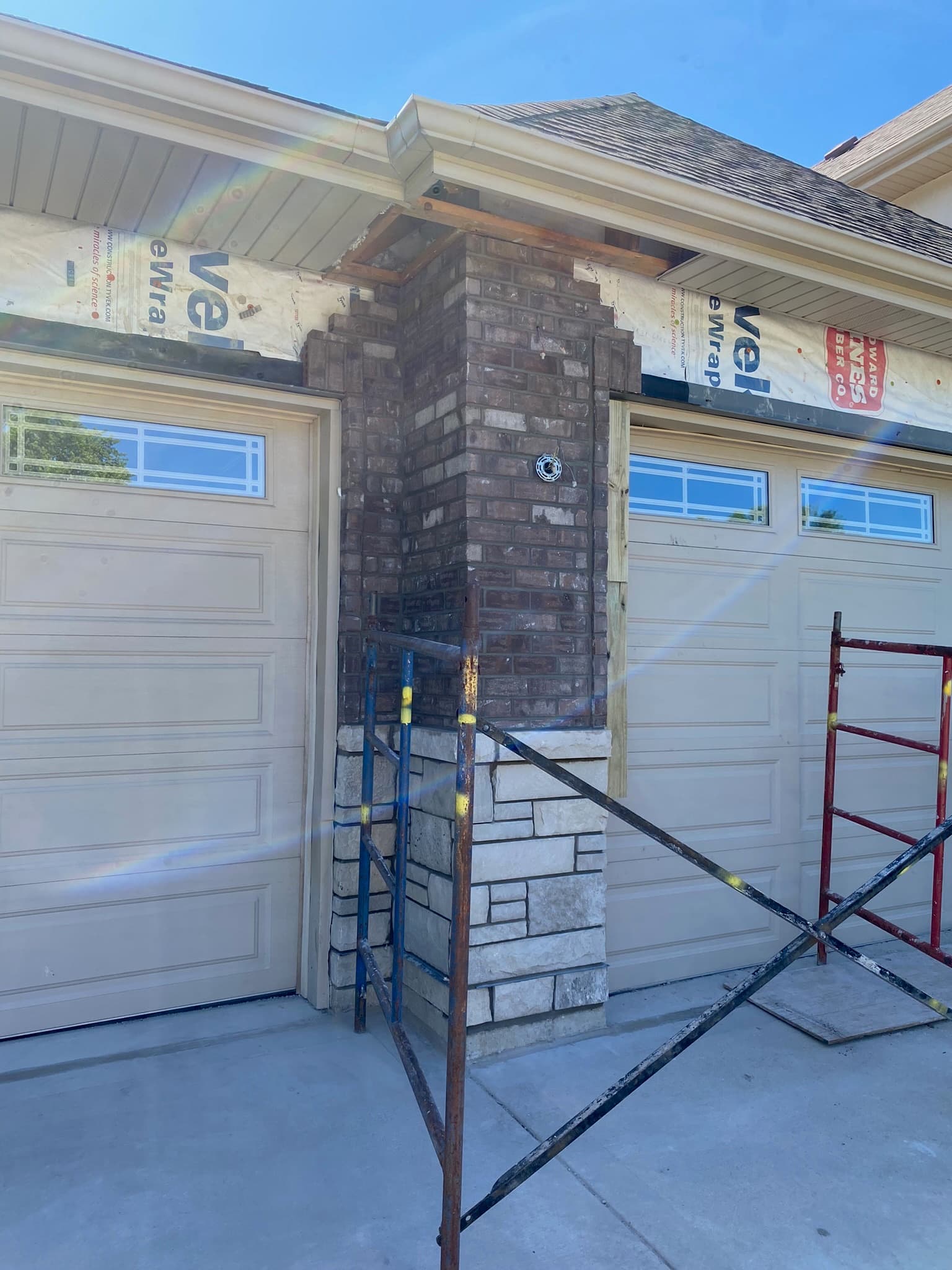
Limestone and Sill Repair in Aurora, IL
Limestone and sill repair in Aurora, IL is the restoration of the stone elements on a masonry building — window and door sills, lintels, water tables, coping, steps and ornamental trim — when they crack, spall, erode or shift. Emerald Masonry LLC repairs these units rather than defaulting to wholesale replacement, using dutchman inserts, matched patching and correctly matched stone. Family-owned, licensed, bonded and insured, 40+ years of Chicagoland experience, free on-site estimates. Call (708) 288-1696.
Aurora has a deep relationship with stone. The city's quarries along the Fox River supplied the limestone that built much of its 19th-century downtown, its churches, its institutional buildings and the sills, lintels and foundations of thousands of its homes. Walk the Near East Side or the downtown historic district and the stonework is everywhere — carved lintels, heavy sills, water tables, and full stone facades that have stood for well over a century.
Stone lasts a very long time. The details around it — joints, caulking, flashing and the mortar bed underneath — do not.
What Fails on Limestone, and Why
Limestone is a sedimentary stone with visible bedding planes. It is durable, workable and beautiful, and it has one vulnerability: it is porous, so it takes on water. In a Kane County winter that water freezes inside the stone, expands, and pushes the stone apart along its natural layers.
That produces four distinct failure modes:
- Delamination and spalling — the face of the stone flaking off in sheets or shells, following the bedding planes.
- Cracking — often through the middle of a sill span, or radiating from a corner where something is bearing on it.
- Surface erosion — the sharp profiles of carved trim rounding over and washing away, most visible on ornamental work.
- Displacement — a sill or lintel dropping, tilting or shifting because the mortar bed under it has failed.
Sills fail first on nearly every building, because a sill is a horizontal stone surface designed to shed water — and once its slope or its joints fail, it starts holding water instead. Everything above and below a failed sill then gets wet: the brick below streaks and spalls, the joint above opens, and water finds its way to the window frame and the wall cavity.
Signs Your Aurora Home or Building Needs Stone Repair
- Sills that are flaking, shelling or crumbling at the face or the nose.
- Cracks running through a sill, lintel or stone trim unit.
- Open or missing mortar joints where stone meets brick.
- Failed or missing caulking at the sill-to-window joint.
- Stone that has dropped, tilted or shifted out of plane.
- Rust staining on stone, indicating corroding embedded metal or a steel lintel behind it.
- Water staining or damage inside below a window.
- Brick below a sill that is spalling or streaked — a reliable sign the sill above stopped shedding water some time ago.
- Eroded carved detail on ornamental stonework and cornices.
Repair Before Replacement: How We Approach It
There is a real difference between a masonry contractor who restores stone and one who only knows how to remove and replace it. Replacement is sometimes the right answer, but it is a last resort — it destroys original material, it is more expensive, it is more disruptive to the surrounding masonry, and matching a new unit into a century-old wall is never perfect.
| Approach | What it involves | When it is right | |---|---|---| | Repointing and recaulking | Restoring joints and sealant around the stone | Sound stone, failed joints only | | Patching / composite repair | Matched cementitious patch to rebuild lost material | Localized spalling and edge loss | | Dutchman repair | Cutting out the damaged area, fitting matched new stone | Significant local damage, sound overall unit | | Repinning / resetting | Removing, rebedding and anchoring a shifted unit | Displaced but intact stone | | Full replacement | New matched limestone unit | Structurally failed or broken units |
Our Limestone Repair Process
- Free on-site assessment. We examine every stone element, determine which are repairable in place, and — critically — identify where water is entering.
- Fix the water path first. Failed joints, missing caulking, bad flashing, a clogged gutter or a downspout discharging onto stone will destroy the repair if left in place.
- Careful removal of failed material. Delaminating and unsound stone is cut back to solid material.
- Repair method selected per unit. Patching, dutchman inserts, repinning, or replacement — chosen unit by unit, not applied blanket-wide.
- Matched stone and mortar. Indiana limestone and matched mortars selected for color, grain and texture.
- Rebedding and repointing. Units are properly bedded and joints repointed with a mix appropriate to the age of the wall.
- Sealant and breathable protection. New backer rod and sealant where needed, and vapor-permeable protection only — never a film-forming coating on porous stone.
Materials We Use
Indiana limestone and matched replacement stone, stainless anchors and pins, matched stone patching compounds, lime-modified and Type N mortars appropriate to older walls, and breathable, vapor-permeable sealers. Related work commonly includes tuckpointing, lintel repair, brick repair and historic masonry restoration.
What Drives Limestone Repair Cost in Aurora
- Number of units — a few sills versus an entire facade of stone trim.
- Repair method — patching is less involved than a dutchman; a dutchman is less involved than replacement.
- Height and access — a second- or third-floor sill needs staging or a lift.
- Matching difficulty — unusual stone color or a carved profile takes real craft to reproduce.
- Related damage — a rusting steel lintel behind the stone, or spalled brick below a failed sill.
- Ornamental complexity — carved and molded trim is slower work than plain stock.
Serving Aurora and the Fox Valley
Aurora sits on the Fox River in a part of Kane County with hard freeze-thaw exposure, and its building stock spans an unusually wide range — from 19th-century stone and brick downtown and on the Near East and Near West Sides, to early-20th-century brick homes, to post-war subdivisions, to the newer development on the far east and west sides. Riverfront humidity and mature tree canopy keep north-facing stone damp for long stretches, which is why the same building will often have sound sills on one elevation and failing sills on another.
We work throughout Aurora and across the Fox Valley, and also serve neighboring North Aurora, Batavia, Montgomery and Oswego.
Emerald Masonry LLC is a family-owned, licensed and insured masonry contractor serving Chicago and the Chicagoland suburbs with 40+ years of experience in tuckpointing, chimney repair, brick repair and replacement, lintel and parapet repair, foundation and limestone/sill repair, caulking, sealing, and commercial, residential and historic masonry restoration. Free on-site estimates — call (708) 288-1696.
Why Waiting Costs More on Stone
A failed sill does not stay a sill problem. It becomes a wet wall, then spalled brick below, then a rusting lintel behind, then water inside at the window head or the wall cavity. Restoring the stone while the unit is still repairable preserves the original material and stops that chain — replacing a fully failed sill after the surrounding brick has spalled is a substantially larger project than repairing it was.
Request a Free Limestone and Sill Assessment in Aurora
If your stone sills are flaking, cracked or dropping — or if you see spalled brick streaking below a window — get them assessed before another freeze-thaw season.
Call (708) 288-1696 or request your free estimate.
Ready to get started?
Free on-site estimates for commercial and large-scale projects.
Limestone / Sill Repair in Aurora, IL — Frequently Asked Questions
Can a cracked limestone sill be repaired, or does it have to be replaced?
Most cracked sills can be repaired. Cracks, spalled edges and eroded faces are commonly restored with dutchman stone inserts, matched patching mortars, or careful cutting and repinning. Full replacement is reserved for sills that have lost structural integrity or broken into separate pieces — and even then, matching the replacement to the surrounding stone matters.
How much does limestone sill repair cost in Aurora, IL?
It depends on how many units are involved, whether they can be repaired in place or need replacing, and how high off the ground they are. Repairing a handful of ground-floor sills is a modest job; restoring stone trim across an entire building facade is a project. Emerald Masonry assesses in person and provides a free written estimate.
Why is the limestone on my Aurora home cracking and flaking?
Water and freeze-thaw, almost always. Limestone is porous, so it absorbs water through its face and, more importantly, through failed joints and cracked caulking above it. When that trapped water freezes it expands and delaminates the stone in layers. Sills take the worst of it because they are horizontal surfaces that hold water rather than shedding it.
What is a dutchman repair?
A dutchman is a stone patch — the damaged section of a limestone unit is cut out cleanly and a matched piece of new stone is fitted and set in its place. It preserves the original unit and most of its material while restoring a sound surface. It is the standard professional alternative to replacing an entire sill or lintel.
Should limestone be sealed?
Only with a breathable, vapor-permeable sealer, and only after the underlying problems are fixed. Film-forming coatings and paint trap moisture inside porous stone, and the trapped water then spalls the face off from behind — a common and avoidable way limestone gets destroyed. Correcting the water source matters far more than any sealer.
Can you match the stone on an older Aurora building?
Yes. We source Indiana limestone and matched stone for repairs, and select for color, grain and texture against the original. On buildings using regional stone, we match as closely as available material allows and detail the repair so it reads as part of the wall rather than a patch.
Limestone / Sill Repair in Nearby Areas
Other Masonry Services in Aurora, IL
Learn more about our limestone / sill repair services across Chicagoland, or view all service areas.