
Parapet Wall Repair · Joliet, IL
Parapet Wall Repair in Joliet, IL — Commercial Roofline Masonry That Stops Leaks at the Source
Parapet walls are the most weather-exposed masonry on any commercial building, and in Joliet's freeze-thaw climate they fail first. Here's how parapet damage starts, what a real repair involves, and how to choose a contractor who fixes the cause — not just the symptom.
Quick Answer
Parapet walls are the most weather-exposed masonry on any commercial building, and in Joliet's freeze-thaw climate they fail first. Here's how parapet damage starts, what a real repair involves, and how to choose a contractor who fixes the cause — not just the symptom.
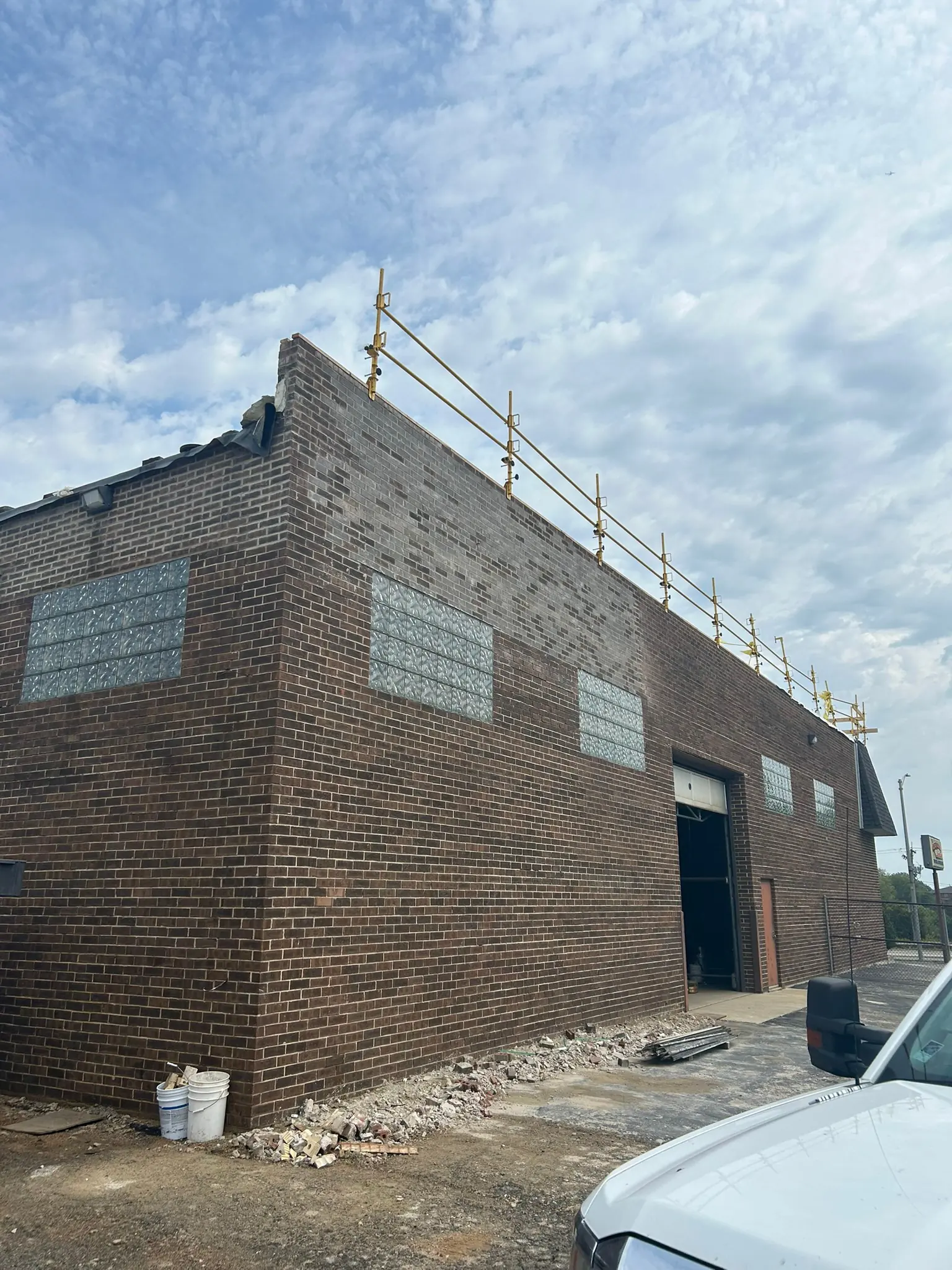
A parapet wall is the section of exterior wall that rises above the roofline — the part you see from the parking lot but the building's occupants never do. On Joliet's commercial and industrial buildings, it is also the single most abused piece of masonry on the structure. It gets weather on both faces, it has no roof above it to shed water, and it is usually the last thing anyone inspects. By the time a parapet shows up on a property manager's radar, it is often leaking into the top floor or dropping mortar onto the sidewalk.
Emerald Masonry repairs and rebuilds parapet walls across Joliet and the rest of Will County. This page explains what actually goes wrong up there, how we fix it for good, and what you should look for before you hire anyone to work on your roofline.
Why Parapet Walls Fail First
Every exterior wall takes weather, but a parapet takes it from every direction. Rain and snow hit the front face, the back face, and the top all at once. Water that soaks a normal wall has a roof overhang and interior heat helping it dry out. A parapet has neither. It stays wet longer, freezes harder, and cycles through more freeze-thaw events per winter than any other masonry on the building.
In Joliet, that matters. The area runs through dozens of freeze-thaw cycles between November and March — every time trapped moisture freezes, it expands roughly nine percent and pries the masonry apart from the inside. Joliet's older downtown and near-downtown commercial stock, much of it brick from the early-to-mid 1900s, was built with soft lime mortar that has long since weathered out of the joints. The newer industrial and warehouse buildings along the I-80 and I-55 corridors use concrete block and brick veneer that depend on hidden steel and flashing to stay dry. Both fail at the parapet, just differently.
The Usual Failure Sequence
- Mortar joints open up. Decades of weather erode the joints, especially on the back (roof-side) face that nobody photographs.
- Water gets in and freezes. Open joints let water into the wall core, where it freezes and expands.
- The coping shifts or cracks. The cap on top of the wall — stone, precast, or metal — loosens, letting even more water straight down into the wall.
- The wall bows or leans. Saturated, freeze-damaged masonry loses its grip. Parapets start to lean out over the street or bulge along their length.
- It leaks inside, or it falls. At that point you are looking at interior water damage on the top floor, or a genuine life-safety hazard.
Warning Signs You Can Check Yourself
You do not need to be a mason to catch a parapet problem early. From the roof, look for:
- Open or crumbling mortar joints, particularly on the roof-side face
- Cracked, loose, or missing coping stones or caps
- A wall that no longer looks plumb — sight down its length and watch for bows or lean
- White, chalky staining (efflorescence) that signals water is moving through the masonry
- Stepped or vertical cracks in the brick, often tracking the corners
- Rust stains or spalling brick near steel lintels or shelf angles below the parapet
From inside, water stains along the top-floor ceiling line — especially after a wind-driven rain — almost always trace back to a failing parapet or its coping. If you see any of these, get it looked at before winter. Parapet problems never get cheaper by waiting.
What a Proper Parapet Repair Involves
There is a real difference between patching a parapet and fixing it. A patch buys a season. A correct repair addresses why the water got in.
Repair vs. Rebuild
The first decision is whether the wall can be repaired in place or needs to come down and go back up. We base that on plumb, the condition of the brick itself, and how deep the freeze damage runs.
- Repair in place works when the wall is still structurally sound and the problem is open joints and tired coping. The scope is typically grinding out and repointing the joints to full depth, replacing spalled brick, and resetting or replacing the coping with proper drainage and a continuous water barrier underneath.
- Partial or full rebuild is the answer when the wall is leaning, bowed, or the brick is too far gone to hold mortar. We take it down to a sound course, salvage what we can, and rebuild with matching brick, fresh mortar, new through-wall flashing, and a coping system designed to throw water clear of the wall.
The Details That Actually Keep It Dry
The parts that determine whether a parapet repair lasts ten years or two are the parts you cannot see from the ground:
- Through-wall flashing at the base of the parapet, so any water that does get in is directed back out rather than down into the building.
- A proper coping system with overhang and drip edges, bedded on flashing — not just mortared brick sitting flat on top, which is how most failing parapets were built.
- Full-depth repointing with mortar matched to the existing wall's strength. Hard modern mortar on a soft old wall traps water and accelerates spalling.
- Tied-back masonry where the parapet connects to the roof structure, so wind load does not walk the wall apart over time.
Choosing a Parapet Contractor in Joliet
Roofline work is access-heavy and easy to underbid, so pay attention to who you are actually hiring:
- Are they licensed, bonded, and insured? Parapet work happens at height and over public sidewalks. Confirm coverage before anyone goes up.
- Do they explain the cause, not just the fix? A contractor who only quotes "tuckpoint the parapet" without looking at coping, flashing, and plumb is selling you a patch.
- Is the access plan real? Scaffolding, swing stages, or lifts cost money and show up in a serious bid. A quote with no access line item is a quote that has not thought the job through.
- Will they match the masonry? Mismatched brick and the wrong mortar make a repair look bad and perform worse.
Emerald Masonry has worked on Chicagoland masonry for more than decades. We are family-owned, non-union, and licensed, bonded, and insured. We work with property managers, HOAs, churches, and insurance companies, and we give free on-site estimates so you know the real scope before you commit. We carry a ,000 project minimum.
Frequently Asked Questions
How do I know if my parapet needs a repair or a full rebuild?
It comes down to whether the wall is still plumb and the brick is still sound. If the parapet is straight and the brick holds mortar, we can usually repoint, replace bad units, and re-cap it in place. If it is leaning, bowing, or the brick crumbles when worked, a partial or full rebuild is the honest answer — patching a moving wall just hides the problem until it gets worse.
Why does my parapet keep leaking even after it was tuckpointed?
Because tuckpointing alone does not fix coping or flashing. If the cap on top of the wall is cracked or has no water barrier under it, water pours straight down into the masonry no matter how good the joints are. A lasting repair has to address the top of the wall and the flashing at its base, not just the face joints.
Can parapet work be done in winter?
Repointing and rebuilds need temperatures and conditions that let mortar cure properly, so deep-winter work in Joliet is limited. We can inspect and stabilize a hazardous parapet year-round, but most full repairs are scheduled for the spring-through-fall window. If you spot a problem in fall, that is the time to call so it is on the schedule before weather closes in.
Is a leaning parapet actually dangerous?
Yes. A parapet that leans or bows over a sidewalk or entrance is a falling-masonry risk, and it is exactly the kind of condition that turns into a liability claim. If yours is visibly out of plumb, treat it as urgent and keep people away from the area below until it has been assessed.
Serving Joliet and Will County
We serve Joliet and the surrounding Will County communities, including Crest Hill, Lockport, Shorewood, Channahon, Romeoville, Plainfield, and New Lenox. Whether it is a downtown Joliet storefront, a near-downtown brick three-flat, or a warehouse along the interstate corridors, we handle parapet repair and rebuilds as well as full commercial masonry restoration and waterproofing.
Get a Free Parapet Inspection
If your parapet is cracked, leaning, leaking, or simply overdue for a look, do not wait for it to get worse over the winter. Contact Emerald Masonry for a free on-site assessment of your Joliet building, or call (708) 288-1696. We will tell you straight whether you are looking at a repair or a rebuild — and what it will take to keep your roofline dry for the long run.
Ready to get started?
Free on-site estimates for commercial and large-scale projects.