
Foundation Masonry Repair · Joliet, IL
Foundation Masonry Repair in Joliet, IL — Limestone, Brick and Block Foundations
Joliet was built on limestone, and a great many of its older homes still sit on quarried stone foundations. Emerald Masonry LLC repoints, parges and rebuilds limestone, brick and block foundation walls across Will County.
Quick Answer
Emerald Masonry LLC provides foundation masonry repair in Joliet, IL — repointing and rebuilding limestone, brick and concrete block foundation walls, parging, and repairing deteriorated mortar at and below grade. Family-owned, licensed and insured, 40+ years of Chicagoland experience, free on-site estimates. Call (708) 288-1696.
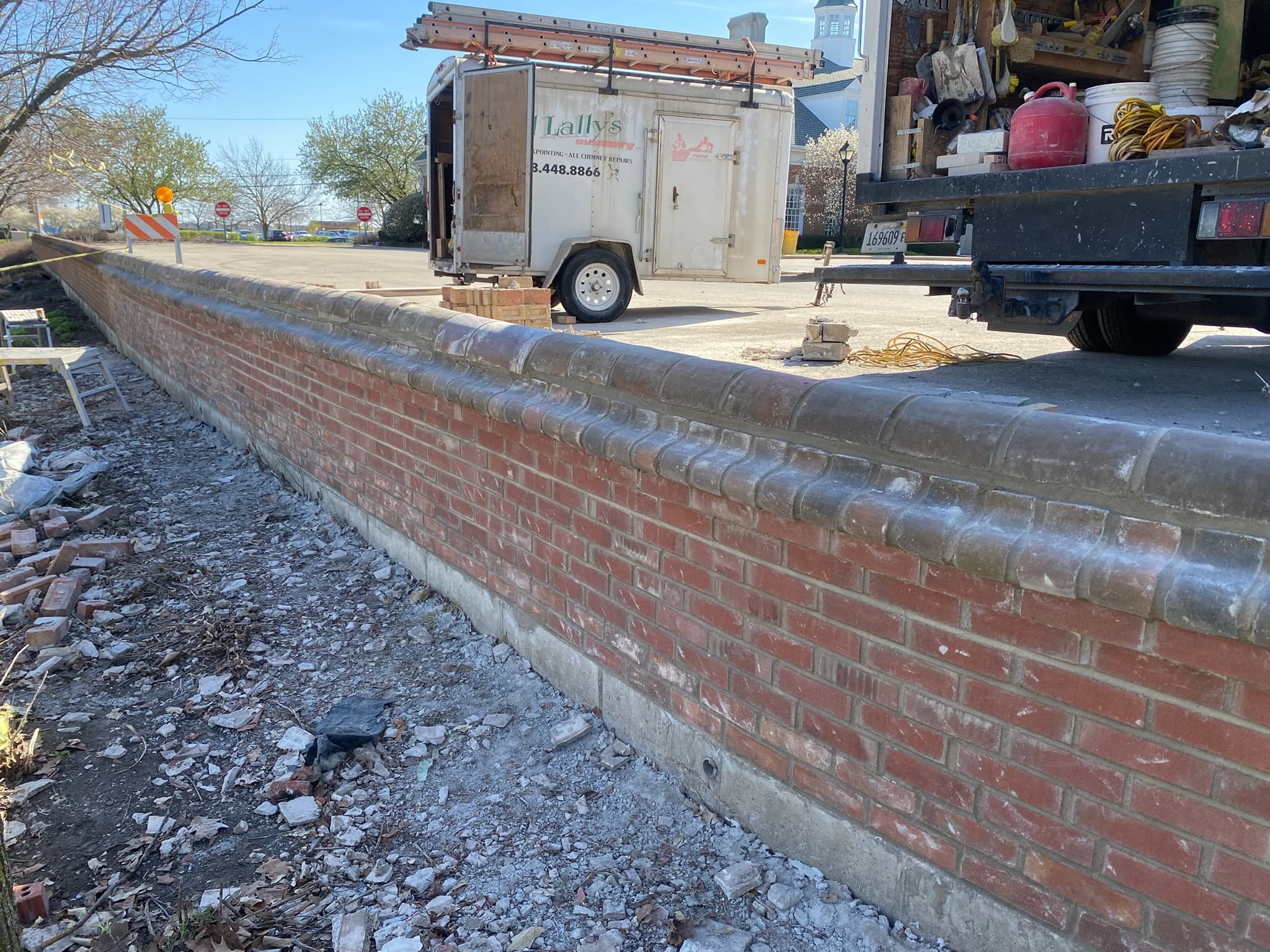
Foundation Masonry Repair in Joliet, IL
Foundation masonry repair in Joliet, IL means restoring the mortar, stone, brick or block that your house actually stands on — repointing failed joints, rebuilding displaced sections, and parging and protecting the wall so water stops driving the damage. Emerald Masonry LLC has been doing this work across Will County and greater Chicagoland for 40+ years. Family-owned, licensed, bonded and insured, with free on-site estimates. Call (708) 288-1696.
Joliet is a limestone town. The city sat on top of one of the region's great dolomitic limestone deposits, and the quarries along the Des Plaines River supplied stone for buildings across the Midwest — including a great many of Joliet's own homes, churches, institutional buildings and foundations. If your house predates the Second World War, there is a strong chance you are standing on quarried Joliet limestone right now.
That stone is remarkable material. It is also, in most older homes, held together by mortar that is now well past a century old.
The Three Foundation Types We Repair in Joliet
| Foundation type | Typical Joliet era | How it fails | Usual repair | |---|---|---|---| | Limestone / rubble stone | Pre-1940 | Mortar joints erode and wash out; stones shift | Repointing, resetting displaced stone, parging | | Brick | Late 1800s–1930s | Soft brick spalls at grade; joints deteriorate | Repointing, brick replacement, drainage correction | | Concrete block (CMU) | Post-war to present | Step cracks, bowing, joint failure, face spalling | Repointing, block replacement, parging, crack repair |
Each of these fails differently and needs a different repair, and the most common mistake we see is a one-size-fits-all patch applied over a wall whose actual problem was never diagnosed.
Signs Your Joliet Foundation Needs Masonry Repair
- Mortar washing or crumbling out from between foundation stones or blocks — often visible as gaps you can see daylight or soil through.
- Stair-step cracking climbing through the mortar joints of a block or brick foundation.
- Horizontal cracking or bowing in a block wall, which indicates lateral soil pressure and always warrants evaluation.
- Spalling and flaking brick in the first few courses above grade, where splash-back keeps the masonry wet.
- Parging falling off in sheets, exposing the wall behind it.
- Water entering the basement at the wall–floor joint or through visible joints.
- Efflorescence — white powdery deposits on interior basement walls.
- Damp or musty basement air with no obvious plumbing source.
- Displaced or dropped stones in a rubble foundation, or a visible bulge in the wall line.
Why Joliet Foundations Deteriorate
Three forces do most of the damage here.
Water at grade. The base of a foundation is the wettest masonry on any property. Rain splashes back off hard surfaces, downspouts discharge beside the wall, grade slopes toward the house instead of away, and the soil holds moisture against the masonry for days. Mortar in constant contact with wet soil erodes.
Freeze-thaw. Will County runs through dozens of freeze-thaw cycles each winter with no lake buffer. Water inside a saturated joint expands as it freezes and works the mortar apart from within — the same mechanism that destroys chimneys, concentrated at the wettest part of the building.
Soil movement. Joliet's clay-heavy soils swell when wet and shrink when dry. That seasonal movement puts lateral pressure on foundation walls, which is why block walls in this area develop horizontal cracks and bowing, and why older stone foundations shift and open at joints.
Add a century of service and it becomes clear why the mortar goes long before the stone does.
Our Foundation Masonry Repair Process
- Free on-site inspection. We evaluate the foundation inside and out, read the crack patterns, check grading, downspouts and drainage, and determine whether the wall is deteriorating or actually moving.
- Diagnosis before scope. Water management problems get identified up front — repairing masonry while leaving the water source in place guarantees a repeat.
- Joint preparation. Failed mortar is raked and cleaned out to sound material.
- Repointing. Joints are packed with mortar matched to the wall — a softer, more forgiving mix on old limestone and soft brick, an appropriate structural mix on block.
- Resetting and rebuilding. Displaced stones are reset; failed brick or block is replaced with matched units; deteriorated sections are rebuilt.
- Parging and protection. The exposed portion of the wall is parged where appropriate to shed water and protect the masonry.
- Drainage recommendations. Grade, downspout extensions and splash control — the low-cost measures that protect the repair for decades.
Materials We Use
Mortars matched to the wall type and era — lime-modified mixes for old limestone and soft brick, Type N and Type S where structurally appropriate; matched replacement brick and concrete block; parging and cementitious coatings; and salvaged or matched stone for rebuilding rubble sections. On limestone foundations we deliberately avoid hard, brittle mixes: mortar that is stronger than the surrounding stone concentrates stress at the stone faces instead of at the joint, which is exactly backwards.
What Drives Foundation Repair Cost in Joliet
- Linear footage and wall height of the section needing work.
- Above grade versus below grade — excavation is the single biggest cost multiplier.
- Foundation type — resetting rubble stone is slower work than repointing block.
- Structural versus deterioration — a bowing wall is a different scope than eroded joints.
- Access — tight side yards, landscaping, decks and driveways.
- Related water work — grading, downspout extension, parging.
- Interior finish — whether a finished basement complicates interior-side access.
Emerald Masonry gives free on-site estimates in Joliet with a written scope, so you know which of these apply to your house.
Joliet Neighborhoods and Buildings We Serve
We work throughout Joliet — the older east-side neighborhoods with their stone-foundation homes near the Cathedral Area and the historic districts, the brick two-flats and worker cottages near the downtown core and the Rialto, the post-war and modern subdivisions on the west side and toward Shorewood and Plainfield, and commercial and institutional buildings along the Route 30 and Jefferson Street corridors. We also serve neighboring Shorewood, Lockport, Crest Hill and Plainfield.
Foundation work frequently connects to other masonry needs on the same building, and we handle them together: tuckpointing, brick repair, masonry sealing and limestone and sill repair.
Emerald Masonry LLC is a family-owned, licensed and insured masonry contractor serving Chicago and the Chicagoland suburbs with 40+ years of experience in tuckpointing, chimney repair, brick repair and replacement, lintel and parapet repair, foundation and limestone/sill repair, caulking, sealing, and commercial, residential and historic masonry restoration. Free on-site estimates — call (708) 288-1696.
What Happens If You Wait
Foundation masonry is the one place where deferral compounds fastest, because the damage is driven by water that keeps arriving whether you address it or not. Open joints let water into the wall and into the basement. Saturated masonry spalls and loses section. Loss of section in a bearing wall becomes a structural problem rather than a maintenance one — and structural repairs on a foundation are an order of magnitude more disruptive and more expensive than repointing was.
Get a Free Foundation Masonry Inspection in Joliet
If mortar is washing out of your foundation, the parging is falling away, or your basement has started taking water at the wall, have it looked at properly.
Call (708) 288-1696 or request your free estimate.
Ready to get started?
Free on-site estimates for commercial and large-scale projects.
Foundation Masonry Repair in Joliet, IL — Frequently Asked Questions
How much does foundation masonry repair cost in Joliet, IL?
It depends on how much of the wall is involved and how much of it is below grade. Repointing an exposed section at grade is a modest job; excavating to reach a deteriorated stone foundation below grade is a much larger one. Emerald Masonry inspects the foundation in person and gives a free written estimate with the scope spelled out.
Are limestone foundations in Joliet worth repairing or should they be replaced?
Almost always worth repairing. Joliet's quarried limestone foundations are extremely durable stone — what fails is the mortar between the stones, not the stone itself. Repointing the joints, rebuilding displaced sections and parging the wall typically restores it, and it is far less invasive and less expensive than replacement.
What is parging and does my foundation need it?
Parging is a cementitious coat applied over a masonry foundation wall to protect it and shed water, most often used on block and stone foundations at the exposed section above grade. It needs redoing when it cracks, blisters or falls away in sheets. Parging is protective, not structural — if the wall behind it is failing, the wall gets repaired first.
Is a masonry foundation crack structural or cosmetic?
Hairline vertical or shrinkage cracks in a foundation are often minor. Stair-step cracks through mortar joints, horizontal cracks, bowing walls, and cracks that are wider at one end signal movement and need real evaluation. We assess what the crack pattern is actually telling you before recommending anything.
Do you repair foundation masonry from the outside or inside?
Both, depending on the wall. Repointing and parging of the exposed portion is done from outside; deteriorated masonry below grade may require excavation to access properly, and interior-side repointing is sometimes appropriate on an unfinished basement wall. We recommend the approach that actually reaches the failed masonry rather than the one that is easiest.
Why is the mortar at the bottom of my Joliet home's foundation crumbling?
That zone takes the most water. Splash-back from grade, poor drainage, downspouts discharging next to the wall, and rising damp all concentrate moisture at the base of a foundation, and Will County's freeze-thaw cycling then works the joints apart. Fixing the water management alongside the masonry is what makes the repair last.
Foundation Masonry Repair in Nearby Areas
Other Masonry Services in Joliet, IL
Learn more about our foundation masonry repair services across Chicagoland, or view all service areas.