
Residential Masonry Restoration · Chicagoland, IL
Your Brick House Just Turned 25: What Fails on 1990s and 2000s Brick Homes in the Southwest Suburbs
The brick on a 1990s or 2000s house in Orland Park, Tinley Park or Homer Glen will outlast the mortgage. The flashing, sealant, weep holes and steel behind it will not. Here is what starts failing at 20 to 30 years, and in what order.
2026-10-03
Quick Answer
On a 1990s–2000s brick-veneer home in the southwest suburbs, the brick rarely fails at 25 years. What fails are the parts behind it and around it: clogged weep holes, window-head flashing, rusting steel lintels, dried-out sealant, the chimney crown and stoops. Emerald Masonry LLC repairs these homes across Orland Park, Tinley Park, Homer Glen and Chicagoland — (708) 288-1696.
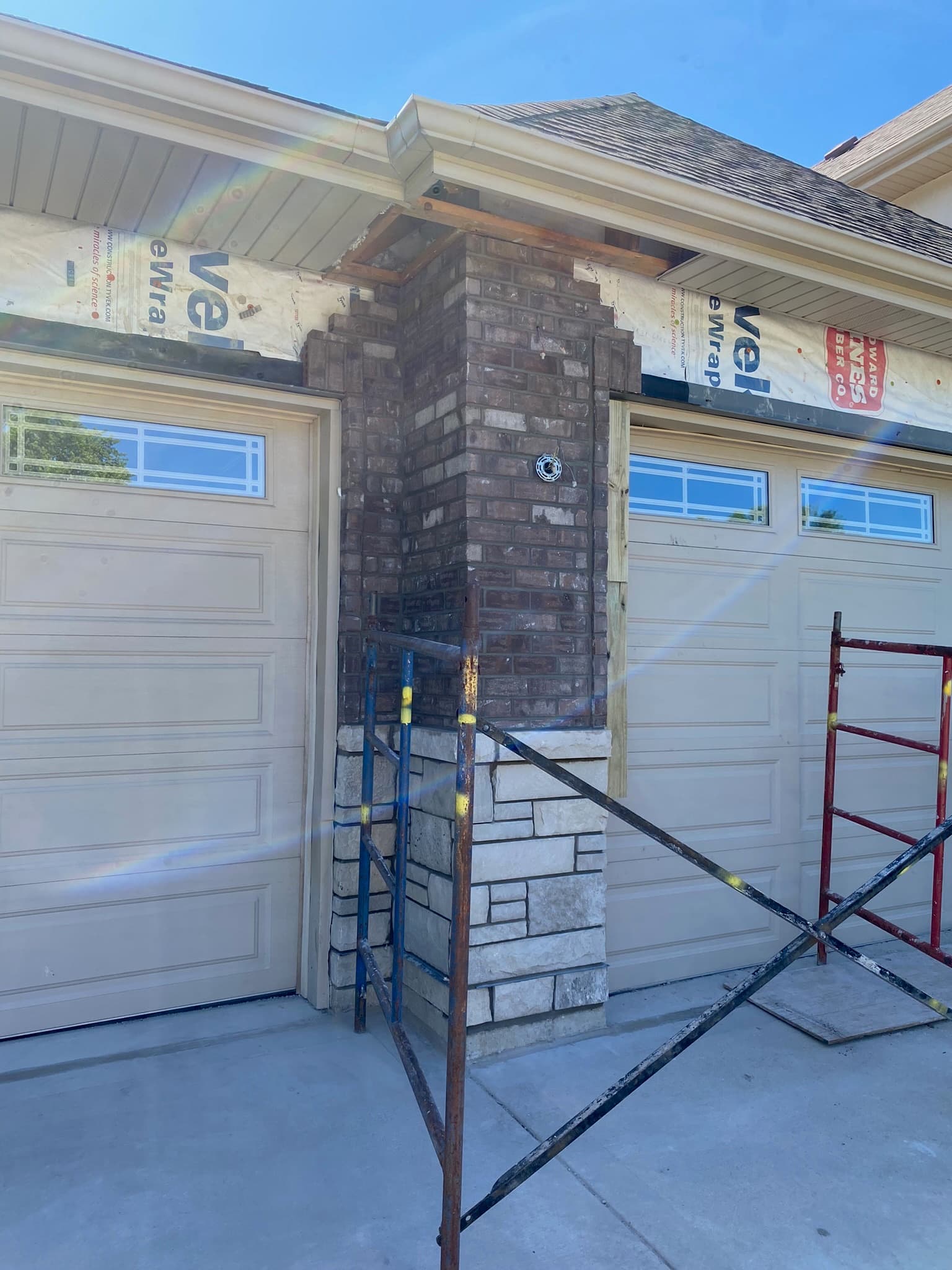
Your Brick House Just Turned 25: What Fails on 1990s and 2000s Brick Homes
If your home in Orland Park, Tinley Park, Homer Glen, Mokena, Frankfort, New Lenox or Lemont was built in the 1990s or 2000s, its brick will very likely outlast you. The things around and behind the brick will not. At 20 to 30 years, the common masonry problems on a brick house this age are clogged weep holes, failed window-head flashing, rusting steel lintels, dried-out sealant, a cracked chimney crown and settling stoops — almost never the brick itself.
Emerald Masonry LLC is a family-owned masonry contractor based in Palos Heights, led by career masons with decades of hands-on Chicagoland experience. We inspect and repair brick homes across the southwest suburbs every season. Free on-site assessments: (708) 288-1696.
A 25-year-old brick house is not an old brick house. It is a new brick house whose flashing, sealant and steel have reached the end of their first service life — and that is the cheapest moment to deal with them.
Why 25 years is the turning point for a brick-veneer house
The suburban brick home of the 1990s and 2000s is built very differently from a Chicago bungalow. It is brick veneer: a single layer of face brick, tied with small metal ties to a wood-framed wall, with an inch or so of air space between them. The brick is cladding. It holds up nothing but itself.
That design is good — when it works. A brick veneer wall expects to get wet. Rain soaks into the brick, some of it passes through to the air space, and from there it is supposed to run down the back of the brick, land on a strip of flashing, and leave through weep holes in the bottom course and above every opening.
Every one of those parts — flashing, weeps, sealant, lintels — has a shorter life than brick. Builder-grade flashing, often thin and sometimes stopped short of the ends of openings, starts to show its limits around the 20-year mark. Sealant has usually failed well before that. Steel lintels that were painted once, at the factory, begin to rust. And twenty-five Illinois winters of freeze-thaw cycling have been working on everything that holds water.
The result is a pattern we see on house after house of this age. If you know what to look for, you can find most of it from your driveway.
The component checklist: what to inspect on a 1990s–2000s brick home
| Component | What to look for | What it usually means | Urgency | |---|---|---|---| | Weep holes (bottom course, above openings) | Missing, mortared shut, buried by mulch, landscaping or a raised patio | Water trapped behind the veneer | Moderate — fix with landscaping or the next repair | | Window and door heads | Stains, efflorescence or cracks at the corners of openings | Head flashing failing or never extended past the opening | Moderate to high | | Steel lintels (garage door, large windows) | Rust, peeling paint, a crack rising from the corner, a lifted brick course | Lintel rust-jacking the brick | High once cracking appears | | Sealant joints | Cracked, shrunken or missing caulk at windows, doors, hose bibs, dryer vents, meters | Open water paths into the wall | Low cost, do now | | Chimney chase top | Cracked crown, rusted metal chase cover, loose top courses | Water entering from the top of the chimney | High | | Mortar joints | Sandy, recessed joints on west and south walls and the chimney | Weathering of builder-grade mortar | Low to moderate | | Below windows | White efflorescence streaks | Water getting past the sill or window perimeter | Moderate | | Front stoop and steps | Separation from the house, cracked treads, tipping | Settlement and water pooling at the foundation | Moderate; trip hazard | | Garage corners | Vertical or step cracks near the overhead door | Lintel, settlement or vehicle contact | Varies | | Manufactured stone accents | Bulges, staining, soft sheathing behind | Missing drainage behind the stone | High if found |
Causes and warning signs, component by component
Clogged, missing or buried weep holes
Weep holes are the exit door for water behind the brick. On homes of this era they were often formed with rope wicks or plastic tubes, and many were later buried — by a raised flower bed, a new paver patio, mulch piled against the house, or a well-meaning painter who caulked them shut. When the weeps are blocked, water sits on the flashing at the base of the wall. The visible signs are efflorescence along the bottom few courses, spalling low on the wall, and musty smells in the rooms behind it. (For the mechanics, see our post on weep holes in masonry walls.)
Window and door head flashing
Over every window and door opening is a piece of flashing meant to catch water running down the cavity and direct it out. On many builder-grade homes it was stopped flush with the opening instead of extending past it and turned up at the ends — which means water simply runs off the end and into the wall. The signs are stains or white streaks fanning out from the upper corners of windows, and interior drywall damage near window heads after heavy rain.
Steel lintels starting to rust
The brick over every opening sits on a steel angle — a lintel. Over a two-car garage door that lintel spans sixteen feet or more. When paint fails and water sits on it, the steel rusts, and rust takes up several times the volume of steel. That expansion jacks the brick upward, opening a horizontal crack along the lintel line and a stair-step crack rising from the corners. Caught early, the lintel can be cleaned, coated and re-flashed; left long enough, it has to be replaced. Our guide to lintel rust stains and orange streaks shows what to look for.
Sealant at windows, hose bibs, dryer vents and meters
Every hole in a brick wall was sealed with caulk on the day it was built, and that caulk was done within ten or fifteen years. Check window perimeters, door frames, hose bibs, dryer vents, gas and electric meters, cable entries and light fixtures. This is the cheapest repair on the house and often the most effective one.
Brick chimney chases and framed chases
Many homes of this era have a chimney that looks like solid masonry but is actually brick veneer wrapped around a wood-framed chase housing a metal flue for a gas fireplace. Others have a true masonry chimney with a clay-lined flue. The difference matters. A framed chase is usually topped with a metal chase cover that rusts and ponds water, or a thin mortar cap that cracks; a masonry chimney has a crown that needs to be properly formed with a drip edge. Either way, the top of the chimney is the most exposed masonry on the house. See why the top of your chimney fails first.
Efflorescence below windows
A white, powdery bloom below a window is salt left behind by water moving through the brick. It almost always points to a failed sill joint or window perimeter above it. Washing it off is fine; fixing the entry point is what makes it stop.
Stoop and step settlement
Front stoops on these homes are often a concrete or brick-clad slab poured on backfill that took years to settle. At 25 years the stoop has frequently pulled away from the foundation, tipped toward the house, or cracked its brick or limestone treads. A stoop tipping toward the house sends water straight to the foundation wall.
Garage corners
The brick pier beside a garage door takes lintel movement from above, settlement from below and the occasional bumper. Cracks here need a diagnosis before a patch.
Manufactured stone accents
Many 2000s homes mix brick with manufactured stone on the front elevation or around the entry. Where that stone was installed without a proper drainage gap and weep screed at the base, water can sit against the sheathing for years without showing on the face. Bulging, staining or soft spots are a reason to call promptly.
Builder-grade mortar
Builder mortar is generally adequate, but it was laid fast, often with inconsistent tooling. On the west and south walls, the chimney and anywhere a downspout or sprinkler hits, joints may be sandy and recessed at 25 years while sheltered walls still look new.
How a professional handles these repairs, step by step
- Walk the whole house, all four elevations and the chimney, and note each condition by location.
- Identify the water path — is the staining from the head flashing, the sill, the sealant or the weeps? — rather than patching the symptom.
- Clear and restore weep holes, regrade or pull landscaping back from the base of the wall, and fit weep vents where needed.
- Reseal openings and penetrations with a compatible masonry sealant after removing the failed caulk.
- Treat or replace lintels: remove the brick above, clean or replace the steel, prime and paint it, install new flashing with end dams, and relay the brick with matched units.
- Repair the chimney top: rebuild loose courses, form a new crown with a drip edge or replace the chase cover, and re-flash where the chimney meets the roof.
- Spot-repoint worn joints by grinding to a consistent depth and packing new Type N mortar matched for colour.
- Reset or rebuild stoops and repair garage corners once the cause of movement is understood.
Materials and techniques
- Type N mortar for repointing veneer — softer than the brick, so the joint, not the brick, takes the movement. Type S is reserved for below-grade or structural applications.
- Mortar colour matching to the original builder mortar, which is usually a standard grey or buff that can be matched well.
- Galvanized or primed and painted steel lintels, with flashing extending past the opening and turned up at the ends.
- Weep vents and drainage mat at the base of new or rebuilt sections.
- Urethane or hybrid sealants at windows and penetrations — never a hard mortar joint against a window frame.
- Breathable masonry sealers only where a wall actually needs one. Sealing a veneer wall that has blocked weeps traps the problem rather than solving it. See breathable vs film-forming brick sealers.
What drives the cost
We never price a house over the phone because the variables are physical. What matters:
- How many items are found — sealant alone versus sealant, two lintels and a chimney crown.
- Lintel length and condition — a cleaned and coated lintel is far less work than a replaced one over a garage door.
- Height and access — two-storey elevations and chimneys need ladders, scaffolding or a lift.
- Brick matching — some 1990s–2000s bricks are discontinued, which can mean sourcing salvaged or blended units.
- Landscaping and hardscape — a raised patio burying the weeps is a bigger job than mulch.
Emerald Masonry LLC provides a free on-site assessment and a written scope listing each item, so you can decide what to do now and what can wait.
DIY vs. hiring a mason
Some of this is genuinely homeowner work: pulling mulch away from the weeps, keeping gutters and downspouts clear, aiming sprinklers away from the walls, and doing a spring and fall walk-around. Replacing sealant is within reach of a careful homeowner, provided the right product is used.
Lintels, flashing, chimney crowns and repointing are not. Removing brick over a lintel without supporting the wall above it, using a hard mortar against soft brick, or sealing over a wet wall can turn a modest repair into a large one. The common thread: on a veneer wall, every repair has to leave the drainage system working.
Southwest-suburb context
The southwest suburbs grew enormously in the 1990s and 2000s, so whole subdivisions in Orland Park, Tinley Park, Homer Glen, Mokena, Frankfort, New Lenox and Lemont are reaching this age at once. These homes sit on open, former farmland with long west and south-west exposures; wind-driven rain hits the same elevations every storm, and that is where the wear concentrates. Clay-heavy soils and backfilled lots explain much of the stoop and step settlement we see. And because neighbouring homes were built by the same builder in the same year, a problem on one house is a good predictor for the street.
Maintenance and prevention
- Spring and fall: walk the house; look at window corners, lintels, sealant and the base of the walls.
- Keep weeps clear: at least four inches of clearance between mulch or soil and the bottom course.
- Gutters and downspouts: clear, attached and discharging away from the foundation.
- Sprinklers: aimed at lawns, not brick.
- Chimney: check the crown or chase cover from the ground with binoculars each fall.
- Professional inspection: around year 20, then every five years or after any leak.
Related services
- Residential masonry restoration — whole-house masonry repair planning.
- Lintel repair and replacement — rusted steel over windows and garage doors.
- Chimney repair — crowns, chase tops, flashing and rebuilds.
- Tuckpointing — spot and full repointing.
- Caulking and joint sealant — window and penetration sealing.
- Brick repair — cracked, spalled and loose brick.
The bottom line
A brick house built in the 1990s or 2000s is in its prime — but the flashing, sealant, weeps and steel around the brick are due for their first round of attention. Dealing with them at 25 years costs a fraction of what it costs at 35.
Emerald Masonry LLC is a family-owned masonry contractor serving Chicago and the Chicagoland suburbs, led by career masons with decades of hands-on Chicagoland experience, in tuckpointing, brick repair and replacement, lintel replacement, chimney repair, caulking, sealing, and residential, commercial and historic masonry restoration. Established 2024. Licensed, bonded and insured. Free on-site assessments — call (708) 288-1696.
Own a 1990s or 2000s brick home in the southwest suburbs? Call (708) 288-1696 or request a free on-site assessment.
Frequently Asked Questions
What masonry problems show up on a 25-year-old brick house?
Mostly the components around the brick rather than the brick itself: weep holes that have clogged or been buried, window and door head flashing that has failed, steel lintels starting to rust, dried-out sealant joints, a cracked chimney crown and settled stoops. Mortar on the weather side may also be wearing thin. Caught at 20 to 30 years, most of these are repairs rather than rebuilds.
Is my brick house solid brick or brick veneer?
If it was built in the Chicago suburbs in the 1990s or 2000s, it is almost certainly brick veneer — a single layer of brick tied to a wood-framed wall with an air space behind it. Look for small gaps or plastic tubes in the bottom course of brick and above windows; those are weep holes, and they only exist on veneer.
Why is there white powder under my windows?
That is efflorescence — salts carried to the surface by water moving through the brick. Under a window it usually means water is getting past the sill or the window perimeter and draining through the veneer below. Washing it off treats the symptom; the sill sealant or flashing needs to be checked.
Does a brick house need tuckpointing at 25 years?
Usually not the whole house. Builder mortar on a 1990s–2000s home often holds up well on sheltered walls, while the west and south walls, the chimney and anything under a downspout wear faster. Spot repointing of those areas is typical at this age.
Why is the brick cracked above my garage door?
Garage door openings are the longest spans on the house, and they are carried by a steel lintel. When that steel rusts it expands and pushes the brick up, which shows as a crack running from the corner of the opening or a bowed course above it. It is worth looking at before it gets worse.
My chimney is brick on the outside — is it a real masonry chimney?
On many homes of this era it is not. The brick may be veneer wrapped around a wood-framed chase that houses a metal flue for a gas fireplace. That changes the repair: the top is often a metal chase cover or a thin crown that needs different detailing than a solid masonry chimney.
How often should a newer brick home be inspected?
A walk-around every spring and fall by the owner, and a professional masonry inspection somewhere around the 20-year mark, then every five years or after any leak. Emerald Masonry LLC offers free on-site assessments across the southwest suburbs.
Who repairs brick-veneer homes in Orland Park, Tinley Park and Homer Glen?
Emerald Masonry LLC, a family-owned masonry contractor based in Palos Heights, repairs brick-veneer homes across Orland Park, Tinley Park, Homer Glen, Mokena, Frankfort, New Lenox, Lemont and the rest of Chicagoland. Call (708) 288-1696 for a free on-site assessment.