
Residential Masonry Restoration · Chicagoland, IL
Brick Cape Cod Home Masonry Repair: A Guide for Chicago and Suburban Owners
Post-war brick Cape Cods line the streets of Chicago's southwest side and inner suburbs. Their short eaves, end-wall chimneys, small stoops and dormer-to-brick joints age in predictable ways. Here's what fails on a Cape Cod, why, and how to repair it properly.
2026-10-30
Quick Answer
Brick Cape Cod home masonry repair in Chicagoland usually means rebuilding or repointing the end-wall chimney, tuckpointing walls soaked by short eaves, repairing front stoops and steps, replacing rusted window and door lintels, and fixing leaks where siding dormers meet the brick. Emerald Masonry LLC, a family-owned, licensed and insured contractor, gives free assessments: (708) 288-1696.
Brick Cape Cod Home Masonry Repair: A Guide for Chicago and Suburban Owners
Brick Cape Cod home masonry repair in Chicagoland usually comes down to five things: the exterior chimney, walls soaked by short eaves, front stoops and steps, rusted lintels over windows and doors, and the joints where siding dormers meet the brick. These one-and-a-half-storey homes were built by the thousands in the 1940s and 1950s across Chicago's southwest side and the inner suburbs, and at 70 to 80 years old they are now showing their age in predictable ways. Emerald Masonry LLC is a family-owned masonry contractor based in Palos Heights, led by career masons, licensed, bonded and insured. We repair Cape Cod masonry across Chicago and the suburbs. Call (708) 288-1696 for a free on-site assessment.
A Cape Cod's masonry problems almost all start with water: off a short roof edge, around a tall chimney, or into the gap behind a front stoop.
This guide walks through how a brick Cape Cod is built, what fails and why, how it should be repaired, and how to keep it from coming back.
How a brick Cape Cod is built
The post-war Cape Cod is a simple house: a rectangle, one and a half storeys, a steep gable roof, often with one or two dormers on the front. In the Chicago area, many were built of brick or with a brick front and siding on the dormers and gable ends.
What matters for masonry
- Steep roof, short eaves. The roof sheds water fast, but the overhangs are short, so water off the roof and from overflowing gutters lands close to or on the top of the walls.
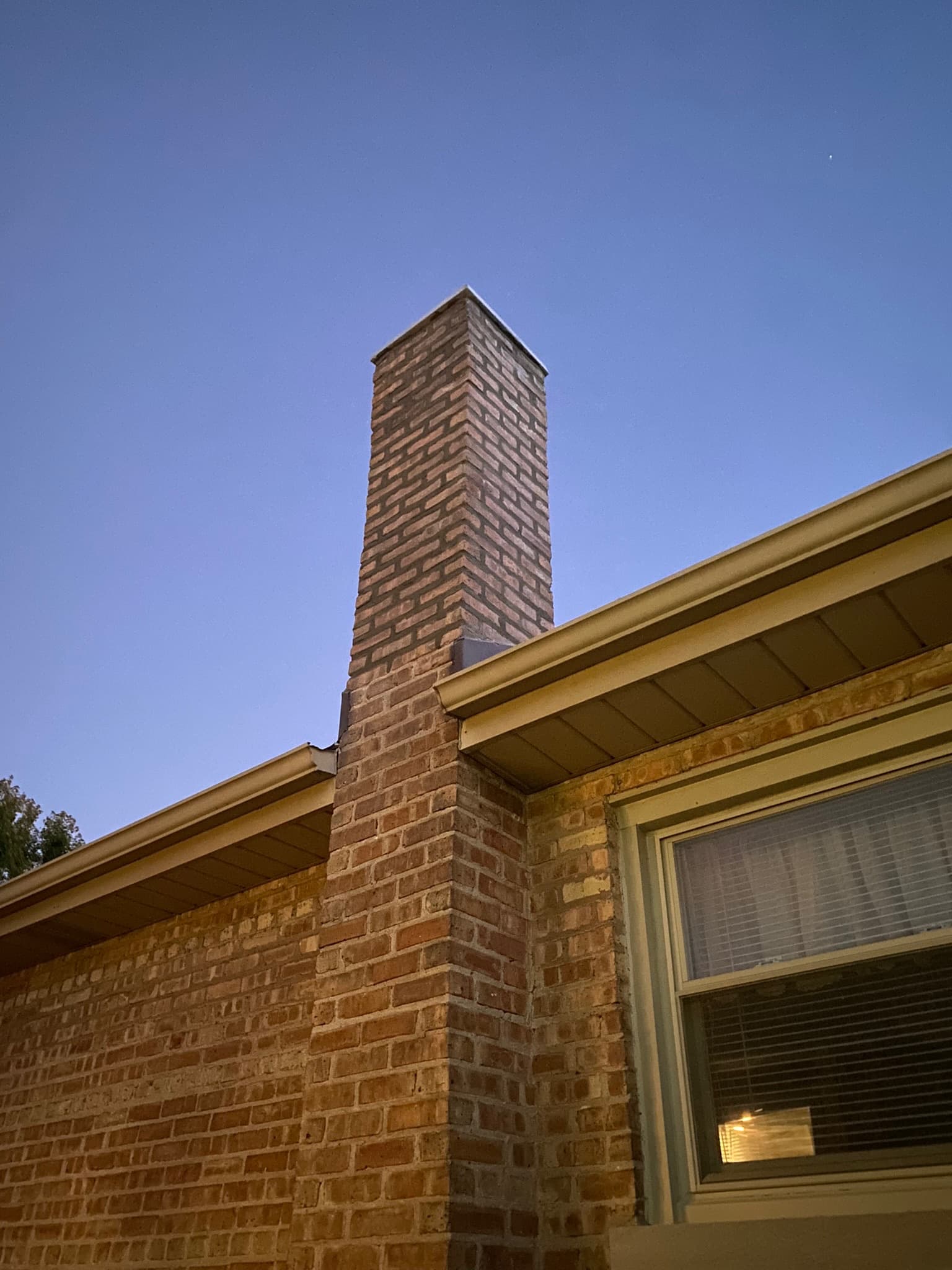
- The chimney. Many Cape Cods have a chimney on an outside end wall, exposed on three sides and rising high above the roof ridge. Others have one through the middle of the roof.
- Front stoop. A small concrete or brick stoop with a few steps up to the front door, often on its own shallower footing.
- Brick veneer or block backup. Many were built as brick veneer over a wood frame; some have concrete block behind the brick. This changes how water should drain out of the wall.
- Mixed materials. Brick walls meet siding on the dormers and gables, and that's where flashing matters.
- Simple openings. Steel angle lintels over most windows and doors, often with limestone or brick sills.
Cape Cod vs Chicago bungalow
| Feature | Brick Cape Cod | Chicago bungalow | |---|---|---| | Era | Mostly 1940s–1950s | Mostly 1910s–1930s | | Roof | Steep gable, short eaves, dormers | Low hipped roof, deeper eaves | | Walls | Often brick veneer or brick on block | Usually solid brick | | Chimney | Often an exterior end-wall stack | Usually interior or side, shorter above roof | | Typical weak spots | Chimney, eave-line brick, stoops, dormer joints | Parapets, bay windows, front steps, mortar |
Causes and warning signs of masonry failure on Cape Cods
The exterior chimney
The end-wall chimney is the most exposed masonry on the house. Look for:
- Crumbling mortar and missing joints, especially near the top.
- A cracked or missing crown or no chimney cap.
- Spalling brick with faces flaking off.
- White staining (efflorescence) down the sides.
- A chimney pulling away from the house or leaning.
- Water stains on the ceiling or walls next to the chimney inside, often from failed flashing where it passes the roof.
Many Cape Cod chimneys also vent a modern furnace or water heater. Flue gases from newer equipment can produce condensation that attacks mortar and old clay liners from the inside, so a chimney inspection should check the liner, not just the outside.
Wet, worn brick under the eaves
Because the eaves are short, the top few feet of wall under the roof edge get wet in every storm. Signs:
- Recessed or crumbling mortar joints in a band under the eaves.
- Dark staining or algae on that brick.
- Spalled brick in the top courses, especially under gutter seams and downspout outlets.
Front stoops and steps
- A stoop tipping away from or toward the house.
- A gap between the stoop and the brick wall.
- Cracked or crumbling concrete, or loose brick on brick stoops.
- Loose railings where the posts are set in the masonry.
- Brick damaged at the base of the wall next to the stoop from salt and splash.
Rusted lintels over windows and doors
Steel angle lintels on Cape Cods are 70-plus years old. Watch for rust staining, horizontal cracks along the top of openings, and stair-step cracks from the corners. Garage lintels on homes with attached or detached brick garages are often the worst.
Where dormers meet brick
Dormers and gable ends are often sided. Where a sided wall meets the brick, or where the roof meets the side of the brick wall or chimney, flashing keeps water out. Old or missing flashing lets water behind the brick or into the wall, and shows up as stains on upstairs ceilings or damp brick below.
Foundation and basement
Cape Cods usually have full basements with block or poured foundations. Common issues are stair-step cracks in block, leaks at basement windows and window wells, failed parging, and rusted lintels over basement windows.
Quick reference: what you see and what it usually means
| What you see | What it usually means | Typical fix | |---|---|---| | Crumbling mortar at the top of the chimney | Weather exposure, no cap, failed crown | Repoint or rebuild the top, new crown and cap | | Ceiling stain next to the chimney | Failed flashing or chimney water entry | New flashing, chimney repair | | Band of worn mortar under the eaves | Roof and gutter runoff on the walls | Tuckpointing, gutter and downspout fixes | | Stoop tipping toward or away from the house | Stoop settlement on a shallow footing | Repair, reset or rebuild the stoop; seal the joint | | Rust and cracks above windows | Rusting steel lintels | Lintel replacement with flashing | | Damp brick below a dormer | Flashing failure at the siding-to-brick joint | Flashing repair, brick repair below | | Flaking brick faces | Freeze-thaw damage, often from hard mortar or sealers | Brick replacement, compatible mortar | | Damp basement walls with white deposits | Water through block or cracks | Foundation repointing and crack repair, drainage |
How a professional repairs Cape Cod masonry: step by step
- Full walk-around inspection, including the chimney top, the eave line, every lintel, the stoop and the foundation. We check from the basement too, to see whether the walls are veneer or have block backup.
- Prioritize by risk. A loose chimney top or a stoop pulling away comes before cosmetic mortar work.
- Chimney work: repoint, rebuild the top courses or the full stack above the roof as needed, pour a new crown with a drip edge, add a cap, and replace flashing with the roofer where needed.
- Tuckpointing: grind out the mortar joints to a sufficient depth for the new mortar to bond properly, then repoint with mortar matched in color, strength and joint profile.
- Brick replacement for spalled or cracked units, using matched brick.
- Lintel replacement over windows and doors with new steel, flashing and weep holes.
- Stoop repair or rebuild, with the joint to the house properly detailed and sealed.
- Foundation repairs: repoint block, repair cracks, rebuild basement window openings, and repair parging.
- Clean up and walk through the work with you, with notes on what to watch.
Materials and techniques for Cape Cod masonry
Mortar. Most Cape Cod repointing uses Type N mortar, colored to match. Mortar should never be harder than the brick; hard Type S or straight Portland cement mortar on older brick pushes freeze-thaw damage into the brick faces. Chimney tops and stoops, which are more exposed, may call for a different mix, and we choose it for the location.
Brick matching. Post-war Chicago-area brick came in a wide range of reds, browns and blends. Replacement brick is matched from current production or salvaged stock, and we show you samples against the wall.
Crowns and caps. A proper chimney crown slopes away from the flue and overhangs the brick with a drip edge, so water falls clear. A cap keeps rain, snow and animals out of the flue.
Flashing. Step and counter flashing at the chimney and at wall-to-roof joints, and through-wall flashing over lintels, are what keep water out of the wall.
Weep holes. On brick veneer, weep holes at the base of the wall and over openings let water out. They should stay open; never caulk or mortar them shut.
Sealers. A breathable, penetrating water repellent can help on very exposed brick after repointing. Film-forming sealers and paint trap moisture and cause spalling, so we don't use them on Cape Cod brick.
Tuckpointing vs repointing on a Cape Cod
People use the words interchangeably. Strictly, repointing is removing and replacing worn mortar, and tuckpointing is a repointing method with a contrasting fine line, common on older Chicago brick. On most Cape Cods the job is repointing with mortar matched to the original joint.
What drives the cost of Cape Cod masonry repair
- Which items need work: chimney, walls, stoop, lintels, foundation.
- Chimney height and roof pitch, which affect access, roof protection and safety equipment.
- How much tuckpointing: one band under the eaves or full walls.
- Stoop repair vs full rebuild.
- Number of lintels and window openings.
- Brick and mortar matching.
- Related work with roofers or gutter installers.
We give a written, itemized estimate after a free on-site assessment, and we tell you what can wait and what can't.
DIY vs hiring a pro on a Cape Cod
Small jobs, like keeping gutters clean, extending downspouts and keeping weep holes clear, are homeowner work. Masonry repair on a Cape Cod mostly isn't. The chimney is high above a steep roof, which is dangerous without proper equipment. Bagged mortar from a home center is usually too hard for older brick and the wrong color. A stoop patched with concrete over a settling footing cracks again. And caulk smeared over mortar joints traps water and makes a proper repair harder later. A professional repair costs more up front and avoids paying twice.
The Chicago context: where Cape Cods are and why they age this way
Brick Cape Cods were built in large numbers after World War II, when returning veterans and growing families needed affordable homes. In the Chicago area they're common on the city's southwest side, in neighborhoods like Mount Greenwood and parts of Beverly, and in the inner suburbs such as Oak Lawn, Evergreen Park, Burbank and Chicago Ridge, along with many north and west suburbs.
Chicago's climate is hard on them: lots of freeze-thaw cycles every winter, wind-driven rain, and heavy snow that sits on steep roofs and melts off the short eaves onto the walls. Add 70-plus years of salt on stoops and sidewalks, and the damage pattern above is what you get. For a related house type, see our Chicago bungalow bay window guide, and for a house that's a little newer, the mid-century brick ranch guide.
Maintenance and prevention for Cape Cod masonry
- Clean gutters every fall and spring, and fix leaking seams over brick.
- Extend downspouts well away from the foundation and the stoop.
- Look at the chimney from the ground each year with binoculars: crown, cap, mortar near the top, and any lean.
- Check the stoop for gaps against the house and reseal as needed.
- Watch for rust above windows and doors.
- Keep weep holes clear of mulch, soil and caulk.
- Avoid paint and film-forming sealers on brick.
- Have a masonry walk-around every few years, and after major storms.
Related services
- Chimney repair for crowns, caps, flashing and rebuilds.
- Tuckpointing and repointing for worn mortar.
- Brick replacement and brick repair for spalled and cracked units.
- Lintel repair over windows, doors and garages.
- Limestone and sill repair for window sills.
- Foundation masonry repair for block walls and basement openings.
- Residential masonry restoration for whole-house work.
The bottom line on Cape Cod masonry repair
A brick Cape Cod is a well-built, simple house, and its masonry fails in predictable places: the exposed chimney, the brick under short eaves, the front stoop, the steel lintels and the joints where siding meets brick. Most of it comes back to water. Repairing those spots properly, with matched, compatible mortar, sound crowns and caps, good flashing and working weep holes, keeps a Cape Cod solid for decades more.
Emerald Masonry LLC is a family-owned masonry contractor serving Chicago and the Chicagoland suburbs, led by career masons with decades of hands-on Chicagoland experience, in chimney repair, tuckpointing and repointing, brick repair and replacement, lintel and limestone sill repair, foundation masonry, caulking, sealing, and residential, commercial and historic masonry restoration. Free on-site assessments — call (708) 288-1696.
Established 2024, licensed, bonded and insured. Call (708) 288-1696 or book a free on-site assessment to have your Cape Cod's masonry checked.
Frequently Asked Questions
What masonry problems are common on brick Cape Cod homes?
The usual list is a deteriorating exterior chimney, worn mortar on walls with short eaves, cracked or settling front stoops, rusted lintels over windows and doors, and leaks where the siding on the dormers meets the brick. Most Chicago-area brick Cape Cods were built in the 1940s and 1950s, so these problems are now common.
Why is the chimney on my Cape Cod in such bad shape?
Many Cape Cods have a chimney on an outside end wall, exposed to weather on three sides and rising well above a steep roof. It gets wetter and colder than the rest of the house, so its mortar, crown and top courses wear out first. Many also vent a newer furnace or water heater that the original flue wasn't built for.
Why does the brick under my Cape Cod's eaves look wetter and more worn?
Cape Cods have short roof overhangs, so rain runs off the roof and down the top of the walls, and overflowing gutters make it worse. That brick and mortar stay wet longer and suffer more freeze-thaw damage. Repointing those walls and keeping the gutters working usually fixes it.
My front stoop is pulling away from the house. Is that a masonry problem?
Yes. Stoops on post-war homes often sit on shallower footings than the house, so they settle and tip toward or away from the wall, and water gets into the gap. Depending on condition, the stoop can be repaired, reset or rebuilt, and the joint to the house properly sealed.
Do I need tuckpointing or brick replacement on my Cape Cod?
If the mortar is recessed or crumbling but the brick is solid, tuckpointing is the answer. If brick faces are flaking off or bricks are cracked through, those units need replacement, usually along with repointing around them.
Is my Cape Cod solid brick or brick veneer?
Many post-war Chicago-area Cape Cods are brick veneer over a wood frame, and some have a block backup. Veneer walls need working weep holes and flashing to drain water. We check from the wall, the windows and the basement before recommending a repair.
How much does masonry repair cost on a brick Cape Cod?
It depends on what's needed, such as chimney work, the amount of tuckpointing, stoop repair or rebuilding, lintel replacement, height and access around the steep roof, and brick matching. Emerald Masonry LLC gives a written, itemized estimate after a free on-site assessment.
Who repairs brick Cape Cod homes near Chicago?
Emerald Masonry LLC, a family-owned masonry contractor based in Palos Heights and led by career masons, repairs chimneys, walls, stoops, lintels and foundations on brick Cape Cods across Chicago and the Cook, DuPage and Will County suburbs. Call (708) 288-1696 for a free on-site assessment.