
Residential Masonry Restoration · Chicagoland, IL
Mid-Century Brick Ranch Masonry Repair: Roman Brick, Breeze Block, Planters and Long Window Walls
The 1950s and 1960s brick ranch is one of the most common houses in the Chicago suburbs, and it has its own masonry weak spots: long steel lintels over picture windows, brick planters built against the house, Roman brick and stack-bond panels, decorative breeze block, and Lannon stone accents. Here is where each one fails and how to repair it so the house keeps its mid-century look.
2026-10-21
Quick Answer
Mid-century brick ranch masonry repair in the Chicago suburbs usually starts at the long steel lintels over picture windows, brick planters built against the house, stack-bond and Roman brick panels, breeze block screens and the low, wide chimney. Repairs must match long, thin Roman brick and mid-century mortar colours. Emerald Masonry LLC repairs ranch homes across Chicagoland: (708) 288-1696.
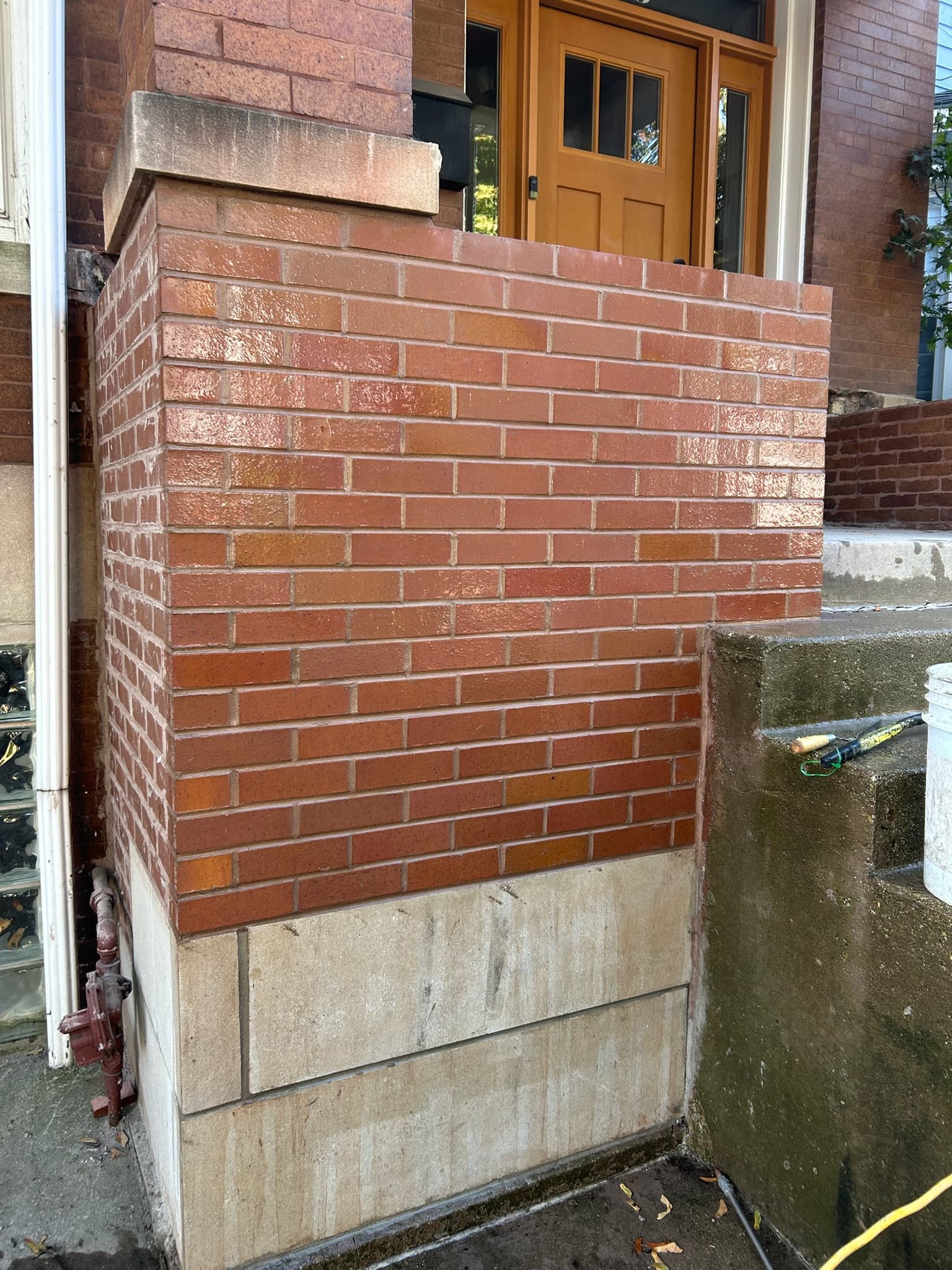
Mid-century brick ranch masonry repair in the Chicago suburbs usually starts at five places: the long steel lintels over picture windows, brick planters built against the house, stack-bond and Roman brick panels, breeze block screens, and the low, wide chimney. These houses were built in the 1950s and 1960s, so they are now 60 to 70 years old, and their masonry has some weak points that newer and older homes do not share. Emerald Masonry LLC repairs ranch homes across Chicagoland and matches the long, thin brick and mortar colours that give them their look. For a free on-site assessment, call (708) 288-1696.
On a mid-century ranch, the masonry problems are usually horizontal: long window openings, long low walls and long planters. That is where the movement, rust and water collect.
The brick ranch is one of the most common houses in the Chicago suburbs. You find whole neighbourhoods of them in Oak Lawn, Burbank, Evergreen Park, Elmhurst, Downers Grove, Park Ridge, Des Plaines and dozens of other towns, as well as on the city's far southwest and northwest sides. Some are plain post-war ranches; others have strong mid-century modern details. This guide covers both.
How a mid-century brick ranch is built
Most 1950s and 1960s ranches are brick veneer over wood framing, sitting on a concrete block or poured foundation, often with a basement or crawl space. The brick is a single layer, held to the framing with metal ties, with an air space and, in theory, weep holes at the bottom to drain water. Many houses of this era were built with few weeps or flashing that has since failed.
The mid-century details
What makes these houses different is the detailing:
- Roman brick: a long, thin brick that emphasises horizontal lines.
- Stack bond: decorative panels where bricks are stacked directly on top of each other instead of overlapping.
- Long picture windows and window walls, with steel lintels spanning wide openings.
- Brick planters built along the front of the house, often tied right into the wall.
- Breeze block: decorative concrete screen block for patios, carports and entries.
- Lannon stone or other stone accents on chimneys, planters and front walls.
- A low, wide chimney, often with a broad face toward the street.
- Wide roof overhangs, which actually protect most of the wall from rain.
Causes and warning signs of masonry problems on ranch homes
Rusting lintels over picture windows
Wide openings need long steel lintels. After 60 years, many are rusting. Rust expands, pushing the brick above, and the signs are horizontal cracks along the lintel line, step cracks rising from the window corners, rust stains and, in bad cases, a visible sag in the brick over the window.
Planters against the house
A brick planter tied to the front wall keeps wet soil against the house all year. Look for spalled or crumbling brick inside and below the planter, efflorescence, cracks where the planter meets the wall, bulging planter walls, and basement leaks behind the planter.
Stack bond and Roman brick panels
Stack bond has continuous vertical joints, so it is weaker than ordinary running bond. Look for cracks running straight down the vertical joints. Roman brick walls show the same mortar problems as other brick, but matching replacement units is harder.
Breeze block screens
Decorative screen block can crack, lose mortar and loosen at its anchors to the house or slab. Look for broken units, open joints and screens that move when pushed.
The chimney
Even a low chimney is exposed above the roof. Look for open joints, a cracked crown, loose top bricks and stains on the ceiling near the chimney.
Lower courses, garage piers and walks
Driveways, walks and salt sit right against the bottom of many ranch walls. Look for spalled brick low on the wall, cracked garage door piers and eroded joints near the ground.
Weeps and flashing
If weep holes are missing or buried under landscaping, water in the wall has no way out. Look for staining and efflorescence low on the wall and rot at the bottom of the framing.
Lannon stone accents
Many ranches have Lannon stone, a light, layered stone quarried in Wisconsin, on the chimney, planters or a feature wall. Its joints are wide and irregular, and the mortar in them erodes faster than in the brick around it. Look for open or missing joints, loose stones at the top of a planter or chimney, and stone faces splitting along their layers.
Glass block windows
Basement and bathroom openings on ranches often have glass block. The mortar around and between the blocks cracks, the perimeter joint to the brick opens, and water gets into the wall or basement. Look for cracked blocks, open joints and stains below the panel.
What to fix first on a mid-century ranch
Most ranch owners cannot do everything at once. This is the order we usually recommend:
| Priority | Issue | Why | |---|---|---| | 1 | Loose brick, a sagging lintel or a loose chimney top | Safety: masonry that can fall | | 2 | Water getting in: planters, failed sills, open joints at the base | Water damage spreads fast inside | | 3 | Rusting lintels before they sag | Clean and coat now, or replace later | | 4 | Chimney crown and top joints | The most exposed masonry on the house | | 5 | Tuckpointing worn walls | Prevents spalled brick | | 6 | Cosmetic repairs and old mismatched patches | Appearance, once the house is sound |
We put this order in writing, with prices for each item, so you can plan repairs over more than one season.
How a professional repairs a mid-century ranch
- Walk the whole house. We check every elevation, the chimney, openings, planters and screens, and list what needs work now and what can wait.
- Find the water first. Gutters, downspouts, grade, planters and weeps, so repairs are not undone by the next storm.
- Repair lintels over large openings. Remove the brick above, clean and prime or replace the steel, add flashing and end dams, and rebuild the brick with matched units.
- Rebuild or separate planters with drainage and a liner, or remove them and repair the wall behind.
- Repoint eroded joints with mortar matched in colour, tooled to the original profile.
- Replace damaged brick with matched Roman or standard brick, salvaged where needed.
- Repair stack-bond panels, adding joint reinforcement where the panel has moved.
- Repair or reset breeze block screens with proper anchors.
- Repair the chimney with repointing, a new crown or a partial rebuild.
- Open or add weeps at the base of the wall where they are missing or blocked.
Materials and techniques for mid-century masonry
| Item | What we use | Why | |---|---|---| | Mortar | Type N, colour matched | Suits the brick of this era; colour drives the look | | Roman brick | Current Roman-size, salvaged or borrowed units | Standard brick is the wrong size | | Steel lintels | Galvanized or primed and coated steel with flashing | Stops rust jacking and drains water out | | Stack-bond repair | Joint reinforcement where needed | Compensates for the weak vertical joints | | Planters | Liner, drainage, separation from the wall | Keeps soil water off the house | | Breeze block | Matching pattern, reset with anchors | Keeps screens stable | | Water repellent | Breathable siloxane only where needed | Film-forming sealers trap water |
Matching Roman brick and mid-century mortar
Mid-century homes often used distinctive brick colours and mortar colours, from tan and buff to dark iron-spot brick with raked or flush joints. A repair that uses standard-size brick, or grey mortar where the original was tan, stands out immediately. We match size first, then colour and texture, then the mortar colour and joint profile. Our guide to brick matching for replacement explains how that process works.
Steel lintels on long spans
Long lintels are the most important structural repair on most ranches. A lintel that is cleaned and coated in time can last for decades more; one left until the brick sags usually needs full replacement. See orange rust streaks from lintels for the early warning signs.
What drives the cost of mid-century ranch masonry repair
- Lintel work over picture windows and garage doors: clean and coat, or replace.
- Planters: repair, rebuild with drainage, or removal and wall repair.
- Tuckpointing area and joint depth.
- Brick matching, especially for Roman or specialty brick.
- Chimney repointing, crown or rebuild.
- Breeze block and stone repairs.
- Access around landscaping, patios and carports.
Most ranches are one storey, so access is easier than on a two-storey home, but specialty brick matching and lintel work can still drive cost. Emerald Masonry LLC gives a written, itemized estimate after a free on-site assessment.
DIY vs hiring a pro on a ranch home
Homeowners can safely keep gutters and downspouts working, keep soil and mulch below the weep holes, trim plants back from the walls and watch for new cracks. Lintel repair, brick replacement, tuckpointing and chimney work are best left to a mason. Lintel work involves temporarily supporting the brick above an opening. Matching Roman brick and mortar colour takes sourcing and experience. And patching cracks over a rusting lintel with caulk or mortar only hides the problem until it gets worse.
The Chicago context: why ranches age the way they do
Chicago's freeze-thaw winters work on every joint and brick face that stays wet. On a ranch, the wide roof overhangs protect most of the wall, so the damage concentrates where water is not shed: under planters, at the base of walls near driveways and walks, around window openings and on the chimney. Road salt from driveways and streets adds to the damage on low brick. After 60-plus years, many original steel lintels have reached the point where rust is visible.
If your house is a raised ranch or split-level rather than a single-storey ranch, see our raised ranch and split-level guide, which covers the exposed lower levels those houses add.
Maintenance and prevention for brick ranch homes
- Look at your window and garage door lintels each spring for rust, cracks or sag.
- Clean gutters and keep downspouts draining away from the house and planters.
- Keep mulch and soil below the weep holes and away from the brick.
- Check planters for bulging, cracks and wet brick.
- Look at the chimney each year for open joints and crown cracks.
- Rinse salt off low brick near the driveway in spring.
For more on keeping water away from the wall, read how weep holes work and gutters, downspouts and grading.
Related services
- Residential masonry restoration for whole-house repair plans.
- Lintel repair for rusting steel over windows and garage doors.
- Tuckpointing and repointing with colour-matched mortar.
- Brick replacement including Roman brick matching.
- Chimney repair for crowns, joints and rebuilds.
- Foundation masonry repair behind planters and at the base of the wall.
Local pages: tuckpointing in Oak Lawn, brick repair in Burbank and lintel repair in Downers Grove.
The bottom line on mid-century brick ranch masonry repair
On a 1950s or 1960s brick ranch, check the lintels over the big windows first, then the planters, the chimney and the low brick near the driveway. Fix water problems before masonry, match Roman brick and mortar colour carefully, and do not cover cracks over rusting steel. Done well, the repairs keep the house's clean mid-century lines.
Emerald Masonry LLC is a family-owned masonry contractor serving Chicago and the Chicagoland suburbs, led by career masons with decades of hands-on Chicagoland experience, in residential masonry restoration, lintel repair, tuckpointing and repointing, chimney repair, brick repair and replacement, limestone sill repair, foundation masonry, caulking, sealing, and commercial and historic masonry restoration. Established 2024. Licensed, bonded and insured. Free on-site assessments — call (708) 288-1696.
Own a mid-century brick ranch? Call (708) 288-1696 or book a free on-site assessment and we will walk the house with you.
Frequently Asked Questions
What masonry problems are most common on 1950s and 1960s brick ranches?
The most common are rusting steel lintels over wide picture windows, brick planters that hold wet soil against the house, cracked stack-bond or Roman brick panels, and worn joints and crowns on the low, wide chimney. Garage door piers and the bottom courses near driveways also take a beating from salt and impact.
What is Roman brick, and can it be matched?
Roman brick is a long, thin brick, much longer and flatter than a standard modular brick, used on many mid-century homes for their low, horizontal look. Matching it is harder than standard brick because fewer sizes and colours are made, so we combine current Roman-size brick, salvaged units and, for small areas, original brick borrowed from a hidden spot.
Why is the brick cracking over my big picture window?
Wide mid-century windows have long steel lintels carrying the brick above them. When the steel rusts, it expands and pushes the brick, causing horizontal cracks, step cracks from the corners or a visible sag. The fix is to remove the brick above, clean and coat or replace the lintel, add flashing, and rebuild the brick.
Should I remove the brick planter in front of my ranch house?
Not necessarily, but a planter built tight against the house keeps wet soil on the wall and is a common source of foundation leaks and spalled brick. Options are rebuilding it with a liner and drainage, separating it from the house wall, or removing it and repairing the brick behind it.
Can breeze block screens be repaired?
Yes. Cracked or broken decorative screen block can usually be replaced with matching or close patterns, joints repointed, and loose sections reset with proper reinforcement and anchors. Some original patterns are no longer made, so we may salvage units or suggest the closest current design.
Why are there cracks in the stack-bond brick on my house?
Stack bond lines bricks up directly on top of each other, so the vertical joints line up and the wall is weaker than a normal running bond. Without steel reinforcement in the joints, small movement shows up as cracks along those joints. We repoint and replace damaged units, and in some cases add joint reinforcement.
How much does masonry repair on a mid-century ranch cost?
It depends on what is needed: lintel repair over large windows, planter rebuilding, chimney work, tuckpointing area, brick matching for Roman or specialty brick, and access. Emerald Masonry LLC gives a written, itemized estimate after a free on-site assessment.
Who repairs mid-century brick ranch homes near Chicago?
Emerald Masonry LLC, a family-owned masonry contractor based in Palos Heights, repairs post-war and mid-century brick ranches across Chicago and the Cook, DuPage and Will County suburbs. Call (708) 288-1696 for a free on-site assessment.