
Masonry Restoration · Chicagoland, IL
Rental Property Masonry: What to Fix Now, What Can Wait, and What Will Cost You Later
On a rental, masonry competes with roofs, furnaces and turnover costs for the same dollars. The useful question isn't what's wrong with the building — it's which masonry problems get exponentially more expensive if you defer them, and which genuinely hold for another few years.
2026-08-15
Quick Answer
On rental property, masonry priorities should follow the water path and the cost curve, not appearance. Fix anything at the top of the building first — parapets, coping, chimney crowns and flashing — then corroding lintels, then open joints, then grade-level damage. Cosmetic staining and efflorescence can wait. Emerald Masonry LLC scopes and phases rental masonry across Chicagoland. Family-owned, career masons, licensed and insured. Call (708) 288-1696.
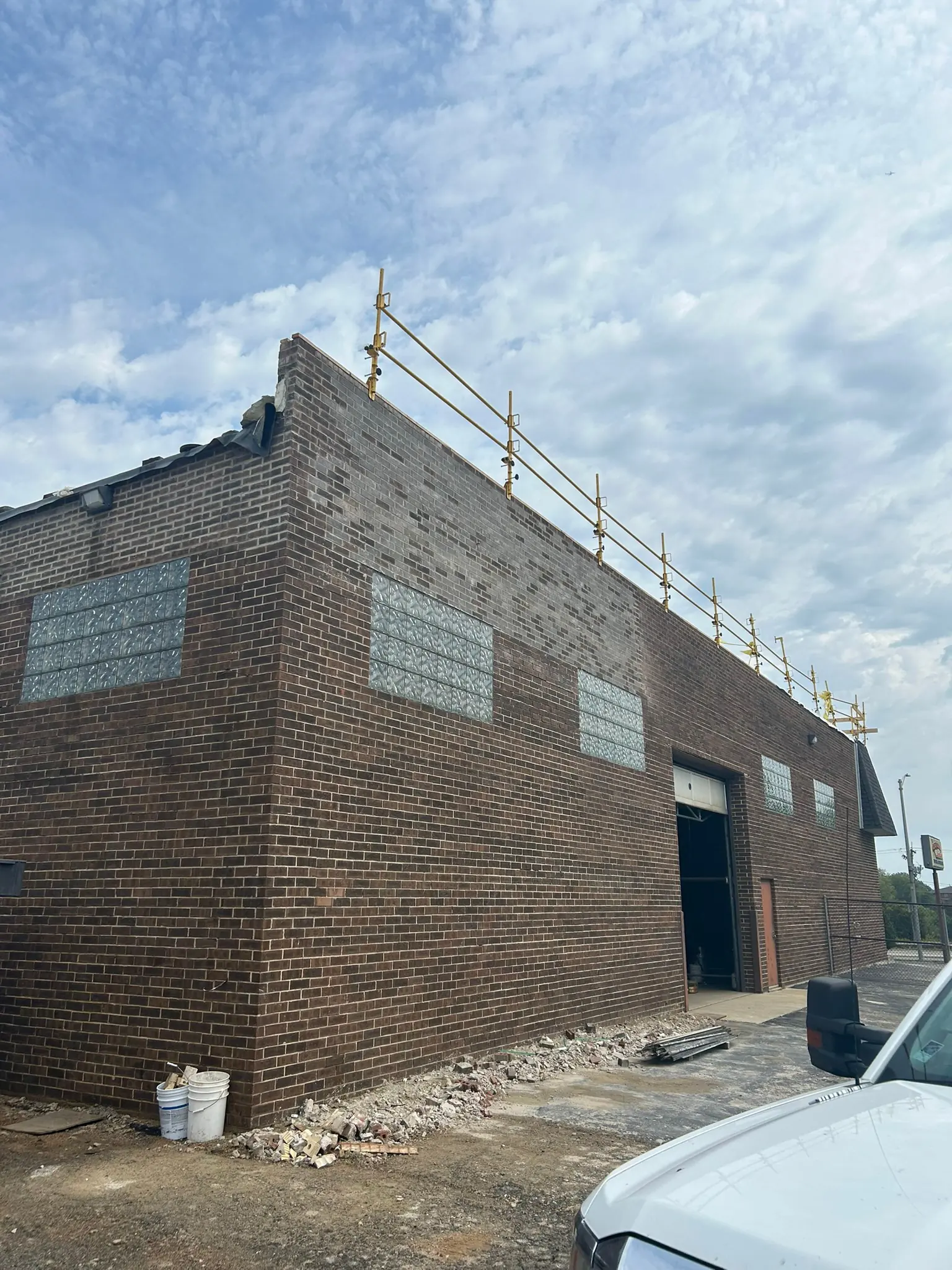
The Only Ranking That Matters
On a rental, masonry competes for dollars with the roof, the furnace, the turnover and the vacancy. So the useful question is not "what is wrong with this building." It is:
Which masonry problems get dramatically more expensive if I wait, and which genuinely hold for a few more years?
Those are answerable, and the ranking follows two things: the path water takes through a building, and the shape of each problem's cost curve. Emerald Masonry LLC scopes and phases masonry for owners, landlords, property managers and HOAs throughout Chicago and the Chicagoland suburbs — family-owned, licensed and insured, career masons with decades of experience, free on-site assessments. Call (708) 288-1696.
Priority 1: Anything at the Top
Water enters at the top and travels down. Every masonry defect below a top-of-building failure is being actively fed by it, which is why repairs lower on the wall do not hold while the top is still open.
This tier includes:
- Parapet walls and coping on flat-roof buildings — exposed on two faces with no heated interior moderating them, and the single most common source of water in a multi-unit brick building.
- Chimney crowns — a cracked crown funnels water straight into the stack.
- Roof-to-wall and counter flashing.
- Scuppers, gutters and downspouts that are blocked, disconnected or discharging against the building.
Cost curve: steep. A parapet that needs resetting coping this year needs rebuilding in a few. And a top-of-building leak is the one most likely to become an interior claim, which is where masonry money turns into drywall, paint, flooring and a rent abatement.
Priority 2: Corroding Steel
Rusting steel is the fastest-compounding problem in masonry, and on rental stock it is everywhere: lintels over every window and door, relieving and shelf angles on veneer buildings, and steel in porch and stair structures.
Steel corrodes when it gets wet. Rust occupies several times the volume of the metal it replaced, and inside a rigid brick wall there is nowhere for that expansion to go, so it lifts the masonry above it. That is rust jacking, and it is why a steel problem announces itself as a horizontal crack in a mortar joint.
The visible warning is rust staining running down from an opening — which means the steel has already been corroding for a while.
Cost curve: steep and accelerating. Caught early, it is one lintel replaced and a few courses rebuilt. Caught late, it is the lintel plus everything it displaced, and on a multi-unit building with twenty identical openings that multiplies fast.
Priority 3: Open Joints and Failed Sealant
Deteriorated mortar joints and split sealant are how water gets into the field of the wall.
- Joints receded behind the brick face, or raking out as sand.
- Split or missing sealant at window perimeters and control joints.
- Joints around sills, lintels and penetrations.
Cost curve: moderate, with a cliff. Repointing is comparatively cheap per square foot and stays cheap — until faces start spalling off the brick. Once units are failing, you are in replacement, which is several times the cost. Spalling is the threshold to watch. Everything before it is manageable.
Priority 4: Grade-Level Damage
Splash-back, snow banked against the wall, road salt and de-icer, and soil or mulch piled against the brick all concentrate in the bottom courses.
Cost curve: moderate, and mostly correctable for free. Extending downspouts, pulling mulch back off the wall and keeping shoveled snow off the building costs nothing and slows the whole process. The masonry repair itself is comparatively cheap because it is at grade and needs no staging — until it reaches the foundation, at which point excavation makes it one of the more expensive repairs on the property.
Priority 5: Genuinely Cosmetic
- Efflorescence — the white mineral bloom.
- Mortar color mismatch from an old repair.
- Staining, algae and general grime.
- Minor variation in a previous repair's joint profile.
Cost curve: flat. These do not get worse in a way that costs more later.
One caveat: efflorescence is cosmetic but it is not meaningless. It is proof that water is actively moving through that masonry, so trace it even when you defer the appearance.
The Priority Table
| Condition | Priority | Cost curve if deferred | |---|---|---| | Parapet, coping, chimney crown, flashing | 1 — now | Steep; risks interior claims | | Corroding lintels, shelf angles | 2 — now | Steep and accelerating | | Open mortar joints, failed sealant | 3 — this season or next | Moderate, cliff at spalling | | Grade-level damage, drainage | 4 — plan it | Moderate; steep if it reaches the foundation | | Efflorescence, staining, color mismatch | 5 — defer | Flat | | Bowing, bulging, displaced walls | Assess immediately | Not a maintenance item |
Bowing, bulging or visibly displaced masonry sits outside this ranking. That is a structural condition, not a maintenance one, and it needs proper assessment on its own timeline.
The Case for Scoping by Elevation
Ask for the scope broken out by elevation with quantities, not as a single building number. Three reasons this matters more on rental property than on an owner-occupied house.
Elevations deteriorate at different rates. South and west walls take the sun, thermal cycling and driving rain, and are typically years ahead of north and east. Pricing the building as one object either overpays for two sound walls or underscopes two failing ones.
Phasing becomes real. An itemized scope lets you take the parapet and the lintels this year and the field walls next, in the order that actually protects the building.
Bids become comparable. Two contractors quoting "the building" are quoting two different jobs and you cannot tell. Two contractors quoting the same elevations with the same quantities are actually competing.
Running It Across a Portfolio
If you hold several buildings, rank line items across the portfolio, not building by building. The urgent parapet on the third building should be funded ahead of the discretionary repointing on the first, and that only becomes visible when everything is scoped the same way.
A workable cycle:
- Scope every building the same way, by elevation, with quantities and a priority grade per item.
- Merge the line items into one list and sort by risk.
- Fund from the top down until the budget runs out.
- Re-walk annually. Grades move — mostly upward.
- Bundle by geography where you can. Mobilization and access are real costs, and two buildings a mile apart done in the same window cost less than the same work six months apart.
What Drives the Cost
- Height and access — ground and lift work versus scaffold or swing stage. On taller buildings access frequently exceeds the masonry itself.
- Repointing-to-replacement ratio. Replacement is the expensive part.
- Steel involved — each corroded lintel or angle adds shoring, removal and rebuild.
- Parapet condition — resetting coping is minor, rebuilding a parapet is major.
- Mortar matching complexity on older brick.
- Prior bad repairs that have to come out first.
- Occupancy constraints — protection over entries, walks and parking, and scheduling around tenants.
- Water-source correction at gutters, flashing and grade.
Working With Tenants in Place
Nearly all of this is exterior work, staged by elevation, and rarely needs interior access. What makes it go smoothly on occupied property is mundane:
- Notice for the elevations being worked, so tenants can move vehicles and close windows.
- Protection over entries, walks, decks and parked cars.
- Keeping egress and parking usable throughout.
- Predictable hours, agreed up front.
- Phasing by elevation rather than surrounding the whole building at once.
The Vacancy Cost Nobody Puts in the Masonry Budget
Masonry decisions on rental property get evaluated against the repair cost, and that leaves out the two numbers that are usually larger.
Interior damage. A parapet or flashing failure does not stay outside. Once water is tracking down inside a wall it reaches drywall, paint, flooring, insulation and sometimes electrical — and the interior repair on a single unit routinely exceeds the masonry repair that would have prevented it.
Lost rent. Water in an occupied unit means an abatement, a repair schedule you do not control, and sometimes a tenant who leaves. On a small building, one displaced unit for a couple of months can cost more than the parapet work.
That is why the priority ranking follows the water path rather than the visible damage. The parapet you cannot see from the sidewalk outranks the eroded joints you look at every time you pull up, because only one of them ends up inside the building.
Chicagoland Context
Three local realities shape rental masonry here.
The stock is old and it is masonry. Two-flats, three-flats, courtyard buildings, bungalows and greystones across Chicago and the near suburbs were built 1890–1940 with soft brick and lime mortar. That masonry is durable but it is unforgiving of hard modern mortar, which means the mortar decision on your building matters more than it would on newer stock.
Freeze-thaw does the damage. Dozens of crossings of the freezing point each winter, each one a stress cycle on saturated masonry. This is why deferral math is harsher here than in milder markets — a Chicagoland winter is not a neutral year for a wall.
Flat roofs mean parapets. Most multi-unit stock in this market has a parapet, and parapets are the highest-risk masonry element on any building. If you own multi-unit property here and have not had the parapets looked at, that is the first call.
DIY vs. Hiring a Pro
Some of the highest-value work on this list genuinely is not masonry: extending downspouts, clearing gutters and scuppers, pulling mulch back off the wall, keeping shoveled snow off the building. Do those.
The masonry itself is specialized, and the failure mode of getting it wrong is expensive rather than merely ugly. Mortar harder than the brick will spall the faces off a wall within a few winters — the most damaging error in the trade, and the most common one on budget repointing jobs. On rental property, where you may be repeating the same repair across twenty identical openings or four identical buildings, a wrong mortar decision multiplies.
Related Services
Rental and multi-unit work usually spans parapet wall repair, tuckpointing, lintel repair, brick repair and brick replacement, chimney repair, caulking and joint sealant and commercial masonry restoration. Related reading: HOA masonry maintenance budgets and what a masonry estimate should include.
The Bottom Line
Fix the top of the building. Fix the steel. Then work down. Defer appearance, never defer water, and watch for spalling as the line where a cheap problem becomes an expensive one.
Get every building scoped by elevation with quantities, rank the line items across the whole portfolio rather than building by building, and phase from the top of that list. That approach funds what protects the asset instead of what happens to be visible from the street.
Emerald Masonry LLC is a family-owned, licensed and insured masonry contractor serving Chicago and the Chicagoland suburbs led by career masons with decades of hands-on experience in tuckpointing, chimney repair, brick repair and replacement, lintel and parapet repair, foundation and limestone/sill repair, caulking, sealing, and commercial, residential and historic masonry restoration. We work with property managers, landlords, HOAs, churches and insurance companies.
Free on-site estimates. Call (708) 288-1696 or request an estimate.
Frequently Asked Questions
What masonry problem should a landlord fix first?
Anything at the top of the building — parapet, coping, chimney crown and roof-to-wall flashing. Water enters at the top and travels down, so a defect there is feeding every problem below it. Repairs lower on the wall do not hold while the top is still letting water in.
Can masonry repairs wait until turnover?
Cosmetic ones can. Anything admitting water cannot, because deterioration continues through every winter regardless of whether the unit is occupied. Masonry does not pause between tenants, and Chicagoland winters are where most of a year's damage happens.
Is tuckpointing a repair or a capital improvement?
How it is classified depends on scope and your accountant's read of the work, so ask them rather than assuming. Practically, a whole-envelope repointing project is usually treated differently from patching one elevation, which is a reason to get the scope written out clearly.
How do I budget masonry across several buildings?
Get each building scoped by elevation with quantities, then rank all the line items across the portfolio by risk rather than by building. That way the urgent parapet on building three gets funded ahead of the cosmetic repointing on building one.
What is the most expensive thing to defer?
A corroding steel lintel or shelf angle. Rusting steel expands and physically lifts the masonry above it, so a repair that starts as one lintel becomes a lintel plus rebuilding the brickwork it displaced. The cost curve on that is steeper than almost anything else in masonry.
Can you work with tenants in place?
Yes — most residential and multi-unit masonry work is exterior, staged by elevation, and rarely needs interior access. We coordinate scheduling with owners and managers and give notice for the areas being worked.
Does efflorescence need immediate attention?
The staining itself does not, but what it indicates might. Efflorescence is proof that water is moving through the masonry, so it is a diagnostic signal worth tracing to its source even when the appearance can wait.
How do I compare masonry bids on a rental?
Compare scopes, not totals. Ask each bidder for the mortar type and why, joint preparation depth, whether steel is included, and quantities by elevation. Bids that differ wildly almost always differ in scope rather than price.
What does a phased masonry program cost?
It depends entirely on building size, height, access and condition, and phasing spreads it across budget years rather than reducing the total. Emerald Masonry provides free written scopes itemized by elevation so a multi-year plan is possible.