
Commercial Masonry Restoration · Chicagoland, IL
What Happens to Masonry in a Vacant Building — and Why Two Winters Cost More Than Ten Occupied Ones
An empty brick building doesn't just sit there. Heat goes off, gutters stop being cleared, a roof leak goes unnoticed for a season, and masonry that would have lasted another forty years starts failing on a schedule nobody is watching.
2026-08-26
Quick Answer
Vacant buildings lose masonry fast because heat is off, water management stops being maintained, and small failures go unobserved. Unheated walls stay saturated through more freeze-thaw cycles, blocked gutters and roof leaks drive water into the assembly from above, and a single unrepaired parapet or chimney can compromise an elevation in two winters. Stabilising the roof, drainage and openings preserves far more value than deferring. Emerald Masonry LLC — (708) 288-1696.
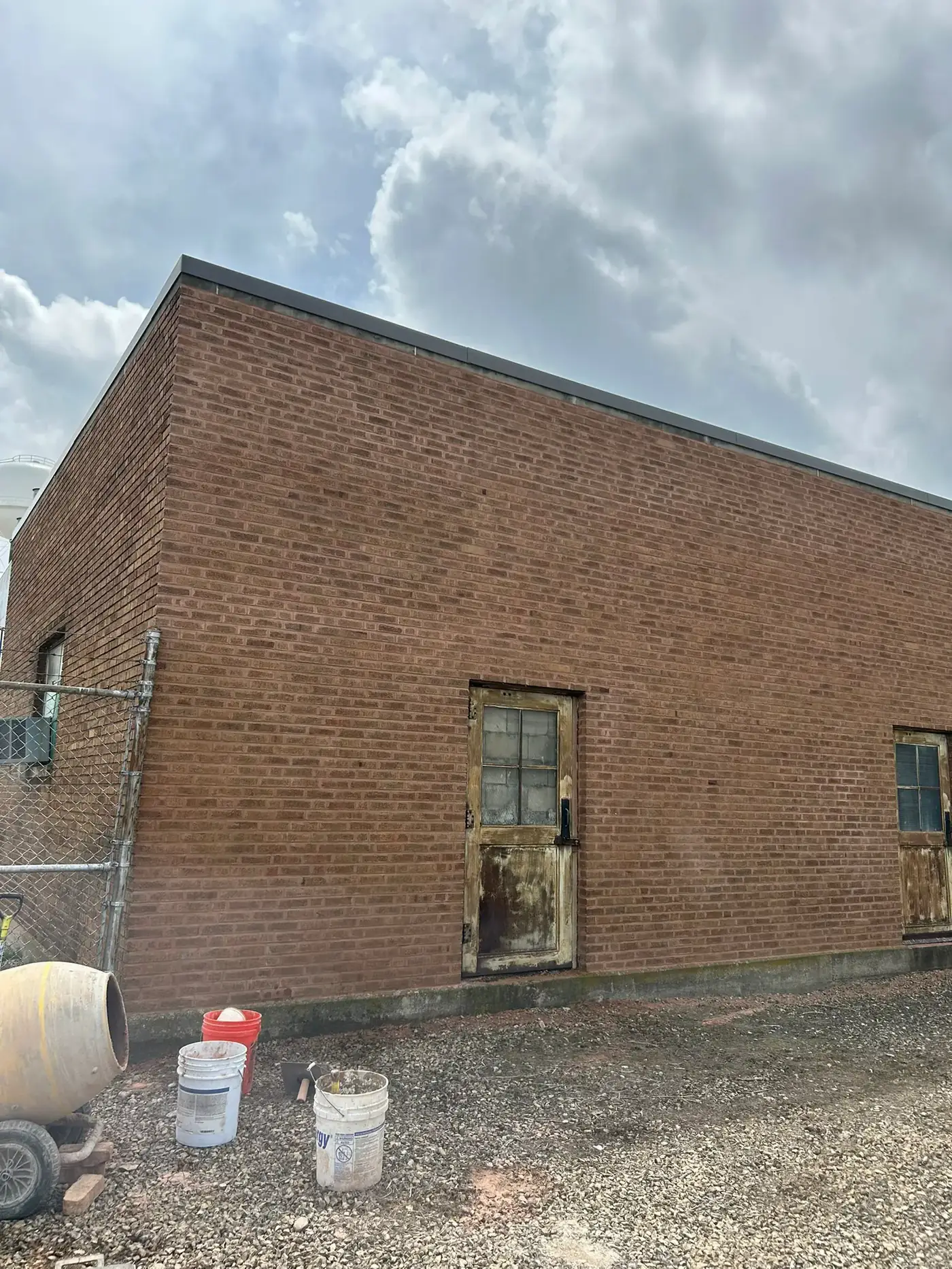
An occupied building is under constant, unpaid inspection. Somebody notices the stain on the ceiling, mentions the gutter overflowing, complains that the back door sticks. That informal surveillance is worth more to a masonry wall than most owners realise — because the moment it stops, the building starts losing material on a schedule nobody is watching.
Emerald Masonry LLC assesses and restores masonry on vacant, transitional and stalled buildings for owners, property managers, investors and institutions across Chicago and the Chicagoland suburbs. Family-owned, licensed, bonded and insured, career masons with decades of experience, free written on-site assessments. Call (708) 288-1696.
Why Vacancy Accelerates Masonry Damage
The heat goes off
This one is underrated. In an occupied, heated building there is a drying gradient — warmth on the inside pushes moisture outward through the assembly. Turn the heat off and that gradient disappears. Masonry that gets wet stays wet longer, and it goes into each freeze wetter.
That matters because freeze-thaw damage scales with saturation. Water in a joint or a unit freezes, expands roughly nine percent, and forces the masonry apart. Damp masonry survives that; saturated masonry does not. Chicagoland cycles through freezing and thawing dozens of times each winter, as covered in freeze-thaw masonry damage in Chicago.
Nobody clears the gutters
Leaves fill the gutters in October, the downspouts block, and by January water is sheeting down an elevation and pooling at the foundation — for months, unobserved. Water management failures are the single most common driver of localised masonry destruction, occupied or not; vacancy just removes the person who would have noticed. See gutters, downspouts and grading brick damage.
A roof leak runs for a season
In an occupied building a roof leak is reported within days. In a vacant one it can run all winter, saturating the wall from the inside and the top — the one direction masonry has no defence against.
Small failures compound unobserved
A cracked chimney crown, an open coping joint, a failed scupper, a broken window. Each is a modest repair when caught. Left alone through a Chicago winter, each becomes a water path into the assembly.
Utilities and mechanical failures
Frozen and burst pipes discharge into wall assemblies. Dead sump pumps let water rise against foundation masonry. Neither gets noticed until somebody walks the building.
Where the Damage Shows Up First
The parapet
Exposed on both faces and the top, unheated even in an occupied building, and standing over the sidewalk. Once coping joints open, water enters the top of the wall and works down. This is the element that most often turns a vacancy into a safety issue.
The chimney
Same exposure logic, plus a crown that cracks and feeds water straight into the stack.
The roof edge and cornice
Where roofing, flashing and masonry meet — and where a lapsed roof maintenance contract shows up first.
The rear and side elevations
Nobody photographs them, nobody walks them, and on Chicago buildings they are frequently softer common brick rather than the harder face brick on the street elevation.
The base course
Blocked downspouts discharging at the foundation, grade nobody is maintaining, and vegetation growing unchecked against the wall.
Interior faces
In a building open to weather, the inside face of an exterior wall starts deteriorating too — and that is a condition ground-level exterior photos will never show.
Reading the Signs on a Vacant Building
- Efflorescence — white salts on the masonry, proof water is moving through the wall
- New or widening step cracks, especially at openings
- Staining tracks running down an elevation from a specific point above
- Vegetation growing from joints, parapets or gutters — a joint holding enough soil and moisture to sustain a plant is a failed joint
- Mortar debris or brick fragments on the ground or roof below
- A parapet out of plumb when sighted along its length
- Bulging or displaced sections anywhere on the elevation
- Interior water staining on exterior walls
Stabilising a Building That Will Sit
The order matters more than the budget. Spending on the wrong item first is how owners fund a repointing job that a scupper then ruins.
- Make the roof sound. Repair or properly tarp. Everything else is downstream.
- Restore drainage. Clear gutters, downspouts, scuppers and roof drains, and get discharge away from the foundation. Set a schedule — vacancy does not pause autumn.
- Address anything unsafe. Loose parapet, cornice or chimney masonry over a sidewalk or entrance gets stabilised or taken down, not deferred.
- Close the openings weathertight — and do it without damaging the building. Board into frames and openings rather than fastening into brick faces, and leave the structure ventilated rather than sealing it airtight, which traps moisture.
- Stop active water entry — failed flashing, open coping joints, cracked crowns, breached lintels.
- Ventilate. A closed, unheated, unventilated masonry building is a condensation chamber.
- Then repoint and rebuild, once the wall is no longer being fed water.
- Inspect on a schedule. Twice a year and after major storms, using the post-storm masonry inspection checklist.
A Two-Winter Timeline
This is the pattern we see repeatedly on buildings that go empty with an unaddressed roof or drainage problem. Timescales vary with severity, but the sequence does not.
| Elapsed | What is happening | |---|---| | Months 1–6 | Gutters fill. A minor roof defect becomes an active leak. Nothing is visible from the street. | | First winter | Saturated masonry freezes and thaws repeatedly. Joints that were merely weathered begin opening. Efflorescence appears. | | Spring | Staining tracks show on the elevation. Mortar debris on the ground below the parapet. Vegetation starts in the gutters and open joints. | | Months 12–18 | Brick faces spall where saturation is worst. Coping joints open further. Interior faces begin deteriorating where the building is open. | | Second winter | Top courses lose bond. Parapet plumb starts to go. What was a repointing scope becomes a rebuild scope. | | Month 24+ | Sections require rebuilding rather than repair; original material is permanently lost; safety becomes the driver rather than economics. |
The inflection point is almost always between the first and second winter — which is also the window in which cheap stabilisation is still enough.
Materials and Techniques on Long-Vacant Masonry
Restoring a building that has been saturated for years is not the same job as routine repointing.
The wall has to dry before it is closed up. Repointing and sealing a saturated assembly traps the water that caused the problem. Sequencing matters: stop the entry, allow drying, then repair.
Mortar hardness still governs. On Chicago's soft common brick the replacement mortar must be softer than the units — lime-rich, low-Portland. Long saturation often leaves the brick weaker than it was, which makes a hard modern mix even more damaging than usual. See lime vs. Portland mortar.
Salvage becomes valuable. On older buildings the closest available match to the original brick is the brick already on site. Units taken from a demolished section or a concealed elevation are worth cleaning and sorting.
Never clean aggressively. Vacancy leaves staining, biological growth and efflorescence, and the temptation to blast it off is strong. Sandblasting and high-pressure washing strip the fired face permanently, leaving masonry that absorbs even more — the last thing a formerly saturated wall needs.
Buying a Vacant Brick Building
The masonry due diligence that pays for itself:
- Inspect from a lift or staging, not from the sidewalk. Parapet, chimney, roof edge and cornice are exactly where vacancy damage concentrates and exactly what a ground-level walk cannot see.
- Sound the walls. Drummy, debonded masonry does not photograph.
- Walk every elevation, including the ones facing the alley and the neighbour.
- Check the interior faces of exterior walls.
- Ask how long the roof has been failing, and treat the answer sceptically.
- Get a written scope with stated assumptions, because on a long-vacant building the hidden-condition risk is unusually high — see buying a home with masonry problems for the residential version of the same exercise.
What Drives the Cost of Restoring a Long-Vacant Building
- How long water has been entering, and from where — the dominant variable
- Whether the parapet, cornice or chimney needs rebuilding rather than repointing
- Percentage of joints and units genuinely failed, which vacancy inspections routinely underestimate
- Structural involvement, and whether an engineer is required
- Access — staging on a tight site, and overhead protection where masonry stands over a public way
- Match difficulty, especially reclaimed brick for older stock
- Interior-face deterioration where the building has been open
- Season and curing conditions
Emerald Masonry provides free written on-site assessments formatted for ownership, a lender or an adjuster, with a $5,000 project minimum. We do not price vacant buildings from photographs.
DIY vs. Hiring a Mason
Owners and caretakers can and should do the stabilisation basics: clearing gutters, checking after storms, keeping vegetation off the walls, photographing conditions each season, and getting a tarp on a failing roof quickly.
What needs a mason is the judgement: whether a parapet is repointable or has to come down, whether a bulge is old and stable or new and moving, how far a rebuild must reach, and which of the visible problems is actually feeding the others. Vacancy damage is layered — a roof leak on top of blocked drainage on top of thirty years of ordinary weathering — and separating those layers is what produces a scope worth funding.
Chicagoland Context
The region's building stock makes this worse in specific ways. Soft common brick and lime-rich mortar on pre-1930s bungalows, two-flats, three-flats, greystones and storefronts is more absorbent and less forgiving of saturation than modern masonry. Flat roofs with parapets are the dominant commercial form here, and the parapet is both the first thing to fail and the thing standing over the sidewalk. Party walls mean one owner's vacancy becomes the neighbour's water problem, an ownership question covered in party wall masonry and who pays.
And the winters do the rest. A building that sits open through two Chicago winters is not in the condition it was in when the last tenant left.
Related Services
- Commercial masonry restoration — vacant, transitional and institutional buildings
- Parapet wall repair — the element most at risk during vacancy
- Chimney repair — crowns, flashing and stack rebuilds
- Tuckpointing and repointing — once the wall is no longer being fed water
- Brick replacement — sections lost to prolonged saturation
- Historic masonry restoration — mothballed and long-vacant older buildings
The Short Version
Vacancy does not preserve a masonry building; it removes the two things that were protecting it — heat, and somebody noticing. An unheated wall goes into every freeze wetter, and a blocked downspout or a slow roof leak runs unobserved for a whole season.
The good news is that the highest-value interventions are the cheapest ones: sound roof, clear drainage, closed openings, ventilation, and a real inspection twice a year. Do those and a building can sit. Skip them and two winters will cost more than ten occupied ones.
Emerald Masonry LLC is a family-owned, licensed and insured masonry contractor serving Chicago and the Chicagoland suburbs led by career masons with decades of hands-on experience in tuckpointing, chimney repair, brick repair and replacement, lintel and parapet repair, foundation and limestone/sill repair, caulking, sealing, and commercial, residential, and historic masonry restoration. Free on-site estimates — call (708) 288-1696.
Holding a vacant building, or considering buying one? We will assess the masonry properly and give you a written, prioritised scope. Request a free on-site estimate or call (708) 288-1696.
Frequently Asked Questions
Why does masonry deteriorate faster in a vacant building?
Three reasons stack: the heat is off so the walls never dry from the inside, nobody is clearing gutters or noticing a roof leak, and small failures that an occupant would report go unobserved for whole seasons. Saturated masonry in an unheated building goes through far more damaging freeze-thaw cycles than an occupied one.
How long can a brick building sit empty before it needs masonry work?
There is no fixed number, but the decisive variable is the roof and the drainage, not the calendar. A building with a sound roof, clear drainage and closed openings can sit for years with modest deterioration; one with an active roof leak can lose a parapet or an elevation's worth of joints in two winters.
What should be done first on a building going vacant?
Secure the water. Make the roof sound or properly tarped, clear and maintain gutters and downspouts, verify scuppers and drains are open, and close openings weathertight. Everything else in a mothballing plan is downstream of keeping water out of the assembly.
Does turning the heat off really damage masonry?
Indirectly but significantly. An unheated building gives the walls no drying gradient from the inside, so masonry that gets wet stays wet longer and freezes wetter — and wetter masonry suffers far more damage per freeze-thaw cycle than damp masonry does.
We're buying a vacant brick building. What should we look at?
Get the masonry assessed from staging or a lift rather than the ground, with the parapet, chimney, roof edge and rear elevations inspected specifically — those are where vacancy damage concentrates and where a ground-level walkthrough sees least. Budget from that assessment, not from the listing photos.
Is a vacant building's deteriorated masonry a liability?
It can be, particularly where a parapet, cornice or chimney stands over a public sidewalk. Falling masonry is a genuine hazard regardless of occupancy, and municipalities take a direct interest in facades over the public way.
Can boarding up openings damage the building?
Poorly done boarding can. Fastening plywood directly into brick faces damages units, and sealing a building airtight without any ventilation traps moisture inside — proper mothballing secures openings while allowing the structure to breathe.
Is it worth repointing a building that will sit empty for another year?
Usually the priority order runs roof and drainage first, then anything structurally unsafe, then repointing. Repointing a wall while water still pours onto it from a blocked scupper is money spent in the wrong sequence.
Can vacancy damage be reversed?
Deteriorated mortar can be replaced and failed units rebuilt, so most vacancy damage is repairable — it is simply far more expensive than the prevention would have been. What cannot be recovered is original material that has been lost, which matters most on historic buildings.