
Tuckpointing & Repointing · Bridgeview, IL
Tuckpointing in Bridgeview, IL — South Cook County Mortar Joint Repair Specialists
Bridgeview's commercial corridors and residential neighborhoods hold a dense inventory of brick buildings from the 1950s through 1980s — all prime candidates for professional tuckpointing. Emerald Masonry LLC delivers detailed mortar joint repair for property owners and managers throughout south Cook County.
Quick Answer
Bridgeview's commercial corridors and residential neighborhoods hold a dense inventory of brick buildings from the 1950s through 1980s — all prime candidates for professional tuckpointing. Emerald Masonry LLC delivers detailed mortar joint repair for property owners and managers throughout south Cook County.
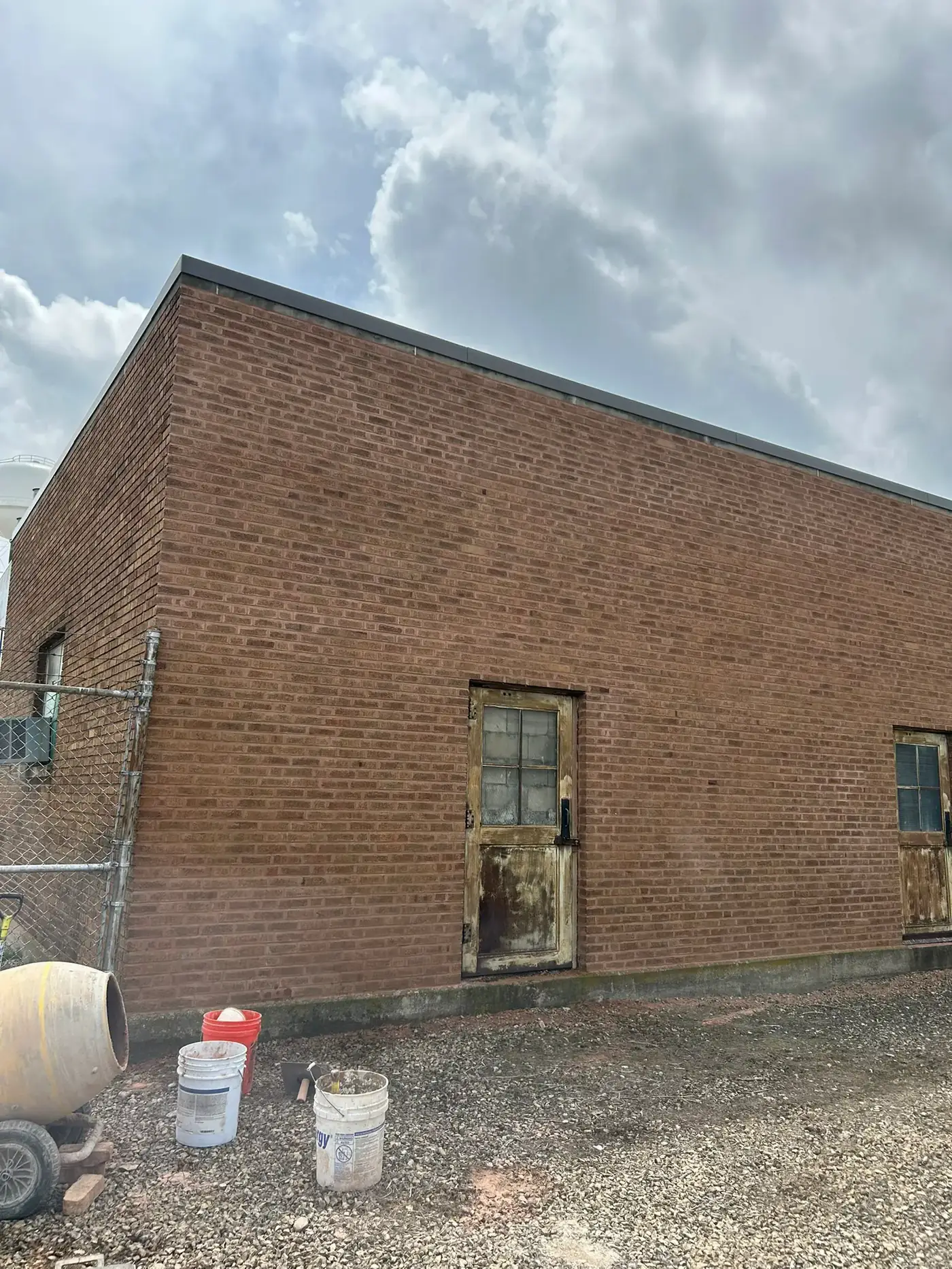
Why Bridgeview Brick Needs Attention Now
Bridgeview is a dense south Cook County suburb built out primarily between the 1950s and 1980s. That era produced solid brick construction — two-flats, small commercial strips along 79th Street and Harlem Avenue, industrial properties near the I-294 corridor, and institutional buildings including schools and churches. That same era also produced mortar joints that are now 40 to 70 years old.
Mortar joints have a finite service life. Chicago's climate — with 30 to 40 freeze-thaw cycles per winter — is harder on mortar than almost anywhere in the continental U.S. When moisture gets into a joint and freezes, it expands. Over decades, that expansion gradually breaks down the mortar's bond, opens gaps, and pulls the joint away from the brick face. Water then follows.
Tuckpointing — also called repointing — removes deteriorated mortar to a proper depth and replaces it with correctly specified, color-matched new mortar. Done right, it extends the weatherproof integrity of a masonry wall by 20 to 30 years. Left undone, you're looking at brick spalling, interior water infiltration, and structural concerns that cost five to ten times more to address.
Emerald Masonry LLC serves Bridgeview and the surrounding south Cook County area from our base in Palos Heights — less than five miles away.
The Tuckpointing Process, Step by Step
Not every contractor approaches this work the same way, and the differences matter significantly on older Bridgeview buildings. Here's how we do it:
Assessment First
Before any grinding starts, we walk the entire facade. We probe mortar joints with a cold chisel to document recession depth, note any brick displacement, spalling, or efflorescence, and identify areas where deterioration has extended to the substrate. If we find anything structural — horizontal cracking in cavity wall construction, displaced brick courses, lintel corrosion — we flag it before production work begins.
Mechanical Joint Preparation
Deteriorated mortar is removed to a consistent depth of 3/4 to 1 inch using angle grinders or oscillating tools, depending on joint width and building sensitivity. We don't apply new mortar over old mortar. That shortcut fails within a season and leaves water locked between the two layers. Dust suppression is standard practice.
Mortar Specification
This is where many contractors cut corners, and it causes lasting damage on older Bridgeview buildings. Buildings constructed before the 1970s were built with softer, lime-based mortars — Type N or Type O. Repointing these walls with harder Type S Portland cement mortar creates a compressive strength mismatch. The harder mortar won't flex with the building's movement, so the brick face absorbs the stress instead of the joint. The result: spalled brick faces that weren't spalling before.
We specify mortar type based on the building's age, original mortar composition, and exposure conditions. On Bridgeview's older two-flats and bungalows, that usually means a lime-rich Type N mix. On 1970s commercial construction, Type S is typically appropriate.
Application and Tooling
New mortar is packed into prepared joints in lifts, allowed to reach initial set, and tooled to match the original joint profile — concave, flush, or weathered, depending on the building. Color matching is done on-site before full production starts.
Final Walkthrough
We review every section before we leave and walk it with you if you're available. You shouldn't have to find missed areas after the crew is gone.
Commercial vs. Residential Tuckpointing in Bridgeview
The fundamentals are the same, but the two project types have distinct priorities.
On a commercial property — a strip center on Harlem Avenue, a flat-roof building near 87th Street, a church or school — the most critical areas are the parapet wall cap, the joint lines just below roof flashing, and the mortar around lintel locations above windows and doors. These are where water gets in first and causes the most damage to interior systems.
Commercial projects also require coordination around business hours, often need aerial lift equipment for upper-story facades, and involve multiple building tenants who need advance notice. We handle all of that.
Residential work on Bridgeview's brick bungalows and two-flats tends to focus on north- and east-facing elevations where moisture exposure is highest, plus chimney stacks and any parapet returns on flat-roof buildings. We do $1,000 project minimums.
For commercial-scale facade work, also see our Commercial Masonry and Masonry Restoration pages.
Warning Signs That Mean Act Now
Most property owners notice the obvious ones — visible gaps in mortar joints, white staining on brick. But there are less obvious signs that indicate the wall has been losing water resistance for some time:
- Mortar joints recessed more than 1/4 inch below the brick face (run a finger across the joint — the gap should be obvious)
- Efflorescence on interior walls or at ceiling level, not just the exterior face
- Diagonal cracks propagating from window or door corners (indicates lintel movement, not just mortar failure)
- Caulk visible in mortar joints — a previous contractor's shortcut that traps moisture and needs to be removed entirely before repointing
- Brick faces flaking or popping — spalling that started from moisture penetration through failed joints
If you're seeing any of these, the wall is already working against you. The sooner the mortar is addressed, the less brick replacement gets involved downstream.
What Separates Competent Contractors from the Rest
Tuckpointing is one of the highest-volume masonry trades in the Chicago suburbs, which means there are operators who move fast and charge accordingly. Fast work with the wrong mortar on Bridgeview's older buildings costs more in the long run than doing it right the first time.
Before hiring anyone, ask:
- Do you identify the correct mortar type for my building's construction era, or do you use one product across every project?
- Do you remove deteriorated mortar mechanically to a full 3/4-inch depth, or do you tool over the surface and apply a skim?
- How do you approach color matching — on-site samples, or do you eyeball it?
- Are you licensed, bonded, and insured in Illinois?
We answer yes to all of those. We're a non-union, family-owned masonry contractor led by career masons with decades of hands-on Chicagoland experience, licensed and insured, with free written estimates on every project.
Frequently Asked Questions
How long does tuckpointing last on a Chicago-area building? With correct mortar specification and proper joint preparation, 20 to 30 years is a realistic service life in our climate. Work done with mismatched mortar or inadequate joint depth can fail within three to five seasons — sometimes less if the winters are severe. That's the core reason the cheapest bid almost never delivers the best outcome on older masonry.
Is tuckpointing something I can do in sections, or does the whole building need to go at once? You can absolutely phase the work. The priority should be the most exposed elevations first — typically north and west faces — and any areas showing active spalling or water infiltration. The rest of the building can follow in a subsequent season. We'll identify and prioritize during the estimate walkthrough.
Can you match the existing mortar color? Yes. We take color samples on-site before mixing production mortar. Perfect matching on buildings with decades of weathered original mortar is difficult — new mortar reads slightly different in tone — but we get as close as the materials allow. The color also shifts as the mortar cures over the first few weeks, typically darkening slightly.
What if some of the brick is also damaged, not just the mortar? We handle brick replacement as part of the same project. When we encounter spalled or fractured brick during tuckpointing, we document it and present pricing before proceeding — you won't get a surprise invoice. For more on that process, see our Brick Repair page.
Serving Bridgeview and the Surrounding South Cook County Area
Emerald Masonry LLC is based in Palos Heights, IL — (708) 288-1696. We serve the full south Cook County area including Alsip, Chicago Ridge, Worth, Hickory Hills, Justice, Evergreen Park, Oak Lawn, Burr Ridge, and surrounding communities.
We're licensed, bonded, and insured. Free on-site estimates. $1,000 project minimum.
Get a free estimate for your Bridgeview property. Contact us at /#contact or call (708) 288-1696. We typically schedule estimates within a few business days.
Ready to get started?
Free on-site estimates for commercial and large-scale projects.