
Brick Repair & Replacement · Calumet City, IL
Brick Repair in Calumet City, IL — Structural & Cosmetic Repairs for South Cook County's Brick Buildings
Calumet City's dense brick housing stock — post-WWII bungalows, two-flats, and commercial buildings along Torrence Avenue — takes a beating from Chicago's freeze-thaw cycles. Emerald Masonry LLC repairs spalled, cracked, and structurally failing brick for property owners throughout south Cook County.
Quick Answer
Calumet City's dense brick housing stock — post-WWII bungalows, two-flats, and commercial buildings along Torrence Avenue — takes a beating from Chicago's freeze-thaw cycles. Emerald Masonry LLC repairs spalled, cracked, and structurally failing brick for property owners throughout south Cook County.
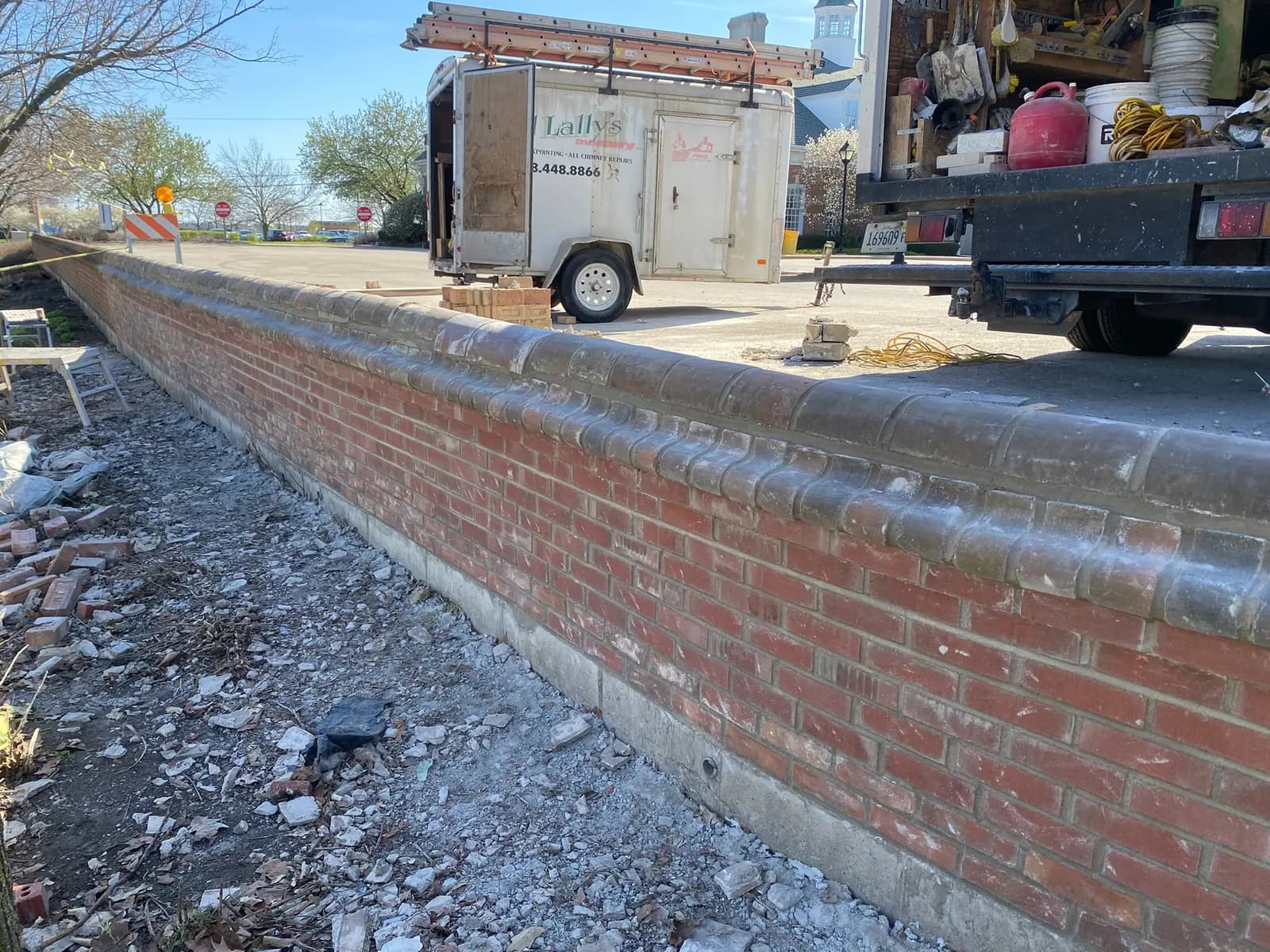
Brick Repair in Calumet City: What the Housing Stock Actually Demands
Calumet City sits at the southern edge of Cook County, roughly 20 miles from the Loop. Most of its residential buildings were constructed between 1945 and 1975 — post-war brick bungalows and two-flats that were built well but are now 50 to 80 years old and showing the consequences of decades of Chicago winters. The mortar in those joints wasn't designed to last forever, and neither was the original brick in some of the older commercial buildings along Torrence Avenue and 159th Street.
The failure modes we see most often in Calumet City:
- Spalling brick faces: The face of the brick pops off, exposing the softer interior core. Once this starts, it accelerates — water gets into the exposed material and the next freeze cycle makes it worse.
- Mortar erosion: Joints that have receded past 3/8" need repointing. Most Calumet City brick buildings that haven't been tuckpointed in the last 15–20 years are past this threshold.
- Horizontal cracking above window and door openings: This almost always signals a failing lintel — the steel angle that spans the opening and carries the brick load above. Catching this early saves significant money.
- Efflorescence on lower courses: White mineral deposits along the base of a wall mean water is moving through the brick. The source is usually failed grade-level mortar joints or missing weep holes in a veneer wall.
How Brick Repair Actually Works
Assessment First
Before any repair work starts, we do a hands-on evaluation: probe the mortar joints, tap the brick faces to check for delamination (hollow brick faces produce a distinctive sound), assess lintel condition above every opening, and check the parapet cap if it's a commercial building. We photograph everything. This isn't a courtesy — it's how we price work accurately and make sure nothing gets missed.
Matching the Brick
Replacing brick on a building constructed in the 1950s or 1960s requires matching brick that's no longer in production. We source from reclaimed brick suppliers and carry a range of Chicago common and regional brick that closely matches the color, texture, and size of the original. A poor brick match is obvious and devalues the repair — we won't set a unit that doesn't blend.
Mortar Compatibility
This matters more than most people realize. Modern Portland-heavy mortars are significantly harder than the bricks used in pre-1980 construction. When a hard mortar cracks — and it will, because brick walls move — the crack propagates through the brick rather than the joint. The joint is supposed to be the sacrificial element. We match mortar strength and flexibility to the building, not to whatever is easiest to mix.
The Repair Sequence
- Remove damaged brick without disturbing the courses above or below
- Cut out all deteriorated mortar from the opening and adjacent joints
- Set replacement brick using mortar matched to the existing mix
- Tool the joints to match the original profile
- Allow to cure; apply penetrating sealer if water infiltration was part of the diagnosis
What Commercial Buildings Along Torrence Avenue Need
The commercial strip along Torrence Avenue includes a mix of 1950s retail, industrial buildings south of I-94, and mixed-use properties. These buildings typically have parapet walls, flat roofs with interior drains, and brick facades that get zero maintenance attention until something fails visually or structurally.
The biggest issue in commercial masonry isn't the brick repair itself — it's that building owners defer it until the structural stakes are high. A brick wall that sheds a face unit onto a sidewalk is a liability event, not just a maintenance call. We work with property managers and building owners to scope the work accurately and prioritize the areas that carry real structural or safety risk.
Our commercial brick repair work in Calumet City and the surrounding south suburbs includes:
- Full brick replacement in spalled or structurally compromised wall sections
- Lintel inspection and replacement where headers have rusted and caused brick displacement
- Parapet wall repairs and coping joint sealing
- CMU block repointing on industrial and warehouse-type structures
- Facade documentation for insurance claims when storm damage is a factor
For commercial properties with full-facade scope, see our commercial masonry service page for what a complete assessment covers.
FAQ
How do I know if my brick actually needs to be replaced or just tuckpointed?
The distinction is straightforward: if the mortar joints are eroded or crumbling but the brick faces are intact, tuckpointing handles it. If brick faces are spalling — meaning the face layer has physically delaminated from the body of the brick — those units need to come out. A spalled brick will keep failing regardless of what mortar work is done around it. During our estimate, we distinguish clearly between which units need replacement and which sections only need repointing.
My building is from the 1950s. Is the brick worth saving or should I reclad?
Almost always worth saving, and recladding is rarely a better option for occupied buildings. The original brick in most Calumet City buildings is denser and more durable than modern thin brick veneer systems. The goal is to repair what's failing, repoint what's eroded, and protect the wall with a penetrating sealer — that's a 20–30 year solution at a fraction of the cost of a reclad.
Do you work on two-flats and residential buildings or only commercial?
Both. Our $5,000 project minimum means we typically aren't the right fit for a few replaced bricks on a small residence, but two-flat and multi-unit residential masonry projects are well within our scope. We serve property owners and investors in Calumet City's residential market alongside commercial and institutional clients.
How much does brick repair cost in Calumet City?
It depends heavily on scope — how many brick units need replacement, whether lintel work is involved, and how much of the surrounding mortar needs to be cut out and repointed. A straightforward 20–30 brick replacement with repointing on a residential two-flat typically runs several thousand dollars. Larger commercial scopes involving lintels, extensive spalling, or full-face facade repair scale up significantly. We provide written estimates after the on-site assessment.
Service Area
Emerald Masonry LLC is based in Palos Heights, IL, roughly 10 miles northwest of Calumet City. We serve all of south Cook County — including Calumet City, Lansing, Harvey, Dolton, South Holland, and Markham — as well as the broader Chicagoland area.
For brick repair, tuckpointing, or a full masonry restoration assessment, contact us at (708) 288-1696 or emeraldmasonryil@gmail.com. Free on-site estimates available — we respond within one business day.
Ready to get started?
Free on-site estimates for commercial and large-scale projects.