
Brick Replacement · Shorewood, IL
Brick Replacement in Shorewood, IL — Cutting Out Failed Units and Matching Them
Replacing brick is not the hard part — matching it is. On Shorewood's 1990s and 2000s veneer, the original color may no longer be manufactured, and the difference between a repair you can find and one you cannot is entirely in the sourcing.
Quick Answer
Emerald Masonry LLC provides brick replacement in Shorewood, IL — cutting out spalled, cracked and failed brick units and replacing them with brick matched for size, color, texture and absorption. Family-owned, licensed and insured, career masons with decades of Chicagoland experience, free estimates. Call (708) 288-1696.
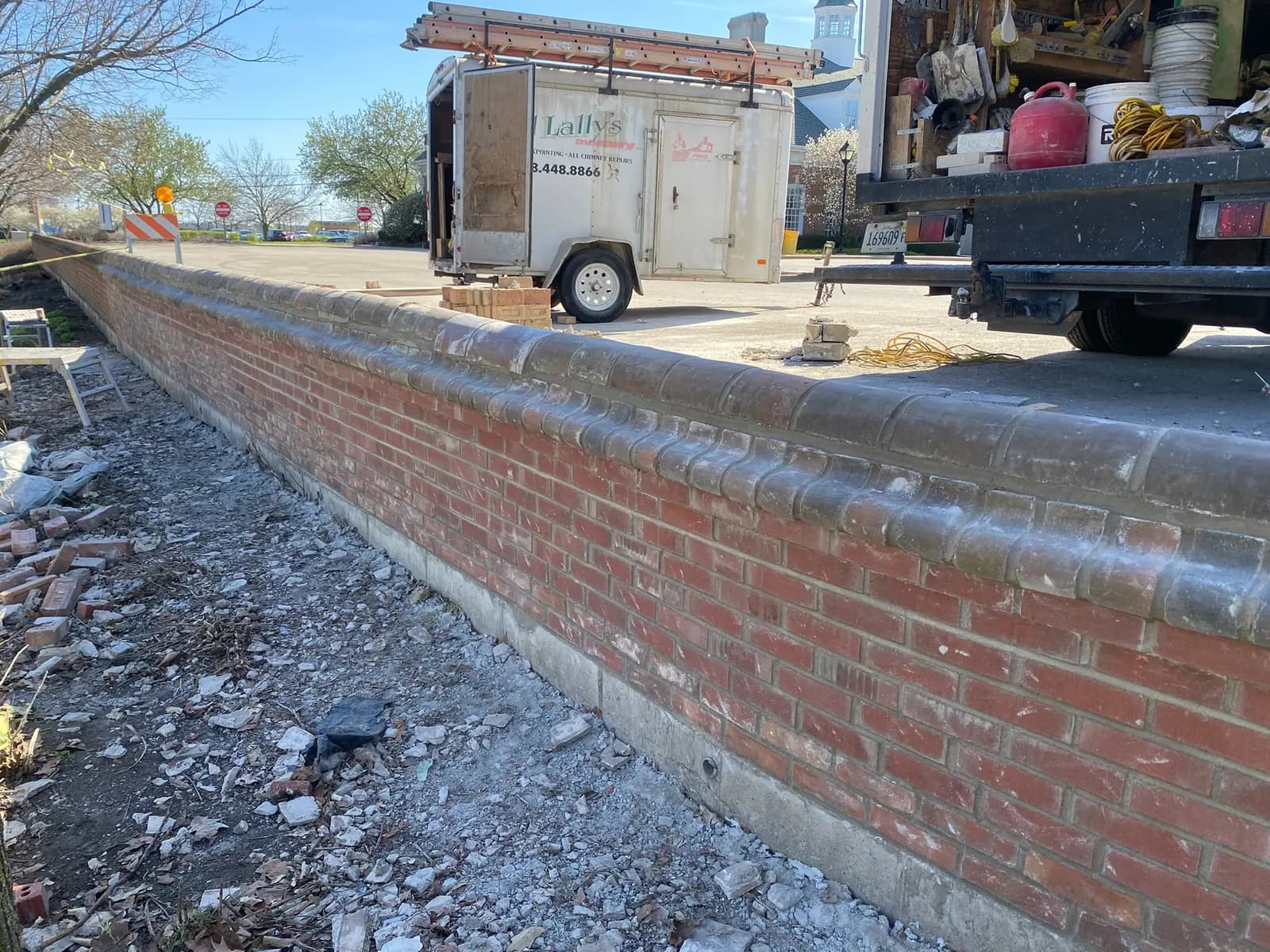
Brick Replacement in Shorewood, IL
Brick replacement in Shorewood, IL means cutting out spalled, cracked or failed units and setting matched brick in their place — matched not just for color, but for size, texture and absorption. Emerald Masonry LLC does this work across Will County. Family-owned, licensed, bonded and insured, career masons with decades of Chicagoland experience, free on-site estimates. Call (708) 288-1696.
Here is the honest framing: cutting out brick and setting new brick is the straightforward part of this job. Any competent mason can do it.
Matching is the part that separates a repair you cannot find from one you notice every time you pull into the driveway — and on Shorewood's housing stock, matching is genuinely harder than people expect.
Why Matching Is Hard Here
Shorewood grew rapidly from the 1990s through the 2000s, on the Will County side of the Joliet area. Its housing is overwhelmingly brick veneer from that build era.
That creates a specific problem. Much of the brick used in 1990s and 2000s subdivision construction came from production runs that no longer exist. Manufacturers discontinue colors, blends change, and a wall laid in 1998 may have no current-production equivalent at all.
So "just get more of the same brick" is frequently not available — and the alternatives all require judgment.
Four Things a Replacement Unit Must Match
| What must match | Why it matters | |---|---| | Size | Brick dimensions vary by era and manufacturer; an off-size unit throws the coursing and joint widths | | Color and texture | The visible match — what you notice from the street | | Absorption | How much water the unit takes on relative to its neighbors | | Hardness | How it behaves under freeze-thaw stress beside the original units |
Most crews think about the first two. Get those right and the last two wrong, and the repair looks perfect on day one, then behaves differently from the wall around it through every wet-freeze cycle — a denser unit set among softer ones does not absorb or move the same way.
When No Exact Match Exists
Three legitimate answers, in order of preference:
Blend. Distribute two or three close units across the repair area. The eye reads natural variation far more forgivingly than it reads a uniform patch that is slightly the wrong tone.
Relocate original material. Take sound original brick from a hidden elevation — behind the garage, a rear wall, below grade — use it for the visible repair, and put the imperfect modern match where nobody looks. This is standard restoration practice and usually the best-looking result.
Salvage. Reclaimed units from the same era, where the yards have them.
What we will not do is set an obviously wrong unit on a front elevation and hope you stop noticing.
Spalling vs. Joint Failure — Which Do You Have?
The distinction determines the whole scope.
Mortar failure is repointing. Brick failure is replacement.
Mortar is the sacrificial layer in a masonry wall — deliberately softer than the brick, so it absorbs the stress and wears out first. When only the joints have gone, tuckpointing restores the wall and the units are untouched.
Once water has been entering long enough to saturate the brick itself, freezing inside it breaks the face off in layers. That is spalling, and a spalled brick cannot be brought back — the fired outer skin is what made it weather-resistant, and it does not grow back.
Most Shorewood jobs involve some of both, plus fixing whatever let the water in.
Signs You Need Brick Replacement
- Spalling faces — flaking, shelling, popping or crumbling.
- Cracked brick, particularly cracks running through the unit rather than following the joints.
- Loose brick that moves under hand pressure.
- Deep pitting, where units have lost real depth.
- Rust staining below a window or garage opening — a corroding steel lintel that will need addressing alongside the brick.
- A patch of damage under a gutter run, below a sill, or at splash height near grade.
- Brick debris collecting at the base of the wall.
- Efflorescence on the surrounding wall, showing water is moving through.
Our Replacement Process
- Free on-site assessment. We count the failed units, take a sample for matching, and — critically — find where water is entering.
- Fix the cause first. Replacing brick while a rusting lintel, failed sill or overflowing gutter keeps running guarantees a repeat.
- Source the match. Current production where one exists, salvage or a blend where it does not. We show you options before proceeding.
- Cut out carefully. The mortar around each unit is cut to free it, rather than attacking the brick, so surrounding units and their edges stay intact.
- Set the new units, properly bedded and aligned to the existing coursing.
- Repoint with mortar matched for hardness, color and sand — Type N for most veneer, Type S where conditions warrant.
- Tool the joints to match the original profile.
- Verify weep holes are open on veneer walls, and clean down gently. Never sandblasting or high-pressure washing.
Materials We Use
Current-production and salvaged brick matched for size, color, texture and absorption; Type N and Type S mortars; blended sands for accurate color; stainless ties and anchors where veneer work requires them; new steel angle lintels where corrosion is part of the scope; and breathable masonry sealers only. Related work: brick repair, lintel repair, limestone and sill repair and masonry sealing.
What Drives Cost
- Number of units and whether the damage is localized or spread.
- Match difficulty — a discontinued color is the single biggest variable on newer homes, and sourcing can affect the schedule as much as the price.
- Height and access — ground level versus staging or a lift.
- Underlying cause — a rusting lintel or failed sill adds scope beyond the brick itself.
- Extent of accompanying joint work.
- Whether original material can be relocated from a hidden elevation.
We do not quote brick replacement sight unseen — the match is most of the job, and it cannot be assessed from a description.
Serving Shorewood and Will County
Shorewood sits along the DuPage and Des Plaines rivers in Will County with no lake buffer, taking the full regional freeze-thaw swing — dozens of crossings of the freezing point each winter. Heavy clay soils swell and shrink seasonally, producing step cracking at corners. River-corridor humidity keeps shaded elevations damp longer, which is why damage clusters on north and east faces.
We work throughout 60404 — the subdivisions off Route 59 and Black Road, the newer construction on the west side, the older homes near the original village center, and the churches and commercial properties along the main corridors. We also serve neighboring Joliet, Plainfield, Minooka and Channahon. Shorewood owners frequently pair replacement with tuckpointing.
Emerald Masonry LLC is a family-owned, licensed and insured masonry contractor serving Chicago and the Chicagoland suburbs led by career masons with decades of hands-on experience in tuckpointing, chimney repair, brick repair and replacement, lintel and parapet repair, foundation and limestone/sill repair, caulking, sealing, and commercial, residential and historic masonry restoration. Free on-site estimates — call (708) 288-1696.
What Waiting Costs
Spalling is progressive. Once a brick loses its fired face, the porous body underneath absorbs water far faster, so that unit deteriorates more quickly and starts wetting its neighbors. A dozen brick becomes fifty. And because spalling means water is already inside the wall, the steel lintels and ties in there are corroding on the same timeline.
There is also a sourcing argument for acting sooner: the longer you wait, the more units you need, and the harder it becomes to find enough matching material for a larger repair.
Get a Free Brick Replacement Estimate in Shorewood
If units are flaking, cracked or loose, bring us out while it is still a small count and the match is still findable.
Call (708) 288-1696 or request your free estimate.
Ready to get started?
Free on-site estimates for commercial and large-scale projects.
Brick Replacement in Shorewood, IL — Frequently Asked Questions
How much does brick replacement cost in Shorewood, IL?
It depends on how many units are involved, how difficult the match is, the height and access, and whether the water source that caused the damage also needs correcting. Replacing a dozen units at grade is a different job from an upper-elevation section needing staging. Emerald Masonry gives free on-site estimates with a written scope.
Can a spalled brick be repaired instead of replaced?
No — once the fired face has flaked or popped off, that unit cannot be restored to sound. The hard outer skin is what made it weather-resistant, and it does not grow back. Spalled units get cut out and replaced; sound units with failed joints around them get repointed instead.
What if my brick color isn't made anymore?
That happens frequently on 1990s and 2000s homes, where some colors had short production runs. The options are sourcing salvage, finding the closest current-production match, or blending two or three close units across the repair area — which usually reads better than a single uniform near-miss. We will show you the options before setting anything.
How do you cut out brick without damaging the ones around it?
Carefully, and it is the part where inexperienced crews cause more damage than they repair. The mortar around the unit is cut out first to free it, rather than attacking the brick itself, so the surrounding units and their arrises stay intact. Rushing this step is how a twelve-brick job becomes a twenty-brick job.
Will the repair be visible?
Done properly, it should be hard to find. That depends on matching size, color, texture and absorption, matching the mortar for hardness and color, tooling the joints to the original profile, and distributing any slightly-off units rather than clustering them. Matching by appearance alone is what makes repairs visible in three years.
Why is my brick failing on a house this new?
Newer veneer fails at points rather than across the field — chimneys, lintels over wide openings, sills, and wherever flashing was poorly detailed during a fast build. The field brick can be perfectly sound while three specific spots are letting water in. Fixing the water source is part of the replacement job.
Brick Replacement in Nearby Areas
Other Masonry Services in Shorewood, IL
Learn more about our brick replacement services across Chicagoland, or view all service areas.