
Commercial Masonry Restoration · Chicago, IL
Commercial Masonry Restoration in Chicago, IL — For the Buildings the Landmark Firms Don't Bid
Chicago's masonry restoration market is built around landmark towers. If you own a four-story mixed-use building, a courtyard apartment property or a corner storefront, you are not that market's customer — and you still have a façade with a deadline on it.
Quick Answer
Emerald Masonry LLC provides commercial masonry restoration in Chicago, IL for mid-size buildings — façade, parapet, lintel and shelf-angle repair, repointing and unit replacement on mixed-use, courtyard apartment, storefront and multi-tenant properties, with phased scopes and the documentation an owner's compliance record needs. Licensed, bonded and insured; COI, W-9 and lien waivers on request. Call (708) 288-1696.
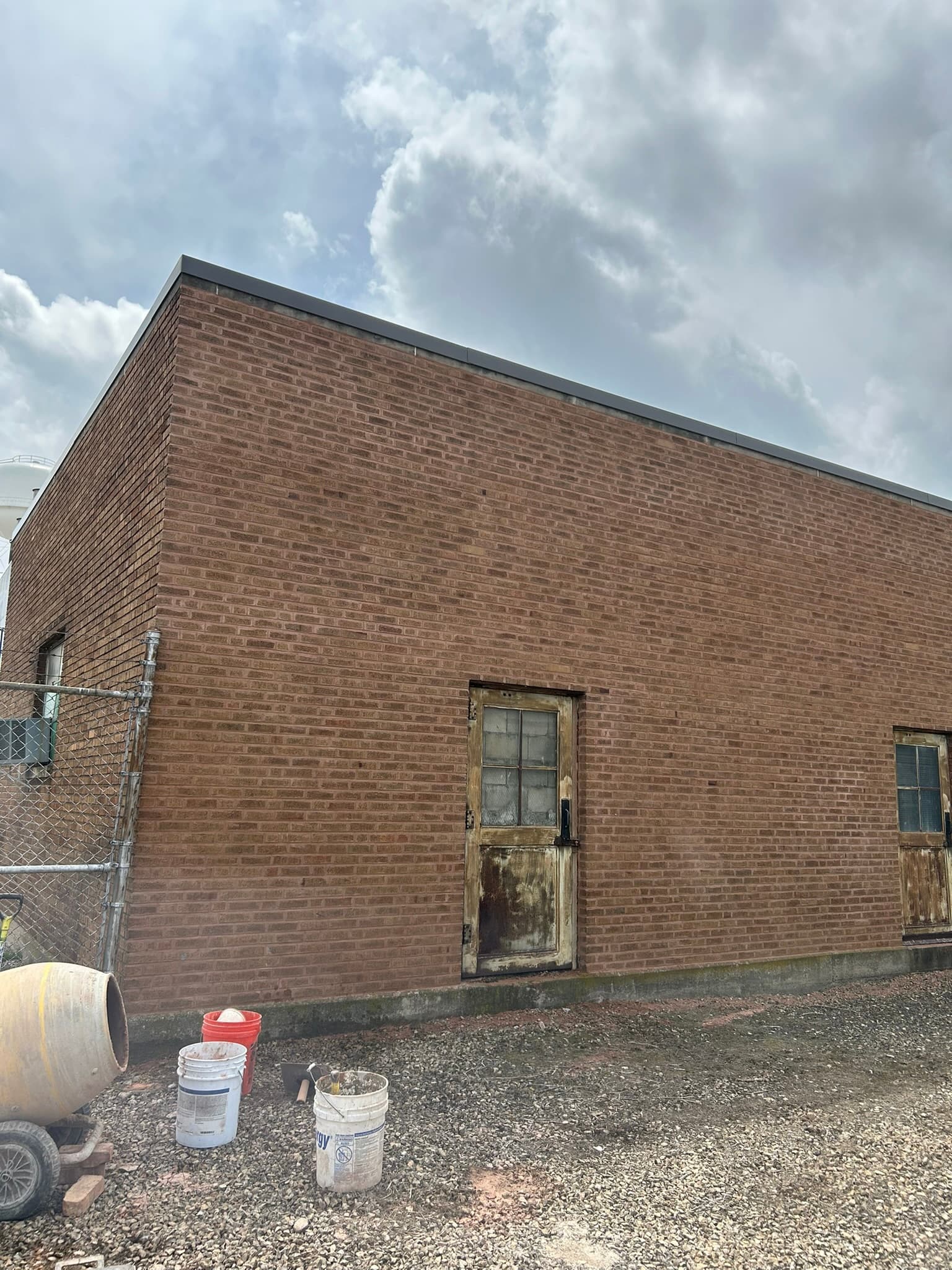
Commercial Masonry Restoration in Chicago, IL
Emerald Masonry LLC provides commercial masonry restoration in Chicago, IL — façade, parapet, lintel and shelf-angle repair, repointing, unit replacement and stone work on mixed-use, courtyard apartment, storefront, small office and multi-tenant buildings. Licensed, bonded and insured, with phased written scopes and the documentation your file actually needs. Free on-site assessment: (708) 288-1696.
Search commercial masonry restoration in this city and you get a very specific answer: firms whose portfolios open with Navy Pier, the Civic Opera House, the Marquette Building, a fifty-eight-story tower. Those are outstanding companies doing outstanding work.
They are also not built for your building.
If you own a four-story mixed-use property on a commercial corridor, a courtyard apartment building, a corner storefront with apartments above, or a small office or industrial building, you sit in a gap: too commercial for the residential tuckpointing shops, too small to be interesting to the landmark restoration market. And you still have a façade, a parapet, a set of lintels, and — if the city has looked at your building — a deadline.
That gap is where we work.
What the big-firm pages leave out
We read the pages that rank for this term. They are strong on credibility and portfolio. Across essentially all of them, the practical content a mid-market owner needs is simply absent:
- No cost drivers. Nothing that tells you what actually moves the number on your building.
- No timelines. Not even orders of magnitude.
- No phasing guidance. No help deciding what to do this year versus next.
- No occupancy planning. Nothing about keeping tenants and customers in place.
- No repair-versus-rebuild criteria. One line distinguishing "repair" from "restoration," with no decision framework.
- No procurement documentation. No mention of certificates of insurance, W-9s, lien waivers or payment applications — the administrative spine of every managed property.
So the rest of this page is that content.
In Chicago, deferred masonry is a compliance problem, not just a budget one
This is the fact that changes the calculus here and does not apply the same way in the suburbs.
The City of Chicago actively enforces exterior wall conditions. A deteriorating façade is not only a maintenance item on a reserve schedule — it is a condition the Department of Buildings can cite. From there it can escalate toward administrative hearings and penalties that compound while the wall sits unrepaired. Separately, buildings above a certain height and construction type carry periodic exterior wall examination obligations, on cycles the Department sets.
Two practical consequences:
One: confirm what applies to your specific building. Requirements turn on height, construction and use, and they change. Ask the Department of Buildings about your address rather than relying on what a neighbor was told.
Two: if an examination or a citation is in play, the masonry scope has to produce a record, not just a repaired wall. That means dated pre-existing-condition photography, a written scope tied to specific elevations and quantities, documented repair methods, and a completion record. An owner who can show a dated assessment and a scheduled, written repair plan is in a materially different position from one holding a verbal quote.
We write scopes that way as a matter of course, because the same documentation that satisfies a compliance file is what protects an owner in an insurance or tenant dispute later.
What actually fails on a mid-size Chicago building
Parapets. The highest-risk masonry you own — weathered on both faces and the top, with the coping acting as its roof. Open coping joints let water straight into the parapet core, where it freezes and works the wall apart from inside. Parapets are also the element most likely to shed material onto a public sidewalk, which is exactly the failure that stops being a repair and becomes an incident.
Steel lintels and shelf angles. Corroding steel expands as it rusts — rust jacking — lifting the courses above it. On a storefront that draws a horizontal crack across a display window. On a multi-story building it draws a level line the length of an elevation at a floor line, which owners are routinely told is settlement. Settlement does not draw a level line.
Mortar joints on the weather elevation, receded behind the face of the units.
Spalling brick at the base courses, where salt, splash and snow concentrate — and on Chicago common brick, which is soft, porous and unforgiving of a hard modern mortar.
Limestone, cast stone and terra cotta at sills, water tables, cornices and entrance surrounds — failing at the wash when they lose pitch and drip edge and begin feeding water back into the wall.
Sealant joints at storefront framing, windows and movement joints, decades past a fifteen-to-twenty-year service life.
Wall ties, where a veneer has begun to bow away from its backup. That is a rebuild condition, not a repointing condition, and catching it early is the whole game.
Phasing by risk, not by appearance
Almost nobody funds a full façade in one year, and nobody should have to. What matters is that the order follows risk.
| Phase | What belongs in it | Why it leads | | --- | --- | --- | | 1. Public safety | Loose parapet units, failing coping, spalled stone or brick above an entrance or public walk | Falling material is the only failure that becomes an incident rather than a line item | | 2. Active water entry | Open coping, failed flashing, corroded lintels, open joints on the weather elevation | Water in a wall converts repointing into rebuilding | | 3. Accelerating deterioration | Elevations where joints have receded past the face of the units | Quantities grow every winter this waits | | 4. Appearance | Sound but stained, patched or mismatched areas | Real value, no urgency |
Each phase is priced separately in the written scope, with quantities carried forward so phase three is not re-estimated from scratch in three years.
How we scope and execute
- Walk every elevation — from grade, from a lift, and from the roof — and sound the masonry rather than reading it from the sidewalk.
- Resolve access first. On a Chicago lot, staging is often the largest single cost driver and sometimes the binding constraint. Alley, gangway, sidewalk, swing stage or lift gets decided before anything is priced.
- Document existing conditions with dated photographs tied to elevations.
- Write the scope with quantities, exclusions, unit prices for hidden conditions, and a stated staging method.
- Correct the water source — coping, through-wall flashing, weep holes, sealant, roof drainage — before or alongside the face work.
- Cut failed joints to depth, roughly two and a half times the joint width, never skimming over failed material.
- Repoint with matched mortar — soft, lime-rich mixes on soft historic brick and stone; Type N for most commercial work; Type S only where exposure or structure genuinely calls for it. Mortar always stays softer than the unit it holds.
- Match color, texture and joint profile against a cured sample panel, not a wet one.
- Replace failed units matched by size, color, texture and era, salvaging from concealed elevations where an exact match cannot be bought.
- Cure and protect, then seal only if warranted — with a breathable penetrating sealer, never a film-forming coating that traps moisture in the wall.
On cleaning: the gentlest method that works, tested on an inconspicuous area. No sandblasting, no high-pressure washing. Both permanently strip the weathered outer skin from limestone, terra cotta and soft Chicago common brick, leaving a more absorbent surface that deteriorates faster than the one you started with.
Keeping the building open
Occupied restoration is the normal case, not the exception:
- Entrances stay usable, with overhead protection wherever work sits above a doorway or public walk
- Staging and public-way permission are resolved before mobilization, because approval time is real schedule
- Noisy cutting is scheduled away from peak hours where the scope allows
- Tenants get written notice ahead of each elevation
- The sidewalk gets cleaned daily — which merchants notice more than anything else on the job
What drives the cost
Height and access, first and often largest. Overhead protection over a public way. Proportion of stone and terra cotta to brick, since stone work is slower and more skilled. How much steel is in the scope, because opening a wall to replace a shelf angle is a different order of work than repointing it. Occupancy and off-hours restrictions. Permit and consent timelines. And what is found once the wall is opened — which is why unit prices for hidden conditions belong in the bid rather than in an argument later.
We do not quote commercial façade work over the phone, and a contractor who will should worry you.
Documentation, and who we work with
Emerald Masonry LLC is licensed, bonded and insured, and provides certificates of insurance, W-9 and lien waivers on request — before work starts, and with each payment application.
Managed portfolios start at property managers. Boards and associations at HOA and condo associations. Owners and GCs at our commercial masonry overview and general contractors. Water, storm and fire losses at insurance restoration.
Trust signals
Emerald Masonry LLC is a family-owned commercial masonry contractor serving Chicago and the Chicagoland suburbs, established 2024 and led by career masons with decades of hands-on Chicagoland experience, in commercial tuckpointing, façade and parapet repair, lintel replacement, chimney and stack rebuilds, CMU block repair, brick repair and replacement, foundation and limestone/sill repair, caulking, sealing, and commercial, residential and historic masonry restoration. Non-union. Free on-site assessments — call (708) 288-1696.
Related services
- Commercial masonry restoration — full-building scopes and phasing
- Parapet wall repair — the highest-risk element on your building
- Lintel repair — rust-jacked steel over openings and at floor lines
- Tuckpointing and repointing — matched mortar on soft Chicago common brick
- Limestone and sill repair — washes, drip edges and matched stone
- Historic masonry restoration — lime mortars and gentle cleaning
- Caulking and joint sealant — the shortest-lived part of the envelope
Get a written, phased scope for your Chicago building
If a parapet is shedding material over a sidewalk, a horizontal crack has opened across a storefront, or you are holding a violation and need a documented plan, get the building assessed by someone who will write it down.
Emerald Masonry LLC — (708) 288-1696 — or request an on-site assessment.
Ready to get started?
Free on-site estimates for commercial and large-scale projects.
Commercial Masonry Restoration in Chicago, IL — Frequently Asked Questions
How much does commercial masonry restoration cost in Chicago, IL?
It is priced by scope. The drivers are elevation height and how the wall is reached, the proportion of stone and terra cotta to brick, how much steel is behind the façade, overhead protection over a public sidewalk, whether the building stays occupied, and what is found once the wall is opened. Emerald Masonry LLC gives a free on-site assessment and a written, phased scope — call (708) 288-1696.
My building got a façade violation. What happens now?
Get it assessed and documented immediately, because unaddressed exterior wall conditions escalate from a citation toward administrative hearings and accumulating penalties. What helps most is a dated, photographed condition assessment and a written repair scope with a schedule, which shows a plan is in motion.
Does my Chicago building need a periodic exterior wall examination?
It depends on the building's height and construction, and the requirements are set and enforced by the Chicago Department of Buildings. Confirm what applies to your specific address with the Department rather than assuming — and if an examination is due, the masonry scope should be written to feed the record it produces.
Do you work on smaller commercial buildings, or only large ones?
Mid-size is our core work — four-story mixed-use, courtyard apartment buildings, corner storefronts, small office and multi-tenant properties. Those owners are frequently squeezed out between landmark restoration firms scaled to swing-stage tower work and residential tuckpointing shops that cannot produce a commercial scope.
Can the work be phased across budget years?
Yes, and it usually should be. We rank the scope by risk — falling-material hazard first, then active water entry, then accelerating deterioration, then appearance — and price each phase separately so an owner can commit to phase one and hold the rest with real numbers rather than an allowance.
Can tenants stay in the building during restoration?
Yes. Entrances stay usable with overhead protection, staging is resolved at the assessment because Chicago lots and alleys dictate what is possible, the noisiest cutting is scheduled away from peak hours where the scope allows, and tenants get written notice before each elevation.
Do you provide a COI, W-9 and lien waivers?
Yes — on request before work starts, and lien waivers with each payment application. Emerald Masonry LLC is licensed, bonded and insured, and is set up for the documentation owners, management companies and lenders keep on file.
What neighborhoods and building types do you serve in Chicago?
Throughout the city — brick and greystone courtyard buildings, two-flats and three-flats converted to commercial use, storefront and mixed-use corridors, and small office and industrial properties. Emerald Masonry LLC is based at 7156 W. 126th St. Suite 136, Palos Heights, IL 60464. Call (708) 288-1696.
Commercial Masonry Restoration in Nearby Areas
Other Masonry Services in Chicago, IL
Learn more about our commercial masonry restoration services across Chicagoland, or view all service areas.