
Tuckpointing · Riverside, IL
Tuckpointing in Riverside, IL — Soft Historic Brick Needs the Right Mortar, Not the Hardest One
Emerald Masonry LLC provides tuckpointing and repointing throughout Riverside, IL — including the village's Olmsted-planned historic district, where soft pre-1920 brick demands a soft, lime-rich mortar rather than a hard modern mix. career masons, family-owned, free on-site estimates.
Quick Answer
Emerald Masonry LLC provides tuckpointing in Riverside, IL, repointing failing mortar joints on the village's historic Victorian, Prairie, and 1920s brick homes. We match soft, lime-rich historic mortar instead of defaulting to a hard modern mix that would spall the brick. Family-owned, licensed and insured, career masons. Free estimates — call (708) 288-1696.
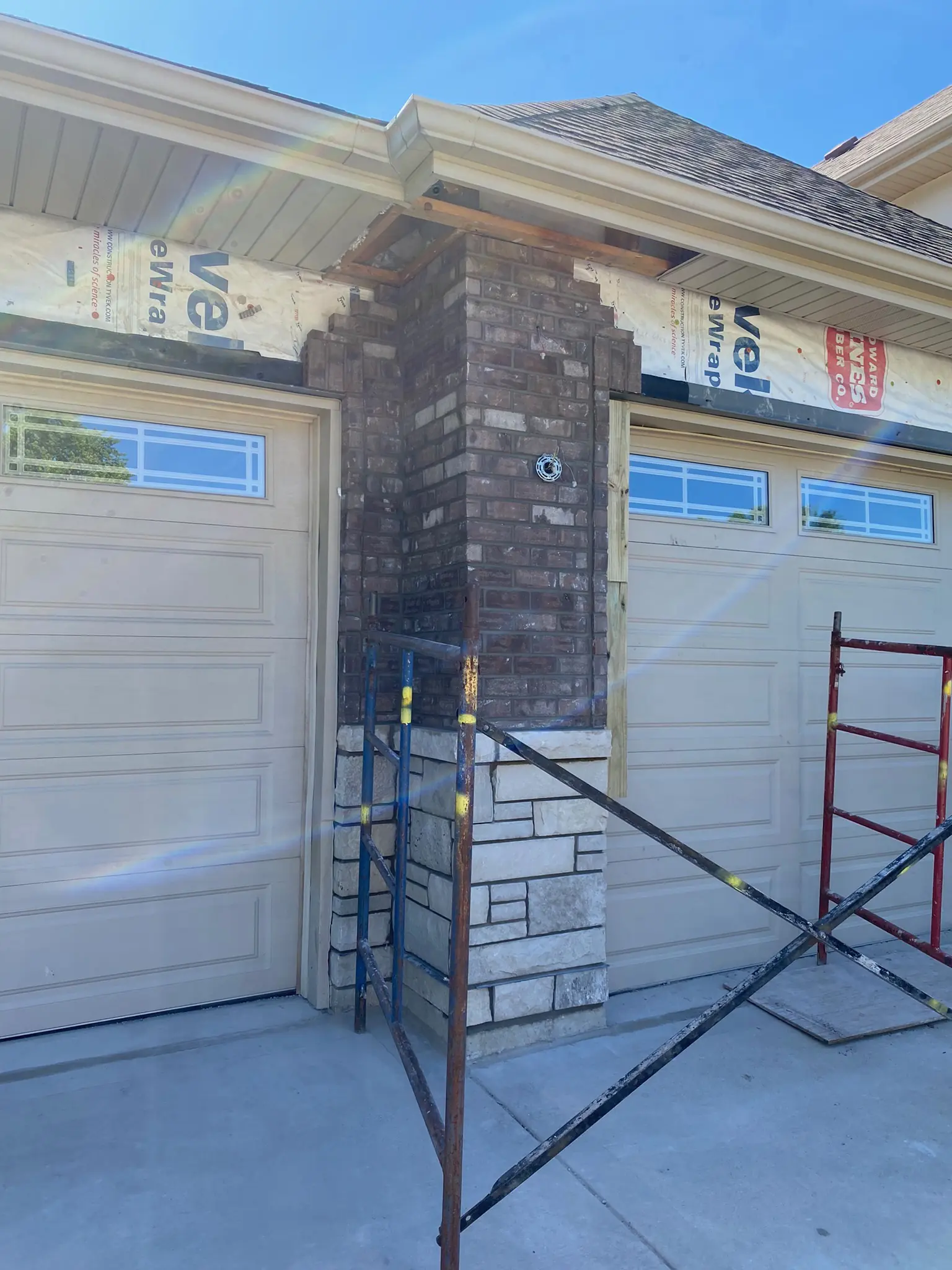
Tuckpointing in Riverside, IL
Emerald Masonry LLC provides tuckpointing in Riverside, IL — repointing failing mortar joints on the village's Victorian, Queen Anne, Prairie School, and 1920s brick homes. The thing that matters most in a village this old is the mortar mix itself: Riverside's pre-1920 brick is soft, it was laid in soft lime mortar, and it has to be repointed with a mortar matched to the original. Call (708) 288-1696 for a free on-site estimate.
That single decision — what goes back into the joint — separates a repair that lasts decades from one that quietly destroys your brick. Most tuckpointing pages for Riverside will not tell you that. It is the first thing we look at when we walk your wall.
Why Riverside Brick Is Different
Riverside is not a typical suburb, and it should not be repointed like one. The village was laid out in 1869 by Frederick Law Olmsted and Calvert Vaux, and the entire district is a National Historic Landmark — curving streets, a deep tree canopy, and a housing stock that runs from Victorian and Queen Anne homes through Prairie School work (Frank Lloyd Wright's Coonley and Tomek houses are both here) to solid 1920s brick.
Three things follow from that:
- The brick is soft. Brick fired in the 1800s and early 1900s is far more porous and less compressive than modern brick. It is designed to breathe.
- The original mortar is soft too. Lime-rich, low in Portland cement, deliberately weaker than the brick around it.
- The trees hold moisture against the walls. Riverside's mature canopy is the village's signature, but shaded, slow-drying elevations — especially north-facing walls — stay damp far longer after rain and snow. Add proximity to the Des Plaines River and Chicago's freeze-thaw cycling, and the mortar joints on the shaded side of a Riverside house almost always fail first.
Tuckpointing in Riverside, IL Starts With Matching the Mortar
Here is the rule the whole trade runs on: mortar is the sacrificial element of a masonry wall. It is supposed to be softer than the brick, so that when the wall moves and moisture cycles through it, the mortar gives — not the brick.
Repoint a century-old Riverside home with a hard, Portland-heavy modern mortar and you invert that relationship. The new mortar will not yield. Moisture that used to escape through the joint gets driven into the brick instead, and every freeze-thaw cycle pushes the brick face off in flakes. You end up with crisp new joints framing spalled, ruined brick — and the brick is the part you cannot replace with a bag from the yard.
So we match, rather than assume:
| What we match | Why it matters | |---|---| | Compressive strength / lime content | The new mortar must be no harder than the original, so the joint stays sacrificial | | Color | Historic mortars pick up their color from local sand; a gray mix on a buff-sand wall reads as a scar | | Sand texture and aggregate | Matches the grain and finish of the original joint | | Joint profile | Concave, weathered, grapevine, struck — the profile is part of the home's character |
On a pre-1920 Riverside home that usually means a lime mortar or lime-dominant blend, not a straight Type N or Type S. On a 1920s or later brick home, a Type N is often correct. We tell you which one you have, and why.
Signs Your Riverside Home Needs Repointing
- Mortar joints that have receded behind the face of the brick, leaving a shadow line
- Mortar you can rake out with a screwdriver, or that crumbles to sand between your fingers
- Efflorescence — the white, powdery salt bloom — on the exterior brick
- Spalling or flaking brick faces, especially low on the wall or on a shaded elevation
- Hairline step cracks running through the joints
- Damp, musty, or stained interior walls behind an exterior brick elevation
- Loose or shifting brick at the chimney, parapet, or window openings
Risks of Waiting
Mortar joints are the wall's water management system. Once they open up, water goes behind the brick and into the wall. In Chicagoland's freeze-thaw climate that water expands and contracts dozens of times each winter, and the damage escalates predictably: open joint → saturated brick → spalled brick face → displaced brick → structural repair. Tuckpointing is inexpensive next to brick repair and brick replacement, and it is a rounding error next to rebuilding a wall. Waiting only moves you up that ladder.
Our Tuckpointing Process
- Assess and identify the mortar. We look at what is actually in your joints — lime content, color, sand, profile — before we specify anything.
- Grind and rake the failed joints to a proper depth, roughly two to two-and-a-half times the joint width, so the new mortar has something to key into. On soft historic brick we work carefully to avoid widening the joint or chipping the brick arris.
- Mix the matched mortar and test it against the existing wall in an inconspicuous area.
- Repoint, packing the joint fully and tooling it to the original profile.
- Cure properly — historic and lime-rich mortars need to cure slowly and damp, not fast in the sun.
- Clean the brick face and walk the finished work with you.
What Drives the Cost of Tuckpointing in Riverside, IL
We will never quote a Riverside home off a photo. The real cost drivers are:
- Scope — square footage of joint to be repointed, and whether it is spot repointing or a full elevation
- Working height and access — a two-story wall behind mature trees and on a tight village lot is not a driveway-level chimney
- Scaffolding requirements
- Mortar matching — a historic lime match takes more care than a stock Type N
- Extent of deterioration — how much brick is already spalled and needs replacing along the way
- Condition of the limestone sills and lintels and whether the chimney needs work at the same time
You get an exact, itemized number after a free on-site estimate — never a guess.
Emerald Masonry LLC is a family-owned, licensed and insured masonry contractor serving Riverside and the Chicagoland suburbs led by career masons with decades of hands-on experience in tuckpointing, chimney repair, brick repair and replacement, lintel and parapet repair, foundation and limestone/sill repair, caulking, sealing, and commercial, residential, and historic masonry restoration. Free on-site estimates — call (708) 288-1696.
Working in the Village
We are used to landmark-district work: careful staging on narrow, curving streets, protecting mature landscaping, keeping the joint profile and mortar color faithful to the original so the house still reads as the house. If your project runs deeper than the joints, that is our historic masonry restoration work — and it is the same crew.
We also serve the neighboring villages: tuckpointing in Brookfield, masonry restoration in Berwyn, and historic masonry restoration in River Forest.
Get a Free Riverside Tuckpointing Estimate
If the joints on your Riverside home are receding, crumbling, or letting water in, we will tell you exactly what you have and what the right mortar is for your wall — before anyone touches it.
Call Emerald Masonry LLC at (708) 288-1696 or request your free on-site estimate. Learn more about our tuckpointing and repointing service.
Ready to get started?
Free on-site estimates for commercial and large-scale projects.
Tuckpointing in Riverside, IL — Frequently Asked Questions
How much does tuckpointing cost in Riverside, IL?
There is no flat rate — the price depends on how many square feet of joint need repointing, the working height and access around Riverside's mature trees and tight lots, whether the mortar has to be matched to a historic lime mix, and how much of the brick face has already deteriorated. A single chimney or one elevation is a very different job from a whole 1890s house. We give you an itemized number after a free on-site look — call (708) 288-1696.
Can you tuckpoint a historic home in Riverside's landmark district?
Yes. Riverside's older homes were laid up in soft lime mortar, and they need to be repointed with a soft, lime-rich mortar that matches the original in strength, color, and joint profile. We match the historic mortar rather than forcing a hard modern mix into a wall that cannot tolerate it.
Why is using hard modern mortar on old Riverside brick a problem?
Mortar is designed to be the sacrificial, softer part of the wall. If you repoint century-old soft brick with a hard Portland-heavy mortar, the mortar will not yield to seasonal movement and trapped moisture — so the brick face spalls and flakes off instead. The repair then destroys the very brick it was meant to protect.
How do I know my Riverside home needs tuckpointing?
Look for mortar joints that have receded behind the face of the brick, mortar you can rake out with a screwdriver or that crumbles into sand in your hand, hairline gaps at the joints, damp interior walls, or efflorescence — the white powdery salt bloom — on the exterior brick. Any of those means water is getting into the wall.
Are you licensed and insured?
Yes. Emerald Masonry LLC is a family-owned, licensed, bonded, and insured masonry contractor led by career masons with decades of hands-on Chicagoland experience, serving Riverside, Brookfield, North Riverside, Berwyn, La Grange Park, and the surrounding suburbs.
Tuckpointing in Nearby Areas
Other Masonry Services in Riverside, IL
Learn more about our tuckpointing services across Chicagoland, or view all service areas.