
Masonry Restoration · Chicagoland, IL
Birds, Bees, and Squirrels: What Wildlife Actually Does to Chicago Masonry
Animals don't attack masonry — they move into it. Every one of them exploits something that had already started to fail, which makes an infestation one of the most reliable early warnings a building gives you.
2026-08-25
Quick Answer
Birds, bees and small mammals rarely damage sound masonry — they exploit joints and openings that have already deteriorated. Mason bees bore into soft, failing mortar; pigeons cause damage through acidic droppings and blocked drainage; squirrels and birds enter through uncapped chimneys and gaps at soffits and vents. The lasting fix is repointing, capping and sealing the openings after humane exclusion. Emerald Masonry LLC restores Chicagoland masonry — (708) 288-1696.
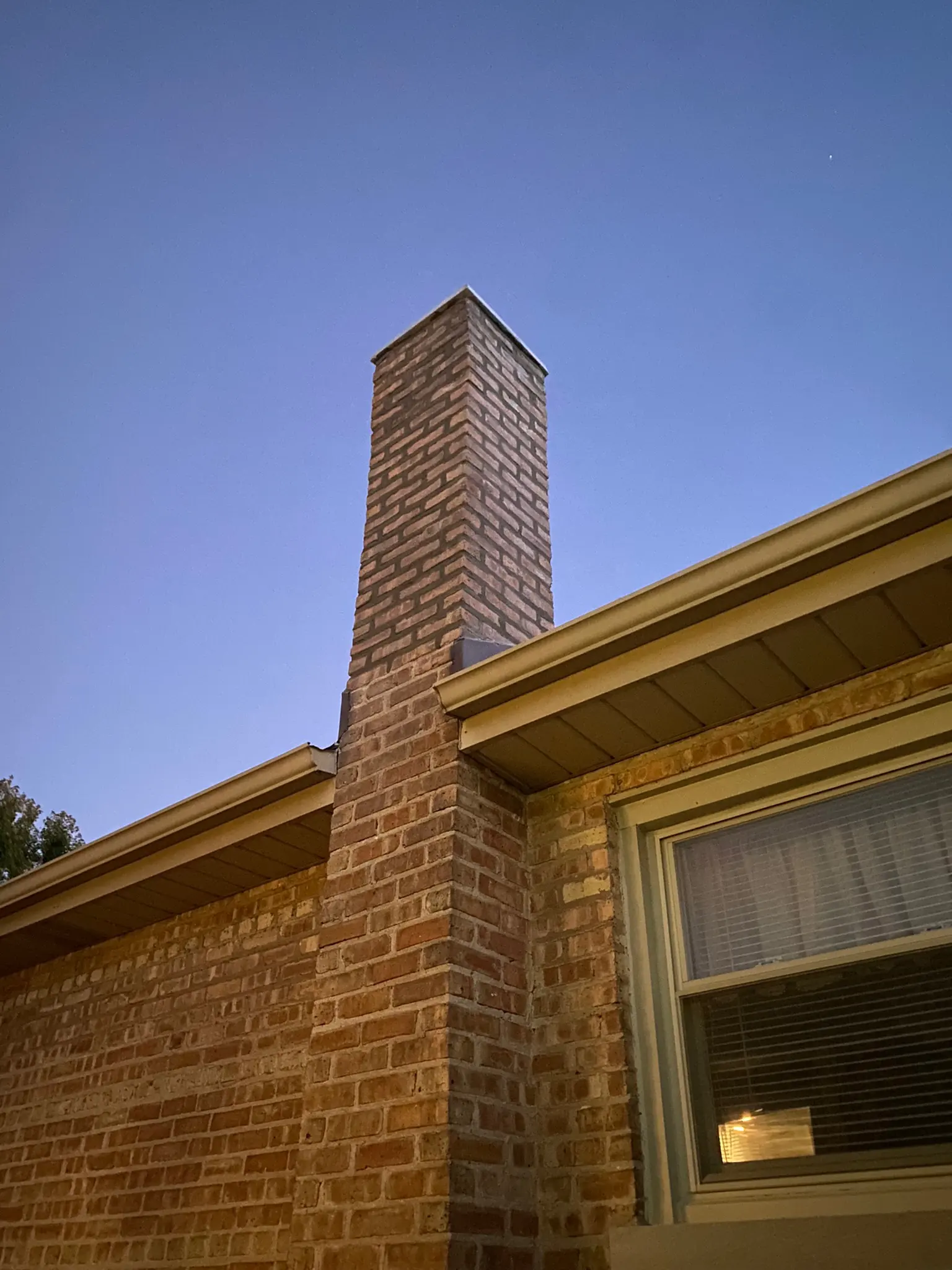
Nothing living chews through a brick wall. Squirrels do not gnaw masonry, birds do not peck through mortar, and no bee in Illinois can drill into fired clay.
What animals do is far more useful to know: they find the part of your building that has already failed, and they move in. Which means an infestation is rarely just a pest problem. It is a survey result — free, unsolicited, and generally accurate.
Emerald Masonry LLC repairs the masonry that wildlife exploits — repointing, chimney caps and crowns, vent and opening details — on homes, multi-family buildings, churches and commercial properties across Chicago and the Chicagoland suburbs. Family-owned, licensed, bonded and insured, career masons with decades of experience, free on-site assessments. Call (708) 288-1696.
The Principle: They Find the Weakness
Sound masonry is an inhospitable building material. It is dense, the joints are hard, and there are no openings. Every wildlife problem on a masonry building traces back to one of a short list of failures:
- Mortar that has lost its binder and is soft enough to excavate
- An uncapped or improperly capped chimney
- A cracked or deteriorated chimney crown leaving gaps at the flue
- Open joints, holes or missing units in a wall
- Vent and duct terminations without functioning covers
- Gaps where masonry meets roof, soffit or fascia
- Ledges, cornices and corbels that hold debris and give purchase
Fix the masonry and the wildlife problem generally does not recur. Remove the wildlife without fixing the masonry and you have booked yourself an annual appointment.
Bees in the Mortar Joints
This is the one that genuinely surprises homeowners: small round holes, roughly pencil-width, appearing in the mortar joints of a brick wall, with bees going in and out.
They are not drilling through masonry. Solitary bees — mason bees and their relatives — excavate nesting tunnels in mortar that has already deteriorated to the point of being workable. Sound, properly cured mortar of appropriate hardness is not excavatable. Sandy, crumbling, binder-depleted mortar is.
So the presence of bees in your joints is a direct statement about the condition of those joints. It usually correlates with the same wall failing the screwdriver test.
Carpenter bees are a different animal, literally. They bore into wood — fascia, soffits, trim, deck rails — leaving clean round entry holes. If the holes are in wood, that is a carpentry problem. If they are in mortar, it is a masonry one.
The masonry answer is repointing, done after the nesting season and after any needed treatment, cutting the joints to sound depth and repacking with mortar matched for color, texture, profile and hardness. Spot-treating the holes with sealant does nothing except hide the condition that attracted them.
Birds
In the chimney
The classic. Uncapped flues are attractive nesting sites, and a nest in a flue is a genuine hazard rather than a nuisance: it obstructs draft, which can push combustion products back into the building.
Chimney swifts deserve a specific mention — they nest in chimneys by preference, and they are a protected migratory species. Removal timing matters, and exclusion after the nesting season, followed by capping, is the correct sequence.
The masonry fix is a properly fitted cap on a sound crown. A cap alone on a cracked crown solves the animal problem while leaving the water problem entirely intact, which is why we assess the crown at the same time — see chimney crown vs. chimney cap.
In vents and ducts
Dryer vents, bath fans and range hoods terminating through masonry are prime nesting sites when the damper or cover has failed. Beyond the nesting itself, a blocked dryer vent is a real fire risk, and the moisture a failed vent dumps into the wall does its own masonry damage — covered in dryer vents, furnace exhaust and brick damage.
On the facade — pigeons and starlings
Roosting causes damage in three ways:
- Droppings are acidic. They etch limestone, cast stone and terra cotta and accelerate mortar deterioration on prolonged contact.
- They hold moisture. Accumulation keeps masonry damp, which in Chicagoland means more freeze-thaw cycles doing more damage.
- Nesting debris blocks drainage. Nests in gutters, on ledges, behind cornices and in scuppers dam water onto masonry — which is a far bigger structural problem than the droppings.
On commercial and institutional buildings the accumulation on cornices, corbels, parapets and window heads is where it hurts most, because those are the details already holding water. There is also a health-and-safety dimension to significant guano accumulation that belongs to a remediation specialist, not a mason.
The masonry-adjacent fixes are exclusion hardware — netting, spikes, wire, slope devices — installed so the anchors themselves do not become new water paths into the wall. Anchoring anything into masonry has rules of its own, covered in anchoring into brick.
Squirrels, Raccoons and Bats
Squirrels enter at the roofline: gaps where masonry meets soffit, fascia or roof deck, uncapped flues, and openings around vents. The masonry work is closing those gaps properly — repointing, rebuilding a deteriorated section, or restoring the flashing and closure detail — rather than stuffing them.
Raccoons are large enough to work loose a compromised chimney crown or a poorly secured cap, which is why cap quality and crown condition matter more than they look like they should.
Bats roost in very small gaps — deteriorated joints, gaps behind loose trim, openings at parapets and roof edges. Bats are protected, exclusion is seasonally regulated, and it must be done by a qualified professional before any masonry is closed up. Sealing bats inside a wall is both unlawful in many circumstances and a genuinely bad outcome for the building.
The Correct Sequence
Getting this order wrong is the most common mistake, and it is worth stating plainly:
- Identify what is living there, and whether it is a protected species or in an active nesting season.
- Humane, lawful exclusion by a wildlife professional. Never seal animals in.
- Clean and remediate the affected area, with appropriate precautions for accumulated droppings or nesting material.
- Assess the masonry, because there is always a reason they got in.
- Repair the masonry — repoint failed joints, rebuild deteriorated sections, repair or rebuild the chimney crown, restore flashing and closures.
- Install proper hardware — chimney cap with spark screen, vent covers with functioning dampers, weep-hole inserts that keep drainage open, exclusion devices where roosting is the issue.
- Seal only after everything above.
What Not To Do
- Do not seal weep holes. They are the drain on a brick-veneer wall, and closing them turns a wall designed to shed water into one that holds it — see weep holes in masonry walls. Use vented inserts.
- Do not fill bee holes with caulk or expanding foam. It hides deteriorated mortar and traps moisture in the joint.
- Do not cap a chimney over live animals.
- Do not pressure wash guano off limestone. High pressure strips the stone's weathered skin permanently, and there are health precautions that a hose does not address.
- Do not treat exclusion hardware as a masonry substitute. Netting over a failing cornice keeps birds off a wall that is still deteriorating underneath.
- Do not anchor exclusion hardware carelessly — every fastener into masonry is a potential water path if it goes into the brick face rather than the joint.
What Drives the Cost of the Masonry Repair
The exclusion work is a wildlife professional's invoice. The masonry side is priced the way all masonry is — by what actually has to be repaired:
- How much joint length has deteriorated to the point of being nestable, which is nearly always more than the area with visible holes
- Height and access — a first-floor elevation versus a chimney or a cornice needing staging or a lift
- Chimney scope — a cap on a sound crown is a modest job; a cracked crown, deteriorated top courses or a rebuild is not
- Whether units have to be replaced as well as joints repointed
- Match difficulty for brick and mortar on older buildings
- Cornice, parapet and ledge work where roosting damage has concentrated
- Cleaning and remediation required before masonry work can begin
- Season — bees, nesting birds and mortar curing all constrain the calendar in different directions
Emerald Masonry does not price this over the phone. The on-site assessment is free and written, with a $5,000 project minimum.
DIY vs. Hiring a Mason
Homeowners can reasonably handle the observation side: walking the walls each spring, checking that the chimney cap is still there, keeping gutters and vent covers clear, and trimming branches back from the roof.
The repair side is not a DIY project, for reasons specific to this problem:
- Wildlife law and timing. Several of the species involved are protected during nesting seasons. Exclusion has to be done correctly and lawfully, and getting the sequence wrong seals animals into a wall.
- Reading the mortar. Judging how deep a joint has to be cut, and specifying mortar hardness that suits the units, is the difference between a repair that lasts and one that spalls the brick within a few winters.
- Chimney work at height. Caps, crowns and top courses are roof work on the most weather-damaged masonry on the building.
- Not making it worse. Foam in a joint, caulk over bee holes and sealed weep holes are all common homeowner fixes that trap water in a wall.
Chicagoland Context
Three regional factors make this a persistent issue here.
The housing stock has a lot of soft mortar. Chicago's bungalows, two-flats, three-flats and greystones were laid in lime-rich mortar, which is correct for those buildings — but once it has weathered past its service life it becomes exactly the workable material solitary bees look for. The mortar that is right for the building is also the mortar that goes soft first.
There are a great many unused chimneys. Decades of furnace and fireplace conversions left Chicago full of stacks nobody thinks about, uncapped and unmaintained — and an unused chimney is still a masonry structure that weathers, leaks and hosts wildlife. Whether to repair or remove one is its own decision, covered in should I remove my chimney instead of repairing it.
Winter compounds everything. Every blocked gutter, dammed scupper and moisture-holding accumulation feeds a masonry wall going through dozens of freeze-thaw cycles a season. Wildlife damage in this climate is mostly water damage with a biological cause.
Maintenance and Prevention
- Inspect the chimney annually — cap present and secure, crown sound, joints intact
- Check vent terminations each spring for nesting and failed dampers
- Keep gutters, scuppers and roof drains clear of nesting debris
- Walk the walls once a year looking for new holes in joints, particularly on south-facing elevations where bees are most active
- Trim branches back from the roofline — most squirrel access starts as a tree limb
- Repoint on schedule rather than waiting for something to move in; sound joints are the whole defense
- Treat any infestation as an inspection prompt. They found something. Find out what.
Related Services
- Chimney repair — caps, crowns, flashing and stack repointing
- Tuckpointing and repointing — the durable answer to bees in the joints
- Brick repair — closing openings and rebuilding deteriorated sections
- Parapet wall repair — roof-edge gaps and roosting damage
- Limestone and sill repair — stone etched by prolonged droppings
- Commercial masonry restoration — cornice and facade work on institutional buildings
The Short Version
Wildlife does not defeat masonry. It finds masonry that has already lost. Bees in your joints means the mortar is spent. Birds in your flue means the cap is missing or the crown is cracked. Squirrels at the roofline means there is a gap at a detail that should be closed.
Get the animals out humanely and lawfully first. Then fix the masonry — because that is what turns a seasonal problem into a solved one.
Emerald Masonry LLC is a family-owned, licensed and insured masonry contractor serving Chicago and the Chicagoland suburbs led by career masons with decades of hands-on experience in tuckpointing, chimney repair, brick repair and replacement, lintel and parapet repair, foundation and limestone/sill repair, caulking, sealing, and commercial, residential, and historic masonry restoration. Free on-site estimates — call (708) 288-1696.
Found holes in your mortar joints, or something living in your chimney? We will assess the masonry and tell you what actually let them in. Request a free on-site estimate or call (708) 288-1696.
Frequently Asked Questions
Can bees really drill into a brick wall?
Not into the brick — into the mortar. Mason bees and similar solitary bees excavate nesting tunnels in soft, deteriorated mortar joints, which is why an infestation is a reliable sign the joints have already lost their binder and need repointing.
How do I know if it is mason bees or carpenter bees?
Carpenter bees bore into wood — fascia, trim, soffits, decks — leaving clean round holes about the diameter of a pencil. Bees working in mortar joints on a masonry wall are typically mason or other solitary bees, and either way the masonry answer is the same: repoint the joints once the season allows.
Do pigeon droppings damage brick and limestone?
Yes. Droppings are acidic and hold moisture against the surface, which etches limestone and cast stone over time and accelerates mortar deterioration. On ledges and cornices the bigger problem is often the accumulated debris blocking drainage.
What is the right way to keep animals out of a chimney?
A properly fitted chimney cap with a spark screen, installed on a sound crown. A cap on a cracked or deteriorated crown is a partial fix, because the water path into the stack stays open even after the animals are excluded.
Something is nesting in my chimney. Can I just cap it?
Not until the animals are out. Sealing wildlife inside a flue creates a much worse problem — trapped animals, blocked draft and an odor issue — and some birds are protected during nesting season, so exclusion has to come first and capping second.
Can a bird nest actually block my chimney?
Yes, and it is a genuine hazard. A nest in the flue obstructs draft and can push combustion gases back into the house, so a blocked flue should be cleared and inspected by a chimney professional before any appliance is used.
Do birds nest in weep holes?
Insects do more often than birds, but weep holes and vent openings do get colonized and blocked. Weep holes are drainage for a brick-veneer wall, so blocking them turns a wall that drains into a wall that holds water — the answer is a vented insert that keeps the drain open, never sealing them shut.
Will repointing stop bees from coming back?
It removes what attracted them. Solid, properly cured mortar of the correct hardness is not workable for nesting, so once the joints are sound the wall stops being a viable site — which is why repointing is the durable fix rather than treating year after year.
Do I call a mason or a wildlife company first?
Wildlife removal first, masonry second. Living animals have to be excluded humanely and legally before openings are closed, and then the masonry work makes the exclusion permanent instead of seasonal.